
Global and Thai Economy
Geopolitical risks keep oil prices near a five-month high; Thailand’s consumption recovery warrants monitoring despite flood relief program.
Global
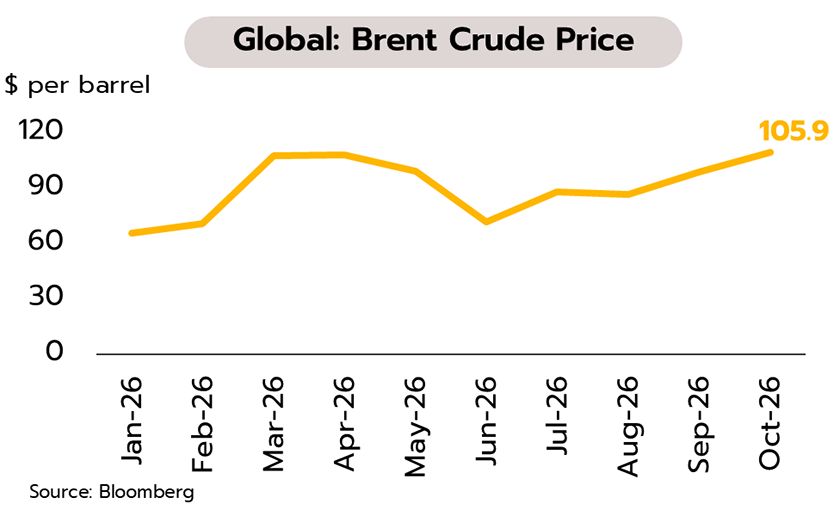
Global: Crude oil prices remain near their highest level in five months, amid concerns that the U.S. could resume attacks on Iran following the November midterm elections. Iran has rejected the prospect of a new round of negotiations unless the U.S. accepts the terms it proposed through intermediaries. Meanwhile, the Russia–Ukraine war has shown signs of de-escalation, with representatives from Ukraine, Russia, and the U.S. preparing to hold peace talks in the first half of November.
Europe: Fiscal risks are rising amid high energy prices and borrowing costs. Protests in France, driven by discontent over the cost of living, educational inequality, and plans to cut public spending, highlight growing opposition to austerity that could spread to other European countries. Constraints on implementing deficit-reduction measures could undermine investor confidence, increase volatility in bond markets, and exacerbate the region’s economic vulnerabilities in the period ahead.
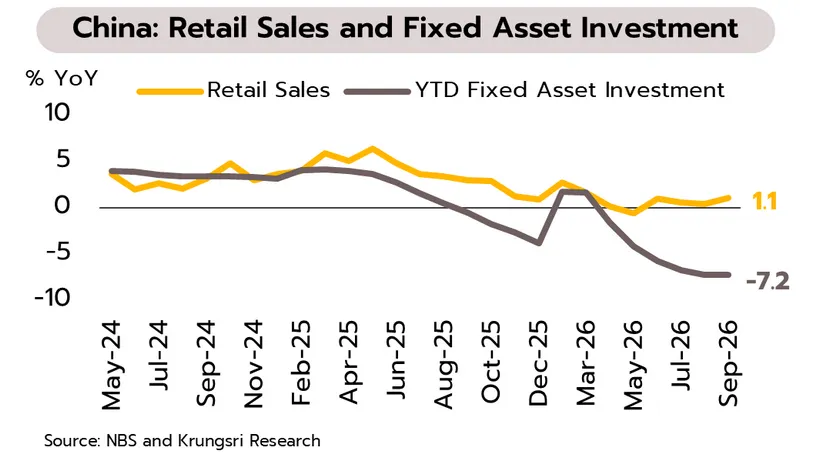
China: The economy grew by 4.5% YoY in 3Q26, up from 4.3% in 2Q26. However, amid continued domestic economy fragility (Figure), China is expected to focus on supporting growth to meet its target rather than issuing large-scale stimulus.
Meanwhile, the government is likely to preserve policy space to address structural issues (such as excess supply and public debt),
as well as promote new high-tech sectors as key growth drivers going forward.
Thailand
Government approves THB 11 billion in central budget for additional flood relief, amid still-weak consumption. The Cabinet has approved an THB 11 billion from the FY2027 central budget for emergency or necessity to assist approximately 1.5 million flood-affected households. The measures comprise three components: immediate relief, recovery support, and tax measures.
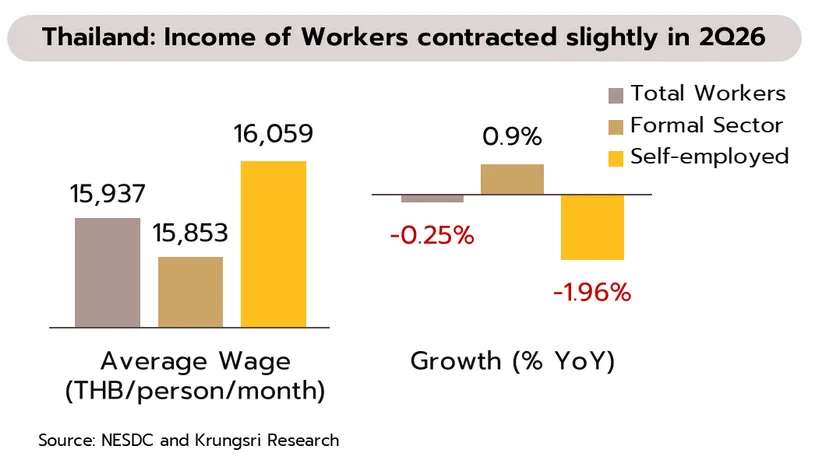
The additional flood relief program, together with consumption stimulus measures, is expected to support household spending in 4Q26. However, the recovery in private consumption is likely to remain constrained by several factors including: (i) a post-stimulus payback effect which may weigh on household spending following the expiration of the Thai Chuay Thai Plus scheme; (ii) flood-related physical asset damage, which is expected to exceed the value of lost output, creating additional financial burdens for households, particularly amid elevated household debt of 85.2% of GDP in 2Q26; and (iii) weak income growth and fragile consumer sentiment, with aggregate labor income contracting by -0.3% YoY in 2Q26 and income among self-employed workers declining by -2.0%. Meanwhile, the Consumer Confidence Index fell to 52.1 in September from 53.2 in August, reflecting concerns over flooding and high living costs.