
Global and Thai Economy
U.S. slowing wage growth limits Fed rate hike risks. Thailand’s investment and stimulus bolster growth, but consumption may lose steam.
Global
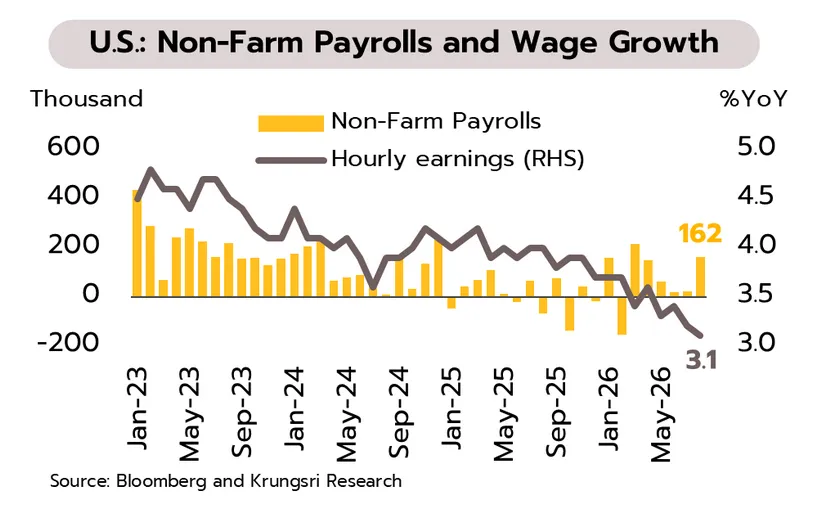
U.S.: Concerns over inflation, fiscal position, and tech fundraising pushed 30-year Treasury yield to a 19-year high, adding pressure on the U.S. economy through higher financing costs. Meanwhile, although nonfarm payrolls increased more than expected in August, hourly wage growth slowed to 3.1% YoY,
limiting the risk of second-round inflation effects and the likelihood of policy rate hikes.
Japan: Household spending fell for an eighth straight month despite energy-cost relief and wage gains. Meanwhile, fiscal concerns have driven Japan’s 10-year government bond yield to its highest level in almost 30 years, adding pressure on the economy and increasing the government’s debt burden. Krungsri Research expects
the BOJ to raise its policy rate by 25 bps to 1.25% at this month’s meeting, aiming to curb yen depreciation and reduce the risk of second-round inflation effects.
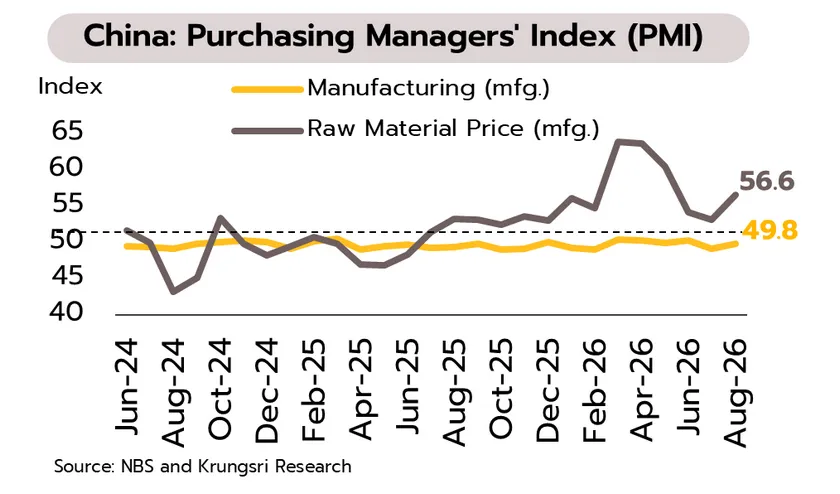
China: Manufacturing picks up modestly (figure), driven by hi-tech goods. However, cost pressures could rise again amid higher global energy prices. Meanwhile,
the government revises new home loans rules, requiring down payments and mortgage to be transfers to developers only upon completion, while extending the maximum repayment terms to 40 years. These are expected to gradually restore confidence, but near-term benefits may be limited as unfinished projects remain quite high.
Thailand
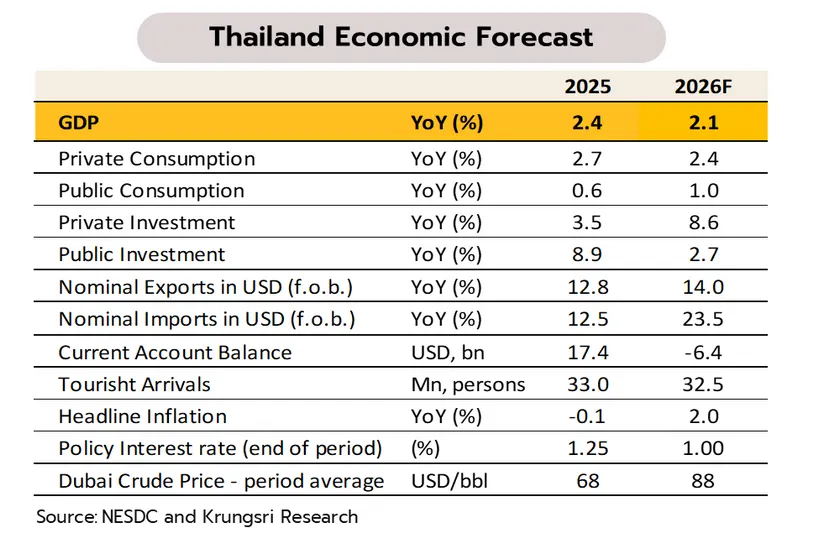
While domestic spending begins to slow, Thailand’s economy gained momentum from exports and investment. In July, the Private Consumption Index slowed (PCI +3.2% YoY from 4.6% in June), despite continued support from stimulus measures. Meanwhile, the Private Investment Index maintained strong growth (PII +12.9% from 18.6%) despite a slight moderation following the acceleration of capital goods imports in recent months. Merchandise exports excluding gold continued to expand (+25.4% from +24.8%), while foreign tourist arrivals increased (2.5 million from 2.1 million).
Looking ahead, Krungsri Research expects Thailand’s economy to be driven by three key factors: (1) private investment, underpinned by continued growth in BOI investment applications in 1H26 (+36.7%), led by digital industries (+100%), alongside the Thailand FastPass program; (2) exports, driven by global AI-related investment and the electronics upcycle; and (3) improved policy continuity, particularly the energy transition program. However, the growth outlook could be constrained by several headwinds, including: (1) a potential loss of momentum in private consumption after stimulus measures expire, amid weak income growth and elevated household debt; (2) El Niño, which could weigh on agricultural output, farm incomes, and related industries; (3) prolonged Middle East tensions; and (4) U.S. tariff policy. Overall, Krungsri Research expects Thailand’s economy to grow by 2.1% in 2026.