
Weekly Economic Review

Weekly Economic Review

12 May 2026

Global and Thai Economy


Supply disruption may persist after Trump rejected Iran’s proposal. Thailand faces rising inflation amid higher cost-push pressures.


Global


Global: Risks of prolonged tightness in global energy supply remain after Trump rejected Iran’s proposal for a U.S. ceasefire, sanctions relief, and the naval blockade in exchange for reopening the Strait of Hormuz. This could keep energy and commodity prices high, adding pressure to the global economy. Meanwhile, uncertainty over U.S. tariff policy increased after the U.S. Court of International Trade ruled the 10% tariff hike under Section 112 unlawful. 

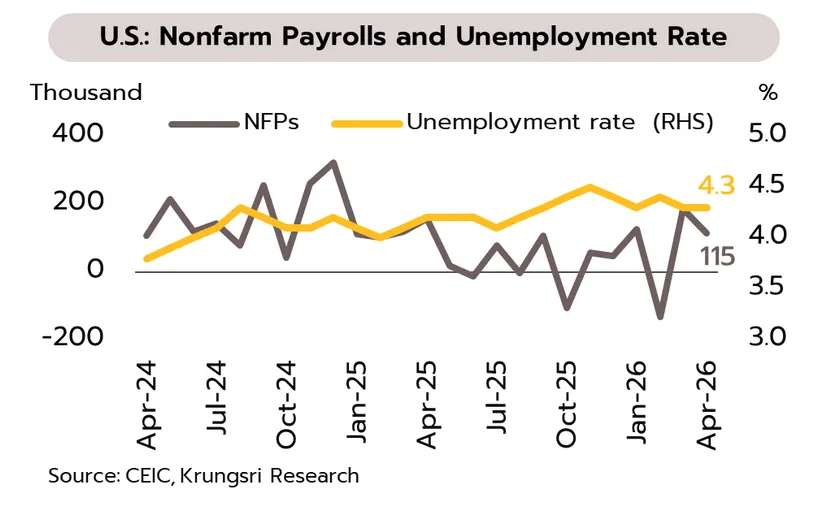
U.S.: Better-than-expected jobs data helped ease concerns over an economic slowdown, with April nonfarm payrolls increasing by more than 100,000 and the unemployment rate at its lowest level in 8 months. However, escalating Middle East tensions could intensify inflationary pressures and weigh on growth, amid record-low consumer confidence and a clearer slowdown in the services sector.

Weekly Economic Review
 

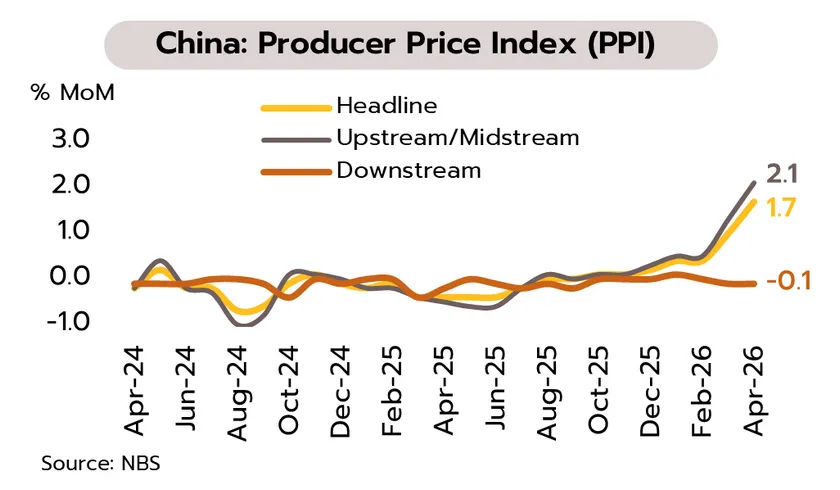
China: Middle East conflict might be a double-edged sword. On one hand, producers have limited ability to pass on rising costs to consumers (figure). On the other hand, excess capacity, which has exerted pressure in recent years, has come to support exports in certain sectors, including solar panels (+34% in the first three months) and aluminum (+17%). However, such positive effects might prove temporary. Moreover, risks from additional U.S. Section 232 tariffs warrant close attention.

Weekly Economic Review


Thailand


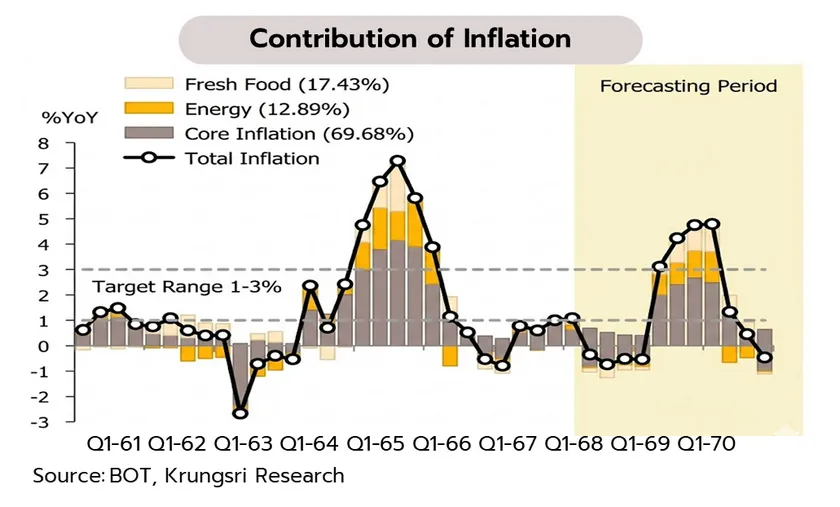
Thailand’s inflation rises to a more-than-three-year high. Focus shifts to the THB 400 bn loan decree and its implications for growth and inflation. In April, headline inflation surged to +2.89% from -0.08% in March, driven by the Middle East conflict, which raised production and transportation costs. Core inflation (excluding fresh food and energy) also rose to +0.83% from +0.56%. The Business Sentiment Index fell to a more-than-five-year low of 43.5 in April from 47.7 in March, reflecting declines across all business categories and components amid rising concerns over costs and profitability. 

Headline inflation is expected to rise further and could exceed the 1–3% official target range from 2Q26 onward, driven by the pass-through effect of higher costs to consumers and the easing of government energy price controls. The “Thai Chuay Thai” measures, expected to be partly funded by the THB 400 bn loan decree, could support economic growth through stronger domestic demand. However, the measures may create upside risks to inflation, while reducing fiscal space and potentially affecting domestic liquidity and borrowing costs through crowding-out effects. The magnitude of these impacts will depend on the implementation details of the projects under the loan decree.

Weekly Economic Review


Announced :12 May 2026
Back
Press keyword to search