
Global and Thai Economy
U.S. imposes a 15% tariff for 150 days. In Thailand, loan growth still contracts while MPC is expected to hold rates on February 25.
Global
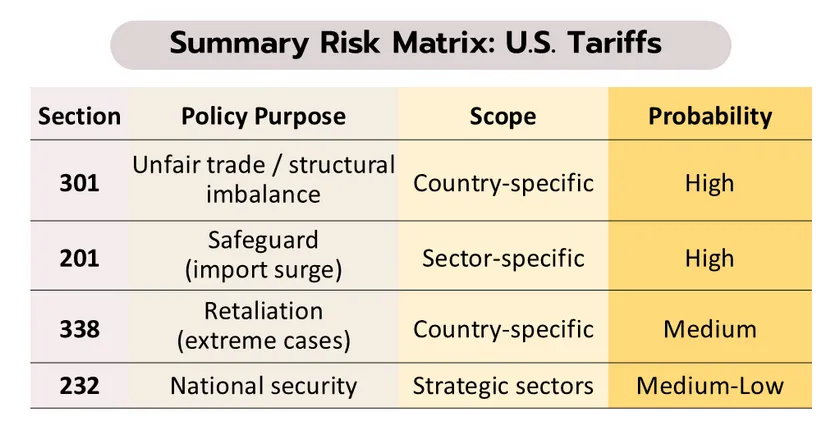
U.S. announced a new 15% tariff after the Supreme Court ruled on February 20 to overturn the reciprocal tariffs, citing that they exceeded the legal authority granted under the IEEPA. Following the invocation of Section 122, which imposes a global tariff of 15% for up to 150 days, effective February 24, existing product-specific tariffs remain fully in force. These include tariffs on automobiles and parts (25%), as well as steel, aluminum, and copper (50%). In addition,
there is a high likelihood that the U.S. may shift toward other legal measures with higher tariff ceilings and longer durations—such as Sections 301, 201, 232, and 338—which are more targeted at specific countries or industries. This reflects rising risks to trade, investment, and the role of countries within global supply chains.
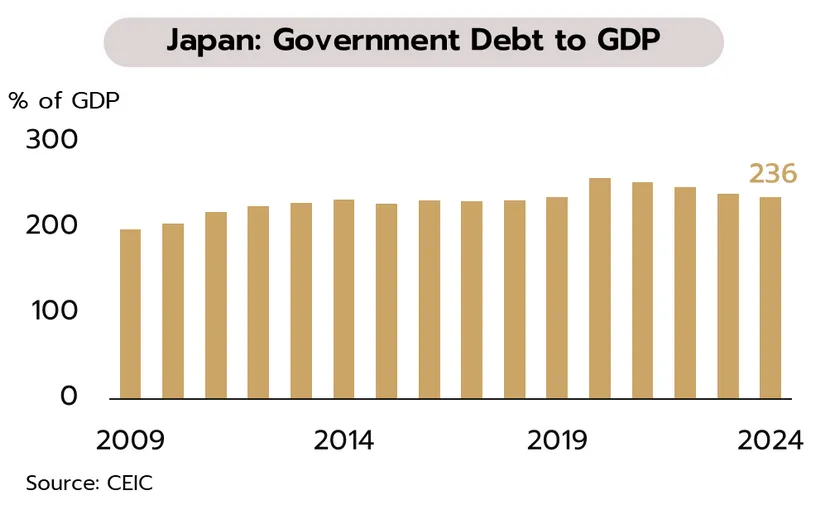
Japan is preparing additional stimulus measures but faces fiscal constraints. It proposed suspending the consumption tax on food and beverages for two years to ease the costs of living, with detailed discussions expected to begin around mid-year. While such proactive fiscal stimulus is likely to support economic growth, it may also increase fiscal vulnerabilities amid elevated public debt levels (around 236% of GDP). In addition,
rising tensions with China are also likely to weigh on tourism and exports, posing downside risks to growth.
Thailand
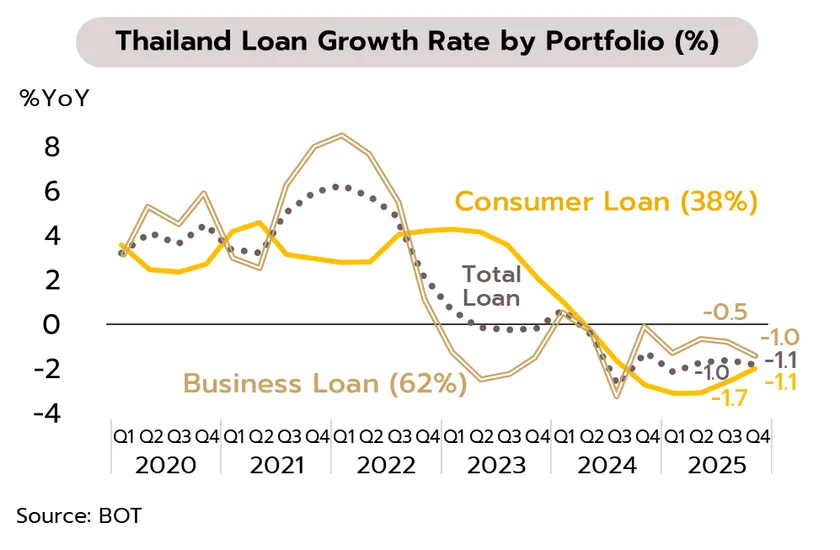
Commercial bank lending contracted by 1.1% YoY in 4Q25, close to a 1.0% decline in 3Q25, driven by continued contraction in business loans across both large corporates and SMEs. Asset quality improved only slightly, with the NPL ratio declining to 2.84% from 2.94%, mainly due to debt repayments, while Stage 2 loans edged down to 7.07% from 7.24%, supported by progress of debt restructuring.
Despite the overall credit contraction, the Monetary Policy Committee is unlikely to rush into rate cuts, as (i) 4Q25 GDP growth surprised on the upside at 2.5% YoY, bringing full-year 2025 growth to 2.4%, above the BOT’s 2.2% forecast, and (ii) positive effects from previous rate cuts are still feeding through the economy. Krungsri Research therefore expects the MPC to keep the policy rate unchanged at its February 25 meeting, while awaiting greater clarity on political developments and the next government’s economic policies. With low inflation and a slow economic recovery, there remains room for further monetary easing; however, the need for additional easing may decline if fiscal policy becomes more effective in supporting growth momentum.