
Weekly Economic Review

Weekly Economic Review

24 March 2026

Global and Thai Economy


Middle East tensions show no signs of easing, posing risks to global and Thai economies. China prioritizes quality-driven growth.


Global


Global energy security is under rising threat after Israel struck Iran’s largest gas field and Iran retaliated across the region. At the same time, the U.S. has threatened to destroy Iran’s power plants if the Strait of Hormuz is not reopened, alongside reports of U.S. Marine deployments in preparation for potential ground operations. These point to an escalating conflict in the Middle East, increasing the risk of a global energy crisis.

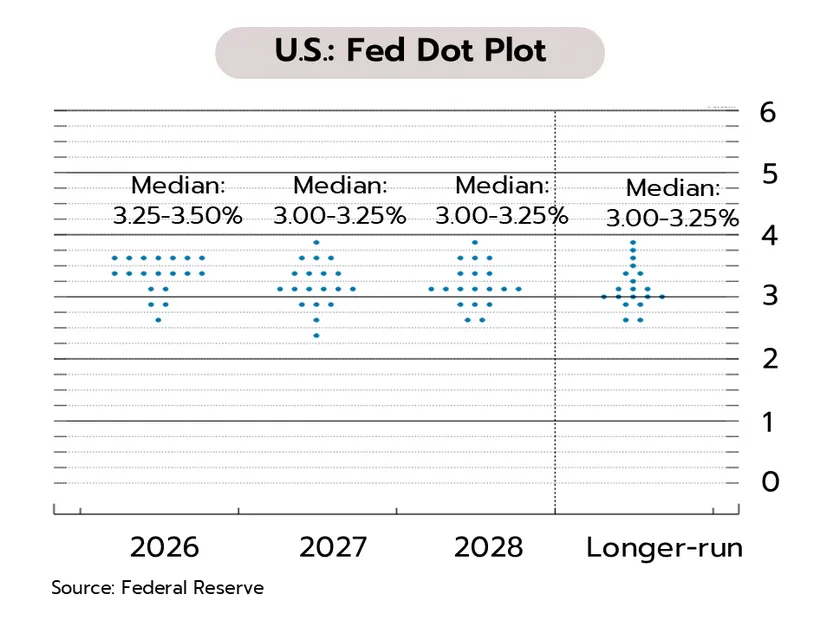
U.S. Fed maintained its policy rate at 3.50–3.75% at the March 17–18 meeting, despite clearer signs of slowing in the U.S. economy, particularly in the labor market. If the Middle East tensions become prolonged, inflationary pressures could rise, delaying the return to the 2% target. In such a scenario, the Fed may keep rates unchanged throughout 2026. However, if the conflict remains contained and energy prices ease, there could be one rate cut in the second half of the year.

Weekly Economic Review
 

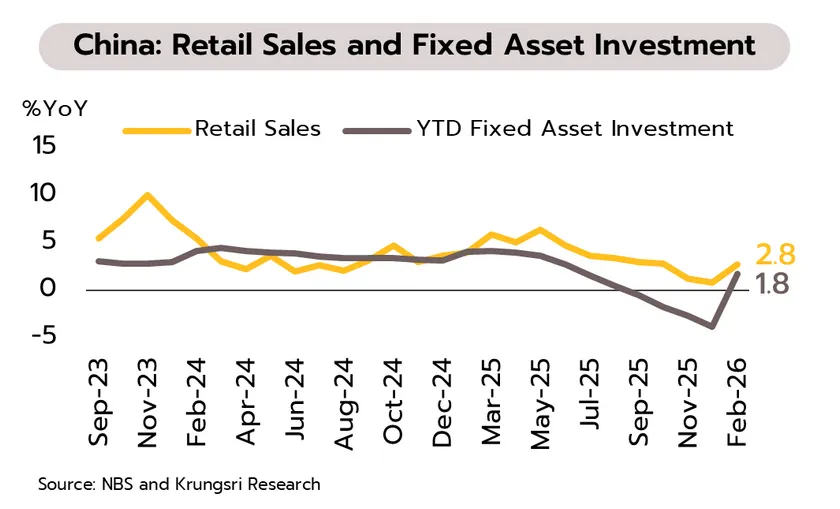
China stimulus is key to propping up the economy. Despite a boost from the Chinese New Year, domestic consumption remains fundamentally weak, partly due to the persistent property crisis. Indeed, home prices have continued to fall for four years. Looking ahead, hope for economic turnaround lies in policies, including trade-in subsidies, income security, social protection, and infrastructure investment (+11.4% YoY during Jan-Feb).

Weekly Economic Review


Thailand


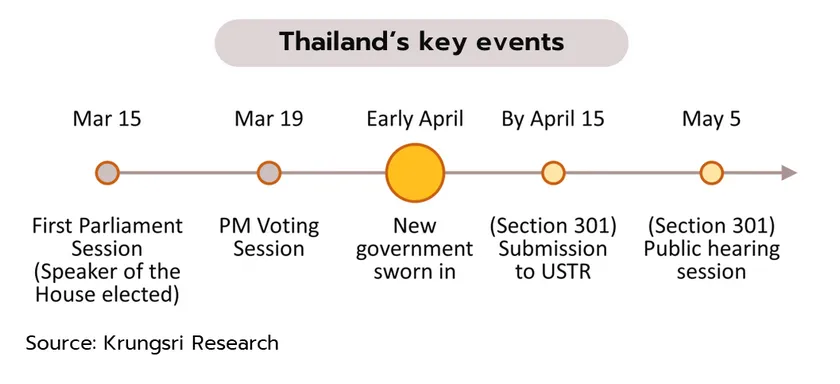
On 19 March, the House of Representatives elected Anutin Charnvirakul of the Bhumjaithai Party as the 32nd Prime Minister with 293/498 votes, following the 15 March appointment of Sophon Saram of the Bhumjaithai Party as House Speaker. 

This result marks the first time in over 15 years that both executive and legislative leaders come from the same party—likely improving policy coordination, legislative passage, and budget execution. However, the incoming administration faces mounting challenges from a global energy crisis, driven by heightened tensions in the Middle East. In response, the government is preparing several measures, including (i) allocating THB 50 bn under the FY2026 budget reallocation bill (ii) accelerating fiscal disbursement and investment by state-owned enterprises (iii) issuing an emergency decree to guarantee loans to the Oil Fuel Fund of no less than THB 40 bn and (iv) considering reductions in excise taxes on fuel, if necessary. On trade negotiations with the U.S., the new government must submit a written document to the Office of the United States Trade Representative (USTR) by 15 April. It must also file a petition to participate in a public hearing scheduled for 5 May in Washington, D.C., after which an additional seven-day window will be provided to submit rebuttal comments. 
 
Weekly Economic Review


Announced :24 March 2026
Back
Press keyword to search