
Global and Thai Economy
IMF cuts global growth forecast and flags downside risks; Thai government rolls out measures to cushion impact of Middle East crisis
Global
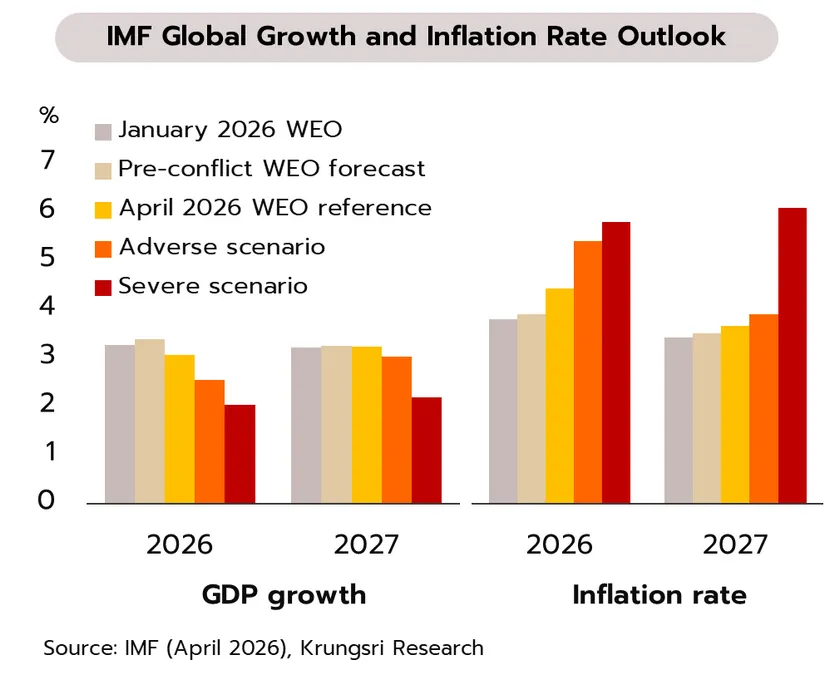
Global: The IMF revises down its global GDP growth forecast for 2026 from 3.3% to 3.1%, based on the assumption that the Iran conflict will remain limited in both duration and intensity and could ease by mid-year. However, if tensions escalate and force further rate hikes, growth could slow to around 2% in 2026–2027. Meanwhile, tensions in the Middle East have shown some signs of easing after Israel and Lebanon reached a temporary 10-day ceasefire agreement.
U.S.: Middle East conflict is adding inflationary pressure and weighing on growth. March inflation accelerated to a 22-month high of 3.3%, while one-year inflation expectations rose to 4.8%. April consumer confidence fell to a record low, and March services PMI contracted for the first time in three years. Despite rising inflation, slowing growth and private credit risks support our view that the Fed will hold rates at 3.50–3.75% on April 29.
China: Growth is expected to slow from 5% YoY in 1Q26 amid multiple pressures including subdued consumption and investment, rising production costs (March PPI rose for the first time in over three years), and increasing vulnerability of exports linked to the oil crisis and slowing global demand.
However, growing AI-related sectors continue to support hi-tech exports (+31.4% YoY in March).
Thailand
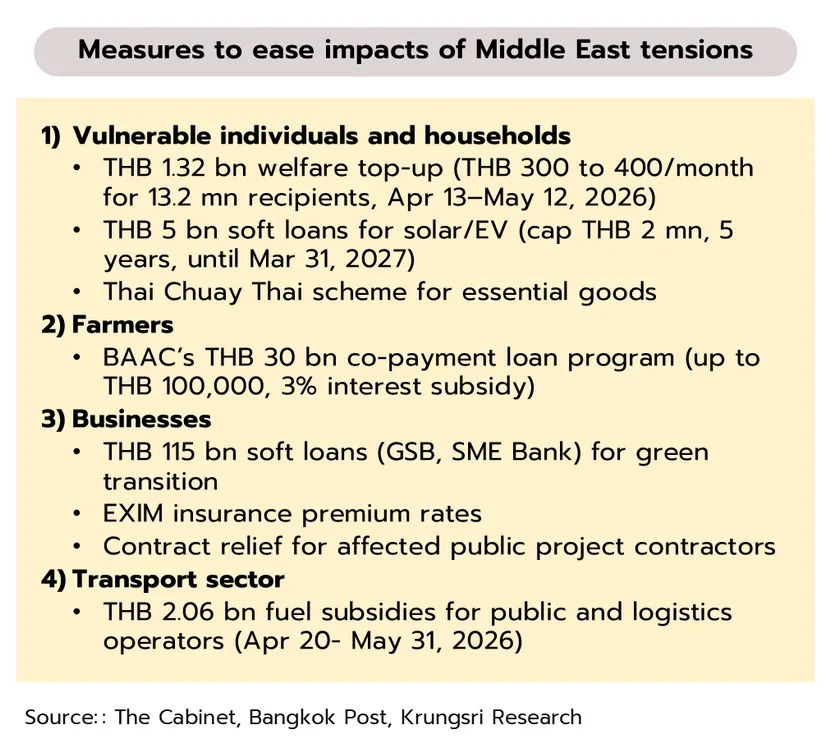
Government introduces measures to mitigate the impact of Middle East tensions though gains remain limited. On April 11, the cabinet approved measures to ease economic risks arising from the war, including cost-of-living relief for vulnerable individuals and households, support for farmers, businesses, and the transport sector, as well as initiatives to promote investment in clean energy.
The latest measures involve government spending of approximately THB 3.64 billion (0.02% of GDP), alongside soft loan programs totaling THB 150 billion (0.78% of GDP). However, targeted measures may need to be further expanded to better support weakening consumption and investment, as reflected in a fall in the Consumer Confidence Index (CCI) to a six-month low in March, and a drop in the Expected Business Sentiment Index (BSI) to a six-year low. Given limited fiscal space and potential risks to the country’s credit rating, effective budget disbursement, reallocation of unutilized funds, and the implementation of non-budgetary measures—such as investment facilitation—will be key to shaping future economic stimulus measures.