
Weekly Economic Review

Weekly Economic Review

19 January 2026

Global and Thai Economy


Japan’s transition underway; China’s monetary easing has limited impact; Thailand increases reliance on monetary policy.   


Global


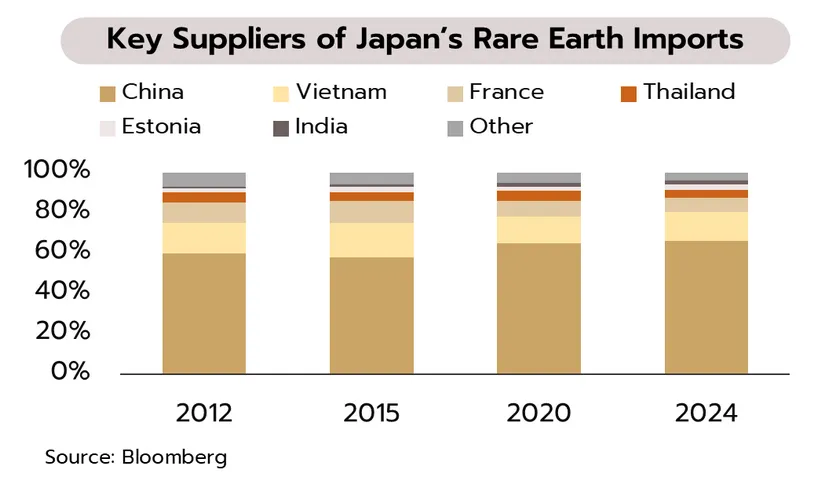
Japan: Political situation is entering a period of transition, after the government announced plans to dissolve the Lower House this week, expected to lead to a general election on February 8. The move seeks to consolidate power and expand Lower House seats, amid strong approval rating of around 70%. However, significant risks remain on both domestic and external fronts: (i) the opposition’s efforts to form new political parties and (ii) rising tensions with China following announcement of export curbs on dual-use goods, including drones, navigation systems, and rare earths. This threatens Japan’s defense, electronics, and automotive sectors, which rely heavily on Chinese inputs, as China supplied around 70% of Japan’s rare-earth imports in 2024.

Weekly Economic Review
 
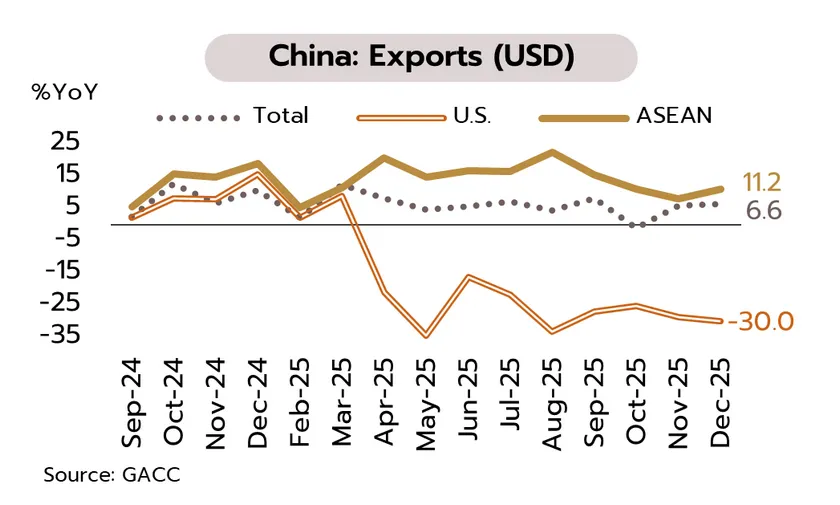
China: Exports grow further despite tariffs, while latest monetary easing may have a limited positive effect. China cut relending rates by 25 bps, effective January 19, and allocated a relending quota of CNY 1 trn specifically for SMEs. We expect the front-loading exports to fade this year, while tariffs on semiconductors and transshipment goods remain a concern. The latest rate cut may improve liquidity for vulnerable sectors, but economic gains may be muted if demand-side momentum remains lacking.

Weekly Economic Review


Thailand


BOT lowers banks’ FIDF contribution to 0.32%, supporting liquidity this year. The Bank of Thailand (BOT) has announced a reduction in the annual contribution rate that financial institutions pay into the Financial Institutions Development Fund (FIDF), lowering it from 0.46% to 0.32%, effective January 1–December 31, 2026. 

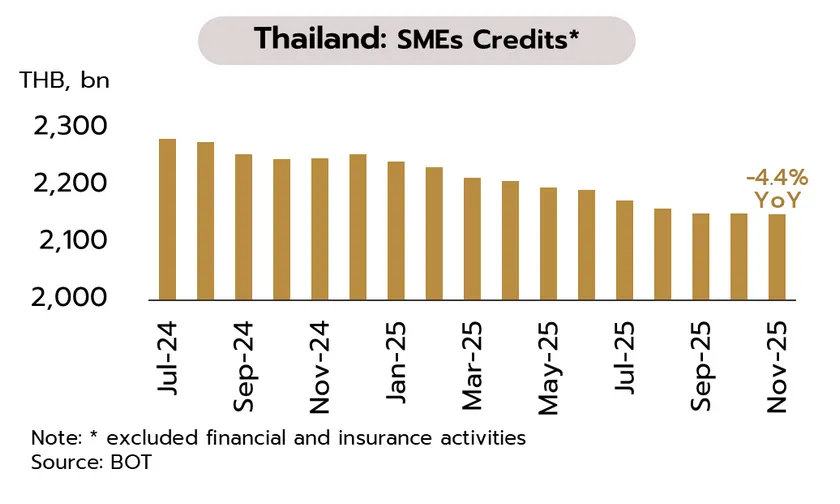
The latest cut in banks’ FIDF contributions signals an easing of financial conditions by directly lowering funding costs for financial institutions, amid fragile domestic demand, constrained fiscal policy, and continued contraction in business lending—especially to SMEs. This move therefore helps to improve the effectiveness of monetary policy in addition to policy rate cuts alone. Krungsri Research continues to expect one additional rate cut to 1.00% within this year, as Thai economic growth remains below potential and inflation pressures are subdued. Going forward, monetary policy is likely to rely more on a hybrid approach, combining the policy interest rate with targeted measures, as well as oversight of specific risk-prone financial activities, such as online gold trading, to contain volatility and excessive speculation while preserving overall financial stability.
 
Weekly Economic Review

 
Announced :20 January 2026
Back
Press keyword to search