
Global and Thai Economy
Middle East tensions weigh on global and Thai economies while China faces limited oil shock impact.
Global
Global: Oil prices remain above USD 100 per barrel although the International Energy Agency (IEA) plans to release a record 400-mn-barrel emergency reserves. However, the measure may offer only short-term relief, as the closure of the Strait of Hormuz has disrupted around 20 mn barrels per day of global crude supply. Iran said the Strait will only be open to non-hostile countries, while the U.S. warned of further strikes on Iranian oil infrastructure if shipping through the Strait is not fully restored.
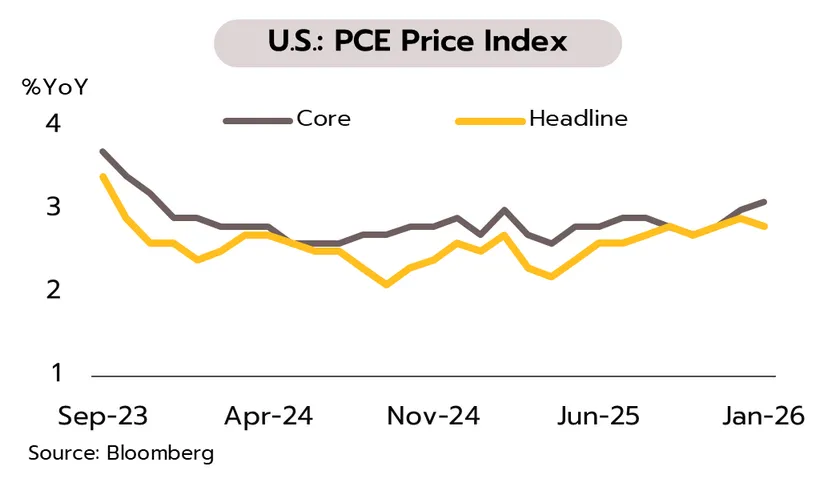
U.S.: 4Q25 GDP grew at an annualized rate of 0.7%, down from 4.4% in 3Q25, due to the impact of the government shutdown. The number points to a soft landing. Meanwhile, January's Core PCE price index hit a 2-year high of 3.1% YoY, exceeding the Fed's 2% target. Together with rising inflation risks amid the Middle East tensions, this may delay the Fed’s potential rate cuts.
China: Impact from the oil crisis is expected to be limited. China holds oil reserves enough to cover around 120 days of imports, while its reliance on oil remains modest (18% of total energy consumption), compared to coal and renewables (70%).
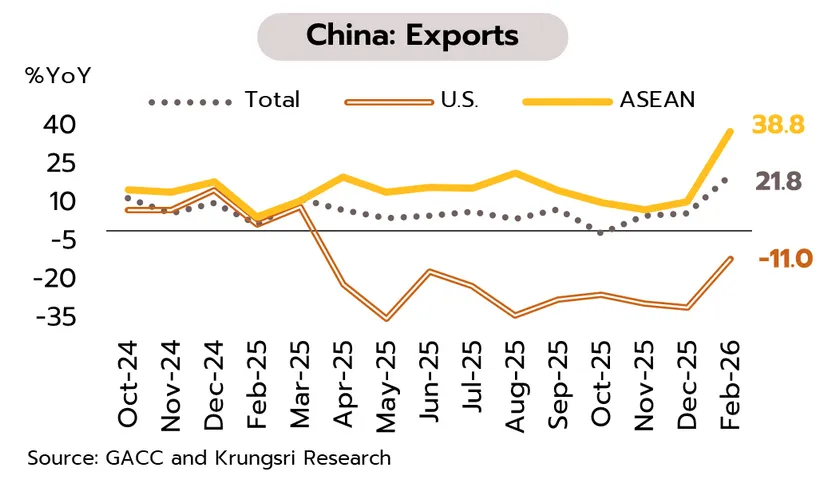
With lower sensitivity to oil prices, manufacturing and exports are likely to maintain their competitiveness at least in the short term. However, a new round of U.S. Section 301 investigations deserves attention.
Thailand
February Consumer Confidence Index (CCI) rose to the highest in nine months at 53.7, up from 52.8 in January. The increases were broad-based, led by improvements in current economic conditions and present consumer confidence, supported by expectations of smooth government policy implementation.
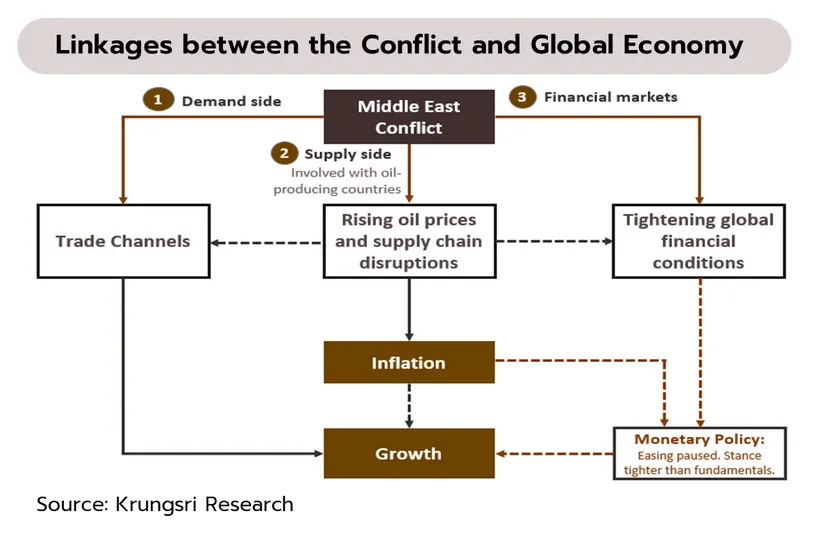
However, the index does not yet reflect the impact of escalating tensions in the Middle East, which may affect the economy through supply side, demand side, and financial markets. Currently, the supply-side effects are visible through higher oil prices, transport, and production costs, alongside disruptions to certain manufacturing and export activities. The tourism sector is also beginning to show the impact due to airspace closures and shutdowns of key aviation and transit hubs. The government is preparing short-term mitigation measures, including diesel price stabilization via the Oil Fuel Fund, diversifying energy sources beyond the Middle East, energy-saving initiatives, and support for key production inputs such as fertilizers. If the Middle East tensions escalate, real economy and financial markets would be significantly impacted whereas the rising inflation could limit monetary easing and pose downside risks to Thailand’s economic growth outlook.