
Global and Thai Economy
Global economy faces ongoing inflation risks in 2H26. Thailand’s growth outlook improves though upside remains limited.
Global
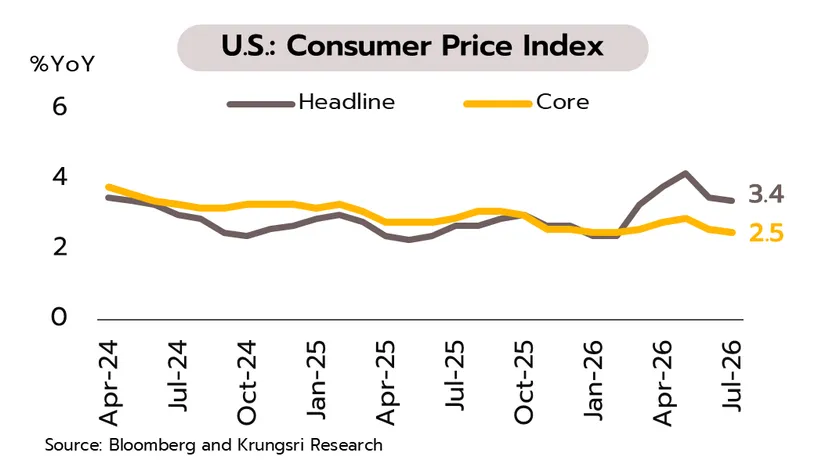
U.S.: Easing inflation and weaker consumption strengthen the case for the Fed to keep rates unchanged. Headline inflation slowed for a second consecutive month to 3.4% YoY in July, while core inflation eased to 2.5%, close to pre-conflict levels. Meanwhile, retail sales fell 0.6% MoM. Softer inflation and consumer spending reduce the likelihood of a Fed rate hike this year. However, a renewed escalation between the US and Iran may once again put upward pressure on inflation and interest rates.
Japan: Growth slowed more sharply than expected amid elevated inflation. 2Q26’s GDP growth weakened more than expected, reflecting softer consumption and business investment. Despite government energy support measures, tight global energy supply, a weaker yen, and wage hikes could keep inflation elevated. Meanwhile, coordinated intervention by Japan and the US may provide only temporary support for the yen.
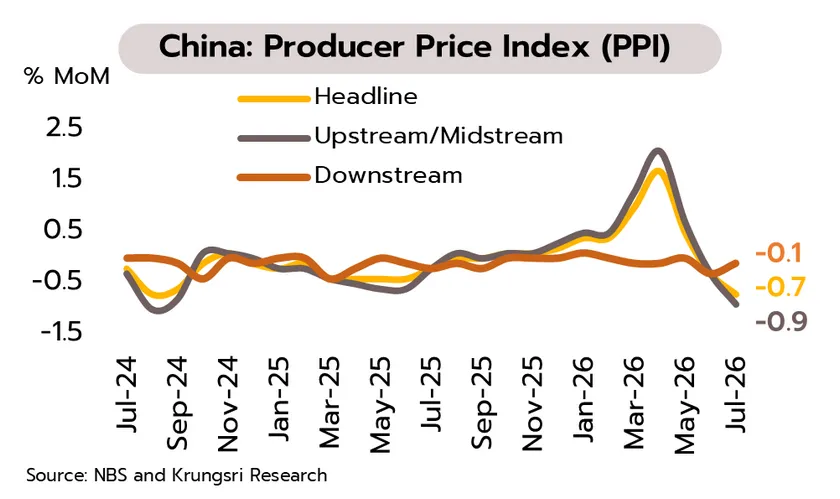
China: Cost pressures begin to ease (figure), but the Middle East conflict remains highly uncertain. If the conflict re-escalates or is prolonged,
oil prices could gradually rise again. Such a situation will place further strain on firms facing already-weak domestic demand and intense price competition. Meanwhile, robust foreign demand for electronics helps alleviate pressures on some certain businesses.
Thailand
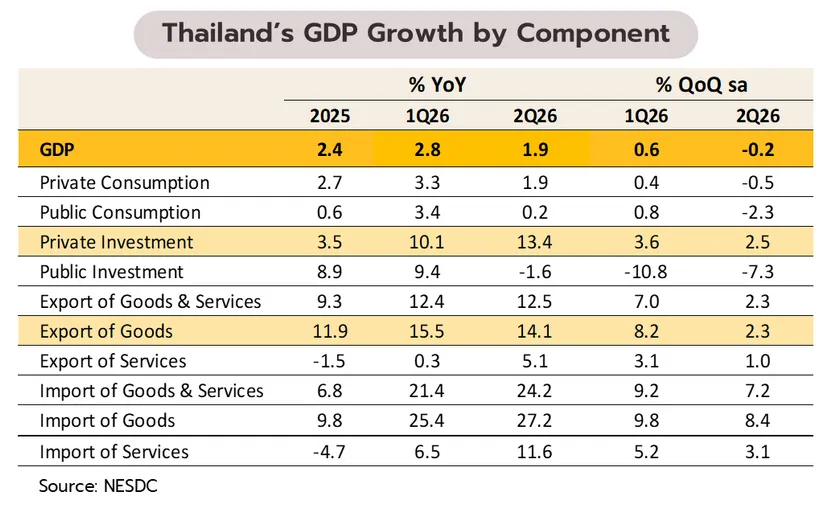
Thailand’s 2Q26 GDP growth decelerated to 1.9% but exceeded expectations. Policy support improves economic momentum, but external risks and El Niño limit growth. The NESDC reported GDP growth slowed down to 1.9% YoY in 2Q26 from 2.8% in 1Q26. The Middle East conflict weighed on private consumption, public spending and tourism while surging imports caused the first current account deficit in 8 quarters. However, 2Q26 GDP growth exceeded Krungsri Research’s expectation (+1.6%) and market consensus (+1.7%). Stronger investment, continued export expansion, and substantial inventory accumulation helped cushion the slowdown in 2Q26. For full-year 2026, the NESDC projects GDP growth at a median of 2.2% (or the range of 2.0–2.5%).
Looking ahead, Thailand’s growth outlook is expected to improve, driven by private investment, export gains from AI-related demand and the global electronics upcycle, and government measures, particularly the energy-transition investment program and the Thailand FastPass scheme. However, the upside remains limited by low capital budget disbursement (typically at only 60-70% within a year), and high import content of investment projects, and external risks including El Niño risks, U.S. tariff measures, and renewed Middle East tensions. Krungsri Research is reviewing 2026 GDP forecast and may raise it modestly from the current 1.9% projection made in May.