
Global and Thai Economy
US-China signal a trade truce; oil prices remain elevated after Trump rejected Iran’s proposal; Thai exports expand, narrowing the trade deficit.
Global
Global: Saudi Arabia’s oil exports, reaching the highest since U.S.-Iran war, provided some relief to oil prices. However, prices remain elevated as fighting in the Middle East continues, while hopes for U.S.-Iran negotiations remain fragile after President Trump rejected Iran’s proposal to reopen the Strait of Hormuz. The prolonged energy supply disruption could therefore pose greater downside risks to the global economy.
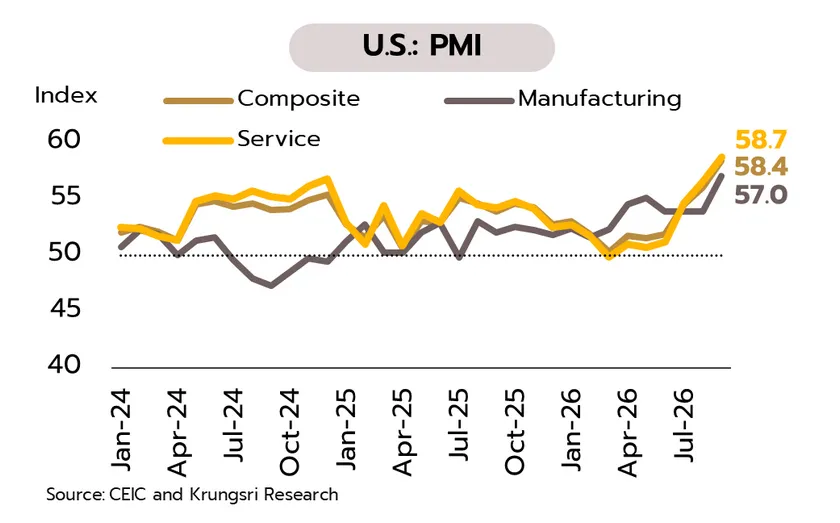
U.S. economy faces pressure from elevated inflation and higher interest rates. High oil prices are adding to inflationary pressures and raising concerns over the interest rate outlook, prompting a sell-off in US Treasuries. The 10-year Treasury yield recently climbed to a nearly 20-year high of 5.2%. Markets are pricing in the possibility of another 1–2 Fed rate hikes by year-end amid resilient economic data, including the strongest Composite PMI in 62 months in September and a two-month low in weekly initial jobless claims.

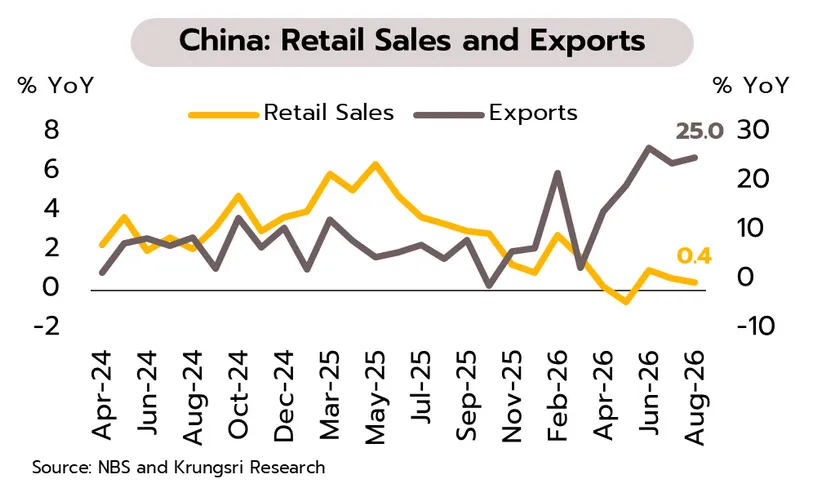
China extends the trade truce and moves to stimulate the domestic economy. It plans to hold cultural and tourism events, alongside offering coupons and subsidies (CNY 310 mn). As for trade, although the U.S. and China have extended the trade truce until January 10, the U.S. may still raise tariffs to levels close to last year’s. The impact, however, is expected to be limited since hi-tech goods--a key export category--are likely to remain tariff-exempt.
Thailand
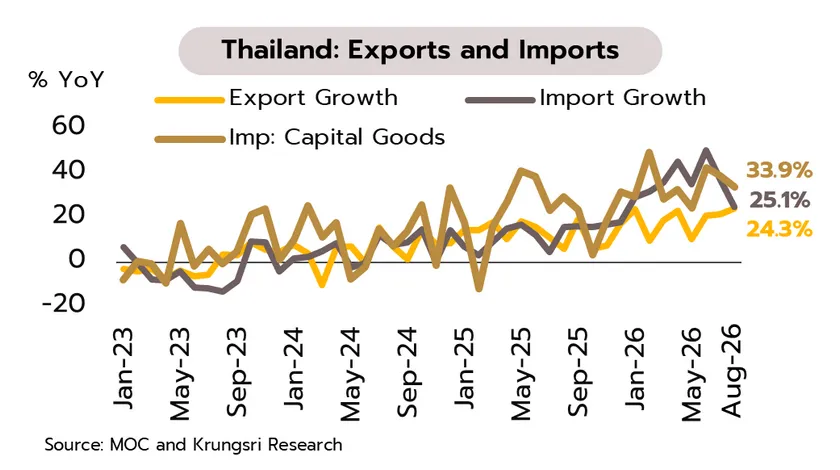
Thai exports continue to benefit from the investment cycle, while imports have moderated, amid the Middle East tension uncertainty. In August, exports rose 24.3% YoY to USD 34.6 bn, marking the 26th consecutive month of growth, up from 21.6% in July. Meanwhile, import growth slowed from 36.7% to 25.1%, reaching USD 37.1 bn, and resulting in a trade deficit of USD 2.5 bn. Over the first eight months of 2026, exports grew 18.9% while imports increased 36.1%, bringing the cumulative trade deficit to USD 37.8 bn.
The latest trade data point to three key developments: (i) exports continue to benefit from the AI and electronics investment cycle; (ii) the monthly trade deficit narrowed to its smallest level in eight months; and (iii) capital goods imports remained robust (+33.9% YoY), led by electrical machinery and equipment (+61.4%) and computers, equipment and components (+57.2%), suggesting continued investment momentum. However, several challenges warrant monitoring. First, export growth has yet to broaden across sectors, with agro-industrial exports contracting for a sixth consecutive month (-1.9%). Second, exports face growing pressure from U.S. tariff measures, particularly the Section 301 investigation into excess capacity. Third, renewed Middle East tensions could lift fuel imports (+42.8% in August), widening the trade deficit and weighing on growth outlook.