
Global and Thai Economy
Despite hopes for U.S.–Iran talks, several factors keep energy prices elevated. Thai economy remains stable but faces increasing external risks.
Global
Global: Although President Trump has suspended attacks on Iran to create room for renewed negotiations, uncertainty remains high. At the same time, disruptions to energy flows through the Strait of Hormuz, war-related damage to oil production capacity, and low global oil inventories could keep energy prices elevated.
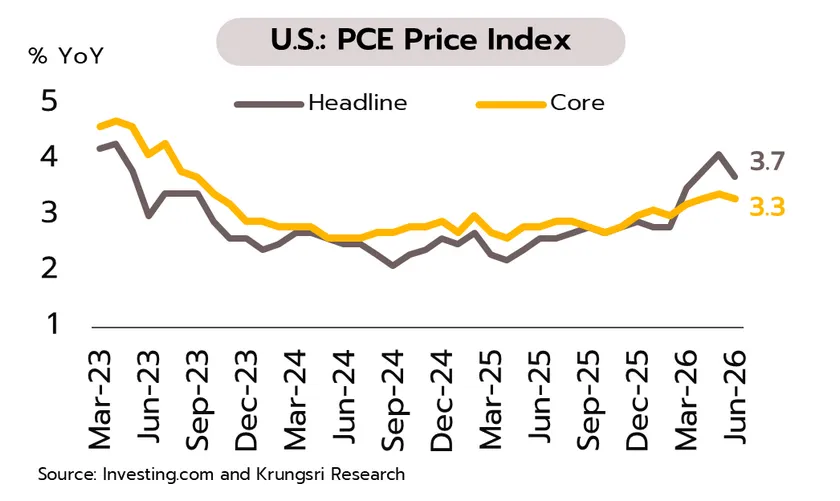
U.S.: The Fed is likely to hold rates steady for the rest of the year. At its July 28–29 meeting, the Fed voted 9–3 to maintain the policy rate. While elevated energy prices continue to pose inflation risks, several factors are weighing on economy. GDP growth slowed to 1.5% in 2Q26 from 2.1% in 1Q26, while labor market conditions and wage growth have moderated. Elevated borrowing costs also point to tightening financial conditions, while PCE inflation began to ease in June. Against this backdrop, Krungsri Research expects the Fed to maintain the policy rate at 3.50–3.75% for the rest of the year.

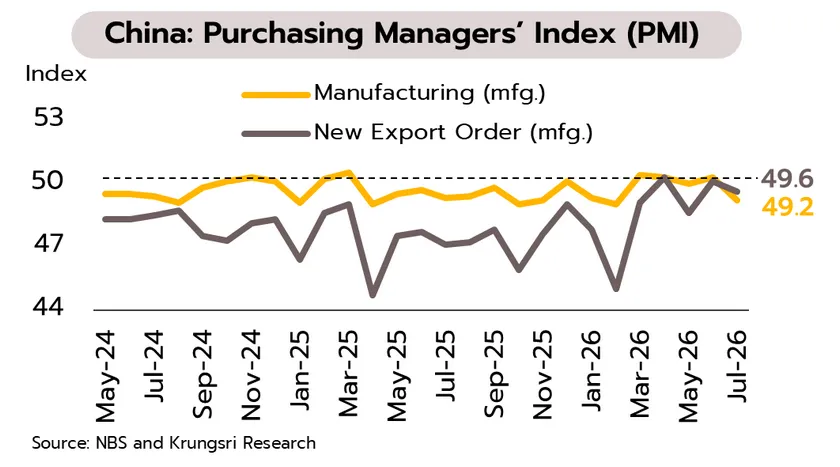
China: Manufacturing fell for the first time in five months in early 3Q26 due to weak demand, sliding new export orders, and seasonal factors. Meanwhile, support measures will focus on accelerating spending via existing budgeted projects instead of new bazooka subsidies. This comes alongside measures to curb overcapacity, including consumption taxes on lithium-ion batteries and energy efficiency standards for solar manufacturing.
Thailand
Domestic economic activity remained broadly stable. Exports accelerated but may slow down in 2H26. In June, the Private Consumption Index gradually improved (PCI +4.9% YoY from +3.5% in May), supported by the Thai Chuay Thai Plus stimulus measure. The Private Investment Index also remained robust (PII +18.1% from +21.7%). Meanwhile, exports excluding gold accelerated (+24.8% from +8.4%). However, foreign tourist arrivals declined modestly (2.1 million from 2.3 million).
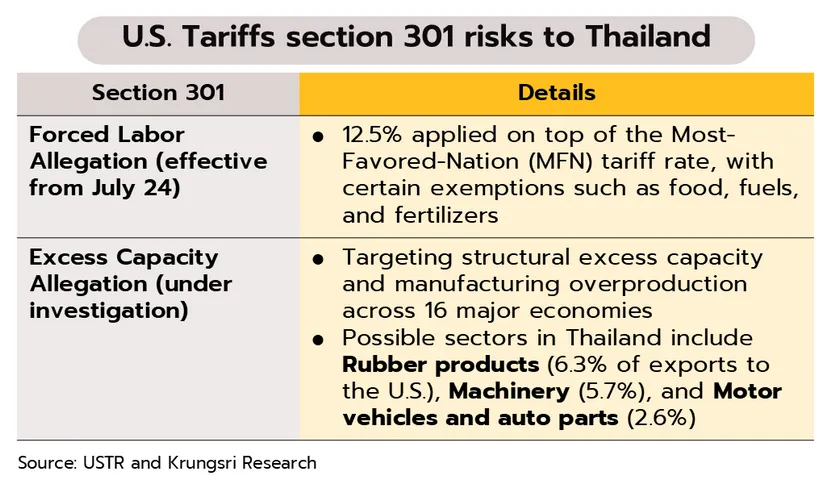
Although exports have benefited from the electronics upcycle and AI-driven growth, the outlook for 2H26 is expected to soften amid rising U.S. tariff risks. Effective July 24, Thailand became subject to a 12.5% Section 301 tariff on imports linked to forced-labor concerns. While the rate is comparable to Vietnam's, it exceeds the 10% rate applied to Malaysia and Indonesia, potentially affecting low-margin export sectors such as food and rubber products. The effective tariff rate will ultimately depend on Thailand's export composition and product-specific exemptions. In addition, ongoing Section 301 investigations into excess production capacity--primarily in rubber, machinery, and motor vehicles and auto parts--could result in further tariff increases, posing downside risks to Thailand's exports, manufacturing sector, and supply chains.