
Global and Thai Economy
Hormuz tensions persist as Iran tightens conditions for reopening the strait. Thailand’s consumption improves but momentum is uncertain.
Global
Global: Iran–Oman have agreed on a framework for shipping through the Strait of Hormuz, but energy supply disruptions are likely to persist. as reopening depends on U.S.–Iran negotiations. Risks remain high as Iran considers banning vessels from the U.S., Israel, and other adversarial countries from transiting the strait, potentially keeping energy prices elevated.
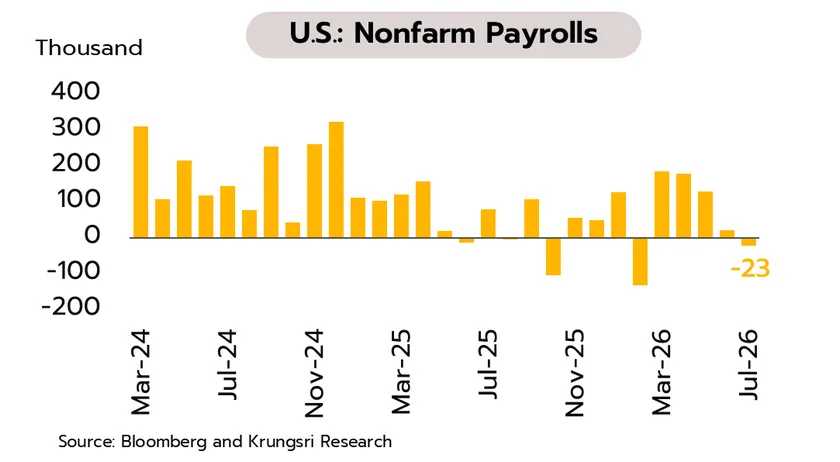
U.S.: Weaker-than-expected labor market conditions reduce the likelihood of Fed’s rate hikes. Nonfarm payrolls fell by 23,000 in July, contrary to expectations for an increase of 88,000. Meanwhile, hourly earnings growth slowed to 3.2% YoY from 3.4%, below the 3.5% expected. Despite inflation remaining above the 2% target, softer employment and wages should ease demand-pull inflationary pressures, supporting the Fed’s decision to maintain policy rates at 3.50–3.75% through this year.
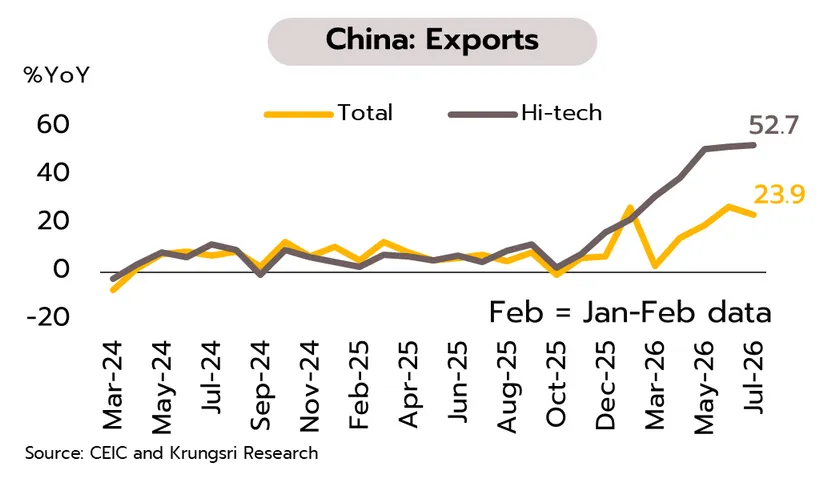
China: Exports remain a key growth driver amid weak domestic demand (figure), led by hi-tech goods exports growing over 50% YoY for three consecutive months).
Meanwhile, the U.S.-China trade war is expected to continue but be contained. The average tariff may rise but is unlikely to exceed the level both sides agreed on. Moreover, controls on hi-tech and military-related exports will still be imposed to maintain their leverage over each other, whether for symbolic or practical outcomes.
Thailand
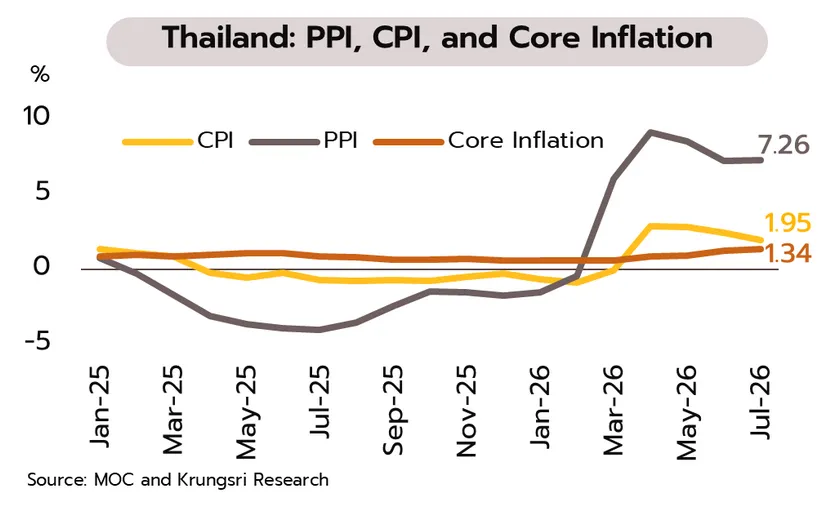
Thailand’s economy in 3Q26 has been supported by stimulus measures, but the outlook remains uncertain. As of end-July, the Thai Chuay Thai Plus measure had generated total spending of THB 86.4 billion, comprising THB 49.6 billion in government co-payments and THB 36.8 billion from participants. This measure would support consumption until the end of 3Q26. Meanwhile, headline inflation eased to 1.95% YoY in July from 2.42% in June, but fuel prices remained elevated and broad-based increases in prepared food prices pushed core inflation up to 1.34% from 1.23%.
Despite firmer spending and easing headline inflation in 3Q26, economic momentum faces uncertainty ahead. First, the stimulus may fade. In 4Q26, although the Thai Travel Thai Plus scheme could support spending, its budget of only THB 1.75-2.0 billion is substantially smaller than the THB 120 billion Thai Chuay Thai Plus measure. Second, medium- to long-term policy support remains uncertain, particularly the THB 200 billion energy transition investment program, with implementation details and disbursement pace still unclear. Third, inflationary pressures remain as elevated producer costs are likely to pass through to consumers, with the Producer Price Index (PPI) increasing 7.26% YoY in July and core inflation continuing to rise, potentially weighing on household purchasing power going forward.