
Global and Thai Economy
Oil prices rose above USD 100 per barrel amid supply disruption risks. Thailand’s inflation is expected at 2.0% this year.
Global
Global: Energy prices remain elevated as supply disruptions intensify. Although President Trump said the war with Iran would end soon after the U.S. midterm elections on November 3, Brent crude remained 8.6% higher than the previous week and above USD 100 per barrel for four consecutive trading days, driven by the temporary shutdown of Saudi Arabia’s East-West Pipeline and Iran’s seizure of strategic areas near the Bab el-Mandeb Strait, raising concerns over prolonged supply disruptions.
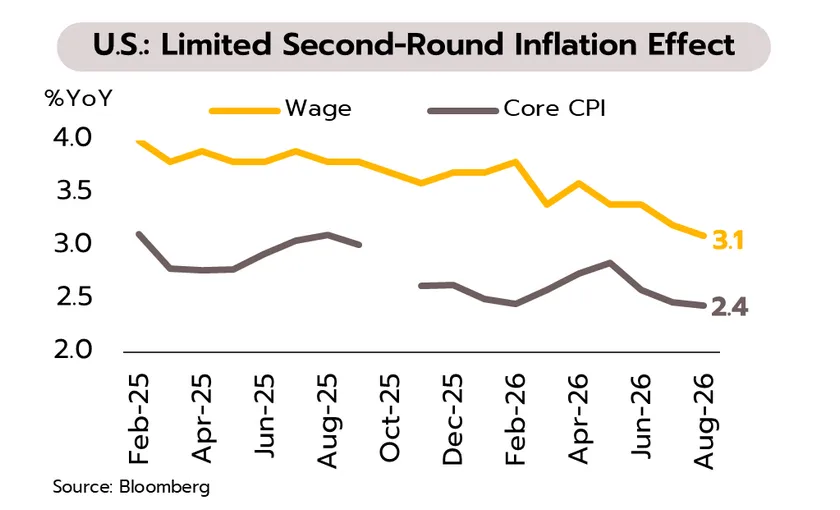
Policy rate: Rising inflation risks are prompting central banks to raise policy rates. The ECB raised its policy rate by 25 bps to 2.50% on September 10, while the BOJ is likely to raise rates by 25 bps to 1.25% on September 17-18 to ease inflationary pressures and curb yen depreciation. In the US, while wage growth has slowed and core inflation remains at a 65-month low, rising oil prices have heightened inflation concerns and increased the likelihood of a Fed rate hike at its September 15-16 meeting.
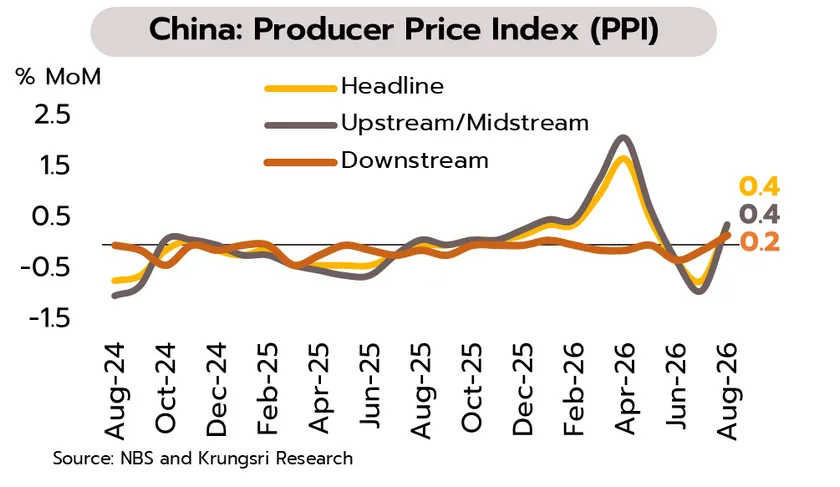
China: External trade underpins the economy. Exports grew by 25% YoY in August, led by hi-tech goods (+57%), while trade surplus in the first eight months reached USD 806 bn (+3.1%). However, a continued high trade surplus could fuel trade tension and protectionism. Meanwhile,
firms continue to face higher costs due to rising energy prices but are still mostly unable to pass on costs to consumers (figure), especially those mainly reliant on domestic markets.
Thailand
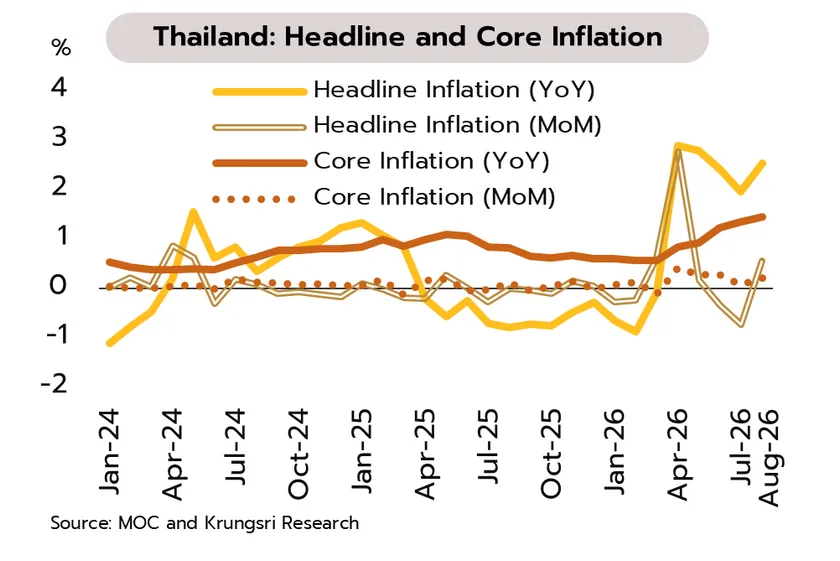
Thai inflation may accelerate amid intensifying Middle East tensions, but the MPC is likely to keep the policy rate unchanged. According to the Ministry of Commerce, headline inflation rose to 2.53% YoY in August from 1.95% in July, mainly driven by higher domestic fuel prices. Meanwhile, core inflation (excluding fresh food and energy) increased to 1.44% from 1.34%, reflecting broad-based and relatively strong increases in prepared food prices, partly due to improving purchasing power following the Thai Chuay Thai Plus stimulus scheme.
The increase in headline inflation in August was primarily driven by energy prices (+8.59% YoY) and public transportation fares (+7.23%). Going forward, escalating Middle East tensions and elevated energy prices are likely to add further pressure on inflation. Full-year headline inflation is projected at 2.00%, compared with 1.37% in the first 8 months of the year. The latest data showed that core inflation also edged higher, led by prepared food prices (+3.72%). Looking ahead, further pass-through of energy costs to prepared food prices could push core inflation higher. However, weak domestic demand is expected to limit the lift in core inflation. In addition, given subdued and uneven economic growth, monetary policy is likely to focus on targeted measures rather than broad-based policy. Therefore, despite upward pressure on inflation, Thailand’s policy rate is expected to stay unchanged through the remainder of the year.