
Krungsri Group places importance on managing the relationships between the Bank and/or companies in the Financial Business Group, and vendors of goods and/or services, or “suppliers”, including sustainable supply chain management through establishment of the common standards of fair treatment of suppliers, including service providers, intermediaries, and agents for equality, fairness, and non-discrimination. All suppliers are managed and encouraged to adopt their corporate governance guidelines, while strictly complying with regulatory requirements related to self-governance and responsibly undertaking business by taking social and environmental issues into account.
Sustainable supply chain management promotes business continuity of Krungsri Group toward our set goals. It does not only reduce the risk of business interruption due to economic, social, and environmental impacts but also enhances cost management efficiency. In addition, the cooperation between Krungsri Group and vendors or suppliers in the development and creation of innovative financial products and services helps promote the flexibility of the domestic economy and finance system as well as transparency, thoroughness, and equality—eventually lead to sustainable supply chain management.
Management Approaches
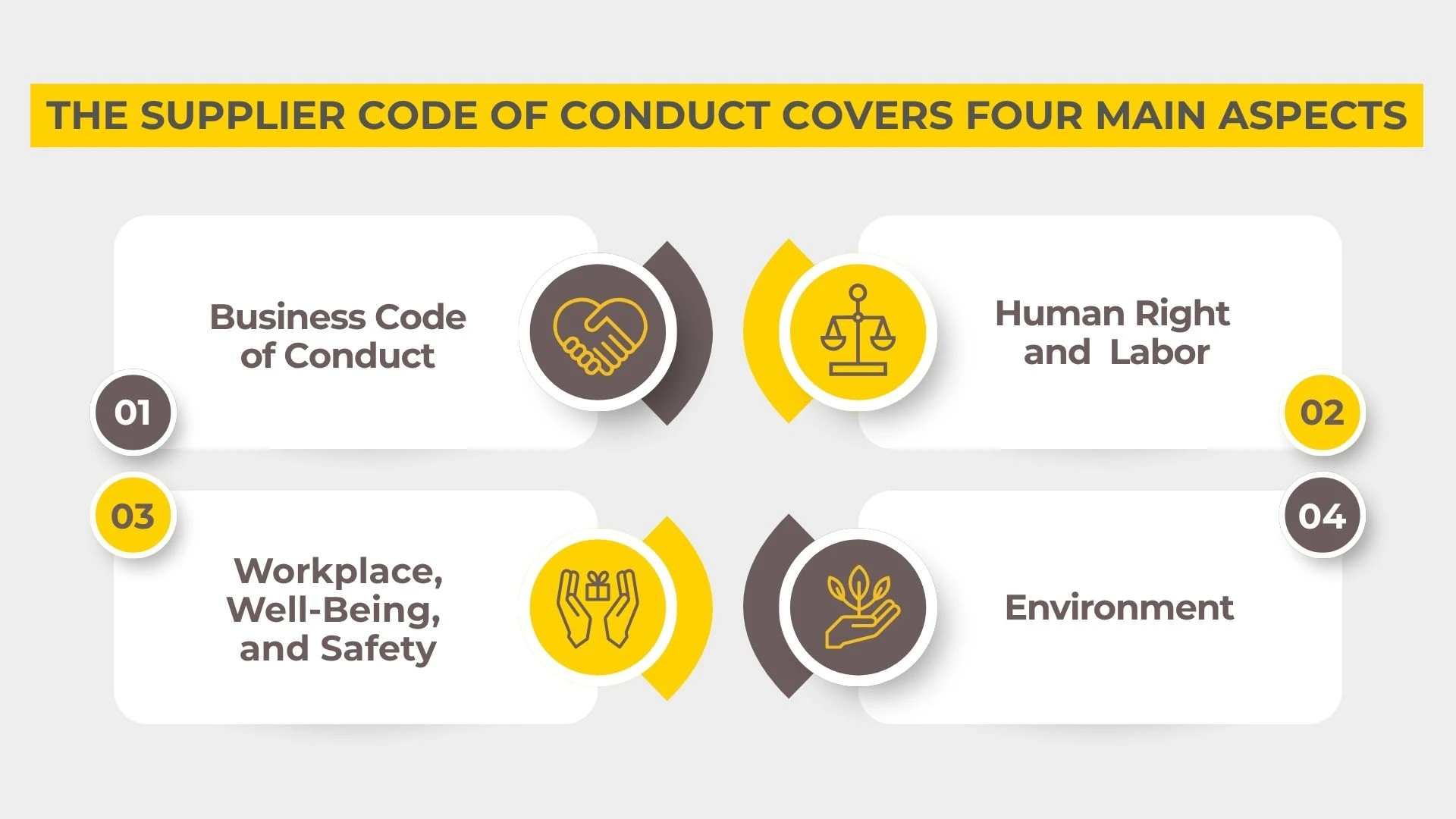
Establish the “Supplier Code of Conduct” as a guideline to encourage all suppliers to adopt corporate governance guidelines and code of conduct standards in the same fashion as Krungsri Group did, particularly regulatory requirements related to their respective corporate governance guidelines, such as laws regarding countering all forms of direct and indirect bribery and corruption, and laws regarding human rights and labor, workplace well-being and safety. They are also encouraged to undertake their business responsibly taking into account impacts on social and environmental aspects. Therefore, Krungsri and companies in the Financial Business Group, as well as suppliers, can sustainably thrive together. The “Supplier Code of Conduct” is subject to review every two years to ensure alignment with the best practices domestically and internationally
In this regard, Krungsri Group communicated with all suppliers about the “Supplier Code of Conduct” through our website (www.krungsri.com), including notifying them about the statements on integrity in operations, the Spirit and The Letter, Environmental Disclosure Statement, and Human Rights Disclosure Statement, as well as social and environmental responsibility with active vendors through e-mail continuously. This is to encourage all suppliers to adhere to the same practices as Krungsri Group.
Establish the “Policy for Supplier Relationships” as a guideline to promote governance and ensure that they are treated and managed prudently, consistently, and in compliance with relevant laws and Krungsri Group’s internal policies. The Policy helps foster relationships between Krungsri Group and suppliers so that business activities can be carried out efficiently, fairly, and sustainably, while considering impacts on society, the environment, biodiversity, and climate change.
Formulate supply chain management strategies, with sub-strategies including increasing productivity and efficiency strategies to align with the Bank's Medium-Term Business Plan. The supply chain management strategies consist of:
Supplier management:Conduct procurement activities fairly, transparently, and with reduced operational risks.
Cost management: Implement appropriate supplier management practices in both concentrated and competitive markets, including outsourcing services, centralized procurement, and strategic sourcing alternatives. This approach aims to ensure that both the Krungsri Group and its suppliers achieve fair and equitable mutual benefits.
Use of technology for procurement activities: Develop tools or software to support procurement activities, such as an electronic bidding system (Electronic Tools), and apply AI in the procurement process and supplier identity verification, etc.
Supply Chain Management Strategy
PDF
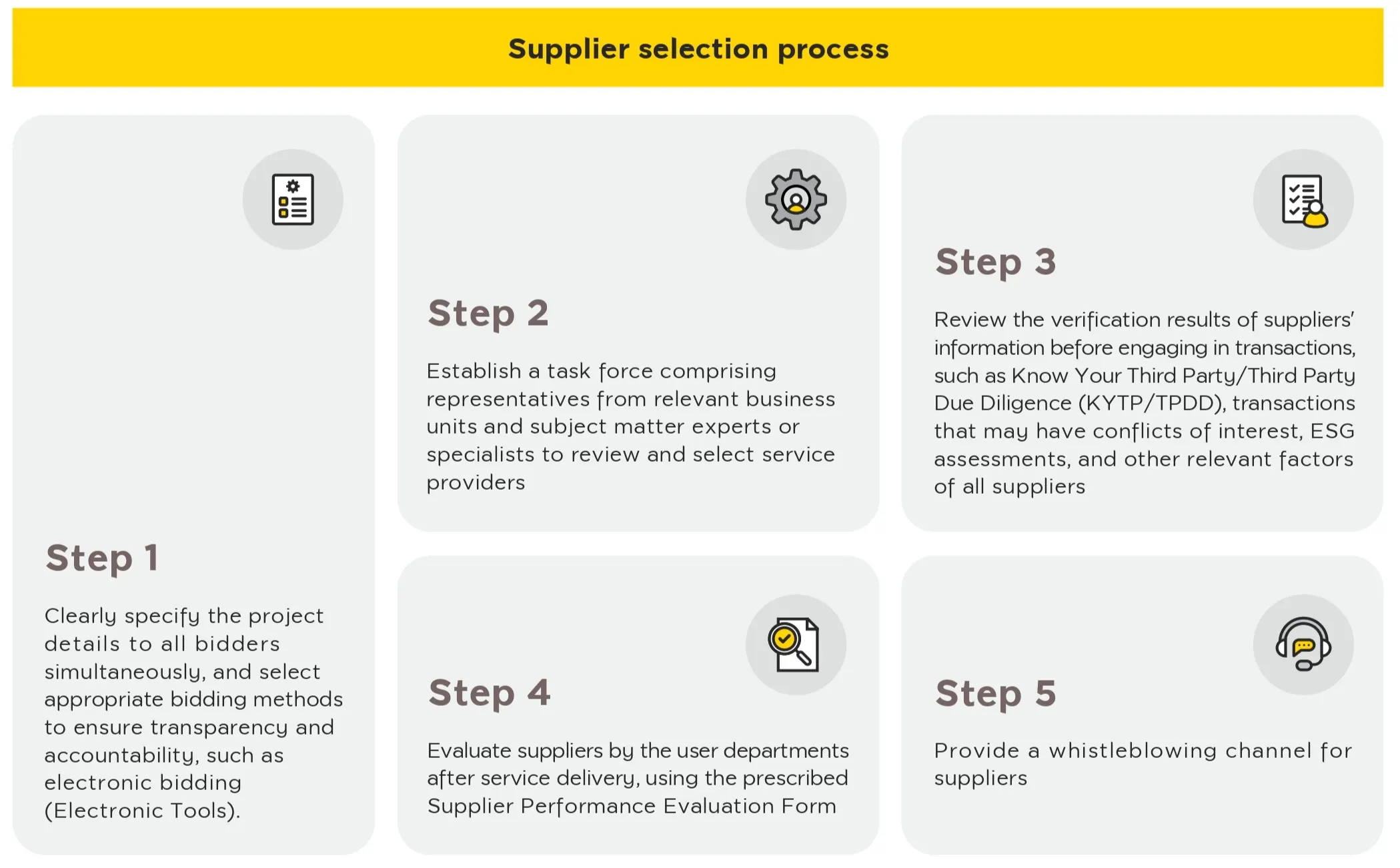
Stipulate “a fair supplier selection process” with a focus on conducting procurement activities with honesty, transparency, fairness, accountability, and auditability, in accordance with good corporate governance principles and best practices, by promoting and providing equal opportunities to all partners in conducting business with Krungsri Group. This also included small enterprises, community enterprises, and businesses owned by the underprivileged, minority groups, females, and disabled veterans, etc., to compete in offering products and/or services and gain a share of Krungsri Group’s procurement.
Furthermore, the supplier selection process takes into account environmentally responsible procurement to raise standards and reduce adverse social and environmental impacts. In addition, guidelines are established to reinforce strict adherence to prescribed procedures, including:
Establishment of an environmental working group to oversee and monitor operations in alignment with the defined targets.
Establishment of an internal procurement audit team to supervise and ensure strict compliance with procedures, regulations, and relevant criteria.
Provide training sessions on procurement processes for relevant employees to build knowledge, understanding, and awareness of practices aligned with sustainability standards.
Establish appropriate “credit terms” for suppliers, with an average of 45 days, depending on the agreements between Krungsri Group and the suppliers. This also includes establishing practices to stipulate payment terms to suppliers, categorized by the characteristics of products and/or services provided, as follows:
Utility and government agency suppliers: Payment within 15 days
Tourism and commission-based suppliers: Payment within 15 days
The payment period is counted from the date the supplier submits a complete and accurate invoice in accordance with Krungsri Group's requirements. If there are factors preventing payment according to the above terms, the hiring department or accounting staff will notify the supplier of the reasons in advance.
Established the procedure on “Know Your Customer and Customer Due Diligence of the Third Party”, requiring that all suppliers be verified to prevent making transactions involving conflicts of interest. Criteria have been clearly defined such as:
Related Party Transactions (RPT) or working team in procurement process.
Supplier Risk Assessment, or criteria for certain outsourced vendors that could impact business continuity.
Compliance with the Bank's Anti-Money Laundering and Counter Terrorism and Proliferation of Weapon of Mass Destruction Financing (AML/CTPF) policy.
Compliance with the Bank’s Policy and Program for Anti-Bribery and Corruption.
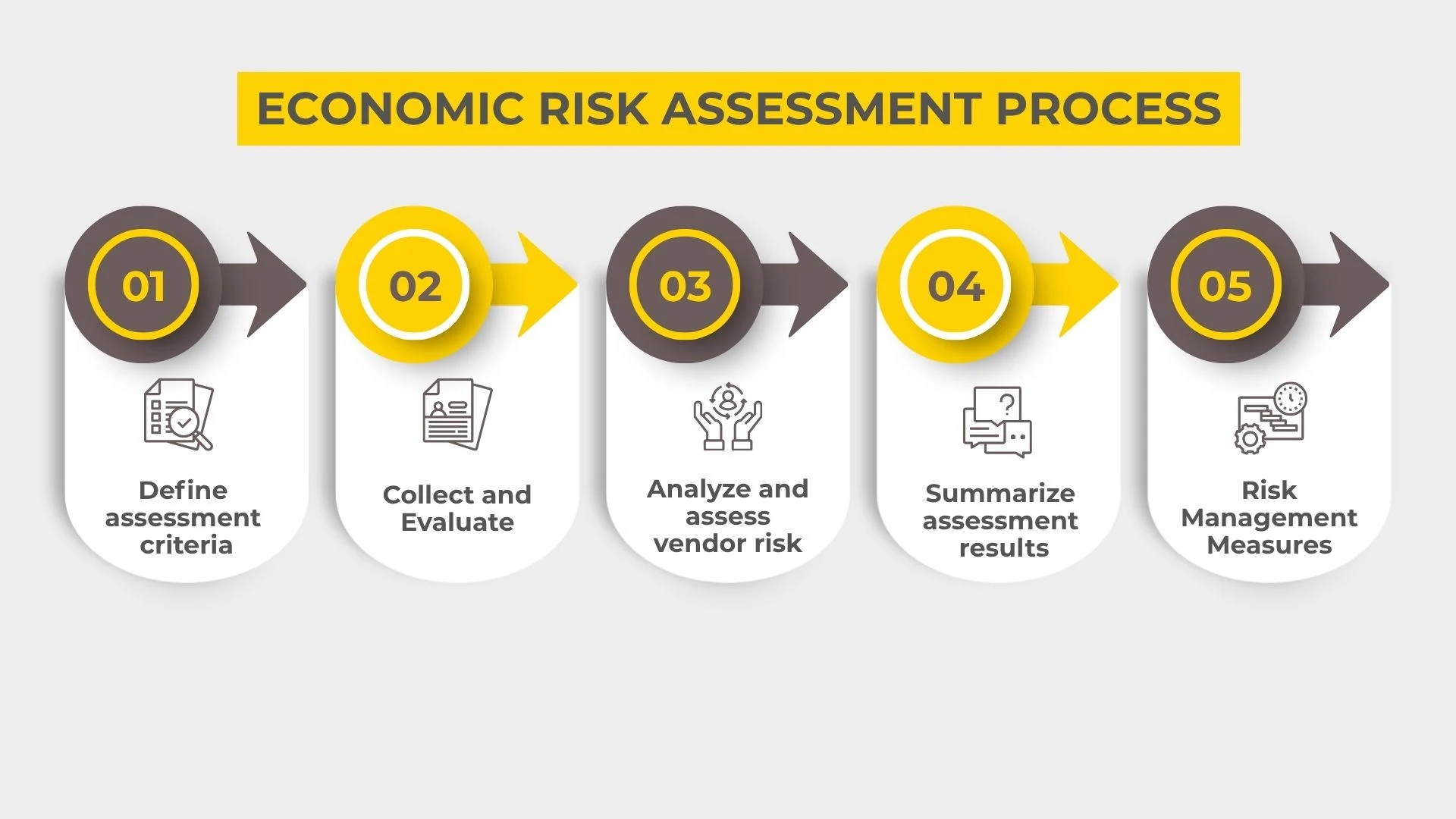
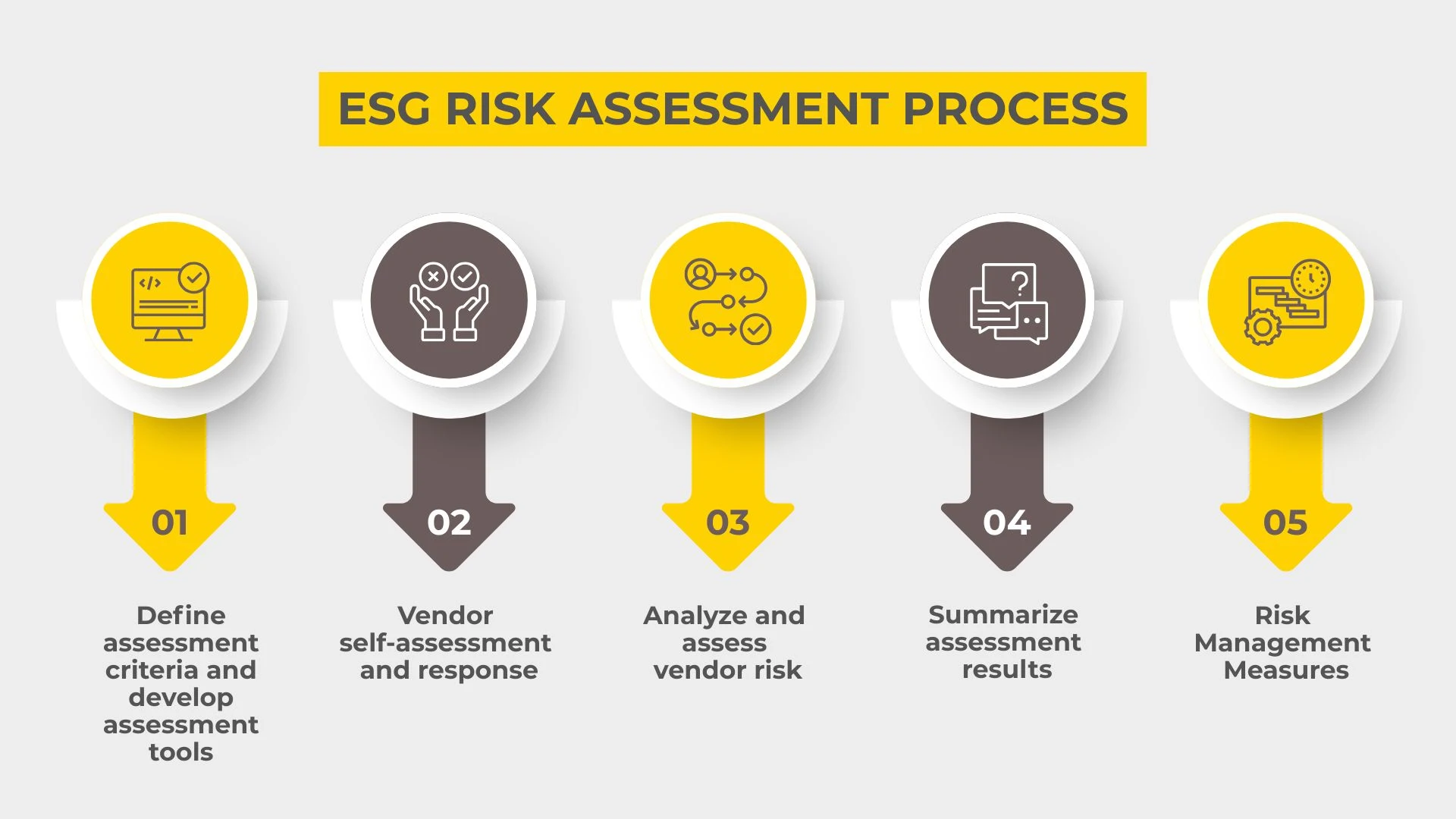
Require that risk assessments be conducted on suppliers, both new and existing, in terms of their economic situation as well as environmental, social and governance (ESG) risks, according to specified evaluation or review criteria and through various channels such as questionnaires, business status verification, and supplier evaluations. Accordingly, risk assessment processes have been established in the following areas:
Formulate agreements to uphold and safeguard the confidentiality and proprietary information of Krungsri Group while Krungsri Group is also obliged to protect suppliers' information as stipulated in confidentiality agreements. The supplier sensitive information was also systematically stored with the access granted to relevant persons only. The data classification level was stipulated to serve as the operating guidelines in alignment with the policies and procedures. Furthermore, notifications regarding personal data protection have been disseminated through email and the website (krungsri.com) to active vendors, seeking their acknowledgment and compliance with the Personal Data Protection Act B.E. 2562 (PDPA).
Conduct “Supplier Classification” to ensure that Krungsri Group can continually deliver customer services by grouping suppliers as follows:
Critical vendors refer to vendors or suppliers that are highly crucial to Krungsri Group's operations. There may be one or a limited number of critical vendors or suppliers. Their inability to provide services to the Bank could result in significant harm to the Bank's business.
Significant vendors refer to vendors or suppliers involved with specialized products and/or services. The nature of work is complex, and while it is possible to find replacement partners, it may take time to procure them. Therefore, this could impact business operations.
General vendors refer to common vendors or suppliers. If they are unable to offer services to the Bank, it will not result in any harm to the Bank's business.
Communicate to suppliers about the Policy and Program for Anti-Bribery and Corruption, alongside the Krungsri Group’s No Gift Policy, as well as participating in the Thai Private Sector Collective Action Against Corruption (CAC Recertification), as well as invite vendors or suppliers to join such anti-corruption organization. This reflects the Krungsri Group’s commitment to conducting business with good governance, transparency, and accountability.