Introduction
In an era where the world faces new and complex challenges, advanced technologies have become essential in enhancing human convenience and enabling people to better navigate problems in daily life, at work, and across broader societal contexts. These technologies also play a crucial role in driving economic growth. As we approach 2026, Krungsri Research identifies four major groups of emerging technologies worth watching: 1) mobile networks that deliver faster and more secure connectivity; 2) next-generation artificial intelligence (AI) capable of more sophisticated learning and decision-making; 3) biotechnology innovations that can significantly improve human health; and 4) sustainability and clean-energy technologies that support a more livable and resilient world.
These technologies have the potential to shape the future direction of our world and influence everyone in society. It is therefore important to monitor these trends, understand their practical applications, and recognize potential impacts. Doing so will enable us to fully harness their benefits while remaining prepared for any challenges that may arise.
Mobile Network Technology
1. 6G Networks: The Technology of the Future
The Evolution of Mobile Networks
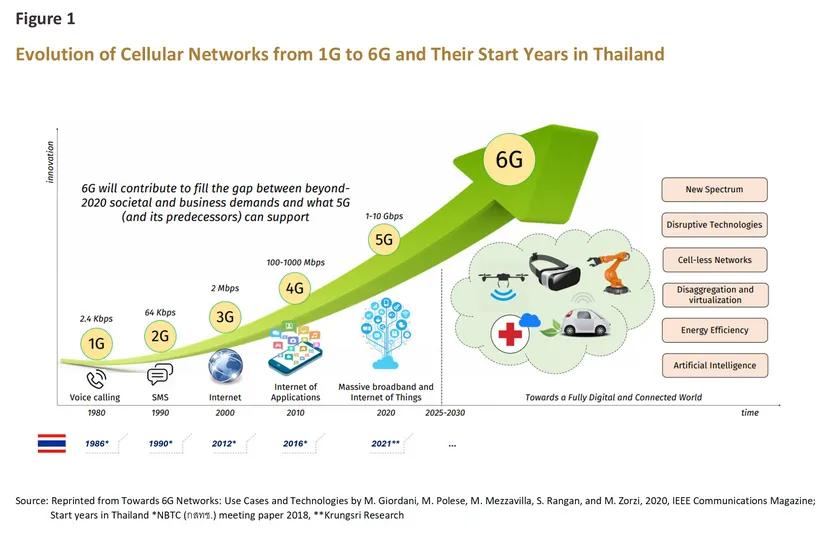
In an era where communication networks play a central role in advancing industries and transforming people’s lifestyles, the evolution of each network generation, or “G,” is far more than a simple technological upgrade. Each generation has reshaped the way humans communicate. Thailand’s journey began with 1G (First Generation) around 1986, marking the start of mobile phones, which supported only voice calls. This progressed to 2G (Second Generation) in 1990, when digital technology enabled short text messaging. The arrival of 3G (Third Generation) in 2012 ushered in the smartphone era, followed by 4G (Fourth Generation) in 2016, which supported an explosion of mobile applications and multimedia data transmitted over mobile networks. Most recently, 5G (Fifth Generation) in 2021 fully enabled the Internet of Things (IoT), making technologies such as smart cities and autonomous vehicles no longer mere concepts but emerging realities.
The next stage of development, 6G mobile networks, will introduce a new paradigm of wireless communication, offering data transmission rates up to 50 times higher and speeds 100 times faster than 5G. Currently, 6G remains in the research and development phase, with commercial deployment expected as early as 2028.
1/ According to forecasts by Precedence Research, the global 6G market is projected to grow from USD 8.3 billion in 2025 to USD 57.6 billion in 2034, representing a compound annual growth rate (CAGR) of 24%.
2/
Key Features of 6G
6G technology stands out for being faster, more stable, and more secure compared to 5G. Its main features include:
-
Terahertz (THz) Frequency Band – 6G utilizes the terahertz spectrum, which operates at frequencies above 100 GHz, beyond the current 5G range (24–100 GHz).3/ This allows data transmission speeds of up to 1 terabit per second (Tbps), forming a critical foundation for future communication technologies. Applications could include real-time 3D holographic teleconferencing,4/ providing highly realistic remote meetings, and ultra-responsive online gaming with virtually no lag or interruptions.5/
-
Ultra-low Latency – 6G is expected to achieve latency of just 0.1 milliseconds, ten times lower than 5G’s 1 millisecond. This enables instantaneous data transmission between source and destination, making real-time operations more efficient. Such low latency is particularly suitable for high-precision applications, such as automated manufacturing, autonomous vehicle control, and remote robotic surgery operated by doctors from a distance.6/
-
Enhanced Security with AI and Quantum Encryption – 6G can integrate artificial intelligence (AI) with quantum encryption to protect against cyber threats in real time. AI will detect and block unauthorized access to data, while quantum encryption enhances the security of information transmission, preventing eavesdropping or data theft. This combination allows 6G networks to safeguard sensitive information, providing a highly secure communication channel.7/
-
Sustainability and Energy Efficiency – 6G networks are designed with energy efficiency in mind, from base stations to end-user devices. This allows high-speed connectivity without a proportional increase in energy consumption, directly contributing to long-term reductions in carbon emissions.8/
However, the development and deployment of 6G face several challenges.9/ These include the need for hardware capable of supporting terahertz frequencies, high investment costs for installing base stations and integrating with existing networks, expanding cloud infrastructure to handle increased data volumes, and establishing regulatory frameworks for the new technology.
Next-generation AI technologies
2. Agentic AI: AI That Can Think, Decide, and Act from Start to Finish
AI technology is currently undergoing a transition—from the era of Generative AI (Gen AI), such as ChatGPT, which can answer questions intelligently,
to the era of “Agentic AI,” capable of performing tasks on behalf of humans and managing complex work from start to finish. Agentic AI can plan, analyze, make decisions, and execute tasks independently. It can also learn from outcomes to improve its own performance and even coordinate other AI systems. This allows Agentic AI to handle a wide range of tasks, from scheduling appointments and conducting online transactions to performing advanced research autonomously. This is in contrast to familiar AI chatbots, which require step-by-step human instructions to respond.
Agentic AI relies on the collaboration of
specialized AI agents, which can operate both independently and cooperatively. Examples include 1) Multimodal AI, capable of understanding and analyzing multiple forms of data, including human language, images, audio, video, and on-screen content,
and 2) Reasoning AI, which applies logic and problem-solving skills to tackle complex challenges. Together, these AI agents enable Agentic AI to function with greater autonomy and versatility, opening new possibilities for automation and intelligent decision-making.
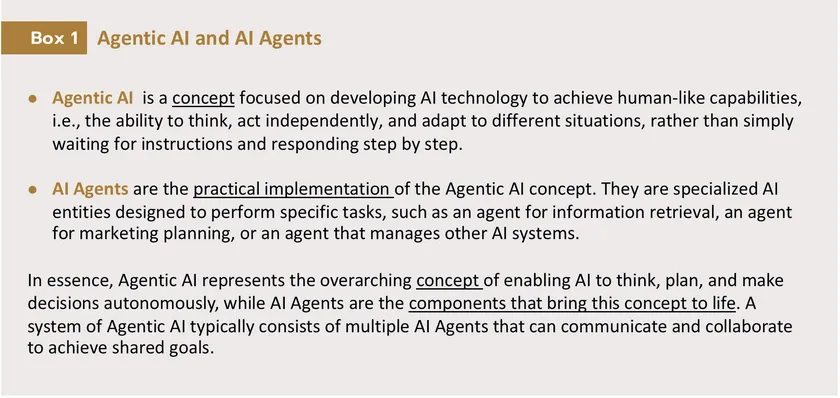
In 2025, leading AI companies are accelerating the development of technologies to fully enter the era of Agentic AI. For example, OpenAI, the developer of ChatGPT, launched “ChatGPT Agent”, an AI assistant capable of performing a wide range of human-like tasks, such as scheduling appointments while preparing key meeting information, summarizing data, and creating presentation materials.10/ In July 2025,11/ Google introduced “Opal”, which allows users to create AI Agents without writing any code. The AI Agents created can operate independently, performing tasks such as gathering information, planning marketing campaigns, and generating content for articles or social media posts.12/ At the same time, AI companies in China are also actively developing Agentic AI to create attention-grabbing innovations. For instance, “Manus” can handle complex tasks such as financial data analysis and website creation without direct human supervision.
Meanwhile, organizations worldwide are beginning to adopt Agentic AI. According to a survey by Capgemini,13/ between 2025 and 2027, more than 82% of organizations plan to use Agentic AI in various areas, including coding, data analysis, and writing or responding to emails.14/ Technavio estimates that the Agentic AI market will experience explosive growth, increasing from USD 7.2 billion in 2025 to USD 27.7 billion in 2029, representing an average annual growth rate (CAGR) of 40%.15/
3. Physical AI: AI with a Tangible Presence Connected to the Real World
AI technology is advancing toward Physical AI, or AI that can perceive, understand, and interact with the external environment. It connects to the human world through humanoid robots—robots with human-like forms—as well as surrounding devices and automation systems. According to Precedence Research, the global Physical AI market is projected to reach USD 67.9 billion by 2034, up from USD 5.1 billion in 2025, representing a compound annual growth rate (CAGR) of 33.3%.16/
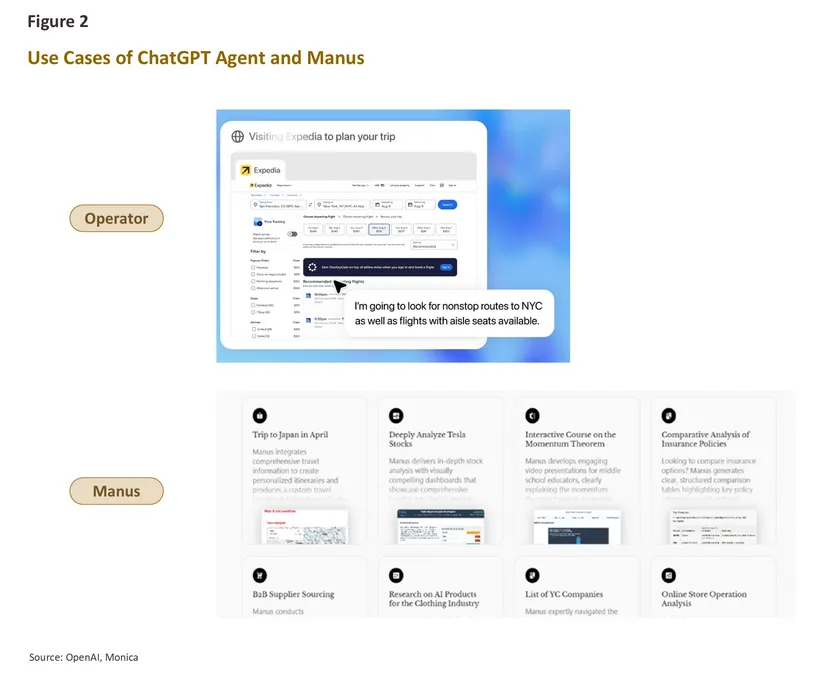
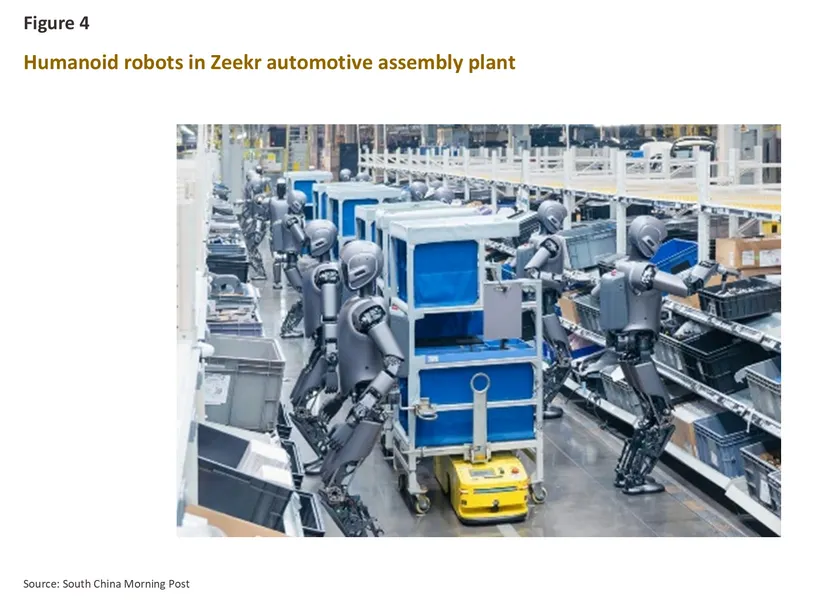
Technology companies are developing AI models to power robots and surrounding devices, enabling them to perform increasingly precise and complex tasks. In early 2025, Google launched “Gemini Robotics”, an AI model designed to assist robots in both industrial and domestic settings—for example, folding paper, packaging snacks, or organizing items. Meanwhile, Ubitech, a leading robotics developer from China, enhanced its DeepSeek-R1 AI model to process environmental data, reason, and collaborate almost like humans. Ubitech has applied multiple robots to work together in the Zeekr automotive factory, handling quality inspection and vehicle assembly processes.
4. SLM: Enabling Specialized AI While Being Environmentally Friendly
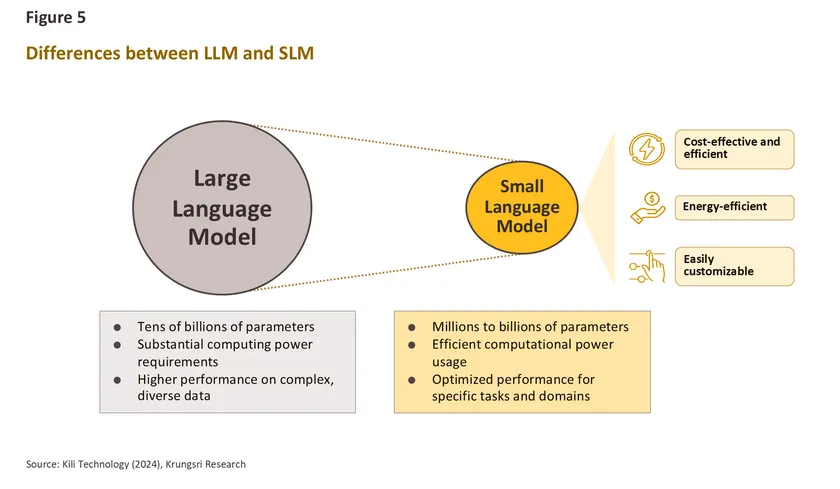
The intelligent chatbots and Generative AI (Gen AI) tools we are familiar with are powered by Large Language Models (LLMs)—AI models trained on massive amounts of data.17/ However, LLMs require substantial computational resources and energy. Small Language Models (SLMs), which use less data and processing power while still delivering precise results, have emerged as a promising alternative for AI development.18/ The global SLM market is projected to grow from USD 0.9 billion in 2025 to USD 5.5 billion by 2032, representing a compound annual growth rate (CAGR) of 28.7%.19/
SLMs offer four key advantages: 1) Lower cost, making them more accessible; 2) Reduced processing requirements, allowing AI to operate on edge devices. Combined with 6G technology, this can enhance innovations such as home automation and smart cities, enabling smarter, real-time responses; 3) Easier customization compared to LLMs, particularly for specialized tasks, enabling AI development with smaller datasets, such as financial, legal, or internal organizational data; and 4) Energy efficiency and environmental friendliness, with a 7-billion-parameter SLM potentially consuming only 5% of the energy required by an LLM.20/
However, as AI becomes increasingly integrated into daily life, it also brings risks that must be managed. These include AI psychosis,21/ where users lose touch with reality while interacting with chatbots; misuse, such as fraudsters using AI to fake faces or voices for identity verification22/ or financial scams; and the reliability of AI-generated outputs. It is therefore essential to use AI mindfully and be aware of potential risks.
Additionally, ethical AI use has become a critical consideration, especially as AI-generated content could be misused. In 2025, the World Economic Forum highlighted “Generative Watermarking” as an emerging technology to watch.23/ This technology embeds watermarks in AI-generated content—such as text, images, or videos—to indicate its source and help reduce the spread of misinformation.
Biotechnologies
5. CRISPR-Cas9: Opening the Door to a New Era of Gene Editing
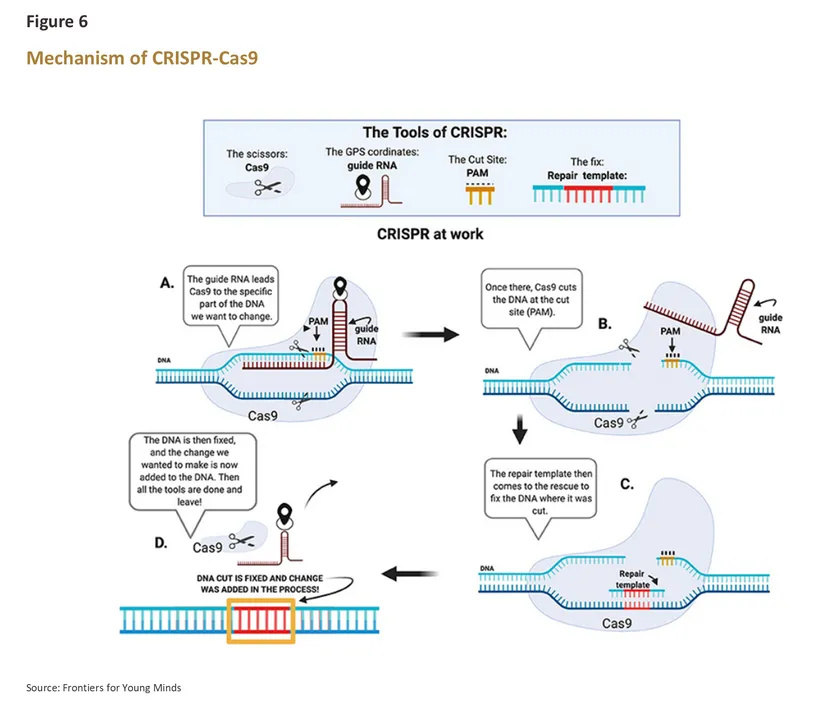
CRISPR-Cas9 is a gene-editing technology designed to correct defective genes. It consists of four main components: 1)
Cas9 – an enzyme that functions like “scissors” to cut the target DNA; 2)
Guide RNA (gRNA) – acts as a “compass” to direct Cas9 to the precise location of the gene to be edited; 3)
PAM Site – a short DNA sequence that serves as a “coordinate marker,” indicating where Cas9 can safely cut; and 4)
Repair Template – a segment of DNA with the desired sequence, inserted after the original DNA is cut.
24/ This technology offers new hope for patients with genetic disorders, enabling the possibility of living normal, healthy lives.
According to Precedence Research, the CRISPR technology market is projected to reach USD 13.39 billion by 2034, up from USD 4.46 billion in 2025, representing a compound annual growth rate (CAGR) of 13%.
25/ Most of
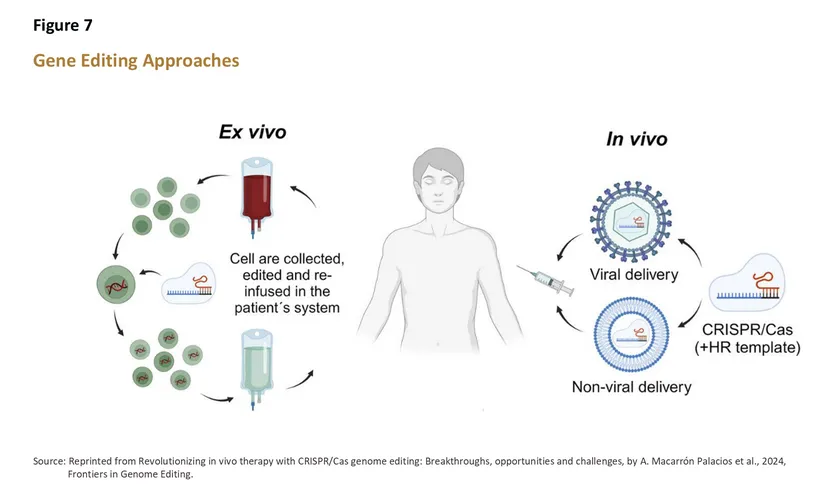
this market value comes from medical applications, which utilize two main gene-editing approaches:
1) Ex-Vivo Editing – stem cells are removed from the human body, edited using CRISPR-Cas9, and then reintroduced. This method is suitable for treating blood-related genetic disorders, such as thalassemia and sickle-cell disease; and
2) In-Vivo Editing – stem cells are edited directly inside the body to treat conditions such as Leber Congenital Amaurosis (congenital blindness), Primary Hyperoxaluria Type 1 (a genetic disorder causing kidney stones), Chronic Hepatitis B Virus, and Familial Hypercholesterolemia (hereditary high cholesterol).
26/ Additionally, CRISPR-Cas9 has shown significant success in addressing the root cause of Down syndrome by removing the extra copy of chromosome 21, leaving the normal two copies.
27/ While clinical application may take more time, this represents a major step toward shifting “treatment” from managing symptoms to “correcting the underlying cause.”
CRISPR-Cas9 can also be applied to cross-species organ transplantation, such as using genetically modified pig organs for human transplants. In early 2025, the U.S. Food and Drug Administration (FDA) approved trials by United Therapeutics and eGenesis to transplant genetically engineered pig kidneys into patients with end-stage renal disease.28/ This milestone highlights the transformative potential of CRISPR-Cas9 as a gateway to regenerative medicine and solutions for the global organ shortage.
6. GLP-1: A New Hope for Brain-related Applications
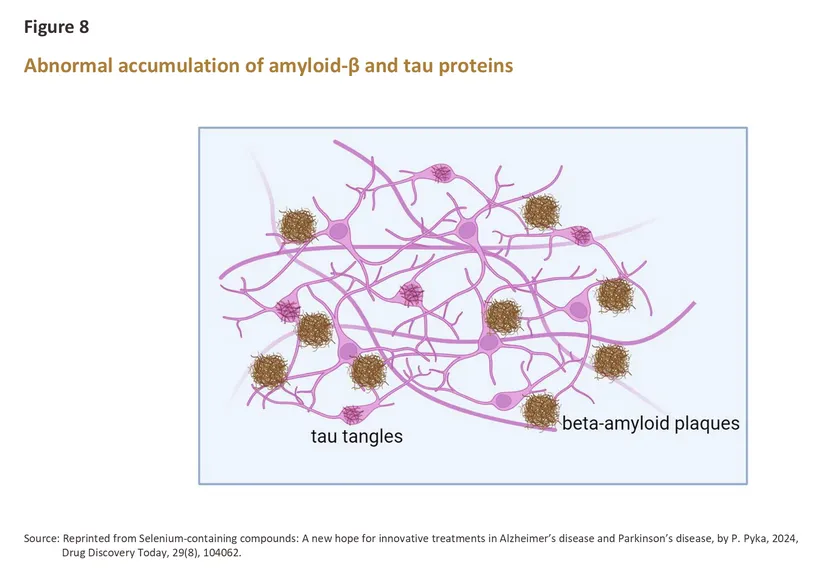
Drugs in the GLP-1 class, or Glucagon-Like Peptide-1 Receptor Agonists, are gaining significant attention in neurology and brain research. These drugs have shown potential in slowing brain degeneration in patients with Parkinson’s disease29/ by reducing inflammation in the central nervous system—which serves as the body’s control center—and increasing dopamine levels in the brain. As a result, they help alleviate symptoms such as slow movement, muscle stiffness, and tremors. GLP-1 drugs may also benefit Alzheimer’s patients30/ by reducing the accumulation of amyloid-β and tau proteins, the primary hallmarks of the disease. They do this by stimulating processes that break down and remove these proteins from the brain, helping restore them to normal levels.31/ Consequently, patients may experience improved quality of life, moving beyond mere symptom management.
Originally, GLP-1 drugs were primarily used to control blood sugar levels in type 2 diabetes. They also help reduce appetite and promote a feeling of fullness. The GLP-1 drug market is expected to expand rapidly. Grand View Research projects that by 2030, the GLP-1 market will reach USD 156.7 billion, up from USD 70.1 billion in 2025, representing a compound annual growth rate (CAGR) of 17.4%.32/
Sustainability and Clean-Energy Technologies
The world is experiencing increasingly severe impacts from climate change. In response, global efforts to tackle this challenge generally fall into two main approaches: (1) Mitigation, such as expanding renewable energy use and capturing carbon dioxide (CO
₂) emissions at their sources; and (2) Adaptation, including the development of climate-control systems that enable people to live more sustainably in a warmer world. Below are some emerging technologies worth following
7. CCUS: A catalyst toward the Net Zero goal
Although natural processes can absorb CO
₂ from the atmosphere, the rapid increase in CO
₂ caused by today’s human activities has exceeded the capacity of these systems. This has led to the development of
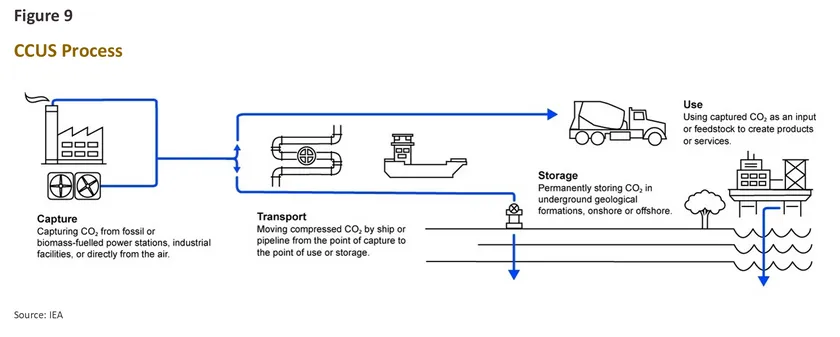
Carbon Capture, Utilization and Storage (CCUS) technology, which captures CO
₂ directly at its source—particularly from heavy industries such as cement, steel, and chemical production. The captured CO
₂ can then be utilized, for example, to produce fuels or construction materials, or stored underground or in depleted oil reservoirs.
The global adoption of CCUS technology continues to grow. According to the IEA, CCUS projects worldwide in 2025 are capable of capturing 50.9 MtCO₂eq per year,33/ with potential to increase to 450.5 MtCO₂eq (a ninefold rise) by 2036.34/ Data from Markets and Markets further indicates that the global CCUS market value is expected to grow at a 25% compound annual growth rate (CAGR), rising from USD 5.82 billion in 2025 to USD 17.75 billion in 2030.35/
In Thailand, CCUS initiatives include PTTEP’s CO₂ storage project at natural gas fields in the Gulf of Thailand,36/ and EGAT’s feasibility studies on converting CO₂ from power plant operations into methanol.37/ These efforts demonstrate the country’s commitment to achieving net zero emissions alongside the global community.
8. Osmotic Power: Generating Endless Electricity from the Ocean
Renewable energy is a key source that helps reduce dependence on fossil fuels, with supply coming from solar, wind, hydropower, geothermal energy, and even the ocean.38/ According to Coherent Market Insights, the market value of ocean power is expected to rise from USD 1.37 billion in 2025 to USD 4.83 billion in 2032, representing an average annual growth rate (CAGR) of 19.7%.39/
One particularly promising form of ocean energy is Osmotic Power, also known as Blue Energy. This technology generates electricity using the natural process of osmosis,40/ which occurs when freshwater and seawater interact across a specially engineered semi-permeable membrane. There are two main methods of generating osmotic power: (1) Pressure Retarded Osmosis (PRO)41/ and (2) Reverse Electrodialysis (RED).42/
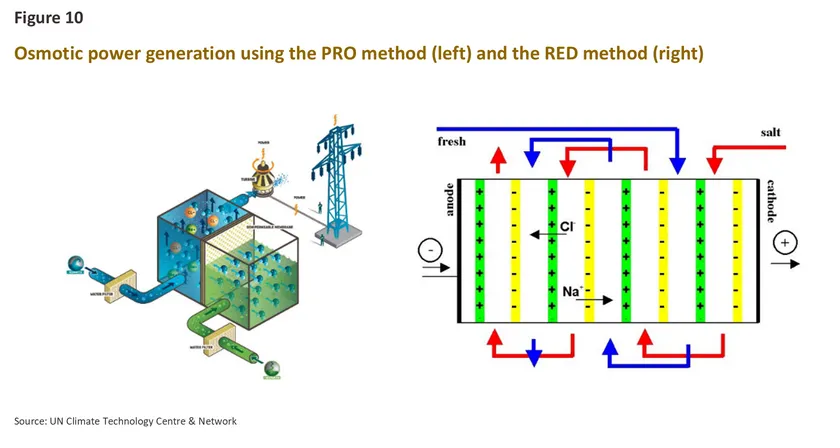
Osmotic power offers significant advantages, including low environmental impact and the ability to generate electricity consistently. This contrasts with other renewable energy sources—particularly solar and wind power—which fluctuate more heavily based on time of day and weather conditions. Osmotic power also has the potential to integrate with water treatment systems by helping to capture contaminants, while serving as a clean energy source for estuaries and coastal areas in the future.
Currently, both Europe and Asia are developing osmotic power projects, ranging from pilot initiatives to early commercial deployment. Notable examples include Sweetch Energy, a French company that launched its first manufacturing plant for osmotic generators in May 2025, and SaltPower, a Danish company that made significant progress in 2024 in developing high-salinity, high-pressure–resistant membranes for PRO-based electricity generation.
9. Elastocalorics: The Future of Heating and Cooling Technology
Elastocalorics, or “heating and cooling technology based on the stretching and compression of materials,” is a solid-state heating and cooling technology that has the potential to replace traditional HVAC systems,43/ which rely on liquid refrigerants. This emerging technology harnesses the elastocaloric effect,44/ in which certain metal wires release heat or absorb heat (producing cooling) when stretched and then returned to their original form.
A key advantage of elastocalorics is its suitability for building temperature control in extreme climates, as it can generate both heating and cooling within a wide temperature range—from 5 to 47.5 degrees Celsius. In addition, although it runs on electricity like conventional air-conditioning systems, it consumes less energy and is more environmentally friendly.45/
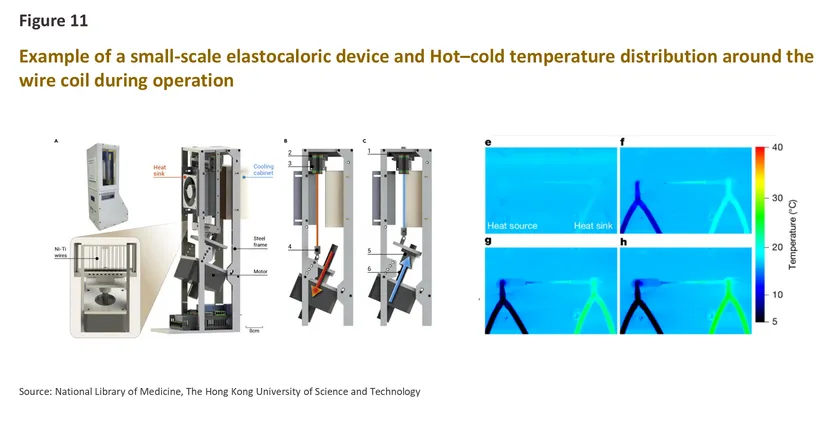
At present, elastocaloric systems are being developed to operate continuously and support larger areas. In early 2025, researchers at the Hong Kong University of Science and Technology (HKUST)46/ successfully developed the world’s first elastocaloric cooling system capable of operating at the kilowatt scale. The system was able to rapidly and steadily reduce the temperature of a 2.7-cubic-meter test house placed outdoors during summer, without releasing greenhouse gases and with low energy consumption. This achievement demonstrates strong potential for future commercial deployment. According to NMSC, the global elastocalorics market is expected to grow from USD 82.2 million in 2025 to USD 356.5 million in 2030, representing a compound annual growth rate (CAGR) of 34.1%.47/
Krungsri Research View
Emerging technologies are accelerating the world’s transition toward a more intelligent and sustainable future. The four major technology groups discussed above will play critical roles in both enhancing people’s quality of life and advancing industrial development.
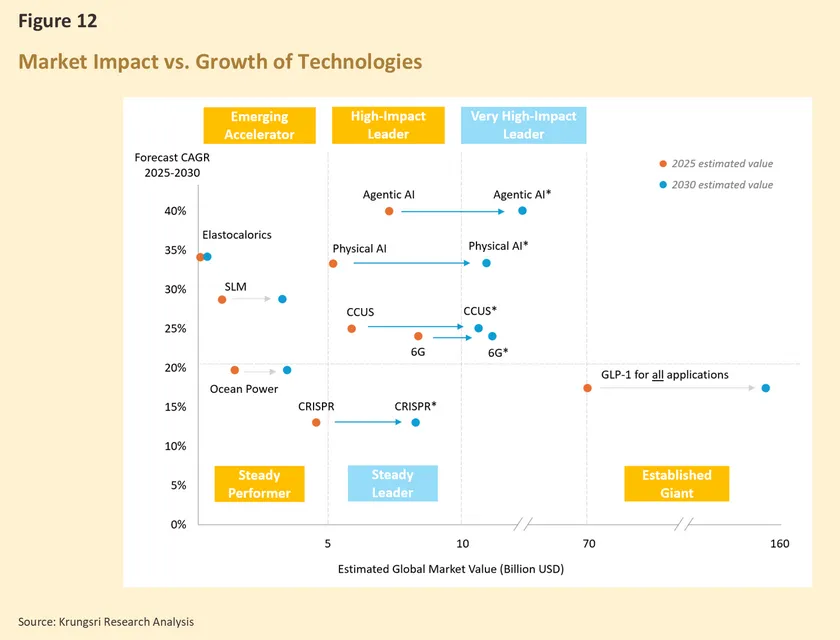
Looking at the overall landscape in 2025, the market size and growth patterns of these nine technologies reflect broader trends in global economic impact. These can be categorized into four groups:
(1) High-Impact Leader, which includes 6G networks, Agentic AI, Physical AI, and CCUS technologies – each currently has a global market size of USD 5–9 billion, with annual growth rates exceeding 20%;
(2) Emerging Accelerator, comprising SLM and Elastocalorics technologies, which also show strong annual growth of more than 20% but currently have relatively small market sizes of less than USD 1 billion;
(3) Established Giant, represented by GLP-1, which already commands a substantial global market value of USD 70 billion and continues to grow robustly at 15–20% per year; and
(4) Steady Performer, which includes CRISPR and Osmotic Power systems, both of which currently have market values below USD 5 billion yet maintaining consistent annual growth rates of 10–20%.
Krungsri Research foresees that over the next five years, technologies in the High-Impact Leader group—namely Agentic AI, Physical AI, CCUS, and 6G networks—will expand their market value by approximately three to five times. Their economic significance will therefore increase substantially, elevating them to the
Very High-Impact Leader category by 2030, with market sizes projected in the range of USD 15–40 billion. Additionally, CRISPR, which enables the correction of genetic abnormalities, is expected to gain wider adoption. As a result, it will shift from the Steady Performer category to the
Steady Leader group. By 2030, the global market value of CRISPR is projected to reach approximately USD 8 billion.
In addition, the actual impact of each technology will depend on another critical factor: the timeline for its wide-scale commercialization. Krungsri Research expects that
over the next one to two years, next-generation AI technologies—Agentic AI, Physical AI, and SLM—will accelerate transformative changes across all business sectors. The banking sector, in particular, will benefit from enhanced operational efficiency and improved customer service through the use of AI for advanced data analytics, risk detection, personalized communication, and the development of new products and services. These shifts will pave the way toward smarter, more responsive banking systems. Beyond the banking industry, other sectors should also seize the opportunity to adopt these technologies by studying and testing their applications early to gain a competitive edge—while ensuring that technological deployment is guided by strong ethical principles.
Looking three to five years ahead, biotechnology innovations that advance medical care—such as CRISPR-Cas9 and GLP-1 for brain-related applications—are expected to become more prominent in the healthcare sector and may influence related industries. These include markets for gene-editing instruments and medical devices, genetic diagnostics and health-screening services, health insurance products that incorporate genetic risk assessments, and personalized medicine.
During the same period,
6G networks and CCUS technologies are likely to enter full commercial deployment. Initial limited-scale testing of 6G is projected to begin in 2028, followed by broader commercial adoption in 2030. As critical infrastructure, 6G could fundamentally change how people work and conduct business—for example, enabling holographic meetings with partners or clients and facilitating virtual-world transactions through ultra-fast data transmission. Meanwhile, sustainability-focused technologies such as CCUS will play an increasingly important role in reducing industrial carbon emissions, serving as a key driver that helps organizations and countries achieve their ESG targets.
Over the next five to ten years, small-scale but transformative technologies such as Osmotic Power, which generates electricity from the ocean, and clean-energy solutions like Elastocalorics are expected to reach their full potential, paving the way for long-term commercial applications.
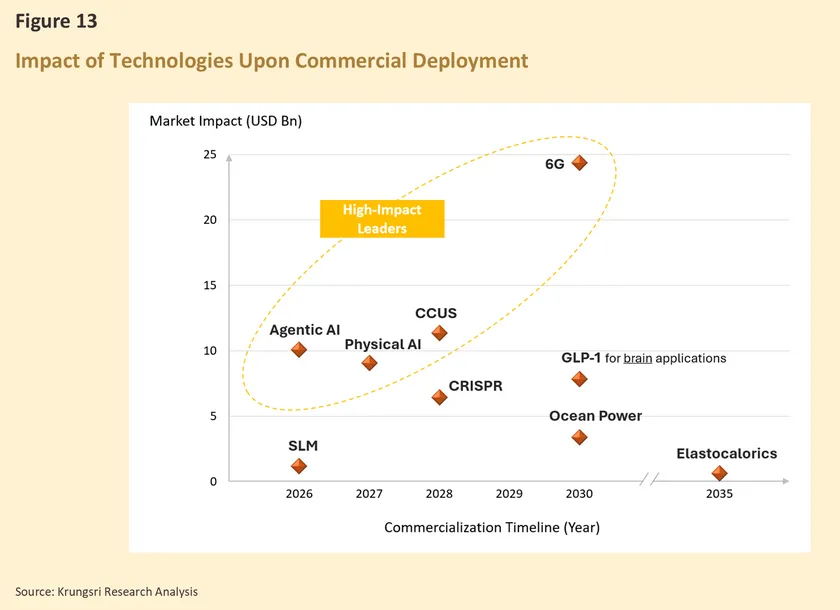
It is clear that, considering both technological impact and growth trends as well as the commercialization timeline, High-Impact Leader technologies remain the “front-runners” with the highest global market value. In particular, next-generation AI technologies are the most advanced in terms of both scale and readiness for adoption, positioning them to become a major driver of economic and social transformation in the near future.
Today, it is essential for all sectors to prepare for the widespread adoption of AI technologies by investing in systems and infrastructure, cultivating AI literacy among personnel while strengthening uniquely human skills such as critical thinking, fostering an organizational culture that embraces innovation, and managing risks to mitigate potential negative impacts. By taking these steps, organizations can fully harness the potential of AI and stay ahead in the transition toward a smarter, more sustainable world.
References
Ali, M. et al. (2025). “Introducing Opal: describe, create, and share your AI mini-apps”. Google Lab. Retrieved Nov17, 2025, from https://developers.googleblog.com/en/introducing-opal/
Biniek, K., et al. (2024). “Global Energy Perspective 2023: CCUS outlook”. McKinsey. Retrieved Oct 29, 2025, from https://www.mckinsey.com/industries/oil-and-gas/our-insights/global-energy-perspective-2023-ccus-outlook
Blackview. (2025). “A look at 6G technology: 6G Meaning, features, benefits, challenges”. Blackview. Retrieved October 24, 2025, from https://www.blackview.hk/blog/tech-news/6g-technology
Chang, Y. (2025). “6G Market 2023-2043: Technology, Trends, Forecasts, Players”. IDTechEx. Retrieved October 21, 2025, from https://www.idtechex.com/en/research-report/6g-market-2023-2043-technology-trends-forecasts-players/911
Chen, Y., et al. (2022). “A compact elastocaloric refrigerator”. National Center for Biotechnology Information. Retrieved Oct 14, 2025, from https://doi.org/10.1016/j.xinn.2022.100205
Climate Technology Centre and Network. (n.d.). “Osmotic Power”. CTCN. Retrieved Oct 7, 2025, from https://www.ctc-n.org/technologies/osmotic-power
DeBiase, D. (2025). “Why Small Language Models Are The Next Big Thing In AI? Retrieved Aug 5, 2025, from https://www.forbes.com/sites/deandebiase/2024/11/25/why-small-language-models-are-the-next-big-thing-in-ai/
Domínguez, F. B. (2025). “Osmotic Power: the next wave of renewable energy”. Earth.Org. Retrieved Oct 8, 2025, from https://earth.org/osmotic-power-the-next-wave-of-renewable-energy/
Du, H. (2022). “The mechanism and efficacy of GLP-1 receptor agonists in the treatment of Alzheimer’s disease”. PMC. Retrieved October 11, 2025, from https://pmc.ncbi.nlm.nih.gov/articles/PMC9714676/#B2
E-Spin. (2025). “Next 6G: Key Features, Use Cases, and Challenges of Tomorrow’s Wireless Revolution”. E-Spin. Retrieved October 22, 2025, from https://www.e-spincorp.com/next-6g-key-features-use-cases/
Fessel, J. (2024). “All GLP-1 Agonists Should, Theoretically, Cure Alzheimer’s Dementia but Dulaglutide Might Be More Effective Than the Others”. MDPI. Retrieved October 11, 2025, from https://www.mdpi.com/2077-0383/13/13/3729
Frontiers. (2021). “CRISPR: A New Way for Scientists to Edit DNA”. Frontiers. Retrieved October 1, 2025, from https://kids.frontiersin.org/articles/10.3389/frym.2021.600133
Galbraith, K. (2017). “Osmotic Power debuts in Norway”. Green Blog. Retrieved Oct 7, 2025, from https://archive.nytimes.com/green.blogs.nytimes.com/2009/11/24/osmotic-power-debuts-in-norway/
Giordani, M., et al. (2020). “Towards 6G Networks: Use Cases and Technologies”. Github. Retrieved October 21, 2025, from https://gmoein.github.io/files/Towards%206G.pdf
Goetzler, W., et al. (2014). “Energy Savings Potential and RD&D Opportunities for Non-Vapor-Compression HVAC Technologies”. U.S. Department of Energy. Retrieved Oct 15, 2025, from https://www.energy.gov/sites/prod/files/2014/03/f12/Non-Vapor%20Compression%20HVAC%20Report.pdf
Grand View Research. (2024). “GLP-1 Receptor Agonist Market (2025 - 2030)”. Grand View Research. Retrieved October 11, 2025, from https://www.grandviewresearch.com/industry-analysis/glp-1-receptor-agonist-market
HKUST. (2025). “HKUST develops world’s first Kilowatt-Scale elastocaloric green cooling device [Press release]”. The Hong Kong University of Science and Technology. Retrieved Oct 15, 2025, from https://hkust.edu.hk/news/hkust-develops-worlds-first-kilowatt-scale-elastocaloric-green-cooling-device
IDTechEx. (2024). “6G: Key Hardware Technologies and Future Development Roadmap”. IDTechEx. Retrieved October 20, 2025, from https://www.idtechex.com/en/research-article/6g-key-hardware-technologies-and-future-development-roadmap/32034
IEA. (n.d.). “Carbon Capture Utilisation and Storage”. IEA. Retrieved Oct 24, 2025, from https://www.iea.org/energy-system/carbon-capture-utilisation-and-storage
Kalinderi, K. (2024). “GLP-1 Receptor Agonists: A New Treatment in Parkinson’s Disease.” MDPI. Retrieved October 10, 2025, from https://www.mdpi.com/1422-0067/25/7/3812
Kili Technology. (2024). “A guide to using small language models for business applications.” Kili. Retrieved December 1, 2025, from https://kili-technology.com/blog/a-guide-to-using-small-language-models
Maad M., Mijwi et al. (2023). “ChatGPT and the Future of Academic Integrity in the Artificial Intelligence Era: A New Frontier”. Al-Salam Journal for Engineering and Technology 2(2):116-127. Retrieved Aug 19, 2025, from https://www.researchgate.net/publication/369977556_ChatGPT_and_the_Future_of_Academic_Integrity_in_the_Artificial_Intelligence_Era_A_New_Frontier
Macarrón Palacios, A. et al. (2024). “Revolutionizing in vivo therapy with CRISPR/Cas genome editing: Breakthroughs, opportunities and challenges.” Frontiers in Genome Editing. Retrieved Dec 1, 2025, from https://pmc.ncbi.nlm.nih.gov/articles/PMC10867117/
Markets and Markets. (2025). “Carbon Capture, Utilization, and Storage Market”. Markets and Markets. Retrieved Oct 29, 2025, from https://www.marketsandmarkets.com/Market-Reports/carbon-capture-utilization-storage-market-151234843.html
Markets and Markets. (2025). “Small Language Model Market”. MarketsandMarkets. Retrieved Jul 22, 2025, from https://www.marketsandmarkets.com/Market-Reports/small-language-model-market-4008452.html
NGThai. (2022). “พลังงานจากมหาสมุทร (Marine Energy)”. National Geographic Thailand. Retrieved Oct 10, 2025, from https://ngthai.com/science/34187/marine-energy/
Nwaehiodo, M. (2025). “Osmotic Power: renewable energy of the future”. What Is Green Living? Retrieved Oct 10, 2025, from https://whatisgreenliving.com/osmotic-power/
O'Hanlon Cohrt, K. (2025). “The Latest Updates From the Gene-Editing Clinical Trials”. CRISPR Medicine News. Retrieved Oct 1, 2025, from https://crisprmedicinenews.com/news/the-latest-updates-from-the-gene-editing-clinical-trials-february-2025/
Pascal, B. et al. (2025). “Generative in Organizations 2024”. Capgemini. Retrieved Jul 22, 2025, from https://www.precedenceresearch.com/artificial-intelligence-robots-market
Plutusias. (2025). “6G Network: The Next Frontier in Wireless Communication”. Plutusias. Retrieved October 27, 2025, from https://plutusias.com/6g-network-the-next-frontier-in-wireless-communication/
Precedence Research. (2025). “6G Market Set to Transform Global Connectivity with Next-Gen Network Innovations”. Precedence Research. Retrieved October 20, 2025, from https://www.precedenceresearch.com/6g-market
Precedence Research. (2025). “Artificial Intelligence (AI) Robots Market Size and Forecast 2025 to 2034”. Precedence Research. Retrieved Jul 22, 2025, from https://www.precedenceresearch.com/artificial-intelligence-robots-market
Precedence Research. (2025). “CRISPR-Based Gene Editing Market Size, Share and Trends 2025 to 2034”. Precedence Research. Retrieved October 1, 2025, from https://www.precedenceresearch.com/crispr-based-gene-editing-market
Pyka, P. et al. (2024). Selenium-containing compounds: A new hope for innovative treatments in Alzheimer’s disease and Parkinson’s disease. Drug Discovery Today, 29(8), 104062. https://doi.org/10.1016/j.drudis.2024.104062
Sweetch Energy. (2025). “Sweetch Energy launches its first production unit in Rennes and initiates the industrial scale-up of osmotic energy [Press release]”. Sweetch Energy. Retrieved Oct 14, 2025, from https://www.sweetch.energy/wp-content/uploads/2025/05/280525-cp-sweetch-ernergy-la-janais-eng.pdf
Taoglas. (2024). “What Is 6G? All You Need to Know About 6G Technology”. Taoglas. Retrieved October 22, 2025, from https://www.taoglas.com/blogs/what-is-6g-all-you-need-to-know-about-6g-technology/
Thaipbs. (2025). “บุกจับ 4 ชาวจีนโยงสแกมเมอร์ เช่าคอนโดตั้งฐานหลอกเพื่อนร่วมชาติ”. Thaipbs. Retrieved Nov 18, 2025, from https://www.thaipbs.or.th/news/content/358368
World Economic Forum. (2025). “Top 10 Emerging Technologies of 2025”. World Economic Forum. Retrieved Oct 18, 2025, from https://www.weforum.org/publications/top-10-emerging-technologies-of-2025/in-full/structural-battery-composites/
พัฒนมงคล, ฐ., & พัฒนมงคล, ฐ. (2019). “ออสโมซิสผลิตไฟฟ้า แสงสว่างจากความเค็ม – สารคดี”. สารคดี. Retrieved Oct 17, 2025, from https://www.sarakadee.com/2012/02/29/osmosis/
1/ 6G: Key Hardware Technologies and Future Development Roadmap | IDTechEx
2/ 6G Market Size to Reach USD 57.55 Billion by 2034 | Precedence Research
3/ 6G Market 2023-2043: Technology, Trends, Forecasts, Players | IDTechEx
4/ A hologram is a three-dimensional image created using laser light, giving the impression that a real object is floating in mid-air.
5/ Next 6G: Key Features, Use Cases, and Challenges of Tomorrow's Wireless Revolution | E-SPIN Group
6/ Ibid
7/ What is 6G? Everything You Need to Know About 6G Technology | Taoglas
8/ About 6G technology: 6G Meaning, features, benefits, challenges | Blackview Blog
9/ 6G Network: The Next Frontier in Wireless Communication | PLUTUS IAS
10/ Introducing ChatGPT agent: bridging research and action |OpenAI
11/ Opal was initially launched for trial in July 2025 in just 15 countries. By November 2025, its availability had expanded to 160 countries. Introducing Opal: describe, create, and share your AI mini-apps | Google Developers Blog
12/ Another key feature of Opal is its ability to integrate with various Google services, enabling the AI Agent to access information from Google Drive, analyze videos from YouTube, or search for data via Google Search, which can then be leveraged for further processing and task execution. Opal [Experiment]
13/ Capgemini is an information technology consulting company.
14/ Generative AI in organizations 2024 | Capgemini.com
15/ Technavio (2025), Global Agentic AI Market 2025-2029
16/ Introducing ChatGPT agent: bridging research and action | OpenAI
17/ The GPT-4 model developed by OpenAI, which powers ChatGPT, has as many as 100 trillion parameters. Source: -The comparison between GPT-3 and GPT-4 based on the number of... | ResearchGate
18/ SLMs typically have between tens of millions and up to 30 billion parameters, which is less than one-fifth the size of LLMs.
19/ Small Language Model Market Size, Share & Growth Forecast [2033] | MarketsandMarkets
20/ Why Small Language Models Are The Next Big Thing In AI | Forbes
21/ AI Psychosis: A New Kind of Digital Madness | Krungsri Research
22/ https://www.thaipbs.or.th/news/content/358368 | Thai PBS News
23/ WEF_Top_10_Emerging_Technologies_of_2025 | World Economic Forum
24/ CRISPR: A New Way for Scientists to Edit DNA | Frontiers
25/ CRISPR-Based Gene Editing Market Size to Hit USD 13.39 Billion by 2034 | Precedence Research
26/ News: The Latest Updates From the Gene-Editing Clinical Trials (February 2025) | CRISPR Medicine News
27/ Japanese scientists delete extra chromosome behind Down syndrome using CRISPR | The Business Standard
28/ FDA greenlights first clinical trials for genetically modified pig kidney transplants in humans | American Kidney Fund
29/ GLP-1 Receptor Agonists: A New Treatment in Parkinson’s Disease | MDPI
30/ All GLP-1 Agonists Should, Theoretically, Cure Alzheimer’s Dementia but Dulaglutide Might Be More Effective Than the Others | MDPI
31/ The mechanism and efficacy of GLP-1 receptor agonists in the treatment of Alzheimer’s disease | PubMed Central
32/ GLP-1 Receptor Agonist Market Size & Share Report, 2030 | Grand View Research
33/ For projects that are already underway.
34/ CCUS Projects Explorer | IEA
35/ Carbon Capture, Utilization, and Storage Market | Markets and Markets
36/ ปตท.สผ. เดินหน้าโครงการ CCS แห่งแรกในไทยที่แหล่งอาทิตย์ สนับสนุนเป้าหมาย Net Zero ของประเทศ | PTTEP
37/ จุฬาฯ - กฟผ. ร่วมวิจัยเปลี่ยนก๊าซคาร์บอนไดออกไซด์จากโรงไฟฟ้าเป็นเมทานอล มุ่งรักษ์โลกอย่างยั่งยืน | EGAT, CCUS TRM | NSTDA
38/ It refers to all forms of renewable energy derived from seawater in the oceans, such as tidal energy, wave energy, ocean thermal energy conversion (OTEC), and salinity gradient energy (also known as osmotic power).
39/ Ocean Power Market Size, Trends & YoY Growth Rate, 2025-2032 | Coherent Market Insights
40/ Osmosis is the movement of liquid molecules through a semipermeable membrane from an area of lower concentration to an area of higher concentration.
41/ It is a process in which freshwater moves through a semipermeable membrane into a saltwater reservoir. As the saltwater side’s concentration decreases and pressure builds, the resulting pressure drives a turbine to generate electricity.
42/ It is a process that relies on an electrochemical reaction, which occurs when freshwater and saltwater flow through multiple layers of a semipermeable membrane to generate electricity.
43/ Heating, Ventilation and Air Conditioning: HVAC
44/ It is the phenomenon where a material changes temperature when stretched or compressed, resulting from a reversible phase transformation within the material.
45/ Energy Savings Potential and RD&D Opportunities for Non-Vapor-Compression HVAC Technologies | U.S. Department of Energy
46/ HKUST Develops World’s First Kilowatt-Scale Elastocaloric Green Cooling Device | The Hong Kong University of Science and Technology
47/ The Elastocalorics Market Share Analysis | 2025-2030 | NMSC