Executive Summary
The concept of “Pet Humanization”, or treating pets as children or family members, has become increasingly widespread. This trend is reflected in rising demand for premium products and services designed to enhance pets' quality of life and support pet longevity, enabling them to live longer and healthier lives.
However, many pet owners may not be adequately prepared for the substantial expenses that can arise from accidents or serious illnesses affecting their pets. As a result, financial products are playing an increasingly important role in helping households manage these costs. Pet insurance enables owners to mitigate financial risks in advance, while credit cards and personal loans provide greater financial flexibility when unexpected veterinary expenses have already occurred.
The United States, China, and Thailand have each developed these financial solutions differently, reflecting the unique characteristics of their respective markets. Despite these differences, they share a common objective: to help pet owners provide appropriate lifelong care for pets that are increasingly regarded as beloved members of the family.
Introduction
The pet market is poised for strong growth, supported by declining marriage and birth rates, which have led more people to view pet ownership as a way to ‘fulfill’ the emotional role of family companionship. A major turning point occurred during the COVID-19 pandemic in 2020. To curb the spread of the virus, governments around the world implemented stay-at-home measures, prompting businesses to shift from office-based operations to remote work arrangements. As people spent more time at home, many experienced loneliness and sought companionship while also having greater capacity to care for animals1/. These factors contributed to the emergence of a global Pet Boom2/, driving a significant increase in pet ownership.
Overview of Thailand's Pet Economy
Pet Ownership Continues to Grow Despite Declining Birth Rates
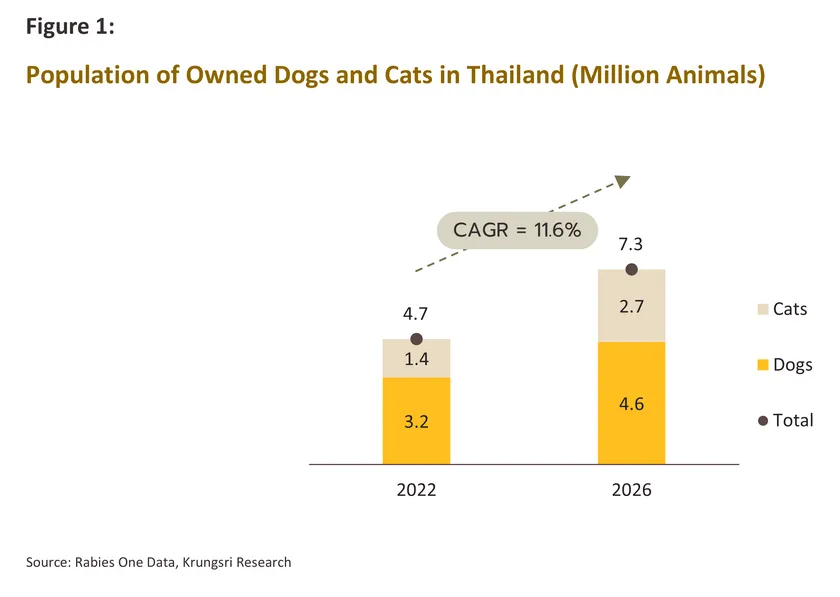
In Thailand, pet ownership has expanded steadily in recent years. The number of owned dogs and cats is projected to increase from 4.7 million in 2022 to 7.3 million in 2026, representing a compound annual growth rate (CAGR) of 11.6%
3/.
This trend stands in sharp contrast to Thailand's declining birth rate. In 2025, the country recorded only 416,517 live births, with the number of births continuing to decline since 2023
4/. The shift is driven in part by changing family structures and evolving lifestyles among younger generations, particularly working-age consumers with strong purchasing power. This trend is consistent with findings from Krungsri Research (2026)
5/, which show that around half of single-income-no-kids (SINK) individuals and double-income-no-kids (DINK) couples aged 24–44 do not intend to have children. Similarly, a survey conducted by the College of Management, Mahidol University (CMMU)
6/ found that 49% of respondents aged 24–41 would like to raise pets as children, identifying themselves as pet parents.
These findings highlight the growing phenomenon of Pet Humanization, whereby pets are increasingly regarded as children or family members who deserve the same level of care, attention, and emotional commitment as humans.
From ‘Pets’ to ‘Family ‘Members’: Driving Demand for Premium Diet and Healthcare
As pet owners increasingly regard their pets as children or members of the family, demand for pet products and services has shifted toward the premium segment. The focus has also evolved beyond simply extending pets' lifespan to promoting Pet Longevity.
In the areas of nutrition and healthcare, Thai pet owners are placing greater emphasis on preventive care and personalized care. In response, pet food manufacturers have introduced products that better meet these evolving expectations, including:
-
Human-grade pet food, made from ingredients of the same quality as those used for human consumption, without animal by-products, and supported by transparent nutritional information and scientific evidence.
-
Functional and therapeutic nutrition, including functional treats and supplements, single-protein diets7/ that reduce the risk of food allergies while helping veterinarians identify allergy-triggering ingredients, and therapeutic diets formulated to support the treatment or management of specific medical conditions
-
Lifestyle- and life stage-specific nutrition, designed to meet the unique needs of different groups of pets. Examples include lower-calorie diets for indoor pets with lower energy requirements, specialized diets for senior pets at risk of joint degeneration, and kibble specially sized for small dogs with smaller teeth.
Beyond nutrition, the pursuit of pet longevity increasingly encompasses preventive healthcare. Technologies originally developed for human healthcare are now being adapted for veterinary applications. One notable example is veterinary telemedicine service (Televet), which enables pet owners to consult veterinarians remotely about non-urgent health concerns through online appointments, eliminating the need for clinic visits. In Thailand, these services are available for dogs, cats, and exotic pets8/. Providers include large veterinary hospitals as well as digital platforms that connect pet owners with veterinary clinics lacking their own telemedicine systems.
Thailand has also introduced pet stem cell banking and stem cell therapy services9/. According to service providers, these biotechnology solutions are designed to support health restoration and treat selected medical conditions, such as degenerative joint disease. Services typically cover the collection, cultivation, and long-term storage of stem cells, as well as cell therapy using either the pet's own stem cells or those obtained from another animal of the same species10/. In addition, pet DNA testing has become increasingly available to assess the risk of inherited diseases, including disorders affecting the brain, blood vessels, eyes, and heart. These genetic screening services enable pet owners to adopt preventive healthcare strategies and monitor potential health risks at an early stage11/.
Younger Generations Want to ‘Live’ and ‘Thrive’ Alongside Their Pets
In the past, pet ownership was largely associated with landed homes that offered sufficient space, while most condominiums prohibited pets. However, changing social structures, particularly the rise of nuclear families, single-person households, and urban living, have significantly increased demand for pet-friendly condominium living. Over the past five years, property developers in Thailand have increasingly launched pet-friendly residential projects to meet this demand12/. These developments typically feature dedicated pet amenities, such as communal walking areas, on-site pet care and grooming services, and additional community rules designed to ensure harmonious living between pet owners and other residents.
The housing-related industry has also adapted to these changing lifestyles. Manufacturers of building materials and furniture have developed products specifically designed for pet-owning households, including slip-resistant flooring, easy-to-clean wall paints and coatings, sound-insulating wall materials that reduce pet-related noise, and scratch-resistant furniture. Many furniture designs now also allow owners and their pets to comfortably share the same living space (Figure 2).

Beyond residential developments, Thailand's urban environment is becoming increasingly accommodating to pet owners, making it easier for people to spend time and participate in everyday activities with their pets. Pet-friendly facilities and services are now available across restaurants, shopping malls, and public transportation. For example, since 2024, the Airport Rail Link has allowed passengers to travel with pets under specified conditions. Likewise, a growing number of hotels now welcome pets and provide dedicated amenities for animal guests. This trend is consistent with findings from Agoda (2025)13/, which reported that Thailand recorded the highest volume of searches for pet-friendly accommodation in the Asia-Pacific region, followed by South Korea and Taiwan. Demand is particularly strong among Gen Y (Millennials) and Gen Z travelers, reflecting a growing preference among younger consumers to live, travel, and share experiences with their pets as members of the family.
Financial Products for Pet Owners
Most pet owners are aware of routine expenses before deciding to adopt a pet, particularly costs related to food, pet supplies, and preventive healthcare.
However, many underestimate the financial impact of unexpected events such as accidents or acute illnesses. A Synchrony Bank (2025)
14/ survey found that many pet owners underestimate the lifetime cost of veterinary care because they have limited understanding of actual treatment costs. Veterinary expenses are generally high, partly because pets do not benefit from universal health coverage systems comparable to those available for humans. Consequently, many households are not adequately prepared for major veterinary expenses. Insufficient financial preparedness can adversely affect pets' long-term well-being. In some cases, treatment may be delayed or compromised because of financial constraints. In more severe situations, owners may be forced to discontinue treatment or even abandon their pets due to an inability to afford medical care
15/.
Against a backdrop of rising prices for pet products, services, and veterinary treatment, together with ongoing economic uncertainty,
financial institutions are playing an increasingly important role in helping households manage pet-related expenses and ensuring that pets can access necessary medical care when needed. Financial products designed to support pet owners include
pet insurance, which enables owners to manage the financial risks associated with accidents and illnesses before they occur, as well as
credit cards and
personal loans, which help finance expenses that have already been incurred. Each product serves a distinct purpose, as outlined below.
-
Pet insurance functions as a health risk management tool, similar to health insurance for humans. Insurers typically offer multiple coverage plans that vary according to factors such as coverage limits and insurance premiums. Its primary advantage is that it allows pet owners to plan healthcare expenses in advance while increasing the likelihood that pets can receive necessary medical treatment without significantly disrupting the household's existing financial plan.
-
Credit cards provide a revolving line of credit that gives pet owners greater flexibility in managing pet-related expenses. Financial institutions offer both pet-focused credit cards designed specifically for pet owners and general-purpose credit cards that support installment payments for veterinary and other pet-related costs. Many cards also include additional benefits, such as merchant discounts, bonus reward points, or pet-related insurance and protection benefits.
-
Personal loans provide another financing option for pet-related expenses that have already been incurred. Some lenders offer specialized veterinary financing, in which loan proceeds are paid directly to veterinary hospitals or clinics. Alternatively, borrowers may use general-purpose personal loans to cover a wide range of pet-related expenses, including veterinary treatment, products, and services, subject to each lender's terms and conditions.
Case Study: Financial Solutions for Veterinary Expenses in the United States, China, and Thailand
The development of pet-related financial products varies considerably across countries, reflecting differences in market maturity and the broader financial ecosystem. The United States has one of the world's most developed markets for pet financial services, while China and Thailand remain at earlier stages of development. Nevertheless, advances in financial technology and innovation have led each country to develop distinctive approaches to supporting pet owners. The following section highlights key examples.
United States
One of the defining characteristics of the U.S. veterinary payment ecosystem is its wide range of financial products,
which are designed to address the diverse needs of pet owners. These solutions also extend beyond dogs and cats to cover many other companion animals. In addition to paying veterinary expenses out of pocket, pet owners in the United States have several financing options.
1) Pet Insurance
Pet insurance is an increasingly popular tool for managing veterinary expenses. In 2025, net written premiums reached USD 3.59 billion, an increase of approximately 11% from 2024. The market has consistently recorded double-digit annual growth since 2018
16/. Despite this strong growth, pet insurance penetration remains relatively low. In 2024, only 3.9% of pets were insured
17/, suggesting substantial room for further market expansion.
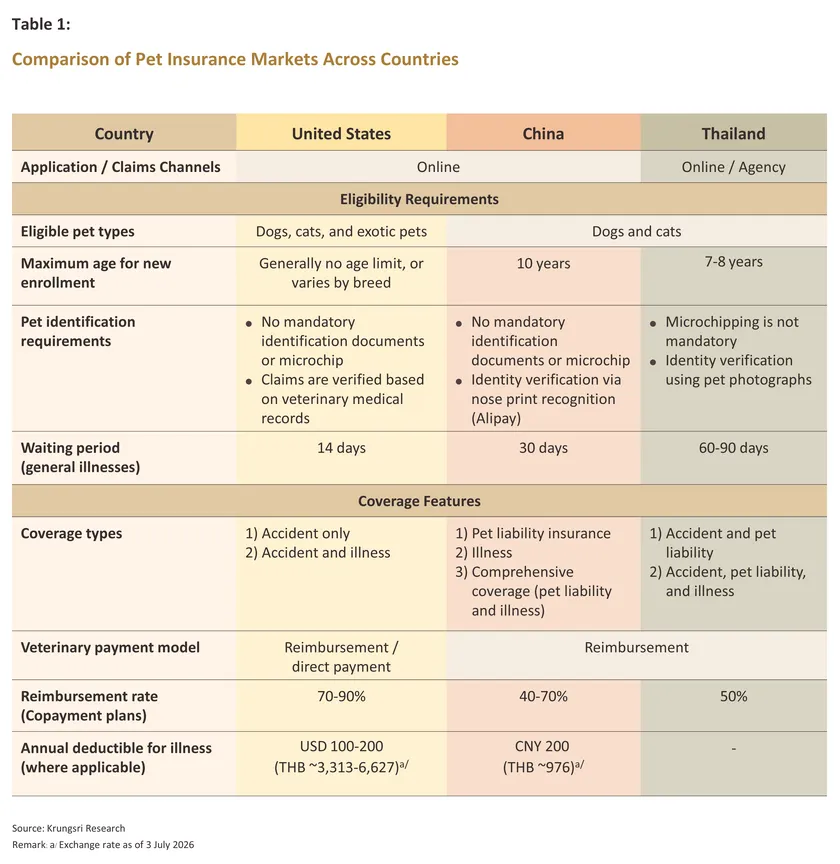
Pet insurance policies in the United States generally fall into two main categories: (1) Accident-only coverage; and (1) Accident and illness coverage. Coverage terms and monthly premiums vary according to several factors, including: Annual coverage limits; Reimbursement levels, which typically range from 70% to 90%
18/ of eligible veterinary expenses; and Annual deductibles, generally between USD 100 and USD 250.
Premiums typically increase with higher coverage limits and reimbursement rates but decrease as deductibles rise. In other words, policies offering more comprehensive protection or lower deductibles generally carry higher premiums.
Insurance pricing also depends on the pet's species, breed, age, and sex19/. In addition, most policies include a waiting period, during which coverage is not yet effective. For general illnesses, this waiting period is typically around 14 days.
Claims are generally processed through one of two payment models: (1) Reimbursement, in which pet owners pay veterinary expenses upfront and subsequently submit claims for reimbursement; and (2) Direct payment, where insurers settle bills directly with participating veterinary hospitals through integrated payment systems. This option, however, is generally limited to veterinary providers within the insurer's network.
Given the size and competitiveness of the U.S. pet insurance market,
insurers continue to differentiate themselves through product innovation and technology. Notable developments include:
-
24/7 veterinary telemedicine (Televet) services, allowing owners to consult veterinarians remotely to assess non-emergency symptoms. Besides improving convenience, these services help reduce unnecessary clinic visits and lower insurers' claim costs.
-
Customizable insurance plans, enabling policyholders to enhance standard coverage with optional benefits such as routine wellness examinations, annual vaccinations, expenses related to locating lost pets, genetic testing to assess inherited disease risks, and behavioral therapy.
-
Artificial Intelligence (AI) for claims processing. For example, Trupanion introduced an AI-powered claims approval system in 2023, enabling eligible claims to be processed and approved within seconds.
-
Employee benefit programs. Some insurers have expanded customer access by partnering with large employers to offer discounted pet insurance as an optional employee benefit. Companies such as Amazon and Nestlé Purina provide access to these programs, with employers either offering the benefit at no cost to themselves or subsidizing part of the premium. Such initiatives are intended to attract and retain talent, particularly younger employees who are increasingly choosing pet ownership over parenthood20/.
2) Credit Cards
Beyond conventional credit cards,
the United States also offers credit cards specifically designed for pet-related spending. These products provide financing solutions that allow owners to spread veterinary expenses over an extended period. One example is
CareCredit, issued by Synchrony Bank, which finances healthcare expenses for both people and pets, reinforcing the concept of Pet Humanization. Eligible animals range from dogs and cats to horses and exotic pets.
Another example is the
All Pet Card, issued by Comenity Capital Bank. Unlike general-purpose credit cards, it can only be used for pet-related expenses, including veterinary treatment, pet training, grooming, and other services provided by participating merchants. A key feature of the card is its interest-free installment plan for up to 18 months on purchases of USD 700 or more, with no annual fee and no down payment required. However, both examples carry relatively high penalty interest rates. If promotional payment terms are not met, interest rates can reach 32.99% per annum
21/, exceeding the average U.S. credit card interest rate of 21–25% per annum
22/.
3) Personal Loans
The United States also offers financing products dedicated to veterinary treatment. One example is
Scratchpay, supported by WebBank, which allows pet owners to finance veterinary expenses at interest rates ranging from 0% to 36% per annum. Applications are submitted online, and once approved, loan proceeds are paid directly to participating veterinary hospitals.
Unlike credit cards, which provide revolving credit, this type of financing is designed as a point-of-care loan for a specific veterinary treatment or medical episode.
China
As in many other countries, Pet Humanization has gained significant momentum in China, particularly among younger pet owners born between 1990 and 2009
23/. Meanwhile, the strong preference for digital wallets in everyday transactions
24/ has shaped payment practices in veterinary care, encouraging the development of payment and financing solutions tailored to the country's digital payment ecosystem rather than traditional credit card- or cash-based payment methods.
One of the distinguishing features of China's pet care ecosystem is the use of technology to improve service delivery and address challenges associated with pet identification.
1) Pet Insurance
Pet insurance products in China can generally be classified into three categories: (1) Pet health insurance; (2) Pet liability insurance, which compensates third parties for damage or injury caused by insured pets; and (3) Comprehensive pet insurance, which combines health and liability coverage. At present, these products are available only for dogs and cats
25/.
China's pet insurance market faces structural challenges due to the lack of standardized veterinary pricing and a nationwide pet identification system26/, which has constrained market growth, much like in Thailand27/.
To address this challenge,
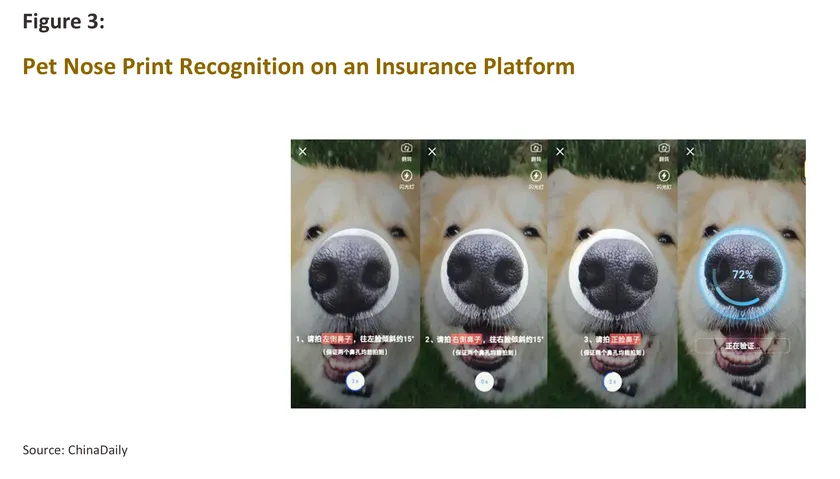
Ant Group, the financial technology affiliate of the Alibaba Group, introduced pet nose print recognition technology in 2020 (Figure 3). Similar to human fingerprints, each pet's nose print is unique and can be used for biometric identification. With an accuracy rate of approximately 99%, the technology enables insurers to verify pet identities more reliably while reducing fraud and duplicate insurance claims. Ant Group has incorporated this technology into pet insurance services available through the Alipay platform in partnership with insurers including Ping An Insurance and ZhongAn Online.
Chinese insurers have also introduced mechanisms to reduce excessive veterinary charges. For veterinary hospitals within an insurer's network, reimbursement rates typically range between 60% and 70%, compared with around 40% for non-network providers. This pricing structure encourages pet owners to use participating veterinary hospitals, where insurers can better monitor service quality and control treatment costs.
2) Personal Loans
China's approach to financing veterinary expenses differs from that of the United States. Rather than offering dedicated veterinary loans, Chinese providers generally allow customers to use online personal loans for pet-related medical expenses. One example is Ant Group, which provides digital personal loans through the Alipay application in collaboration with partner banks and financial institutions28/. When users choose a loan product to pay veterinary expenses, the veterinary hospital receives payment immediately from the platform. The transaction is then recorded as a financed purchase, allowing users to repay the balance in installments over 3 to 12 months at annual interest rates of approximately 18–20%29/, equivalent to a daily interest rate of around 0.05%30/.
Thailand
In Thailand, regulations governing veterinary hospitals primarily focus on standards of veterinary practice and medical care rather than payment systems. Consequently, payment options vary by veterinary provider. Smaller clinics may accept only cash or PromptPay, whereas larger veterinary hospitals typically offer a wider range of payment methods, including credit cards and digital wallets.
1) Pet Insurance
Although policy details differ among insurers, pet insurance products in Thailand can generally be divided into two categories: (1) Coverage for accidents and third-party liability, with annual premiums typically below THB 1,000; and (2) Coverage for accidents, illnesses, and third-party liability, with annual premiums ranging from THB 2,000 to THB 13,000. Unlike some markets, Thailand currently does not offer a direct payment system. Pet owners are generally required to pay veterinary expenses upfront and submit reimbursement claims afterward.
Premiums in Thailand are determined primarily by the overall coverage limit rather than by the pet's age or breed, as is common in the United States. However, underwriting conditions tend to be more restrictive (Table 1). Typical requirements include: Pets must generally be no older than 7–8 years; Pets must be in good health at the time of enrollment; Owners must provide health examination records and vaccination certificates; and Policies are subject to waiting periods of approximately 60–90 days before coverage becomes effective.
For policies incorporating copayment, insurers typically reimburse around 50% of eligible expenses. Pet identification is generally based on photographs rather than mandatory microchip implantation. Nevertheless, some insurers offer premium discounts for microchipped pets, encouraging owners to adopt permanent identification while enabling insurers to verify pet identities more accurately31/.
2) Credit Cards
Thailand also offers credit cards designed specifically for pet owners. One example is the AEON Petster Credit Card. Unlike certain pet-focused credit cards in the United States that restrict spending exclusively to pet-related purchases, the AEON Petster Credit Card functions as a general-purpose credit card while providing benefits tailored to pet owners. These include pet insurance coverage for cardholders' pets, additional discounts and reward points on pet-related spending, and installment payment options for eligible purchases. General-purpose credit cards in Thailand also frequently offer installment plans and promotional benefits for pet-related expenses. Most issuers specify minimum spending requirements for installment payments, for example, purchases of THB 3,000 or more, with repayment periods ranging from 3 to 10 months and promotional interest rates between 0% and 16% per annum, depending on the issuer's terms and conditions32/.
3) Personal Loans
Thailand does not yet offer dedicated loan products specifically designed to finance veterinary treatment. However, many veterinary hospitals accept alternative payment solutions that support installment financing. One example is SPayLater, a revolving credit service available through the Shopee e-commerce platform. Customers can scan the participating veterinary hospital's QR code to pay for treatment, with the transaction charged to their available SPayLater credit limit. Users may then repay the balance in installments for up to 12 months, with interest rates ranging from 0% to 25% per annum, depending on the loan amount and repayment period33/.
Krungsri Research View: The Role of Financial Institutions in Supporting Pet Healthcare
The rise of “Pet Humanization” is expected to continue driving growth in Thailand's pet economy, particularly in the premium segment, where products and services focus on improving pets' health and promoting pet longevity. However, while many owners are willing to invest in their pets' well-being, they may not be financially prepared for the substantial costs associated with unexpected accidents or serious illnesses. This creates opportunities for financial institutions to develop products that better support pet owners. Pet insurance enables owners to manage healthcare risks before they occur, while lending products can provide timely financial support, helping pets receive appropriate medical treatment when unexpected situations arise. Nevertheless, several structural challenges remain and should be carefully considered by financial service providers.
1) Pet Insurance: Thailand's pet insurance market continues to face several structural constraints. The country lacks an accessible, centralized pet health database, standardized veterinary pricing, and a nationwide pet identification system. As a result,
insurers have limited data for pricing policies accurately. The absence of standardized pet identification also increases the risk of fraud, as pet owners may conceal or misrepresent their pets' identities or medical histories when filing insurance claims. Although the Bangkok Metropolitan Administration (BMA) has introduced regulations requiring dogs and cats to be microchipped and registered, effective 10 January 2027
34/, the policy applies only within Bangkok and does not establish a nationwide identification framework.
These limitations increase insurers' underwriting risks, resulting in relatively high insurance premiums despite comparatively limited coverage.
To address these challenges, insurers may consider several strategic initiatives. (1) Adopting advanced pet identification technologies, particularly nose print recognition. (2) Strengthening partnerships with veterinary hospitals to establish standardized treatment and pricing databases. Such collaboration would improve underwriting accuracy, expand customer acquisition channels, and lay the foundation for introducing direct payment systems in the future. Similar to practices in China, insurers could encourage policyholders to use partner veterinary hospitals with standardized pricing by offering higher reimbursement rates for treatment received within the network. (3) Integrating Televet services into insurance plans. As demonstrated in the United States, remote veterinary consultations can enhance convenience for pet owners while reducing unnecessary clinic visits.
The public sector also has an important role to play by establishing standardized veterinary fee schedules and developing a centralized pet health database. Such initiatives would not only support the sustainable development of the pet insurance market but also contribute to improving animal welfare over the long term.
2) Specialized Lending: Current pet insurance products in Thailand generally operate on a reimbursement basis, requiring policyholders to pay veterinary expenses upfront before submitting claims. Reimbursements are typically processed within 15–30 business days after insurers receive and verify the required documentation, although the process may take up to 90 business days if additional investigations are necessary. This reimbursement gap creates an opportunity for banks and financial institutions to provide short-term financing, particularly for customers who require immediate liquidity or have limited access to other forms of credit.
Banks could build on their existing digital personal loan products, which are well suited for emergency veterinary expenses because they generally require minimal documentation, do not require collateral, and offer rapid approval. Typical loan limits of THB 3,000–20,00035/ are also broadly sufficient to cover the cost of a single episode of veterinary treatment. Financial institutions could further enhance these products by increasing customer awareness and partnering directly with veterinary hospitals. Under such arrangements, approved loan proceeds could be disbursed directly to participating veterinary providers immediately after loan approval. This approach would also benefit veterinary hospitals by enabling them to offer pet owners an additional financing option, helping ensure that financial constraints do not prevent pets from receiving appropriate medical care.
Finally, although banks do not directly provide pet-related services, pets are increasingly regarded as important members of the family. As a result, their well-being can also contribute to customers’ overall financial stability and resilience. Banks can therefore play a supportive role by developing financial solutions that help customers manage pet-related expenses more sustainably. Such efforts are consistent with a customer-centric business approach and the broader objective of enhancing customers’ quality of life in a holistic manner.
References
ชวนวัน, ศ. (2024). เทรนด์ใหม่มีสัตว์เลี้ยงเป็นลูก สวนกระแสเด็กเกิดน้อย. IPSR Mahidol. https://ipsr.mahidol.ac.th/wp-content/uploads/2024/10/PopDev-Vol45-No1.pdf
ผู้จัดการออนไลน์. (2026). เจาะลึก 2 นวัตกรรม Longevity เพื่อสุขภาพสัตว์เลี้ยง Geneus Genetics & Fudo Solution ในงาน Pet Expo Thailand 2026 [Press release]. MGR Online. https://mgronline.com/business/detail/9690000038228
ศูนย์บัญชาการเพื่อการเฝ้าระวังโรคพิษสุนัขบ้า. (2026). ข้อมูลสำรวจประชากรสุนัขและแมว. Rabies One Data. https://rabiesonedata.online/
สำนักงานประชาสัมพันธ์ กรุงเทพมหานคร. (2026). กทม. รุกส่งหน่วยเคลื่อนที่ฉีดฝังไมโครชิปและจดทะเบียนสุนัขและแมว บุกชุมชน 50 เขต – ห้าง หลังสภา กทม. มีมติขยายเวลาการบังคับใช้ออกไป 1 ปี [Press release]. Pr-bangkok. https://pr-bangkok.com/?p=567443
Agoda. (2025). Agoda Reveals Increased Search Growth in Pet-Friendly Accommodations as South Korea, Thailand, and India Lead the Way [Press release]. Agoda. https://www.agoda.com/press/agoda-reveals-increased-search-growth-in-pet-friendly-accommodations-as-south-korea-thailand-and-india-lead-the-way/?cb=sqfkux
Alt, K. (2026). How Much Does Pet Health Insurance Cost And Is It Worth It? Average Cost, Deductibles, Premiums, Reimbursement, Fees, Etc. Canine Journal. https://www.caninejournal.com/pet-insurance-costs/
Boehringer Ingelheim. (2025). Going Beyond: Charting a Sustainable Future for Veterinary Medicine in Southeast Asia. Animal Health Hub. https://animalhealthhub.in.th/sites/default/files/2025-07/20250428_GCI_BoehringerIngelheim_Animal_Health_Whitepaper_FINAL_B%201.pdf
British Veterinary Association. (2025). BVA speaks to the BBC amid reports of rising vet costs impacting animal welfare. BVA. https://www.bva.co.uk/news-and-blog/news-article/bva-speaks-to-the-bbc-amid-reports-of-rising-vet-costs-impacting-animal-welfare/
Coleman, E. (2026). What Is The Average Credit Card Interest Rate This Week? July 13, 2026 [Press release]. Forbes. https://www.forbes.com/advisor/credit-cards/average-credit-card-interest-rate/
Connolly, J., & Mowafi, M. (2025). Vet bills: More pets being put down due to rising costs, BBC told. BBC. https://www.bbc.com/news/articles/ce9xjmz70m5o
Frost & Sullivan. (2025). Frost & Sullivan: Medical standards, data transparency and tech applications will be key to breaking through the pet insurance barrier [Press release]. Frost China. https://www.frostchina.com/en/content/news/detail/68a58496ec651704f456c2d3
Global Times. (2020). Alipay launches pet insurance featuring nose print recognition technology [Press release]. Global Times. https://www.globaltimes.cn/content/1195059.shtml
Hajdari, U. (2025). Rising vet costs and abandonment are putting Europe’s pets at risk. Euronews. https://www.euronews.com/business/2025/08/22/rising-vet-costs-and-abandonment-are-putting-europes-pets-at-risk
HealthforAnimals. (2022). Global State of Pet Care Stats, Facts and Trends. Health for Animals. https://healthforanimals.org/reports/pet-care-report/global-trends-in-the-pet-population/
Ho et al. (2021). Did the COVID-19 Pandemic Spark a Public Interest in Pet Adoption? Frontiersin. https://www.frontiersin.org/journals/veterinary-science/articles/10.3389/fvets.2021.647308/full
Hrynowski, Z., & Lall, J. (2025). 52% of U.S. pet owners skipped or declined veterinary care. Gallup. https://news.gallup.com/poll/659057/pet-owners-skipped-declined-veterinary-care.aspx
Jacob, C. (2024). China and India lead the charge as digital wallets overtake cash and cards in Asia [Press release]. CNBC. https://www.cnbc.com/2024/06/13/china-india-lead-as-digital-wallets-overtake-cash-and-cards-in-asia.html
Metz, J. (2026). Forbes’ Best Pet Insurance Companies Of 2026. Forbes. https://www.forbes.com/financial-services/best-pet-insurance/
North American Pet Health Insurance Association (NAPHIA). (2026). Industry Data: Pet Insurance in North America. NAPHIA. https://naphia.org/industry-data/
North American Pet Health Insurance Association (NAPHIA). (2026). North American Pet Health Insurance Industry Market Reaches $5.2B in Written Premium. NAPHIA. https://naphia.org/news/naphia-news/soi-report-2025/
Pet Benefit Solutions. (2024). Case Studies: Companies Leading the Way in Pet-Friendly Benefits. Pet Benefit Solutions. https://www.petbenefits.com/blog/case-studies-companies-leading-the-way-in-pet-friendly-benefits/
Real Estate Research and Development. (2024). 5 ทำเลเหมาะในการพัฒนาคอนโดฯ เพื่อสัตว์เลี้ยง. LWS. https://lws.co.th/blog/5-%e0%b8%97%e0%b8%b3%e0%b9%80%e0%b8%a5%e0%b9%80%e0%b8%ab%e0%b8%a1%e0%b8%b2%e0%b8%b0%e0%b9%83%e0%b8%99%e0%b8%81%e0%b8%b2%e0%b8%a3%e0%b8%9e%e0%b8%b1%e0%b8%92%e0%b8%99%e0%b8%b2%e0%b8%84%e0%b8%ad%e0%b8%99/
Recamara, J. (2026). Pet insurance market to soar past $113.7B by 2035 as vet costs climb: Report [Press release]. Insurance Business. https://www.insurancebusinessmag.com/us/news/breaking-news/pet-insurance-market-to-soar-past-113-7b-by-2035-as-vet-costs-climb-report-575559.aspx
Ross, H., & Figuracion, K. (2026). US pet insurance market growth slows in 2025, but still robust. S&P Global. https://www.spglobal.com/market-intelligence/en/news-insights/articles/2026/4/us-pet-insurance-market-growth-slows-in-2025-but-still-robust-100302726
Synchrony Bank. (2025). Pet Lifetime of Care 2025. Synchrony. https://www.synchrony.com/contenthub/newsroom/new-synchrony-study-finds-nearly-8-out-of-10-pet-owners.html
Tomkins, I. (2025). More pets being abandoned in England as food and vet bills soar, say charities. The Guardian. https://www.theguardian.com/world/2025/nov/02/firefighters-charities-animal-rescue-callouts-england
Webb, A. (2026). Pet costs driving owner regret, survey claims. VetTimes. https://www.vettimes.com/news/business/finance/pet-costs-driving-owner-regret-survey-claims
Won, C., & Larkin, M. (2025). Survey results highlight pet owner price sensitivity for veterinary services. AVMA. https://www.avma.org/news/survey-results-highlight-pet-owner-price-sensitivity-veterinary-services
XiYa, G., & Salam, Z. (2024). An Analysis of the Development of Pet Insurance Market in China. HRMARS. https://hrmars.com/IJARBSS/article/view/23634/An-Analysis-of-the-Development-of-Pet-Insurance-Market-in-China
Ying, W. (2025). Many paws driving pet economy growth [Press release]. China Daily. https://global.chinadaily.com.cn/a/202510/06/WS68e32d5da310f735438b3a58_1.html
1/ Global Trends in the Pet Population - HealthforAnimals | Health for Animals
2/ Frontiers | Did the COVID-19 Pandemic Spark a Public Interest in Pet Adoption? | Frontiers
3/ Calculated based on data from the Rabies One Data, using the first-round pet population surveys conducted in 2022 and 2026. (Source: Rabies One Data)
4/ Based on population registration statistics published by the Bureau of Registration Administration, Department of Provincial Administration, covering the period 2023–2025. (Source: Official Statistics Registration System)
5/ For further details, see The Single Economy Survey Part 1: “Life at Different Stages”
6/ Survey of 1,046 Thai respondents aged 24–41, conducted in January 2023. (Source: PopDev-Vol45-No1.pdf)
7/ Pet food made from a single animal protein source, such as salmon, chicken, or lamb.
8/ For example, reptiles (e.g., lizards and iguanas) and small mammals (e.g., rabbits and hamsters).
9/ Specialized cells that can self-renew and differentiate into various cell types. In veterinary medicine, they are increasingly being used to support regenerative therapy in pets. Stem cells can be collected from several sources, including blood, adipose (fat) tissue, and umbilical cord tissue at birth.
10/ However, the clinical effectiveness of stem cell therapy for many applications remains under investigation, and comprehensive regulatory standards have yet to be established.
11/ เจาะลึก 2 นวัตกรรม Longevity เพื่อสุขภาพสัตว์เลี้ยง Geneus Genetics & Fudo Solution ในงาน Pet Expo Thailand 2026 | MGR Online
12/ 5 ทำเลเหมาะในการพัฒนาคอนโดฯ เพื่อสัตว์เลี้ยง | LWS Wisdom
13/ Agoda Reveals Increased Search Growth in Pet-Friendly Accommodations as South Korea, Thailand, and India Lead the Way | Agoda
14/ PET LIFETIME OF CARE 2025 | Synchrony Bank
15/ Rising vet costs and abandonment are putting Europe’s pets at risk | Euronews, Vet bills: More pets being put down due to rising costs, BBC told | BBC, More pets being abandoned in England as food and vet bills soar, say charities | Animal welfare | The Guardian, Survey results highlight pet owner price sensitivity for veterinary services | American Veterinary Medical Association, 52% of U.S. Pet Owners Skipped or Declined Veterinary Care | Gallup
16/ US pet insurance market growth slows in 2025, but still robust | S&P Global
17/ NAPHIA - About the Industry - State of the Industry Report 2025 | NAPHIA, North American Pet Health Insurance Industry Market Reaches $5.2B in Written Premium – NAPHIA | NAPHIA
18/ This is conceptually similar to the copayment system used in Thailand, but expressed from the insurer's perspective. For example, if a policy has a 70% reimbursement level, the insurer reimburses 70% of eligible veterinary expenses, while the pet owner is responsible for the remaining 30% as a copayment (copay).
19/ How Much Does Pet Health Insurance Cost And Is It Worth It? | Canine Journal
20/ Case Studies: Companies Leading the Way in Pet-Friendly Benefits - Pet Benefit Solutions | Pet Benefits, Pet insurance market to soar past $113.7B by 2035 as vet costs climb: Report | Insurance Business
21/ CareCredit FAQs | CareCredit, carecredit.com/YourTerms/ | CareCredit, All Pet Card | The Credit Card Designed for Pet Owners | All Pet
22/ What Is The Average Credit Card Interest Rate This Week? June 1, 2026 – Forbes Advisor | Forbes Advisor
23/ Many paws driving pet economy growth | ChinaDaily
24/ China, India lead as digital wallets overtake cash and cards in Asia | CNBC
25/ HRMARS - An Analysis of the Development of Pet Insurance Market in China | HRMARS
26/ Medical standards, data transparency and tech applications will be key to breaking through the pet insurance barrier | Frost & Sullivan
27/ Although the Bangkok Metropolitan Administration (BMA) has issued regulations requiring dogs and cats to be microchipped and registered, enforcement has been postponed until early 2027. (Source: กทม. รุกส่งหน่วยเคลื่อนที่ฉีดฝังไมโครชิปและจดทะเบียนสุนัขและแมว | BMA Data Center)
28/ Ant Group - Digital Finance | Ant Group
29/ Calculated based on a daily interest rate of 0.05% using both simple annualization and annual compounding methods.
30/ Huabei Partnership | Alipay, How does Huabei installment pay - Alipay Document Center | Alipay
31/ ประกันสัตว์เลี้ยง | Tip Insure, ประกันสัตว์เลี้ยง เมืองไทย Cats & Dogs Plus | Muang Thai Insurance, ประกันสัตว์เลี้ยง Pet Chill | Muang Thai Insurance, ประกันสัตว์เลี้ยง Pet Protect Sure | Falcon Insurance
32/ บัตรเครดิตอิออน เพ็ทสเตอร์ | สิทธิพิเศษสำหรับคนรักสัตว์เลี้ยง | AEON, รับส่วนลด + แลกรับเครดิตเงินคืนเพิ่ม 10%*,** | Krungsri Card
33/ SPayLater คืออะไร? | Shopee TH, SPayLater สแกนจ่ายพร้อมเพย์คิวอาร์ที่ร้านค้าทั่วประเทศ | Shopee TH
34/ Although the Bangkok Metropolitan Administration (BMA) has issued regulations requiring dogs and cats to be microchipped and registered, enforcement has been postponed until early 2027. (Source: Ibid.)
35/ กู้เงินด่วน First Choice PAYPLUS - กรุงศรี เฟิร์สช้อยส์ | First Choice