EXECUTIVE SUMMARY
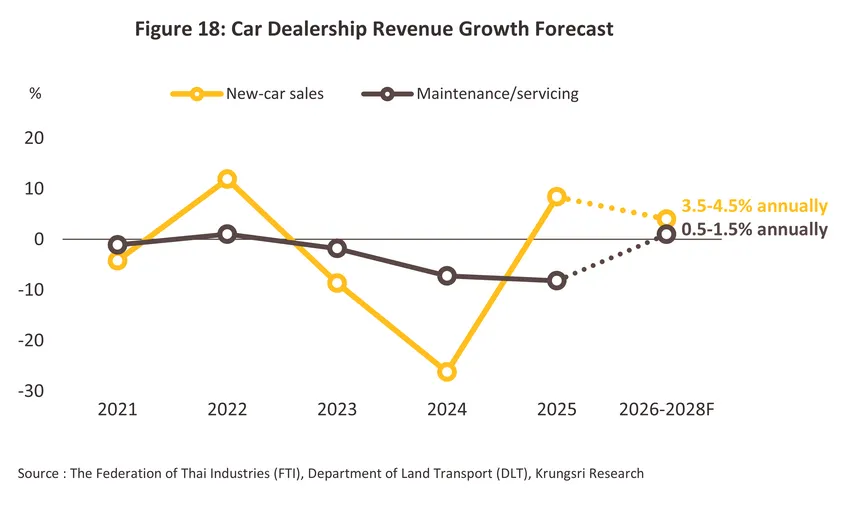
Revenue from vehicle sales is projected to grow by an average of 3.5-4.5% per year during 2026-2028, driven by the gradual recovery of the domestic automotive market. Key factors include renewed EV adoption incentives under energy transition measures, excise tax reductions for HEVs and MHEVs, sales promotions to clear passenger BEV inventories, and a gradual rebound in pickup truck sales after users postponed vehicle replacement purchases in previous years. Meanwhile, revenue from after-sales services and spare parts sales is expected to increase by an average of 0.5-1.5% per year, underpinned by growing cumulative vehicle registrations as the domestic market recovers from 2025 onward, following the easing of auto hire-purchase loan approvals in line with improving asset quality. In addition, EV support measures are expected to sustain growth in cumulative passenger BEV registrations, with many vehicles gradually reaching the stage requiring after-sales maintenance and replacement of certain spare parts.
Krungsri Research view
Overall operating performance of automotive dealerships is expected to expand during 2026-2028, albeit at a modest pace, particularly in 2026 as the prolonged Middle East conflict weakens domestic purchasing power. By brand nationality, the outlook can be summarized as follows:
-
Japanese brands are expected to benefit from passenger HEV support measures, after-sales service advantages, and the gradual recovery in domestic pickup truck sales. However, brands relying primarily on ICE passenger car sales will continue to face risks from the ongoing decline in this market in Thailand.
-
Chinese brands are expected to benefit from passenger BEV support measures, new passenger EV and premium pickup truck models, and the expansion of related supply chains, such as battery testing and maintenance centers and EV component suppliers in Thailand. However, Chinese brands will continue to face challenges from after-sales service issues weighing on consumer confidence, accelerated passenger BEV inventory clearance in 2027, and higher insurance premiums for BEVs than for other vehicle types.
-
European and U.S. brands are expected to continue benefiting from the resilient purchasing power of middle- to upper-income consumers, as well as brand advantages in image and technological leadership. However, overall sales will remain challenged by increasing market share losses to imported Chinese BEVs.
Overview
Thailand's automotive industry has long been one of the country's key economic drivers, backed by continuous government support through tax incentives, foreign investment promotion, and policies positioning the 1-ton pickup truck and eco-car segments as Thailand's product champions. More recently, policy focus has shifted to promoting the Electric Vehicle (EV) industry1/. Against this backdrop, automotive dealerships play a vital role as an intermediary between vehicle manufacturers (OEMs) and domestic consumers, serving as the main channel for vehicle distribution and government market-stimulus measures. They also create economic value through partnerships across after-sales services, spare parts distribution, and automotive financing.
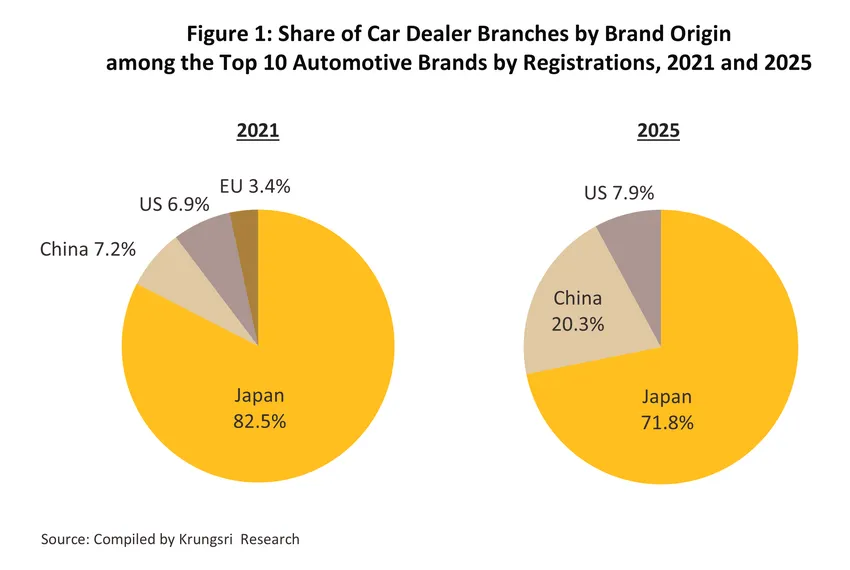
Government measures promoting domestic EV production and adoption under the EV 3.0 scheme (2022-2025) and EV 3.5 scheme (2024-2027), aimed at achieving the Zero Emission Vehicle (ZEV) production target, have not only reshaped Thailand's automotive production structure but also accelerated EV adoption nationwide. This is reflected in new passenger BEV registrations, which recorded a CAGR of 179.6% during 2022-2025 and reached 118,696 vehicles in 2025, accounting for 21.9% of total new passenger vehicle registrations. More than 90% of passenger BEVs sold in Thailand are Chinese brands, resulting in changes to the market structure of automotive dealerships. Based on the showroom shares of the top 10 vehicle brands by sales, Chinese brands accounted for 7.2% of total showrooms in 2021, prior to the EV 3.0 scheme, compared with 82.5% for Japanese brands, 6.9% for U.S. brands, and 3.4% for European brands (Figure 1). By 2025, under the EV 3.0 and EV 3.5 schemes, the showroom share of Chinese brands had increased to 20.3%, while Japanese and U.S. brands accounted for 71.8% and 7.9%, respectively.
Revenue and Net Profit Margin
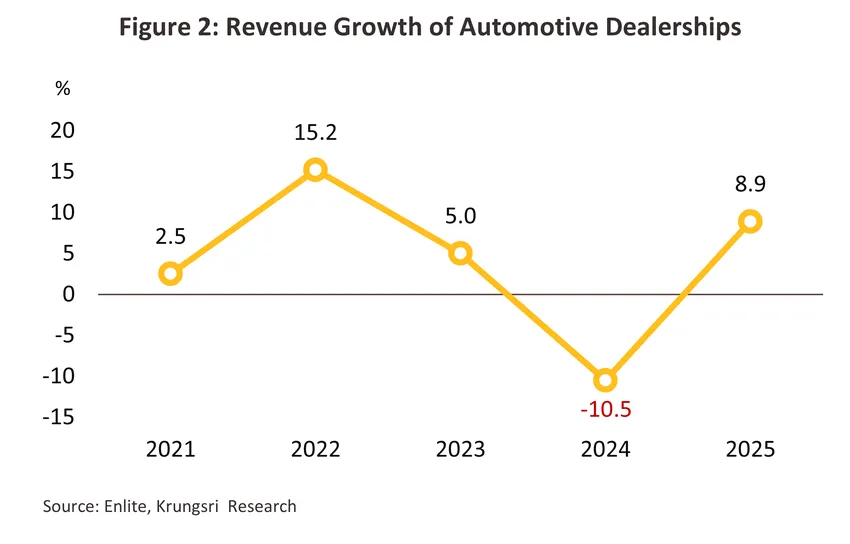
In 2025, revenue from vehicle sales and after-sales services of automotive dealerships increased by 8.9%, in line with domestic vehicle sales, which rose 8.3% to 620,975 vehicles (Figure 2). Growth was driven by passenger vehicle sales, up 7.8% to 241,543 vehicles, supported by (i) higher auto hire-purchase loan approvals as non- performing loans (NPLs) and special mention loans (SMLs) in the auto hire-purchase segment declined, (ii) resilient purchasing power among middle- to upper-income consumers, and (iii) accelerated BEV sales promotions ahead of the expiration of EV 3.5 subsidies. However, some dealerships faced a -6.9% decline in 1-ton pickup truck sales to 186,416 vehicles, as the financial position of pickup truck buyers, mainly middle- to lower-income consumers, remained weak, leading financial institutions to maintain strict lending criteria. This was despite support from the 'Pickup with Credit Guarantee' scheme2/, aimed at improving access to hire-purchase financing for pickup buyers.
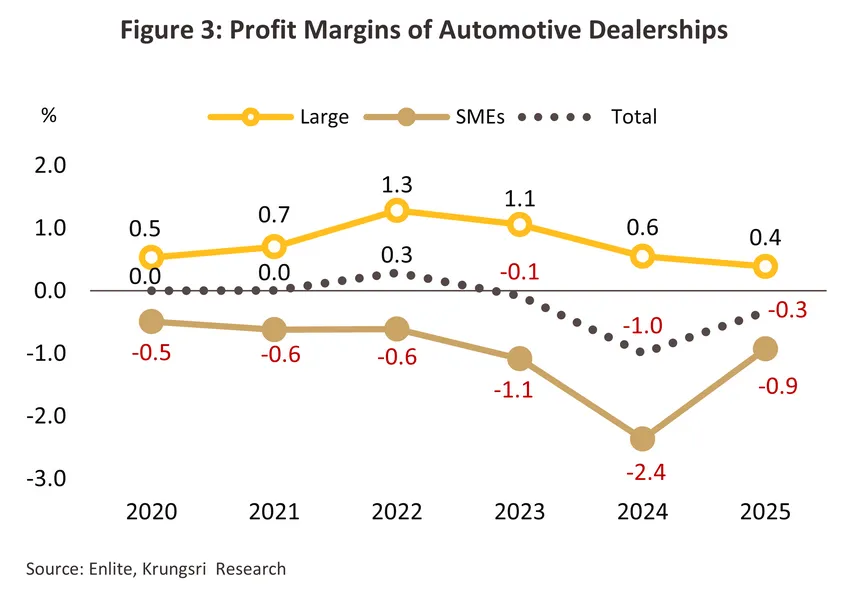
Meanwhile, the average net profit margin of automotive dealerships stood at -0.3% (Figure 3), weighed down by an intense EV price war3/, which pressured automakers across several segments to cut vehicle prices to maintain competitiveness, as well as accelerated sales promotions by EV brands to boost sales ahead of the end of EV 3.0 subsidies in 2025. SME dealerships recorded an average net profit margin of -0.9%, while large dealerships achieved 0.4%, supported by better cost management, more diversified business networks, and greater expansion into EV dealerships. Overall, although automotive dealership revenue resumed growth in 2025, profitability remained low, partly due to intense price competition, particularly in the EV market
Situation
Revenue from Vehicle Sales
During the first 7 months of 2026, revenue from vehicle sales showed an upward trend, in line with domestic vehicle sales, which increased 15.5% YoY to 406,162 vehicles. The breakdown is as follows:
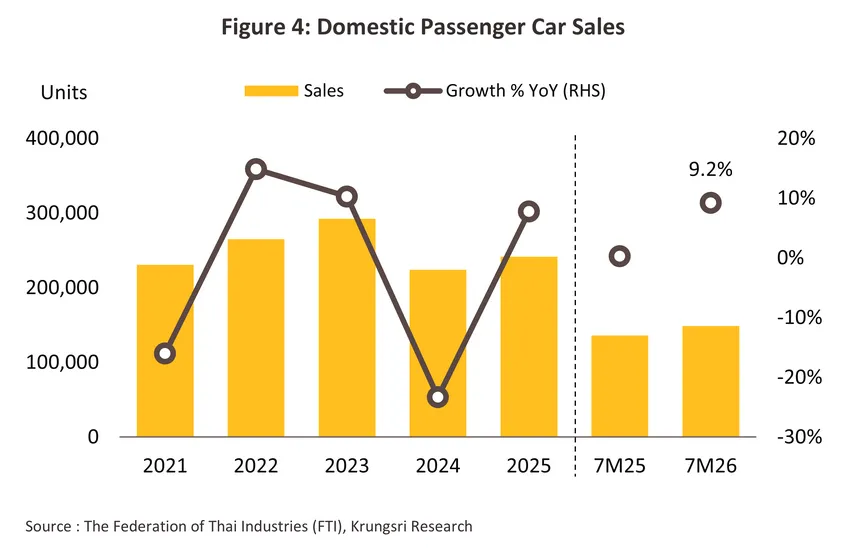
1) Total passenger vehicle sales increased 9.2% YoY to 148,815 units, accounting for 36.6% of total vehicle sales (Figure 4), supported by (i) resilient purchasing power among middle- to upper-income consumers, (ii) easing loan approvals by financial institutions following the continued decline in NPLs and SMLs, and (iii) continued growth in passenger HEV and passenger BEV sales under government support measures1/.
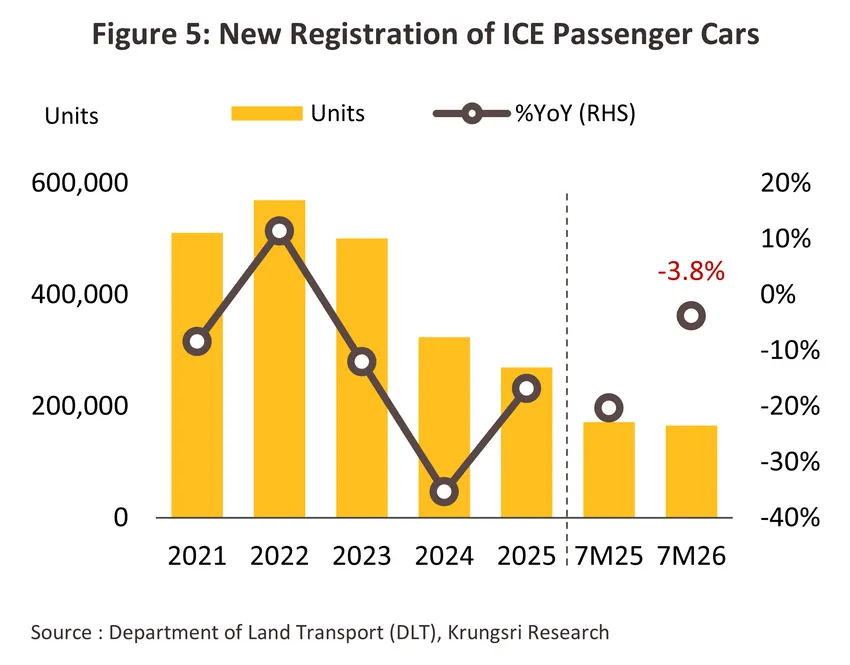
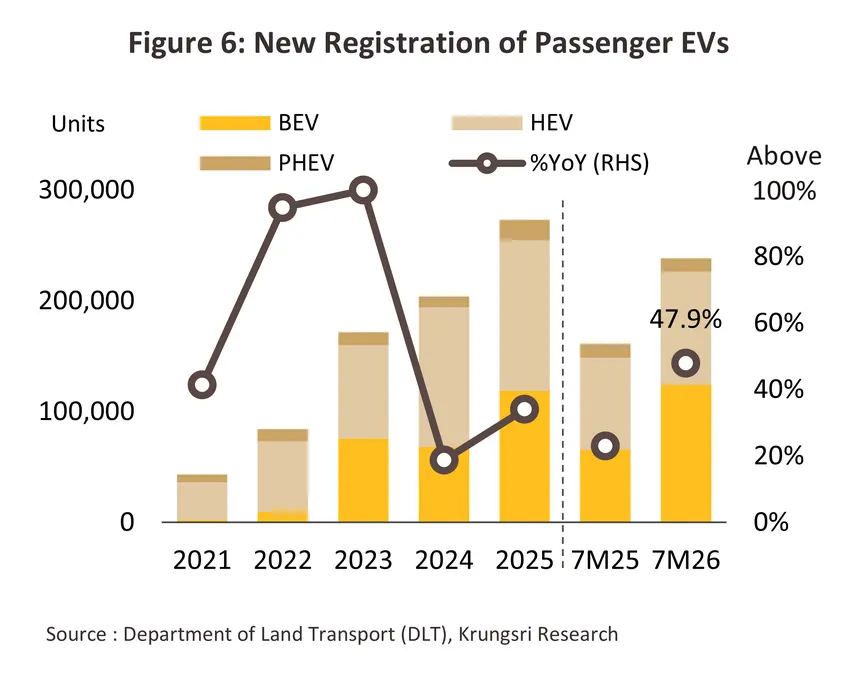
New passenger vehicle registrations by fuel type during the first 7 months of 2026 (Figures 5 and 6) are summarized as follows:
-
ICE passenger cars: New registrations declined -3.8% YoY, reflecting the continued rise in EV adoption and government support measures that encouraged greater imports and domestic production of small passenger BEVs. Chinese passenger BEVs, in particular, benefited from advantages in pricing and lower fuel costs compared with ICE passenger cars.
-
Passenger BEVs: New registrations increased 89.3% YoY, driven by (i) accelerated deliveries of domestically produced vehicles registered in January 2026, the final month eligible for the maximum subsidy of THB 150,000 per vehicle under the EV 3.0 scheme4/, (ii) rising concerns over higher energy costs, prompting more consumers to switch to passenger BEVs, as reflected in higher EV bookings at the Motor Show 2026 (March-April 2026)5/ and stronger passenger BEV registrations during April-July 2026, supported by the EV 3.5 scheme6/, and (iii) new model launches, particularly from Chinese automakers, featuring advanced technologies and driving ranges exceeding 400 kilometers per charge.
-
Passenger HEVs: New registrations increased 22.8% YoY, supported by (i) lower excise tax rates for HEVs and MHEVs to 6-9% and 10-12%, respectively, during 2026-20327/, for domestically produced vehicles meeting BOI investment requirements, making new Japanese passenger HEV models more affordable, (ii) new model launches by leading Japanese automakers offering affordable pricing, fuel efficiency, longer battery-powered driving ranges, and Advanced Driver Assistance Systems (ADAS)8/, and (iii) higher energy costs, which encouraged demand among consumers seeking fuel-efficient vehicles but not yet ready to switch to fully electric vehicles. However, new registrations of passenger PHEVs contracted -2.9% YoY, partly due to fewer new model options and prices that remained relatively high compared with other EV types.
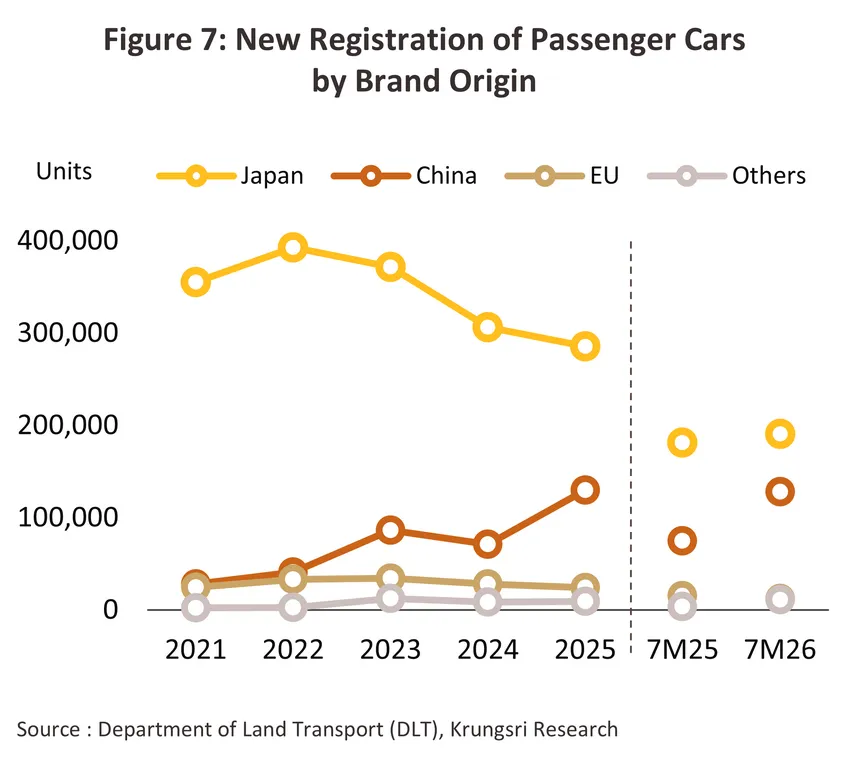
New passenger vehicle registrations by manufacturer nationality (Figure 7) are summarized as follows:
-
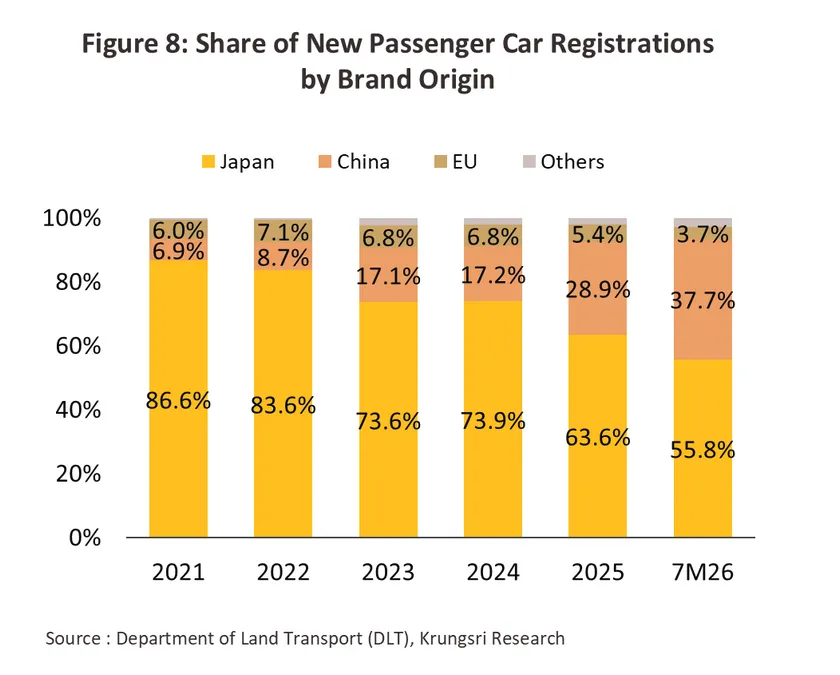
Japanese brands: New registrations increased 5.4% YoY, driven by the launch of new HEV models gaining popularity in Thailand, particularly in the B- and C-SUV segments9/, priced at THB 0.8-1.0 million and THB 1.0-1.2 million, respectively. These models appeal to middle- to upper-income consumers seeking affordable EV SUVs with lower fuel costs. Japanese brands also benefited from extensive dealership and service networks nationwide, meeting demand for after-sales services. However, the share of new registrations by Japanese passenger vehicle brands declined from 86.6% of total passenger vehicle registrations in 2021, prior to EV support measures, to 55.8% during the first 7 months of 2026 (Figure 8), in line with new ICE passenger car registrations, which contracted by an average of -22.1% per year during 2021-2025.
-
Chinese brands: New registrations increased 71.1% YoY, bolstered by (i) growth in new passenger BEV registrations in the B- and C-segments10/, priced at THB 0.5-0.7 million and THB 0.8-1.1 million, respectively, with more advanced technologies and driving ranges exceeding 400 kilometers per charge, and (ii) the launch of affordable new PHEV models11/, which appeal to consumers not yet ready to switch to fully EVs amid high fuel costs. As a result, the share of new registrations by Chinese passenger vehicle brands rose from 6.9% of total passenger vehicle registrations in 2021, prior to the introduction of EV support measures, to 37.7% during the first 7 months of 2026 (Figure 8). Growth was also supported by the EV 3.0 scheme, which attracted new automakers such as BYD and MG to invest and expand in Thailand during 2022-2023, and the EV 3.5 scheme, which brought in new entrants including Jaecoo, Aion, Deepal, and Geely from 2024 onward.
-
European brands: New registrations declined -16.4% YoY, weighed down by (i) higher fuel prices since April 2026, prompting some consumers to delay purchases of premium European ICE models, which are generally heavier and less fuel-efficient than conventional passenger vehicles, and (ii) the launch of premium EV models by Chinese automakers featuring more advanced technologies, such as massage seats and intelligent driving assistance systems, while remaining competitively priced relative to premium European ICE models12/. As a result, the share of new registrations by European passenger vehicle brands fell from 6.0% of total passenger vehicle registrations in 2021 to 3.7% during the first 7 months of 2026.
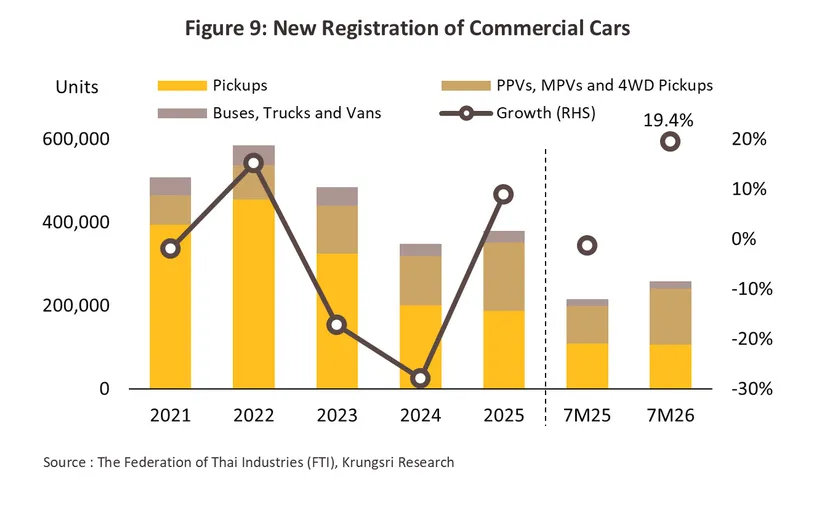
2) 1-ton pickup truck sales declined -1.8% YoY to 106,288 units, accounting for 26.2% of total vehicle sales (Figure 9), weighed down by (i) the still-weak financial position of middle- to lower-income consumers, particularly farmers facing high household debt and slow income recovery, leading financial institutions to maintain strict lending criteria for pickup truck loans, (ii) higher fuel costs resulting from the Middle East conflict, prompting some consumers to delay purchases of fuel-intensive pickup trucks, with sales during April-July 2026 declining -5.2% YoY after growth in the first quarter, despite support from new model launches by leading automakers and earlier growth in private investment, which helped sustain demand for commercial pickup trucks, and (iii) the still-fragile economic recovery, prompting some SMEs to postpone replacement of single-cab pickup trucks used for transporting raw materials and goods.
3) Other utility vehicles (PPVs and MPVs) and four-wheel-drive pickup trucks increased 48.1% YoY to 134,417 units, accounting for 33.1% of total vehicle sales, supported by easing loan approvals by financial institutions for target buyers. Most are middle- to upper-income consumers with resilient purchasing power and a preference for larger multipurpose vehicles for long-distance family travel and cargo transport.
4) Buses, trucks, and vans increased 0.5% YoY to 16,642 units, accounting for 4.1% of total vehicle sales, supported by higher private investment in high-potential industries, particularly in strategic areas such as the Eastern Economic Corridor (EEC). BOI-approved investment value increased at an average annual rate of 46.8% during 2023-2025, totaling THB 3.3 trillion, supporting demand for commercial trucks. However, sales of some vans and buses were affected by a slowdown in the tourism sector due to a decline in foreign tourist arrivals, prompting transport operators to postpone vehicle replacement for tourist transportation services.
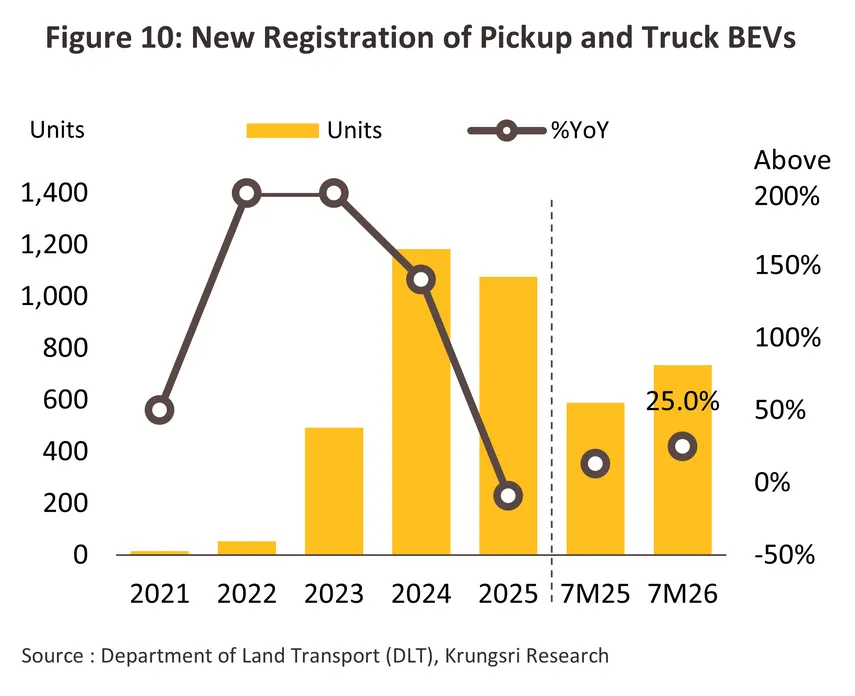
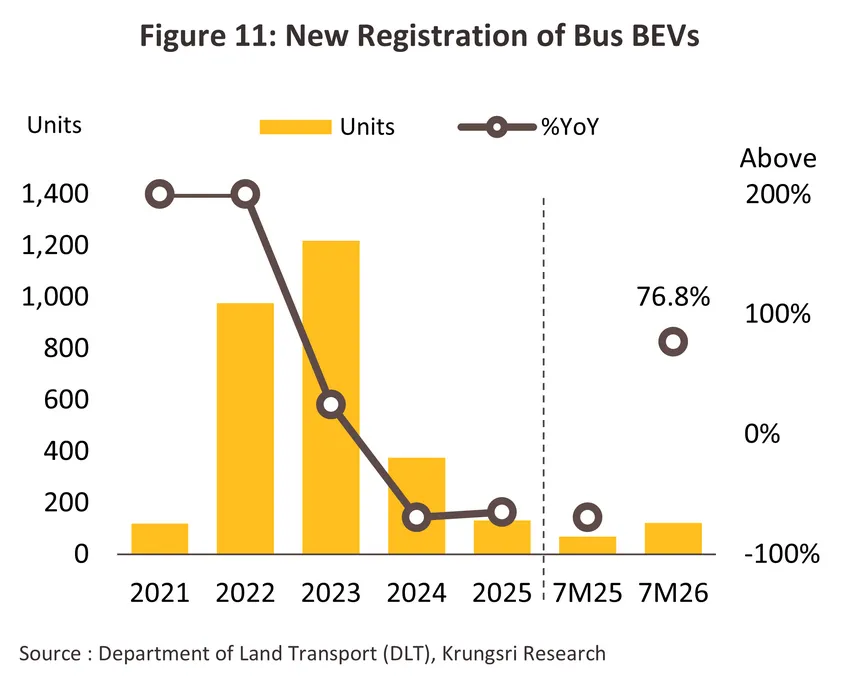
New registrations of commercial EVs (electric pickup trucks and trucks) increased 25.0% YoY to 735 units, while electric buses rose 76.8% YoY to 122 units, driven by (i) higher private investment in recent years, which boosted demand for electric trucks for goods transportation and electric buses for employee transportation, given their advantages in fuel costs and carbon reduction under corporate Net Zero strategies, and (ii) the replacement cycle of government-operated electric buses in Bangkok and surrounding areas, following the previous replacement cycle during 2022-2023.
However, commercial EVs and electric buses remain relatively niche in Thailand, accounting for only 0.6% and 3.2% of new registrations of commercial vehicles and buses, respectively. This is because batteries for large EVs still lack sufficient energy capacity for long-distance commercial operations. As a result, more than 90% of commercial EV registrations remain concentrated in Bangkok and surrounding areas. Similarly, almost all electric bus registrations in recent years were Category 1 electric buses operating exclusively in Bangkok and nearby provinces. In addition, the high cost of charging infrastructure remains a barrier to EV adoption among SME operators in the electric bus and commercial vehicle segments13/.
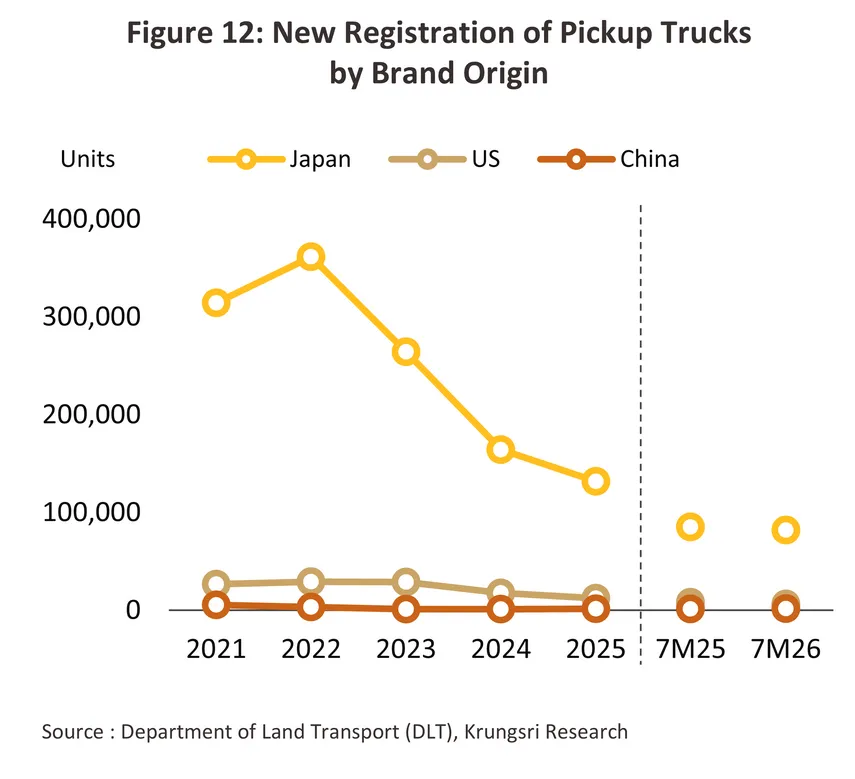
New commercial vehicle registrations in Thailand by manufacturer nationality, based on pickup trucks, which account for the largest share of registrations among commercial vehicle segments (Figure 12), are summarized as follows:
-
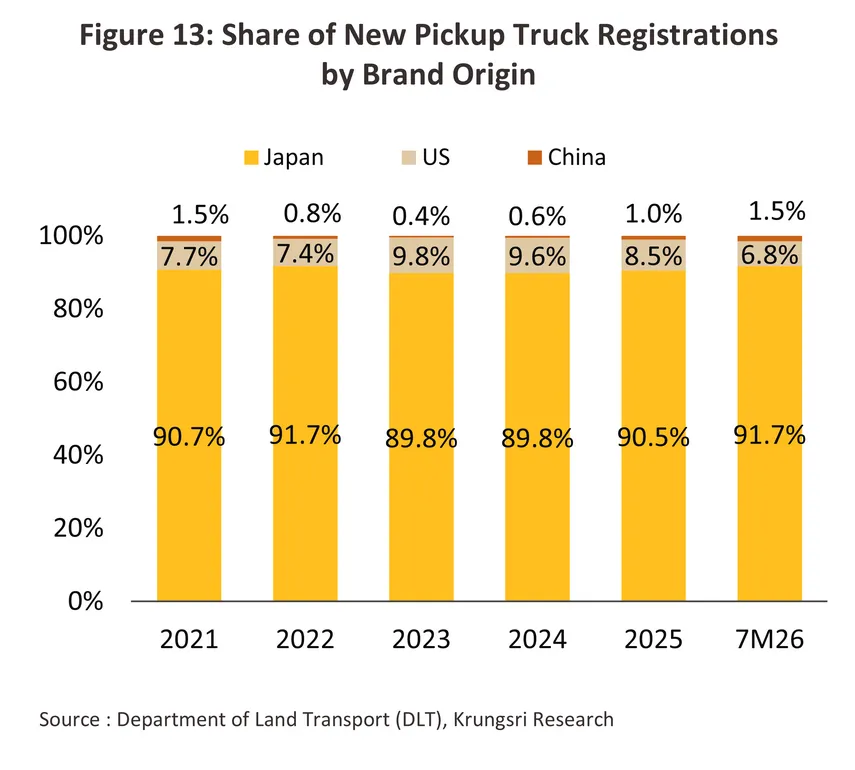
Japanese brands: During the first 7 months of 2026, new registrations declined -3.6% YoY, weighed down by (i) stricter lending by financial institutions due to the still-fragile financial position of buyers, most of whom are middle- to lower-income consumers affected by declining farm income and high household debt, and (ii) delayed pickup truck replacement by SMEs, such as mobile food and beverage vendors and goods transport operators, amid the still-fragile domestic economic recovery. However, Japanese brands remained the market leader, accounting for 91.7% of total new pickup truck registrations (Figure 13), supported by the continued popularity of ICE pickup trucks, most of which are produced by Japanese automakers, and new ICE pickup truck launches by leading automakers in Thailand14/, featuring more advanced technologies and catering to a wider range of user needs.
-
U.S. brands: New registrations declined -24.8% YoY, with their share falling to 6.8% of total new pickup truck registrations, continuing a decline over the past three years (Figure 13). This was weighed down by (i) stricter lending by financial institutions, making it more difficult for buyers of U.S. pickup trucks to obtain financing, as these vehicles are priced higher than conventional pickup trucks while their target customers remain largely middle- to lower-income consumers, and (ii) intensifying competition in the premium pickup truck segment following the entry of Chinese automakers focused on advanced technologies. Although new pickup truck models were launched in 202615/, featuring improved technologies and higher price points, they have yet to significantly stimulate demand amid the still-fragile domestic economic recovery and rising fuel costs.
-
Chinese brands: New registrations increased 15.8% YoY, with their share rising to 1.5% of total new pickup truck registrations, driven by the launch of new ICE, HEV16/, and BEV17/ pickup truck models featuring advanced technologies at affordable prices and appealing to consumers seeking commercial EVs that help reduce fuel costs amid rising oil prices.
Number of Branches and Sales of Automotive Dealerships
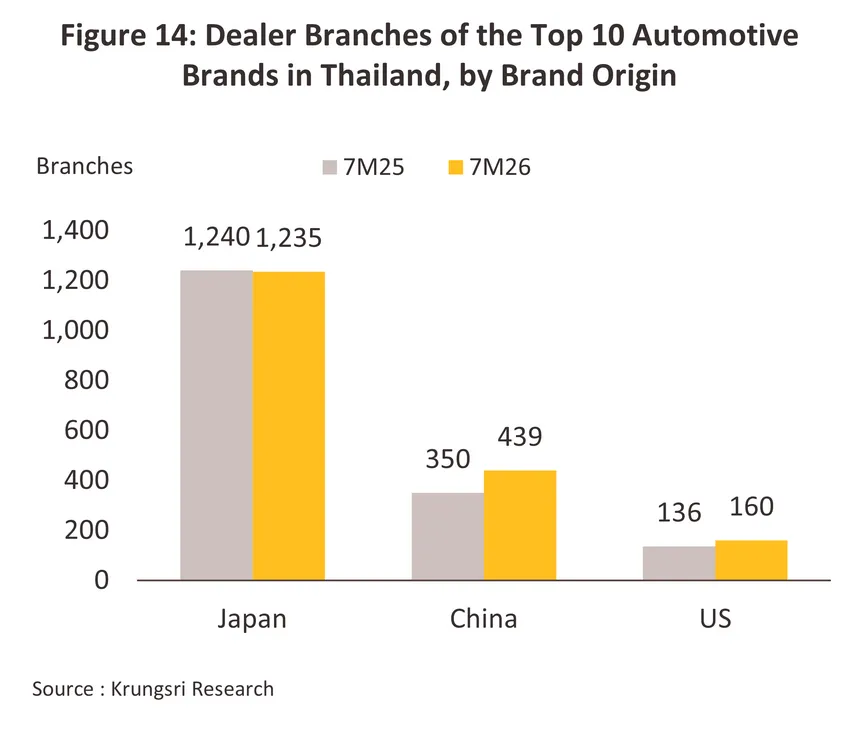
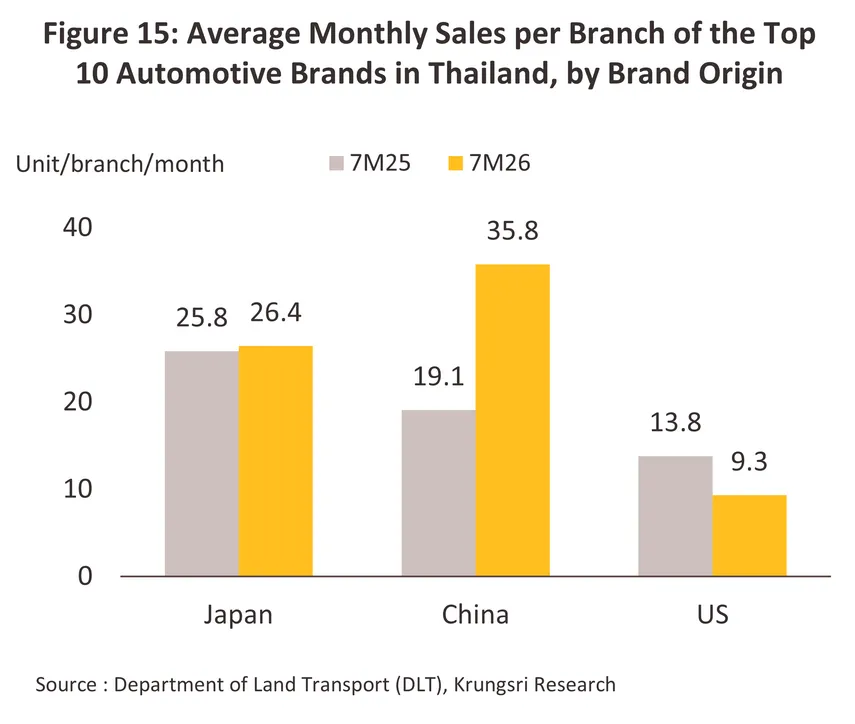
Among the top 10 vehicle brands by new registrations during the first 7 months of 2026, five were Chinese brands, four were Japanese brands, and one was a U.S. brand. Based on the number of showrooms (Figure 14) and monthly sales per showroom (Figure 15), the key developments are summarized as follows:
-
Japanese and U.S. brands: The number of showrooms increased 1.4% to 1,395 branches, driven by showroom expansion by some Japanese and U.S. pickup truck dealers to support the recovery in pickup truck sales, particularly during the fourth quarter of 2025 and the first quarter of 2026, following 32 consecutive months of contraction between January 2023 and August 2025. Expansion was also supported by continued growth in passenger HEV sales among Japanese automakers, with new passenger HEV registrations increasing at a CAGR of 41.1% during 2022-2025. However, monthly sales per showroom declined -9.8% YoY to an average of 17.9 units, in line with a -3.8% YoY decline in new ICE passenger car registrations and a -1.3% YoY decline in 1-ton pickup truck sales. Pickup truck sales returned to contraction during April-July 2026, partly due to higher energy costs, which prompted some consumers to delay purchases of pickup trucks and ICE passenger cars with relatively high fuel costs.
-
Chinese brands: Showroom numbers expanded 25.4% YoY to 439 branches to support continued sales growth, which recorded a CAGR of 179.6% during 2022-2025. Growth was particularly evident among brands supported under the EV 3.5 scheme that entered the Thai market during 2024-2025, such as Deepal and Jaecoo, which expanded their showroom networks to 55 and 32 branches, respectively18/. Meanwhile, monthly sales per showroom increased 87.7% YoY to 35.8 units, bolstered by higher passenger BEV registrations following accelerated registrations of vehicles supported under the EV 3.0 scheme in January 2026 and rising energy costs.
However, some Japanese-brand dealerships, particularly those heavily reliant on ICE passenger car sales amid recent declines, have adjusted their business strategies to address mounting challenges. These include (i) reducing showroom numbers, with operations outside major cities consolidated to one showroom per province as a hub for after-sales services, (ii) becoming dealers for Chinese automakers that have gained popularity recently, and (iii) allocating half of showroom space to Chinese vehicle brands while retaining the remaining half for Japanese brands to reduce operating costs19/. In addition, some Japanese-brand dealerships have diversified into other businesses to generate revenue beyond new vehicle sales, including car rental services, vehicle maintenance and repair centers, insurance brokerage, and used-car dealerships20/.
Revenue from After-sales Services and Spare Parts Sales
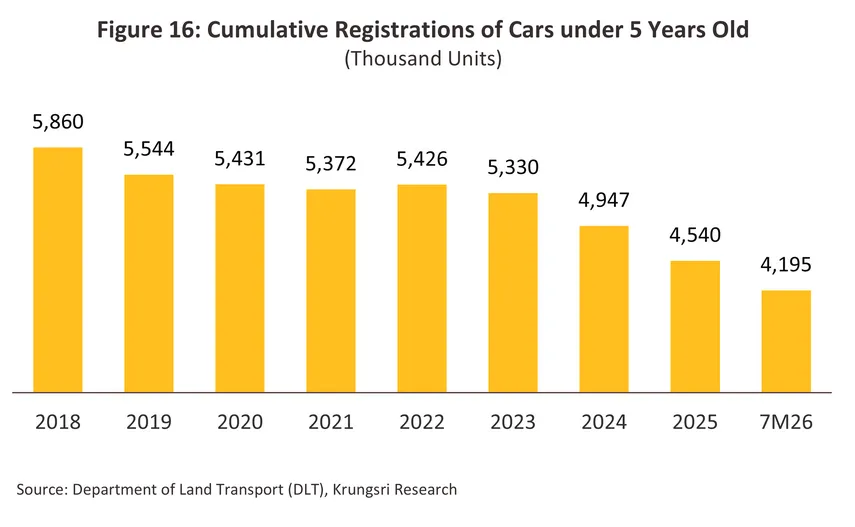
Revenue from after-sales services and spare parts sales declined, in line with a -7.6% YoY decline in cumulative vehicle registrations aged less than 5 years to 4.2 million units during the first 7 months of 2026 (Figure 16), weighed down by21/:
-
Strict lending by financial institutions under ongoing credit quality management measures, including debt moratoriums, debt restructuring, and tighter loan approvals, limited access to auto hire-purchase loans in an effort to contain rising NPLs and SMLs between the third quarter of 2022 and the second quarter of 2024.
-
Weather volatility and low agricultural prices affected agricultural output and farm income, prompting some farmers to postpone replacement of pickup trucks used to transport agricultural products, while others were unable to obtain auto hire-purchase loans due to weak financial positions.
-
A decline in foreign tourist arrivals, which have yet to recover to pre-COVID-19 levels, reduced demand for vehicles used in tourist transportation, such as vans, buses, and pickup trucks.
-
The still-fragile economic recovery, coupled with high household debt and living costs, continued to weigh on overall consumer purchasing power and demand across multiple vehicle segments.
Meanwhile, revenue from after-sales services and spare parts sales for passenger BEVs has increased in recent years, in line with cumulative registrations of passenger BEVs aged less than 5 years, which recorded a CAGR of 189.2% during 2021-2025. Their share of total cumulative passenger vehicle registrations rose from 0.4% in 2021, prior to the EV 3.0 and EV 3.5 schemes, to 21.9% in July 2026 under these support measures19/. Growth was driven by (i) government support measures, including direct subsidies, tax incentives, and domestic production compensation requirements under the EV 3.0 scheme (2022-2025) and EV 3.5 scheme (2024-2027), (ii) new passenger BEV model launches featuring more advanced technologies at affordable prices, particularly during 2025-2026, when several EV models offering driving ranges exceeding 400 kilometers per charge were introduced, and (iii) investment in EV charging infrastructure, which increased the number of charging stations in Thailand to 4,817 as of April 2026, recording a CAGR of 48.1% during 2023-2026, while the number of charging points reached 14,486, with a CAGR of 46.3%22/.
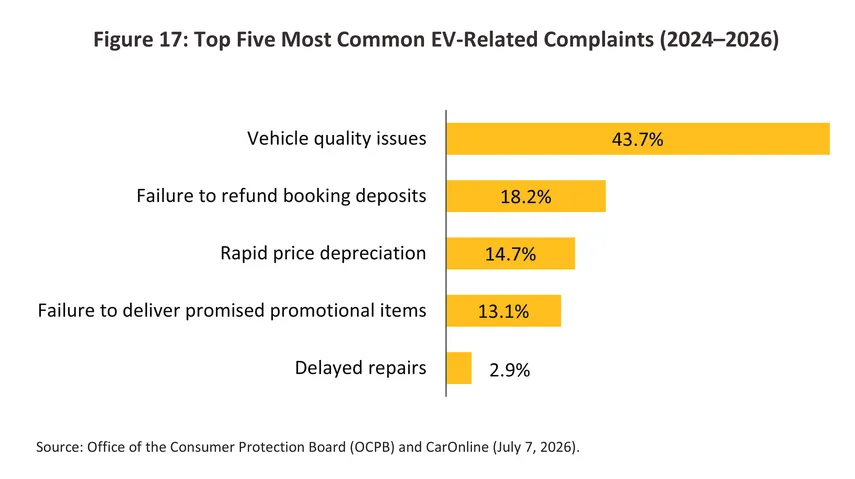
However, after-sales service issues remain a key challenge affecting consumer confidence in Chinese EVs. This is partly due to the strategy adopted by many Chinese EV automakers, which typically prioritize sales growth before gradually expanding their dealership and service networks23/. As a result, after-sales service capacity has often lagged behind demand, particularly in terms of maintenance delays and incomplete installation of accessories promised under sales promotions. Together, these issues accounted for 16.0% of all EV-related consumer complaints during 2024-202624/ (Figure 17).
Outlook
Revenue from Vehicle Sales
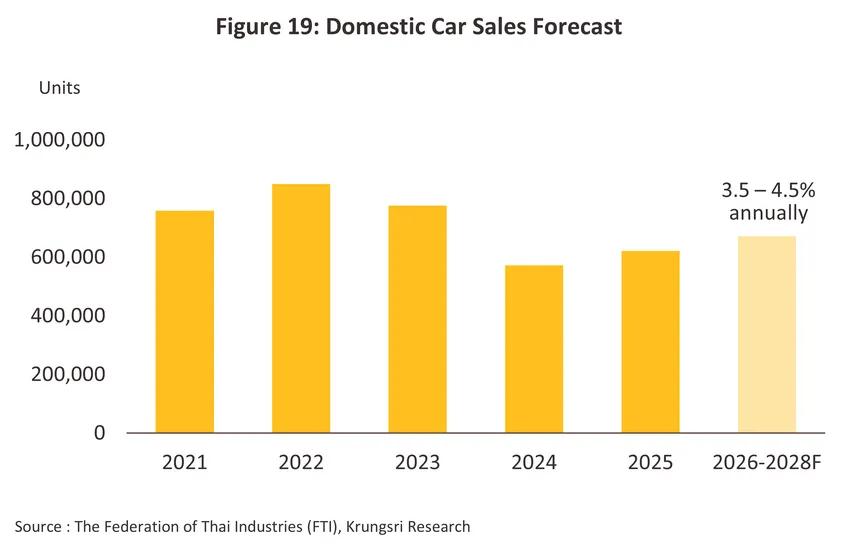
Revenue from vehicle sales is projected to increase by an average of 3.5-4.5% per year during 2026-2028 (Figure 18), in line with the growth outlook for vehicle sales (Figure 19). Key supporting factors include:
-
Government EV adoption measures will continue to support market growth, including (i) a new scheme under the energy transition framework, expected to promote the adoption of clean-energy vehicles and further boost domestic demand for XEVs, while reducing fuel consumption and air pollution, with implementation anticipated within 2027 (Source: Money & Banking (June 23, 2026)) and (ii) the EV 3.5 scheme, under which subsidies for domestically produced and sold passenger BEVs will expire from 2028 onward, likely prompting purchases ahead of the scheme's expiration.
-
Lower excise tax rates for HEVs and MHEVs (Mild HEVs) to 6-9% and 10-12%, respectively, during 2026-2032 for automakers meeting government investment requirements will make passenger HEVs and MHEVs more affordable.
-
Sales promotions are expected to accelerate inventory clearance of passenger BEVs produced under the domestic production requirements of the EV 3.5 scheme during 2026-2027.
-
The gradual recovery in pickup truck sales is expected to be supported by users entering a new replacement cycle after extending vehicle usage since the COVID-19 pandemic25/. Rising private investment is also expected to support demand for pickup trucks and light commercial trucks.
However, several challenges are expected to weigh on the Thai automotive market and constrain growth in vehicle sales revenue, including (i) fragile consumer purchasing power amid the still-fragile economic recovery, rising living costs, and persistently high household debt, which may lead financial institutions to maintain strict lending criteria, particularly for middle- to lower-income consumers, and (ii) intense competition, particularly in the passenger BEV segment, through price competition that may weigh on revenue and sales promotion expenses that increase operating costs and may limit profitability.
Revenue from After-sales Services and Spare Parts Sales
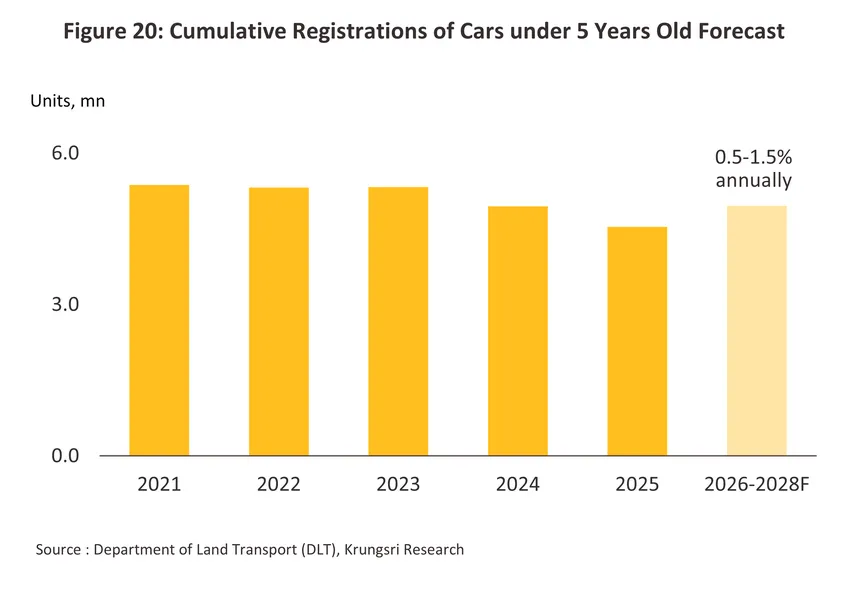
Revenue from after-sales services and spare parts sales is projected to increase by an average of 0.5-1.5% per year (Figure 18), in line with growth in cumulative vehicle registrations aged less than 5 years (Figure 20). This will be supported by (i) growing cumulative registrations of vehicles aged 0-3 years, as the continued decline in NPLs and SMLs in the auto hire-purchase segment has led financial institutions to ease loan approvals, supporting the recovery in domestic vehicle sales since 2025, and (ii) growing cumulative registrations of passenger BEVs, driven by government support measures in recent years, particularly passenger BEVs aged 4-5 years that recorded strong sales growth during 2022-2023 under the EV 3.0 scheme. However, revenue from after-sales services and spare parts sales for ICE passenger cars and pickup trucks aged 4-5 years is expected to remain constrained, due to stricter auto hire-purchase lending by financial institutions in prior years, which contributed to a decline in domestic vehicle sales during 2023-2024.
Automotive dealerships are expected to benefit from growing vehicle sales and an increasing number of cumulative vehicle registrations aged less than 5 years. However, they will continue to face challenges from declining sales and after-sales service revenue for ICE passenger cars as the transition toward EV adoption continues. The key business opportunities and challenges by brand nationality are summarized as follows:
-
Japanese brands are expected to benefit from (i) support measures for passenger HEVs, including lower excise tax rates for domestically produced HEVs and a new scheme under the energy transition framework26/, which is expected to improve the affordability of passenger HEVs, (ii) advantages in after-sales services, supported by nationwide service networks and readily available spare parts inventories, making Japanese brands a preferred choice among Thai consumers who value after-sales support, and (iii) the gradual recovery in domestic pickup truck sales, driven by a new replacement cycle, rising private investment, and the technological advantages of ICE pickup trucks, which remain better suited for commercial use27/. However, brands that rely primarily on ICE passenger car sales will continue to face risks from the ongoing decline in Thailand's ICE passenger car market.
-
Chinese brands are expected to benefit from (i) support measures for passenger BEVs under the EV 3.5 scheme and the government's new EV adoption program, helping passenger BEVs remain competitively priced, (ii) new EV model launches, including B- and C-segment passenger EVs priced below THB 1.1 million and premium electric SUVs priced above THB 1 million, offering more advanced technologies and longer driving ranges, (iii) new premium pickup truck models that appeal to consumers seeking multipurpose vehicles with advanced technologies, and (iv) the expansion of related supply chains, including battery testing and maintenance centers, charging stations, and EV component suppliers in Thailand, in line with rising EV production by Chinese automakers that have established local manufacturing operations in recent years. However, Chinese brands will continue to face risks from after-sales service issues that may affect consumer confidence, accelerated passenger BEV inventory clearance in 2027 as Chinese automakers must increase domestic production to three times prior import volumes, and higher insurance premiums for BEVs than for other vehicle types.
-
European and U.S. brands are expected to continue benefiting from the resilient purchasing power of middle- to upper-income consumers, as well as advantages in brand image and technological leadership. However, overall sales will remain challenged by growing competition from Chinese brands, which are expected to launch more premium passenger vehicle and pickup truck models featuring advanced technologies, such as massage seats and intelligent driving assistance systems, while offering more competitive pricing than premium European ICE models. In addition, persistently high fuel costs may prompt some consumers to postpone purchases of European ICE vehicles, most of which are equipped with larger engines and consume more fuel than mass-market models.
1/ For additional details, please refer to Industry Outlook 2026-2028: Automobile Industry
2/ The 'Pickup with Credit Guarantee' scheme is a hire-purchase loan guarantee program operated by the Thai Credit Guarantee Corporation (TCG) to assist small business operators, self-employed workers, and farmers seeking to purchase pickup trucks
for business use. Under the scheme, TCG provides guarantees of up to THB 1.5 million per borrower for a maximum of 7 years (84 installments), helping reduce collateral constraints and improve access to financing from financial institutions. (Source: TCG)
3/ For additional details, please refer to EV Price War: Will EV Prices Drop Further or Is This the Bottom?.
4/ New passenger BEV registrations surged 228.1% YoY to 40,466 units in January 2026, the final month eligible for the maximum subsidy under the EV 3.0 scheme. (Source: DLT)
5/ Total vehicle bookings at the Motor Show 2026 reached 132,951 units, up 71.8%, including more than 80,000 EV bookings, accounting for over 60% of total bookings at the event (Sources: The Standard (April 6, 2026) and EV Roads (April 14, 2026)).
6/ New passenger BEV registrations increased 69.5% YoY during April-July 2026, exceeding the 17.7% YoY growth recorded during February-March 2026 under the EV 3.5 scheme. (Source: DLT)
7/ This replaced the previous structure, under which excise tax rates were scheduled to increase by 2% every two years. (Source: Autolifethailand (July 26, 2024))
8/ Examples include the Advanced Emergency Braking System (AEB), Lane Keeping Assistance Systems (LKAS), Blind Spot Detection (BSD), Forward Vehicle Collision Warning Systems (FCW), Lane Departure Warning System (LDW), and Adaptive Cruise Control (ACC) (Source: BOI).
9/ Examples include the Toyota Yaris Cross, Toyota Corolla Cross, and Mitsubishi XFORCE HEV.
10/ Examples include the BYD Atto 3, MG S5 EV, Jaecoo 6, Geely EX5, AION UT, and Deepal S05.
11/ Examples include the Jaecoo 7 and GWM Haval H6 PHEV.
12/ Source: Nikkei Asia (July 23, 2026)
13/ Electric trucks are priced around 1.5-2 times higher than ICE trucks, representing an additional cost of nearly THB 2 million per unit. Uncertainty over resale values also remains a challenge, keeping the overall cost of ownership of electric trucks higher. In addition, electric trucks require dedicated charging facilities due to their higher power requirements and larger space needs. Public charging stations for electric trucks, however, remain limited, while businesses that choose to install their own chargers face investment costs of several million baht (Source: TDRI (March 5, 2026)).
14/ Examples include the Toyota Hilux Travo, which features a stronger chassis, a redesigned suspension system, driver assistance features, and a more advanced digital display (Source: Toyota).
15/ Source: Headlight Magazine (March 23, 2026).
16/ Examples include the GWM POER SAHAR HEV (Source: Autolifethailand (November 28, 2024)).
17/ Examples include the GEELY RIDDARA RD6 (Source: Autolifethailand (December 1, 2025)).
18/ Retrieved from https://www.changan.co.th/th/dealer/ and https://www.omodajaecoo.co.th/th/dealerslist on July 16, 2026.
19/ Source: Prachachat Turakij (July 29, 2026
20/ Source: Autolifethailand (April 9, 2026).
21/ For additional details, please refer to the Industry Outlook 2024-2026, 2025-2027 and 2026-2028.
22/ Source: EVAT
23/ This differs from the strategy traditionally adopted by Japanese automakers, which focused on expanding service centers, dealership networks, and related supply chains during the early stages of entering the Thai market. (Source: MGR Online (April 3, 2026))
24/ Sources: OCPB and CarOnline (July 7, 2026)
25/ During 2021-2025, cumulative registrations of pickup trucks aged 11 years and older increased by an average of 3.8% per year. As a result, cumulative registrations of pickup trucks in this age group reached 4,878,397 units in 2025, accounting for 69.9% of total cumulative pickup truck registrations. (Source: DLT)
26/ The Ministry of Finance is preparing energy transition measures to encourage EV adoption. The measures are expected to be implemented through financial institutions and auto finance companies, including direct subsidies, preferential financing schemes, and other financial support to reduce vehicle purchase costs (Source: Thansettakij (June 23, 2026)).
27/ This is particularly relevant when compared with electric pickup trucks, which require longer charging times, route planning around charging station availability, and have driving ranges per charge that remain less suitable for long-distance travel.







.webp.aspx)