EXECUTIVE SUMMARY
The residential property market in the Bangkok Metropolitan Region (BMR) is expected to expand gradually over 2027–2029, driven by (i) a gradual economic recovery, with renewed growth in exports and private investment, alongside a recovery in tourism, which will progressively improve employment and purchasing power; (ii) the expansion of transport networks and the full operation of new mass transit lines, particularly the Orange Line (Taling Chan–Min Buri) and the Southern Purple Line (Tao Poon–Rat Burana), which will unlock new high-potential locations and encourage homebuying decisions; and (iii) demand from foreign buyers and expatriates, including those seeking to mitigate risks from global geopolitical uncertainty, as well as highly skilled workers and foreign specialists relocating to Thailand amid shifts in manufacturing bases and investment in next-generation industries. These positive factors will help sustain the housing market’s recovery, particularly in the mid- to upper-priced segments and above. However, the sector will continue to face challenges from high household debt and stricter mortgage approval criteria, which are increasingly affecting middle-income groups, as well as geopolitical pressures that weigh on financing costs and foreign purchasing power. Rising development costs are also driving selling prices up faster than consumer incomes. Longer-term structural challenges include population aging and a growing preference for renting over homeownership. In addition, flooding in the BMR has heightened the need for developers to strengthen flood protection infrastructure, incorporate climate-resilient design, and increase investment to meet ESG standards, adding to operating costs in the years ahead.
Krungsri Research view
The outlook for the housing market in 2027–2029 can be summarized as follows:
-
Low-rise housing developers (in BMR): Large developers’ revenue is expected to remain stable or grow slightly, driven by a focus on upper-end projects targeting high-purchasing-power buyers. They will retain advantages in financing costs and access to capital market funding, alongside greater strategic flexibility, the ability to form business partnerships, and readiness to develop projects in line with ESG standards, strengthening their long-term competitiveness. In contrast, medium-sized and small developers are likely to lose market share amid intensifying competition and rising construction and financing costs. Developers lacking business partnerships or facing limited access to funding will face greater challenges and heightened liquidity risks.
-
High-rise housing developers (in BMR): Large developers’ revenue is expected to continue growing, leveraging their funding capacity and expertise to focus on projects in central city locations and along mass transit lines. However, intense competition to clear excess supply will keep marketing and promotional campaign costs elevated, potentially weighing on profitability. Meanwhile, medium-sized and small developers will continue to face significant pressure. Most focus on low-rise condominiums (up to 8 floors) in Bangkok’s outer areas and surrounding provinces, where they face competition from landed housing projects in similar price ranges, leading to a slowdown in business performance.
Overview
The real estate sector is a key driver of Thailand’s economy, generating substantial financial flows, creating employment, and maintaining extensive linkages with the supply chains of other industries, including construction, building materials, electrical appliances, furniture and interior decoration, and financial institutions. In 2025, the real estate sector and related economic activities across its supply chain accounted for approximately 7–8%1/ of Thailand’s gross domestic product (GDP).
The real estate sector can be divided into three principal segments based on use: residential, commercial, and industrial property. Residential property accounts for the largest share, representing two-thirds of the total value of Thailand’s real estate market (source: World Bank), with demand primarily driven by domestic buyers. Under Thai law, foreigners are permitted to purchase and own condominiums, subject to a foreign ownership limit of 49% of a condominium project’s total saleable area. Foreign ownership of detached houses and townhouses remains subject to strict conditions and restrictions.
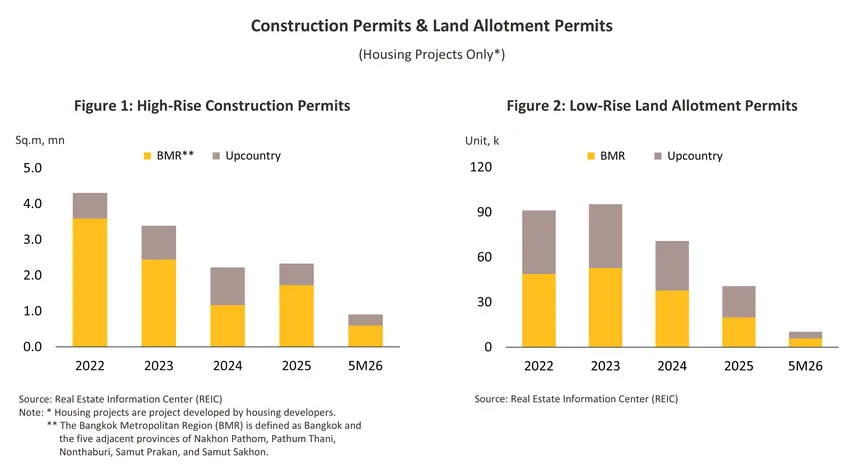
In the past, the housing market in Bangkok and its vicinity (BMR) has accounted for a larger share of the market than the regions. Based on the five-year average for 2021–2025, the ratio of permitted high-rise residential construction area in the BMR to that in the regions stood at 74:26. For low-rise housing, the shares of land allocation permits by unit count were more evenly distributed at 51:49 (Figure 1 and Figure 2). The BMR’s concentration of employment, business districts, and high urbanization has attracted major developers to focus primarily on this market. However, in 2024–2025, applications for high-rise construction permits and low-rise land allocation permits slowed significantly across all areas, reflecting developers’ adjustments to weakening housing demand.
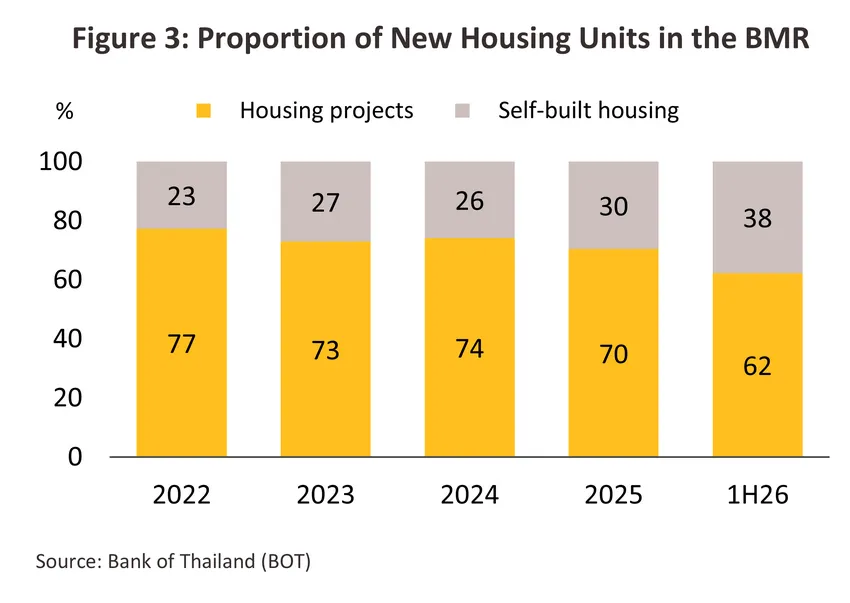
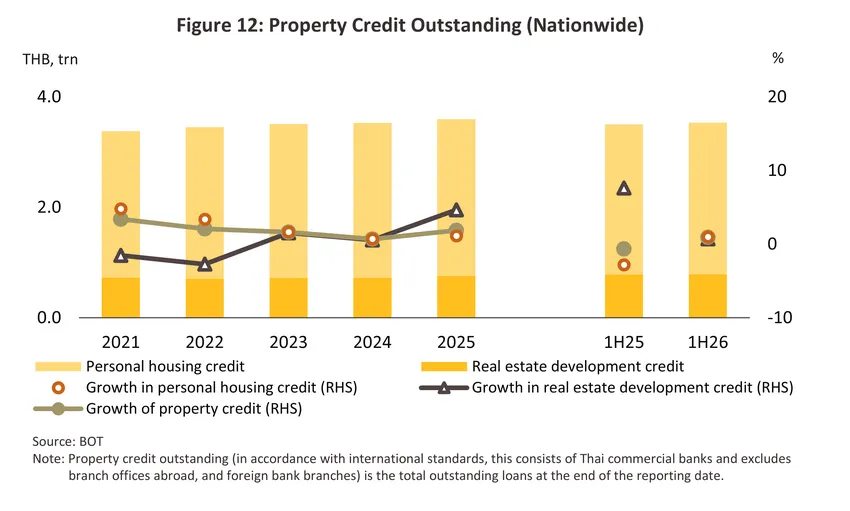
The housing market in BMR comprises two main segments: self-built housing and housing projects developed by property developers (Figure 3). In 2022–2025, housing projects accounted for 70–77% of newly registered residential units. However, this share declined to 62% in 1H26, while self-built housing increased to 38%. As a result, the value of newly launched housing projects has declined significantly, averaging THB 290 billion in 2025, compared with approximately THB 400–450 billion annually in 2022–2024.
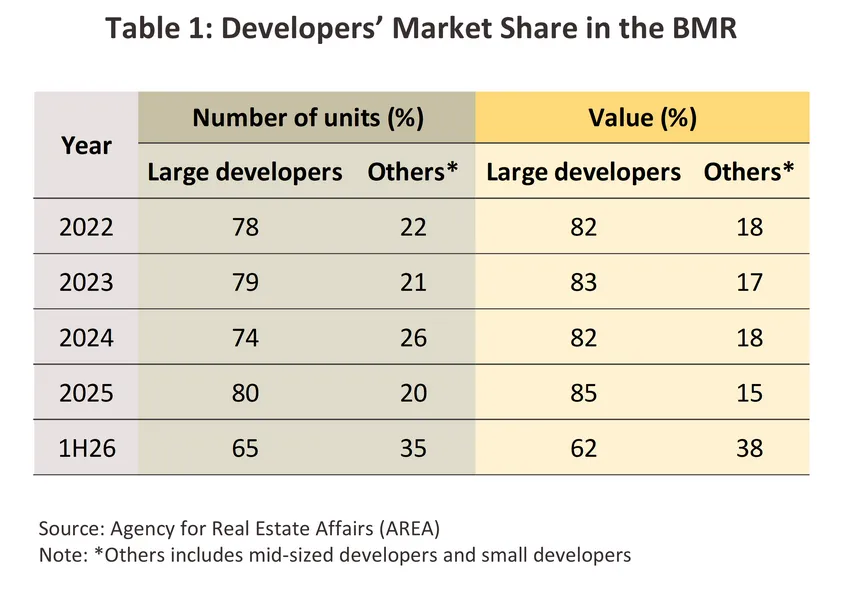
During 2022–2025, large developers listed on the Stock Exchange of Thailand (SET) and their affiliated companies accounted for 74–80% of the market by unit volume and 82–85% by project value (Table 1). In 1H26, their shares declined to 65% by unit volume and 62% by project value, as they adopted a more cautious approach and delayed new project launches to preserve liquidity. Nevertheless, large developers retain advantages in cost management, economies of scale, and brand credibility among consumers.
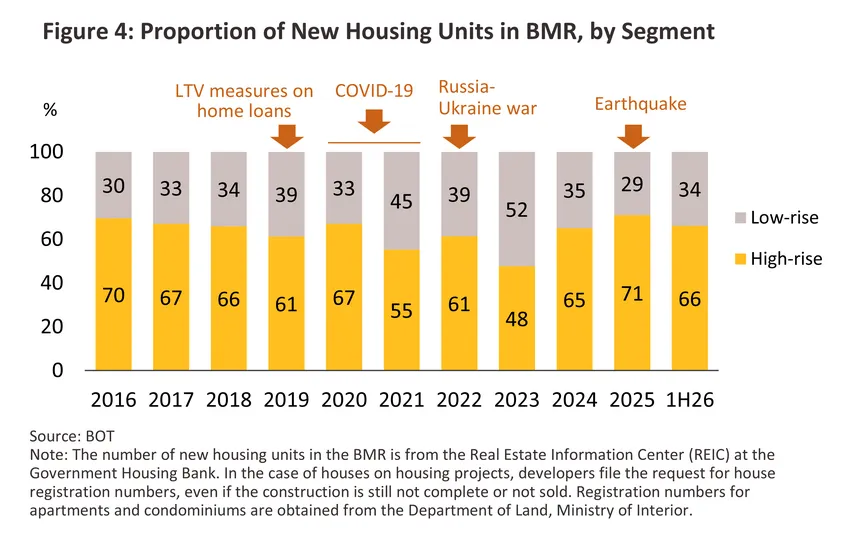
Over the past decade (2016–2025), high-rise projects (i.e., condominiums) have accounted for a larger share of newly registered housing units in the BMR than low-rise projects (i.e., detached houses and townhouses), representing an average of 60–70% of total newly registered units2/(Figure 4). This trend reflects rising land prices and the expansion of the mass transit network. However, the share of high-rise units declined to 55% during the COVID-19 crisis in 2021, reaching a low of 48% in 2023, when low-rise housing accounted for a higher share for the first time at 52%. The share of high-rise units subsequently rebounded to a peak of 71% in 2025, reflecting the completion and handover of projects launched earlier, before easing to 66% in 1H26. Although the earthquake in early 2025 may not have immediately affected the supply of completed units, its psychological impact weighed on condominium sales and new project launches in subsequent periods.
Situation
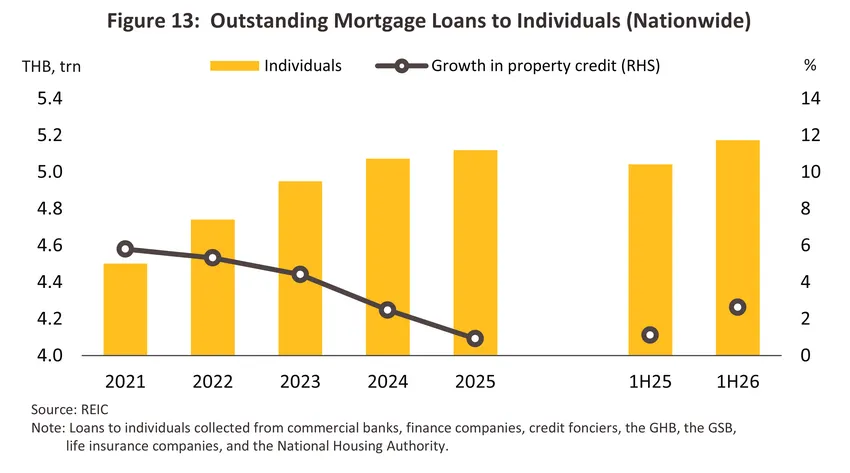
In 2026, the housing market in the BMR showed a stronger-than-expected recovery, with both new supply and sales returning to double-digit growth in 1H26 after reaching lows in 2025. However, this momentum is expected to moderate in 2H26 amid persistent headwinds, including (i) sluggish Thai economic growth and global trade uncertainties weighing on manufacturing and investment; (ii) persistently high household debt, prompting financial institutions to maintain stringent lending standards, particularly for middle- to lower-income borrowers3/; (iii) global economic volatility affecting the purchasing power of certain investor groups; and (iv) the immediate impact of flooding and waterlogging in the BMR in September 2026, which dampened investment sentiment, reduced visits to housing projects, and temporarily delayed ownership transfers in low-lying areas toward the end of 3Q26. Nevertheless, the overall market continued to expand, driven by demand from financially ready, high-purchasing-power buyers seeking second homes and mid- to high-end condominiums4/. Meanwhile, developers focused on promotional campaigns to clear existing inventory, while government property stimulus measures encouraged Thai consumers to accelerate purchasing decisions. These measures included reducing property transfer and mortgage registration fees to 0.01% for residential properties priced at no more than THB 7 million5/, relaxing loan-to-value (LTV) regulations6/, and cutting the policy rate. These factors helped sustain growth in certain market segments. The overall housing market in the BMR can be summarized as follows:
-
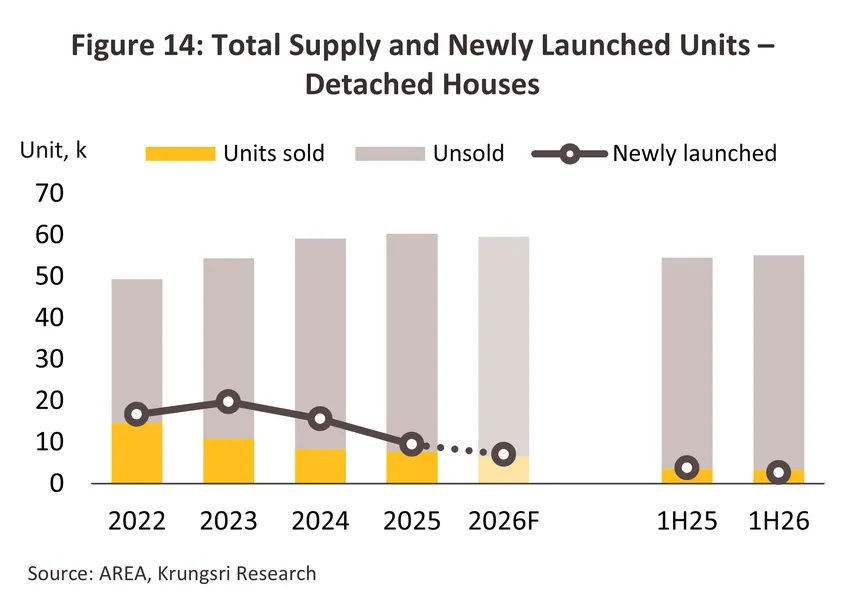
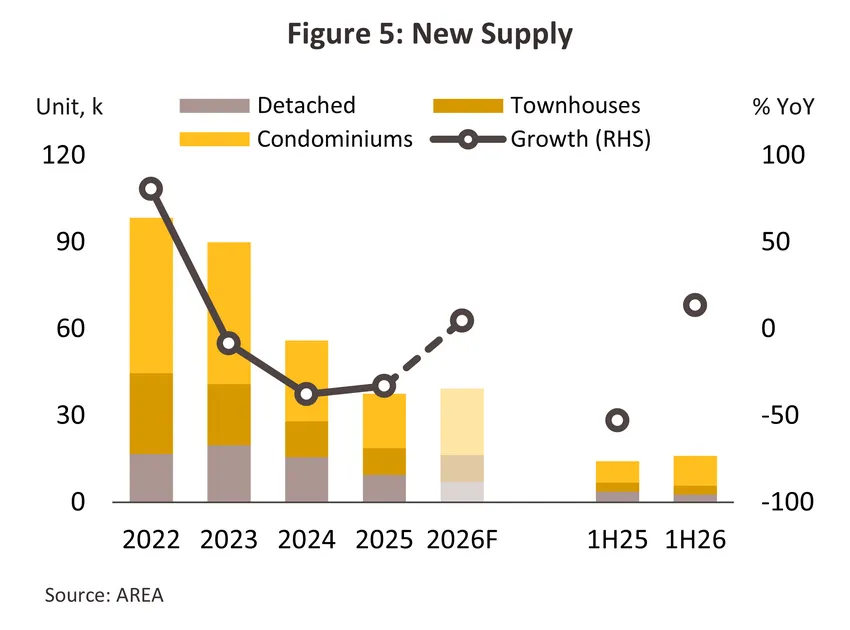
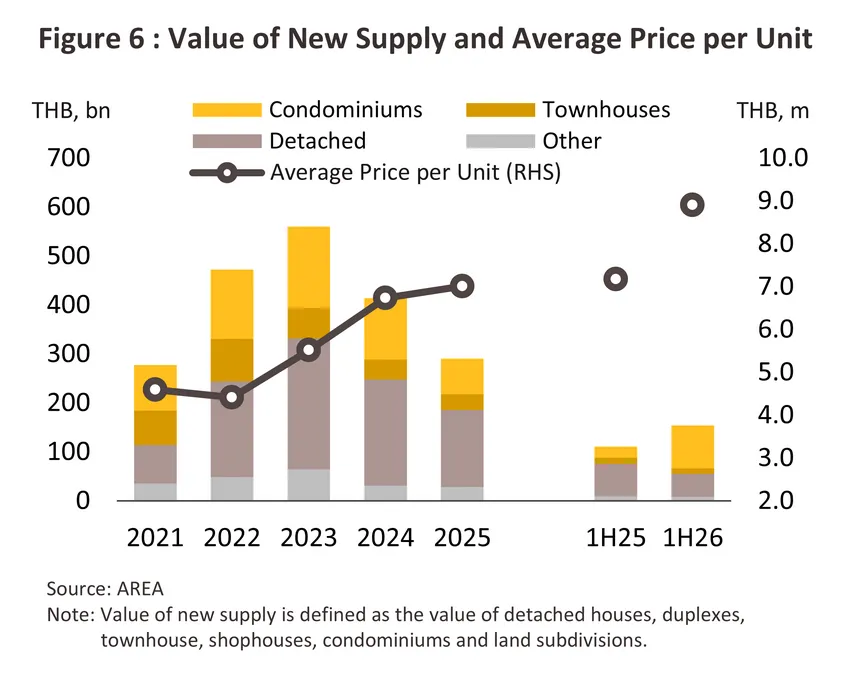
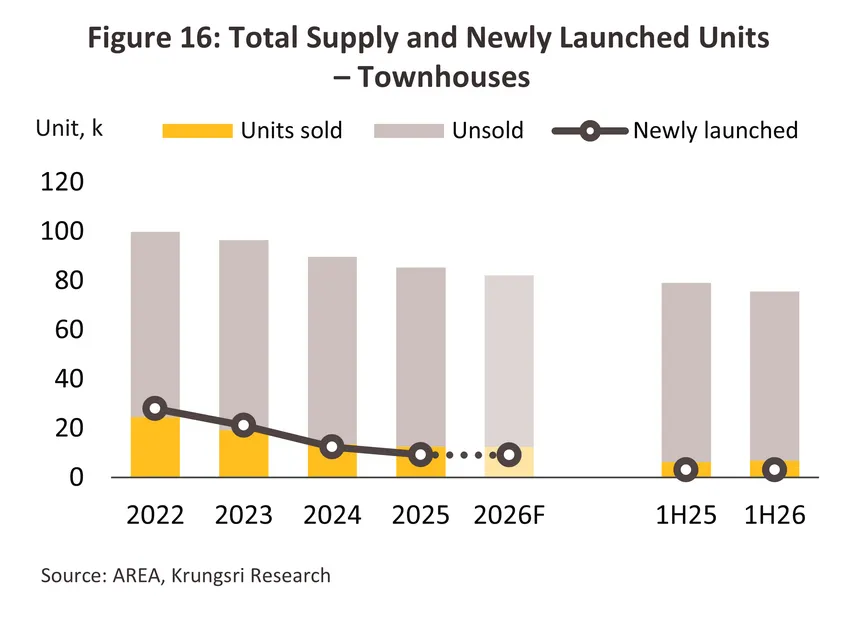
New project launches in 1H26 increased by 13.6% YoY to 16,107 units (Figure 5), with a total project value of THB 150 billion (+38.8% YoY). This reflected developers’ strategic shift toward the mid- to high-end segments, targeting buyers with strong purchasing power and better access to mortgage financing, thereby reducing exposure to household debt risks among middle- to lower-income buyers in the mass market. As a result, the average launch price rose to THB 8.9 million per unit, up from THB 7.2 million in 2025. By housing type, new supply was concentrated in condominiums, which accounted for 65% of total launches, at 10,418 units (+40.9% YoY), while launch value surged by 281.1% YoY to THB 87.38 billion. In contrast, low-rise launches continued to slow. Townhouse launches, accounting for 19% of total new units, edged down by -0.3% YoY to 3,061 units, while detached house launches, representing 16%, declined by -29.3% YoY to 2,628 units. For the remainder of 2026, developers are expected to gradually increase new launches in line with seasonal trends, while remaining cautious and focusing on luxury condominiums7/ and above in central business district (CBD) locations. Flooding in September–October 2026 may prompt developers to review or delay low-rise projects in low-lying areas and prioritize locations with effective drainage systems. Developers may also upgrade construction engineering standards through climate-resilient design, such as raising ground levels and installing on-site water management systems, increasing development costs. For full-year 2026, new launches are projected to grow by 4.8% to approximately 39,250 units (Figure 5).
-
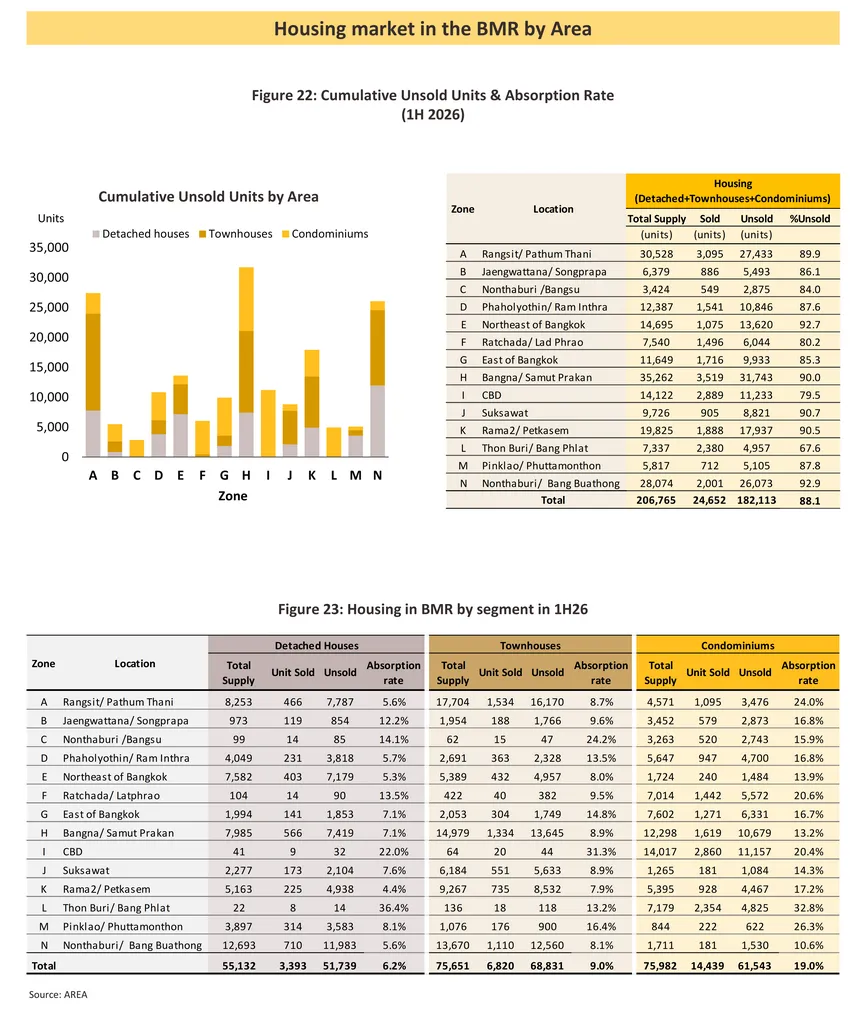
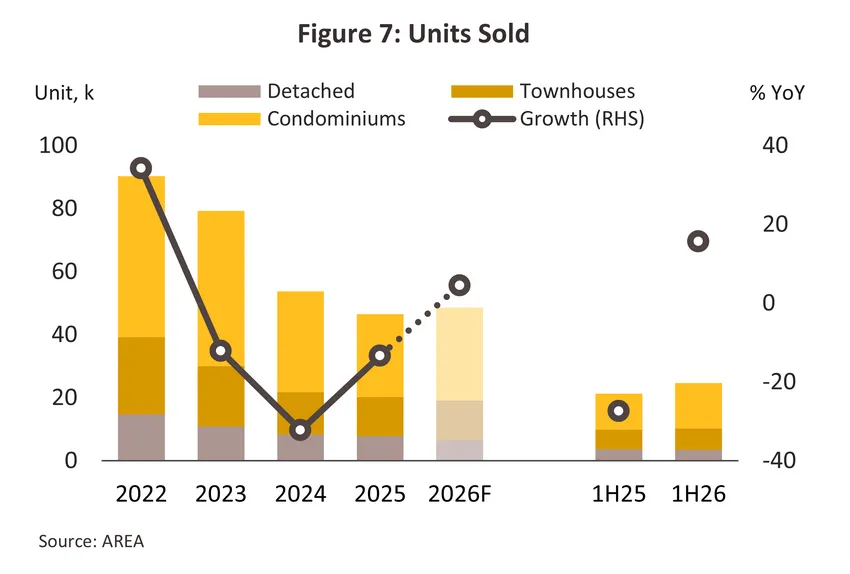
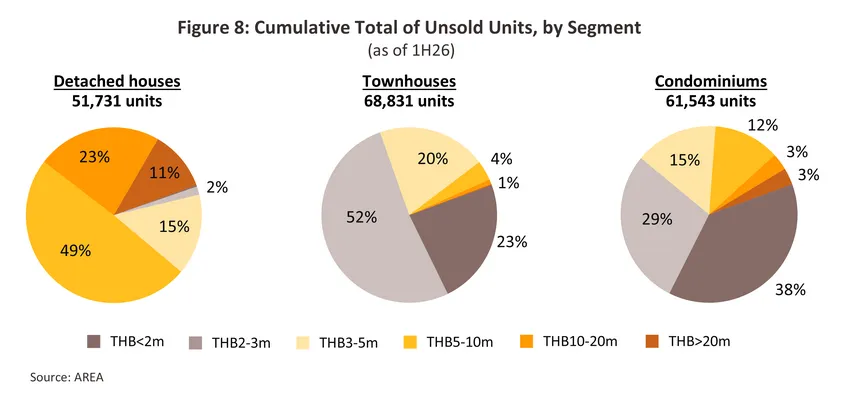
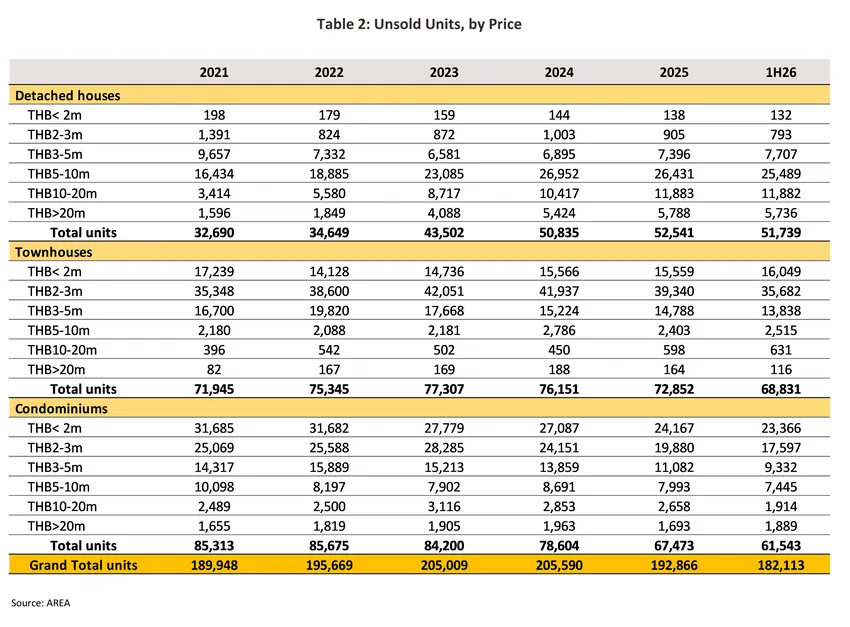
Residential sales in the BMR increased by 15.6% YoY to 24,652 units in 1H26 (Figure 7), led by condominiums, which grew by 26.5% YoY. This reflected demand from high-income buyers and foreign purchasers seeking second homes in mid- to high-end projects, alongside government measures extending reductions in property transfer and mortgage registration fees through mid-2027, which encouraged real-demand buyers to accelerate their purchasing decisions. Townhouse sales also rebounded by 8.7% YoY, as some buyers shifted from higher-priced detached houses to townhouses priced below THB 3 million, which better matched their purchasing power and debt-servicing capacity. In contrast, detached house sales declined by -6.6% YoY amid high household debt and stringent mortgage lending standards for middle-income borrowers. As the number of units sold exceeded new launches, cumulative unsold inventory fell by -6.5% YoY to 182,113 units at the end of 1H26 (Table 2). Of the total, 51% were priced below THB 3 million, mainly townhouses and condominiums (Figure 8). In 2H26, sales growth is expected to moderate against the high base in 1H26. Flooding in the BMR during September–October 2026 may temporarily weigh on purchasing decisions and project visits in some locations. Nevertheless, demand for luxury properties and continued government stimulus measures are expected to sustain market activity. For full-year 2026, residential sales are projected to grow by 4.5% to approximately 48,600 units.
-
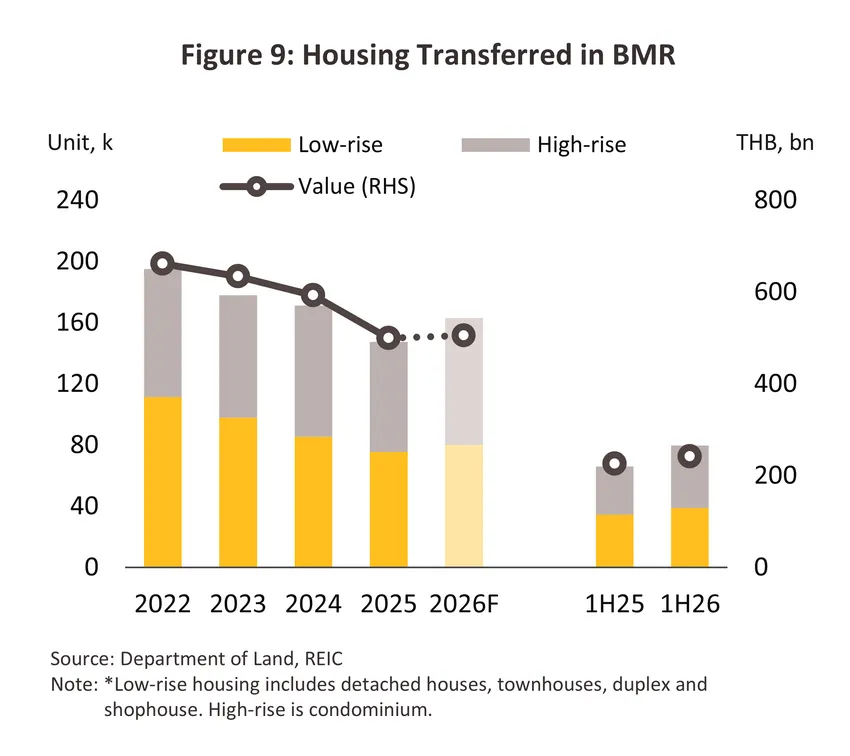
Residential ownership transfers totaled 79,703 units in 1H26, up 20.8% YoY, with a combined value of THB 241.9 billion, up 7.0% YoY (Figure 9). Condominium transfers rose by 30.4% YoY to 40,976 units, accounting for 51% of total transfers, while low-rise housing transfers increased by 12.1% YoY to 38,727 units, representing 49%. Low-rise transfers comprised townhouses (26%), detached houses (15%), semi-detached houses (4%), and shophouses (4%). Key drivers included (i) the gradual handover of newly completed condominiums launched 1–2 years earlier; (ii) government property stimulus measures, including the extension of transfer and mortgage registration fee reductions to 0.01% through mid-2027 and the relaxation of LTV regulations, which accelerated transfers of condominiums and low-rise housing priced at no more than THB 7 million among real-demand buyers; and (iii) developers’ promotional campaigns to clear completed, ready-to-occupy inventory.
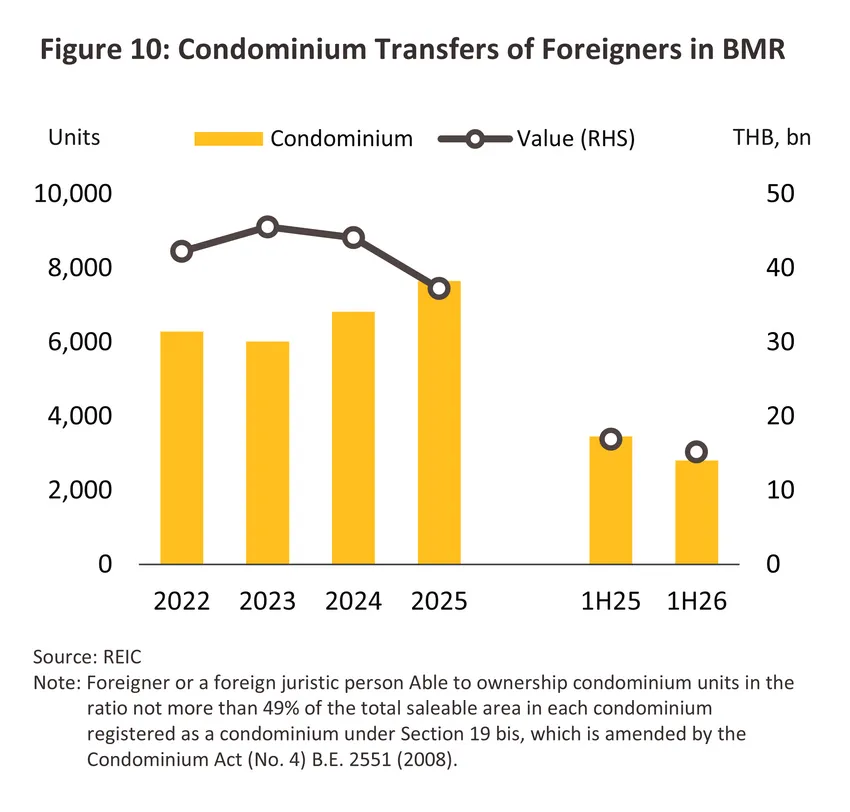
Meanwhile, foreign ownership transfers of condominiums slowed in 1H26 to 2,806 units (-17.9% YoY), with a total value of THB 15.2 billion (-10.2% YoY) (Figure 10). This reflected global economic conditions and geopolitical tensions, which weighed on foreign buyers’ confidence and purchasing power. Nevertheless, demand from high-purchasing-power foreign buyers seeking second homes for security, particularly in luxury condominiums and above in central business district (CBD) locations, continued to provide some support to the market.
For the remainder of 2026, overall residential ownership transfers are expected to slow from 1H26 amid weak purchasing power and persistently high household debt. Flooding in September–October 2026 may further delay property inspections, handovers, and ownership transfers in some projects. However, government property stimulus measures extended through mid-2027 are expected to remain an important factor in accelerating transfers among real-demand buyers. For full-year 2026, total residential ownership transfers are projected to grow by 10.6% YoY, while their value is expected to increase by 1.2% YoY (Figure 9).
-
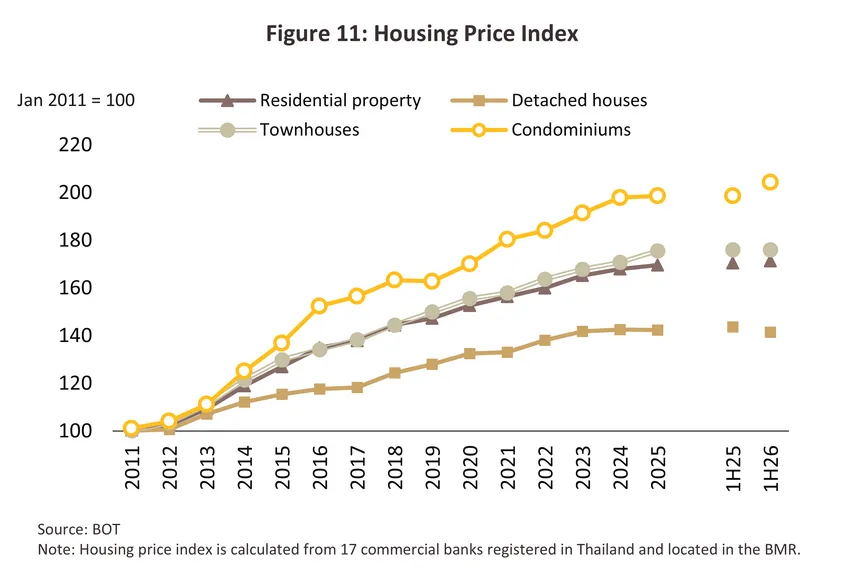
The overall residential property price index in the BMR increased slightly by 0.5% YoY in 1H26 (Figure 11), reflecting rising development costs, including land prices in high-potential locations along mass transit routes, construction material costs, and labor wages. However, actual selling price increases remained limited amid intense competition to clear existing inventory, as economic uncertainty and geopolitical tensions weighed on purchasing power and consumer confidence. This contrasted with the rise in the construction materials price index, which increased by 3.7% YoY in 1H26. By property type, the condominium price index recorded the largest increase at 2.8% YoY, reflecting new launches focused on the mid- to high-end and luxury segments, which entail higher development costs. The townhouse price index remained unchanged YoY, while the detached house price index declined by -1.5% YoY as developers continued offering promotional discounts to accelerate purchasing decisions, particularly among middle-income buyers. For full-year 2026, prices of newly launched housing projects are expected to rise in line with land and construction costs, as well as additional expenses for upgrading flood protection systems. However, developers in flood-affected locations may need to offer special promotions, such as drainage system guarantees, additional provisions for flood insurance claims, and discounts to clear existing inventory. These measures are expected to limit increases in actual average selling prices.
-
-
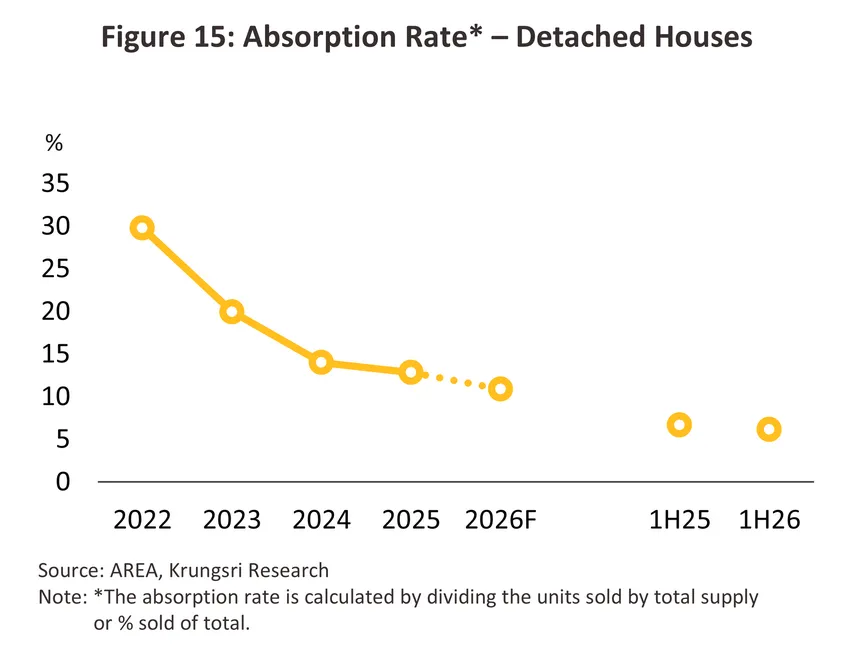
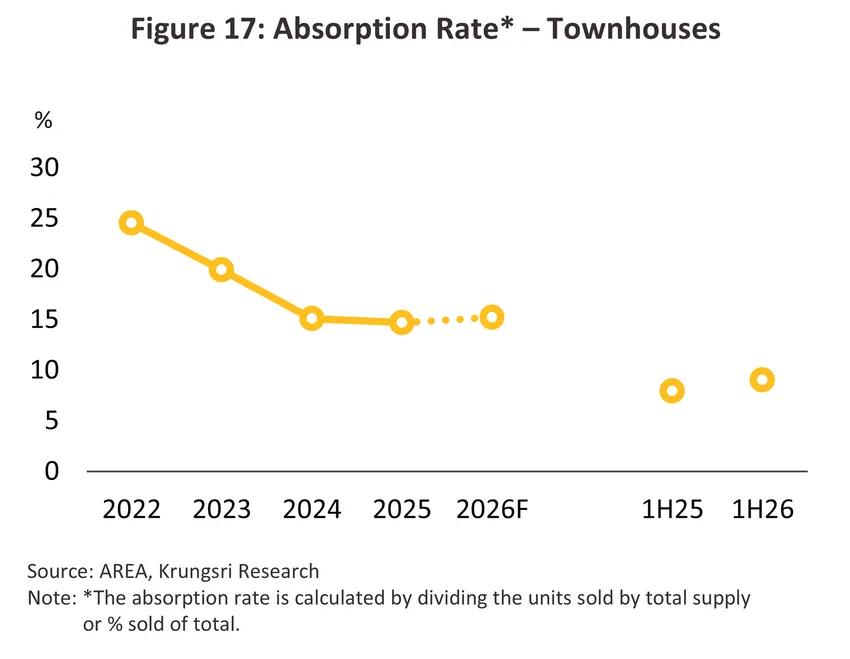
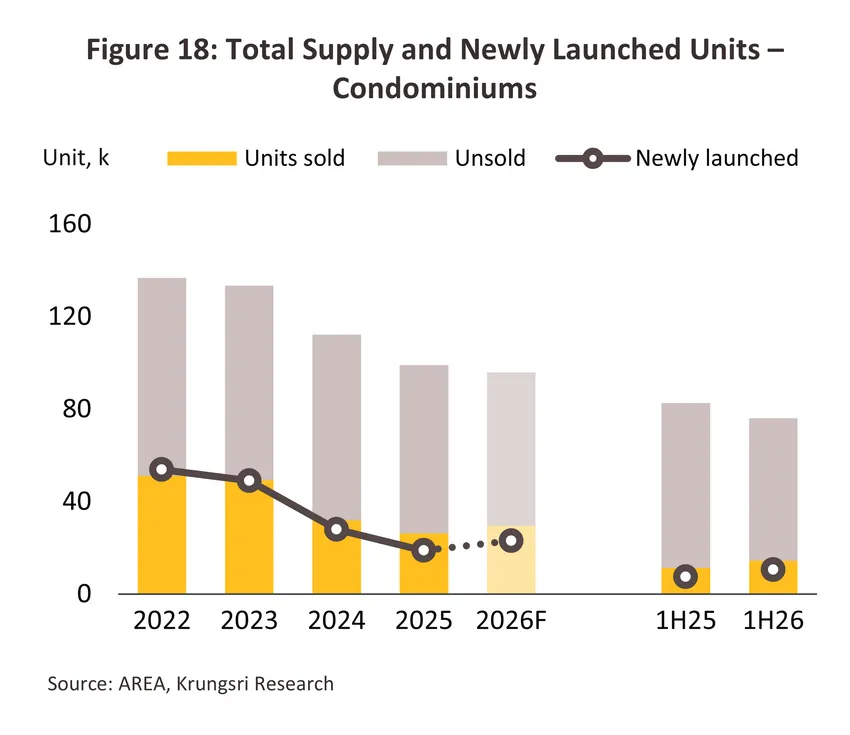
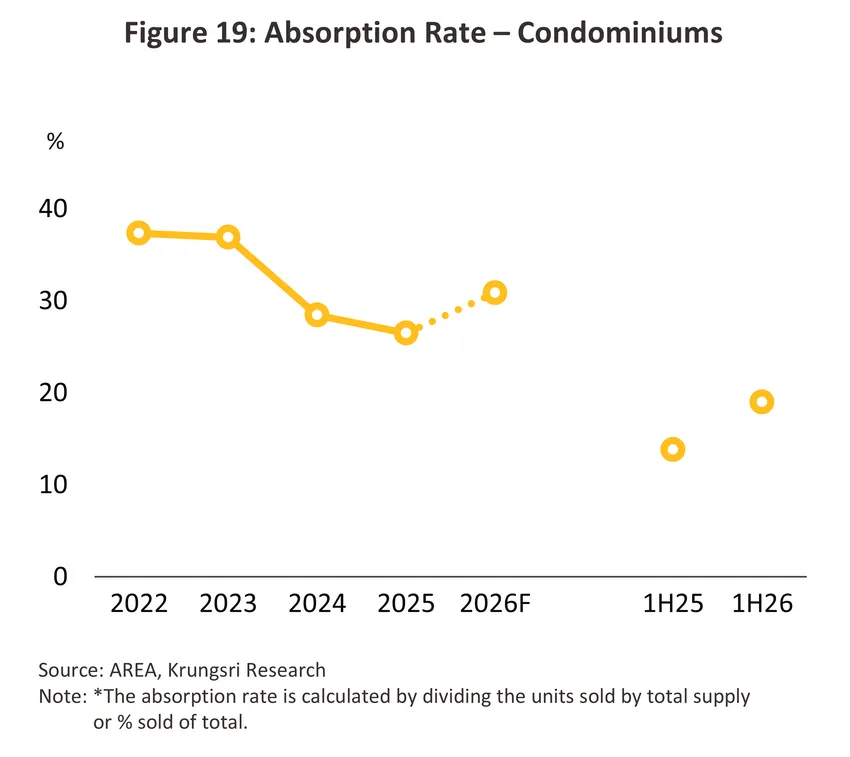
Condominiums: New launches totaled 10,418 units in 1H26, up 40.9% YoY, while sales increased by 26.5% YoY to 14,439 units. This reflected developers’ renewed focus on the upper-end market, particularly luxury and higher-priced projects in prime CBD locations and along major mass transit lines. These projects attracted strong demand from high-purchasing-power domestic buyers and foreign buyers seeking secure second homes. Government measures reducing property transfer and mortgage registration fees also accelerated purchases of completed, ready-to-occupy units. As a result, cumulative unsold inventory declined by -15.4% from the end of 2025 to 61,543 units at the end of June 2026, while the absorption rate improved to 19.0%, reflecting faster inventory clearance and stronger sales, partly driven by pent-up demand stimulated by new supply and government measures. In 2H26, condominium launches and sales are expected to continue growing, although growth may moderate following the substantial volume of new launches in 1H26. Flooding in urban areas in September 2026 may also increase interest in CBD condominiums and projects along inner-city mass transit lines, as these are perceived as safer residential options during flood events. However, overall purchasing power remains fragile amid weaker spending confidence, which may prompt some buyers to postpone decisions. For full-year 2026, condominium sales are projected to increase by 12.8% YoY, while new launches are expected to grow by 10.4% YoY.
Outlook
For 2027–2029, Krungsri Research expects the housing market in the BMR to recover gradually, as follows:
-
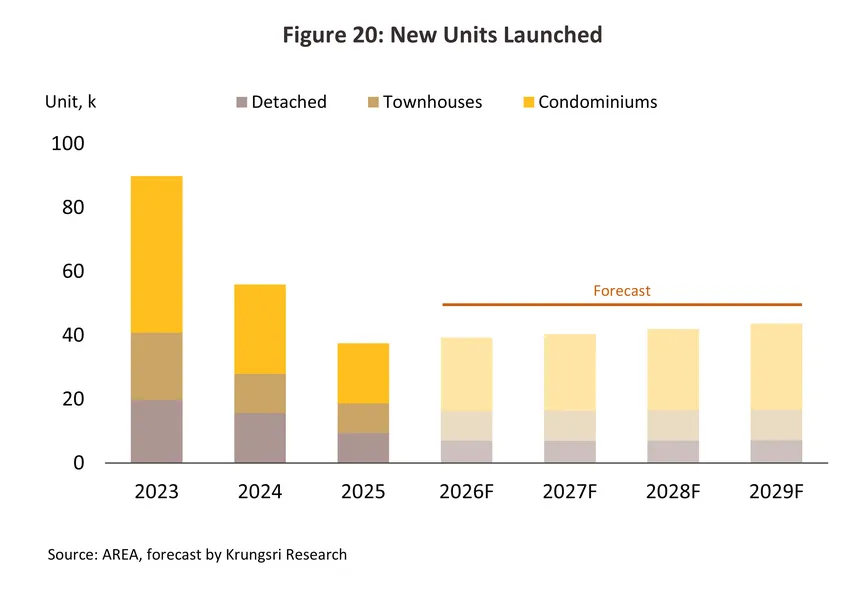
New project launches are projected to increase by an average of 3.2–4.0% annually, reaching approximately 42,000 units per year (Figure 20), equivalent to nearly 40% of the pre-COVID-19 average of 110,000 units annually in 2017–2019. Developers are expected to gradually resume new launches as the economy recovers, while continuing to manage accumulated unsold inventory cautiously. New launches will remain concentrated among large developers with strong financial positions, flexible product portfolios, and better access to funding. Meanwhile, medium-sized and small developers will continue to face financing cost pressures and competitive constraints, prompting them to focus on smaller projects or joint ventures to diversify risk. New development will also benefit from the expected implementation of the fourth revision of the Bangkok Comprehensive Plan in 2027. The revised plan is expected to expand orange zones (medium-density residential areas) and increase floor area ratio (FAR) allowances along new mass transit routes and around transit-oriented development (TOD) hubs. These changes should improve the feasibility and cost efficiency of residential development, particularly condominiums and new low-rise formats, such as 3–4-storey townhomes and small projects comprising 10–30 units. Developers are also expected to prioritize locations with specific growth drivers, including fully operational mass transit lines, major employment centers, educational institutions, and urban expansion areas linked to public infrastructure investment. These projects will target owner-occupiers and high-purchasing-power buyers. In addition, developers are likely to refine their sales strategies by (i) developing products for niche demand, such as pet-friendly projects, wellness residences, and housing designed for an aging population; (ii) adopting environmental, social, and governance (ESG) standards, including energy-efficient systems, rooftop solar panels, and EV charging stations, to enhance long-term property value; and (iii) leveraging technology and digital platforms to improve cost management, accelerate purchasing decisions, and provide comprehensive after-sales services.
-
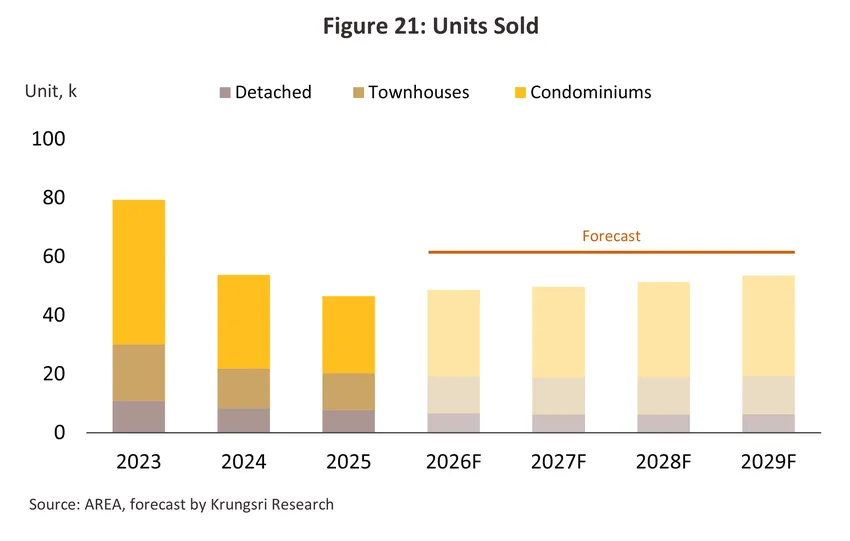
Overall residential sales are projected to grow by an average of 2.9–3.7% annually (Figure 21), driven by the following factors: (i) Thailand’s continued economic recovery, with GDP expected to expand by an average of 2.0–2.3% annually, driven primarily by a recovery in exports and private investment. Tourism is also expected to recover gradually, with international arrivals projected to reach 36.5 million in 2029. Although this would remain below pre-COVID-19 levels, tourism will generate income, support employment in the service sector, and gradually strengthen overall purchasing power; (ii) the full operation of new transportation infrastructure and mass transit lines, including the Orange Line (Taling Chan–Min Buri), the Southern Purple Line (Tao Poon–Rat Burana), and extensions connecting Bangkok with surrounding provinces. These developments will open up new potential locations and encourage housing purchases, including condominiums and low-rise properties, along mass transit routes; and (iii) demand from foreign buyers and a growing expatriate population, including second-home buyers, those seeking to mitigate geopolitical risks, retirees, foreign investors, and skilled workers relocating to Thailand alongside manufacturing operations. These groups are expected to sustain demand for mid- to high-end housing. The outlook for each housing segment is as follows:
-
Condominiums: Condominiums are expected to remain the key driver of housing market growth in the BMR, with sales and new supply projected to accelerate. Key growth drivers include:
1) Rising demand in inner- and mid-city areas as urbanization and business hubs expand. With land prices continuing to rise, condominiums offer a cost-effective and convenient housing option that aligns with modern lifestyles. Demand for rental investment is also increasing, driven by working-age tenants and Gen Z consumers who tend to prefer renting over buying.
2) The expected implementation of the fourth revision of the Bangkok Comprehensive Plan in 2027, which will increase floor area ratio (FAR) allowances in orange zones (medium-density residential areas) and transit-oriented development (TOD) areas along new mass transit routes, such as Srinakarin Road, Ramintra Road, and Ladprao Road. These changes are expected to improve the cost efficiency of developing mid-market condominiums.
3) Purchasing demand from foreign buyers, including those seeking luxury to super-luxury condominiums in prime CBD locations and along the Chao Phraya River, as well as second-home buyers seeking to mitigate geopolitical risks.
4) The psychological impact of flooding in the BMR, which is expected to increase interest in condominiums in inner-city areas and along mass transit routes, as these locations are perceived as safer from natural disasters. This adds to their appeal in terms of convenient access to transportation, particularly along extended mass transit lines.
However, market growth is expected to vary across locations. Projects in the outer BMR will continue to face intense competition and require more time to absorb existing inventory, particularly in Chaeng Watthana, Nonthaburi, and Bang Na–Samut Prakan. Buyers in these areas often prefer low-rise housing at similar price points, prompting developers to continue offering promotional campaigns to accelerate the clearance of completed, ready-to-occupy condominiums.
-
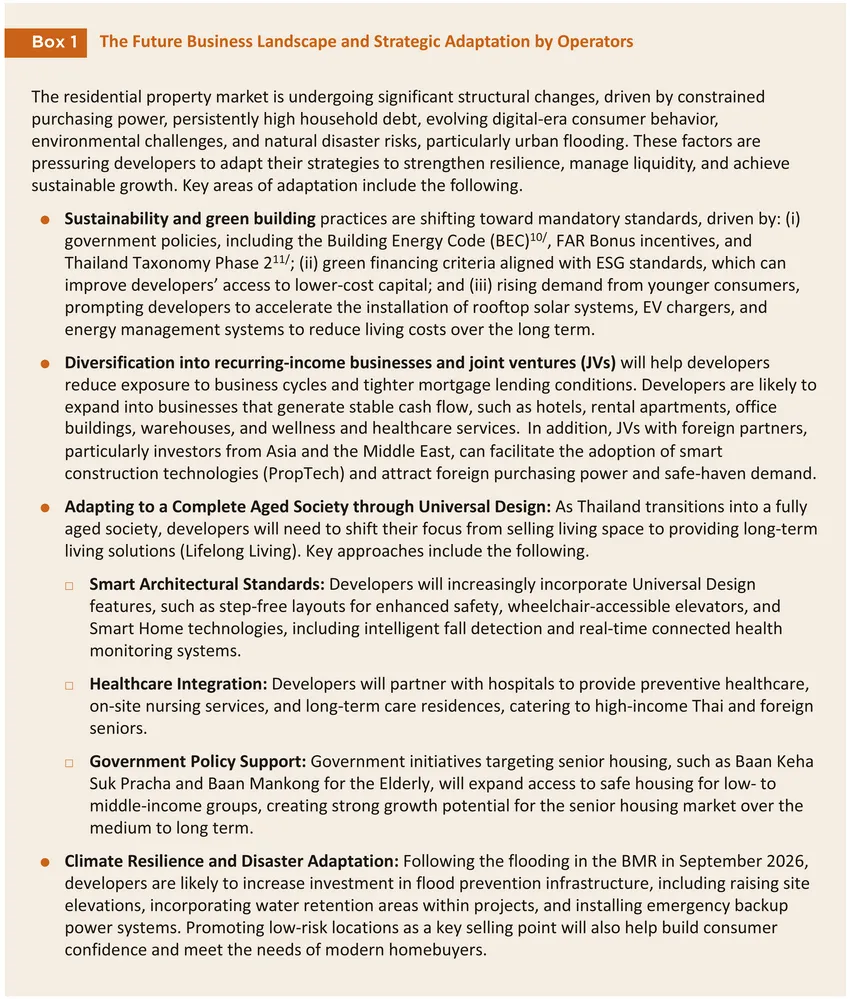
Key challenges facing the housing industry in the near term include: (i) persistently high household debt and stringent lending standards, which continue to constrain borrowers’ ability to take on long-term financial commitments. Mortgage rejection rates are expected to remain high, affecting not only middle- to lower-income borrowers but increasingly middle-income buyers in the THB 5–7 million segment; (ii) geopolitical tensions and global economic fragmentation, which remain external risks that could increase financial cost volatility, undermine foreign investor confidence, and weigh on housing purchases by foreign buyers; (iii) rising development costs and selling prices, as land prices in high-potential locations along mass transit routes, construction material costs, and labor costs continue to increase, pushing average selling prices per unit higher than consumer income growth; (iv) demographic shifts and the growing preference for renting, as Thailand’s transition to an aged society is expected to dampen some demand for new housing, while younger consumers increasingly favor renting over homeownership for greater financial flexibility; and (v) environmental regulations and the tightening of ESG requirements. Sustainability reporting standards and pressure from financial institutions to adopt green finance and green loans are prompting developers to invest more in environmentally friendly construction, carbon footprint reduction, energy-efficient building materials, and on-site water management. In particular, upgrading infrastructure to mitigate flood risks through climate-resilient design following the September 2026 floods in the BMR will add to operating costs.
1/ From Ministry of Finance
2/ The registration of new properties in the BMR is collected from requests for new house numbers made to district offices in the BMR. In the case of allocated project houses, the developer is the one who applies for the house number, even if the construction is not yet completed or there is no buyer yet (source: REIC). For high-rise projects, it is collected from the Land Office.
3/ Middle- to lower-income households refer to those with a combined monthly household income of approximately THB 15,000–50,000. This group is the primary target market for housing priced below THB 3.0 million per unit (Source: Office of the National Economic and Social Development Council (NESDC) and Real Estate Information Center (REIC)).
4/ Mid- to high-end condominiums refer to projects with an average selling price of at least THB 100,000 per sq.m. or an approximate selling price of THB 3.5 million or more per unit (Sources: CBRE Thailand and REIC).
5/ The measure reduces registration fees for residential property transactions to 0.01%, comprising (i) a reduction in the property transfer registration fee from 2% to 0.01%; and (ii) a reduction in the mortgage registration fee from 1% to 0.01%. The measure applies to newly built and second-hand residential properties with a mortgage amount of no more than THB 7 million per agreement. Eligible buyers must be Thai nationals. The measure took effect on the date of its publication in the Royal Gazette and has been extended until June 30, 2027.
6/ Allows 100% loan-to-value (LTV) financing for a first home priced above THB 10 million and a second home priced at no more than THB 10 million. The measure was effective from May 1, 2025, to June 30, 2026.
7/ Luxury condominiums and above refer to projects with an average selling price of approximately THB 200,000–250,000 per sq.m. or higher, or a starting price of THB 10.0 million per unit. The segment is classified into (i) Luxury condominiums, priced at THB 200,000–349,999 per sq.m. (or THB 10.0–20.0 million per unit); and (ii) Super/Ultra-Luxury condominiums, priced at THB 350,000 per sq.m. or higher (Sources: CBRE Thailand, Knight Frank, and REIC).
8/ The financial sector comprises commercial banks, the Government Housing Bank, the Government Savings Bank, the Islamic Bank of Thailand, the Bank for Agriculture and Agricultural Cooperatives, finance companies, credit fonciers, life insurance companies and the National Housing Authority.
9/ Source: Housing Development Association and Housing Loan Survey.
10/ The Building Energy Code (BEC) applies to 9 types of buildings with a total floor area of at least 2,000 sq.m. per building. It sets minimum energy-efficiency design standards for 6 systems: the building envelope (OTTV and RTTV), lighting (LPD), air conditioning, hot water systems, overall building energy consumption, and renewable energy use. The code took effect on March 13, 2023, and is administered by the Department of Alternative Energy Development and Efficiency (DEDE).
11/ Thailand Taxonomy Phase 2 is the second phase of Thailand’s environmental classification system for economic activities, expanding its scope to cover the real estate and construction sectors. It establishes clear quantitative indicators and environmental criteria, such as greenhouse gas emission reductions, building energy efficiency, and the use of low-carbon construction materials. These criteria provide financial institutions and investors with a reference framework for green loans and sustainability-linked bonds (ESG bonds). Projects that meet the criteria may gain access to lower-cost capital and qualify for tax incentives or other government support measures.