EXECUTIVE SUMMARY
Thailand’s air transport industry is expected to continue expanding in 2026, albeit at a slower pace following the recovery recorded in the previous year. Growth will be underpinned by demand for domestic and international travel, together with route expansion. However, the industry will remain under pressure from the Middle East conflict, which has kept jet fuel costs elevated, while some airlines have had to cancel flights or operate longer routings to avoid restricted airspace and high-risk areas. Weak domestic purchasing power and a slower-than-expected recovery in foreign tourist arrivals will add to these headwinds. In 2027–2028, business conditions are expected to improve as foreign tourist arrivals recover, international route networks expand, and energy costs ease. Nevertheless, growth will continue to face several challenges: (i) intensifying competition as incumbent airlines expand capacity and foreign carriers restore flight frequencies; (ii) capacity constraints at major airports, where major airports are still under development to enhance service capacity, with completion expected after 2028; (iii) the withdrawal of the 60-day visa-exemption scheme, which may weigh on selected visitor segments; (iv) aircraft delivery delays and maintenance constraints, which will continue to restrict airlines’ capacity expansion over the next 2–3 years; and (v) rising costs associated with international standards and the transition to sustainable aviation, including CORSIA compliance and SAF adoption, which may place further pressure on operators’ operating costs and profitability.
Krungsri Research View
The operating performance of businesses across Thailand’s air transport industry is expected to continue improving, although growth will vary across segments of the aviation service value chain, as follows:
-
Airport operators: Revenue is expected to recover gradually in line with rising passenger traffic and flight movements, particularly at major airports such as Suvarnabhumi, Don Mueang, Phuket, and Chiang Mai, which serve as key gateways for international tourists and domestic passengers. Revenue growth will be driven primarily by higher aeronautical revenue, including landing charges, aircraft parking charges, and passenger service charges, together with higher non-aeronautical revenue from airport shops, restaurants, commercial space, and related services. The increase in the Passenger Service Charge (PSC) for departing international passengers will further lift revenue, particularly at airports with a high share of international passengers. However, growth may be constrained by infrastructure capacity limitations, as most expansion projects needed to accommodate additional aircraft and passengers are not expected to be completed until after 2028.
-
Passenger carriers: Revenue is expected to increase in line with the gradual recovery in passenger traffic, particularly on short-haul international routes to China, India, and ASEAN markets. Growth will be further underpinned by demand for leisure and business travel, as well as niche tourism. However, in 2026, operators will remain affected by the conflict in the Middle East, notably through persistently high jet fuel prices, flight cancellations, and longer routings, while demand from the Chinese market continues to recover slowly. Airlines are therefore likely to prioritize cost efficiency and revenue preservation by focusing on routes with clear demand and attractive profit potential, rather than accelerating capacity expansion across all markets. Earnings are expected to recover gradually in 2027–2028 in line with improving tourism and investment conditions.
-
Freight services: Revenue is expected to continue growing, driven primarily by international air cargo traffic, which remains critical to supply chains for time-sensitive and high-value goods such as electronic components, computers and parts, telecommunications equipment, fresh fruit and other fresh foods, pharmaceuticals, and temperature-controlled products. At the same time, exports of technology products, e-commerce activity, and production-base restructuring, including China+1 strategies, will bolster demand for air cargo services. However, the domestic cargo market is likely to slow due to its limited size and competition from road freight, which offers lower costs and wider service coverage.
Overview
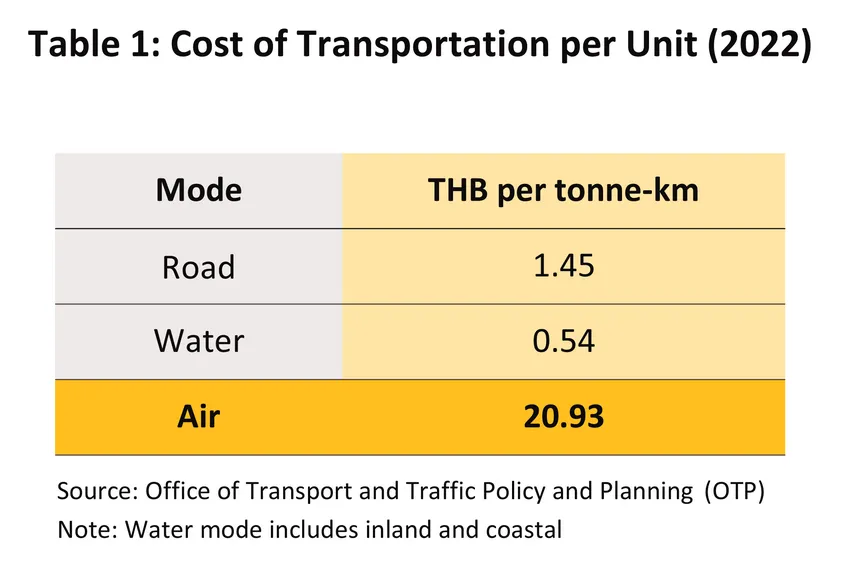
Air transport is a critical infrastructure component that underpins economic activity, trade, and international investment. Compared with other modes of transport, it offers clear advantages in terms of speed for both passenger travel and cargo delivery, as well as access to remote areas where alternative transport options remain limited, high safety standards1/, and relatively reliable adherence to schedules. These advantages have increased the popularity of air transport across many regions worldwide, as reflected in the continued development of commercial airports; the production of larger, higher-performance aircraft capable of carrying more passengers and cargo; upgrades to aviation support systems; and the expansion and modernization of airport cargo facilities to enhance convenience and service efficiency. However, air transport remains subject to cost constraints, as its unit costs are higher than those of other transport modes and substantial capital investment is required to develop the interconnected infrastructure used throughout the service process.
The air transport industry can be divided into four categories, as follows:
-
Passenger carriers operate aircraft equipped with passenger cabins and related amenities. Revenue is derived mainly from ticket sales and in-flight ancillary services. Some airlines may also sell blocks of seats on routes operated year-round to tour operators at wholesale rates to secure a more predictable revenue base.
-
Cargo and air express services operate dedicated freighter aircraft equipped with cargo-handling systems, equipment, and technology. Revenue is derived mainly from freight charges and customs-clearance-related services. Shipments include general cargo, special cargo, service cargo such as aircraft maintenance equipment and spare parts, and diplomatic cargo and mail.
-
Combined carriers use cargo capacity in the belly holds of passenger aircraft to transport goods alongside passengers, thereby generating revenue from both ticket sales and freight charges.
-
Other air services serve niche markets such as sightseeing flights, flight training, skydiving, and film production. These services use aircraft suited to each operation, including helicopters, balloons, and small airplanes.
Most airline operators provide both passenger and cargo services, working with freight forwarders that resell cargo space to shippers. Operators also establish domestic and international business partnerships to connect services across complementary routes and schedules, thereby broadening the coverage of their air cargo networks.
Air transport services can be classified into three types, as follows:
-
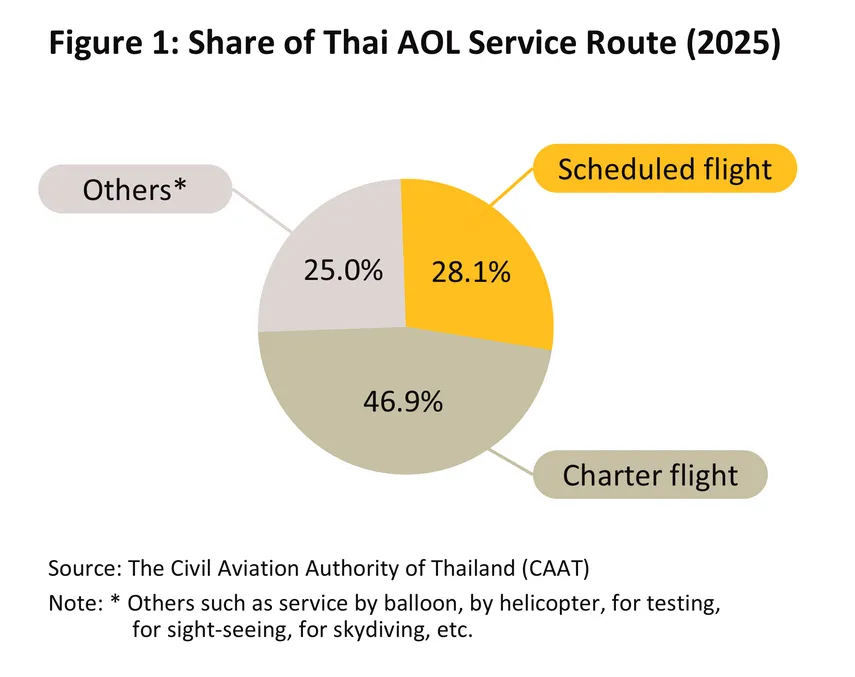
Scheduled flight services operate on fixed routes and timetables, primarily carrying passengers and cargo according to schedule. Some operators in this category may also provide non-scheduled or charter flights. Scheduled service operators account for 28.1% of all air transport operators (Figure 1).
-
Non-scheduled or charter flight services operate occasional or special-purpose flights, and account for 46.9% of operators. Most are small operators with only one aircraft and therefore have limited service options. Government regulations permit single-aircraft operators to provide only ad hoc charter flights, while those with at least two aircraft may operate authorized program charter flights.
-
Specialized flight services, including sightseeing, flight training, skydiving, air ambulance, communication services such as traffic reporting and weather surveys, and film production, account for 25.0% of operators.
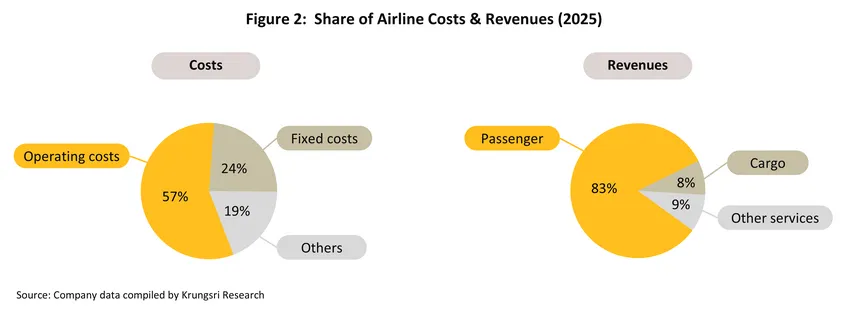
The unit cost of air transport remains substantially higher than that of other transport modes (Table 1). The main cost components are: (i) operating costs, accounting for approximately 57% of total costs, including aviation fuel, which represents around 50% of operating costs and may fluctuate sharply in line with global oil prices2/; (ii) fixed costs, accounting for 24%, including personnel expenses, particularly for specialized professionals, aircraft purchase or lease costs, and expenses related to flight information management and associated systems; and (iii) other costs, including daily aircraft inspections, scheduled maintenance, and airport, ground handling, and apron charges. Revenue is derived primarily from passenger ticket sales, accounting for approximately 83% of total revenue, followed by cargo services at 8%, and other sources, including ancillary services, fees, and related services, at 9% (Figure 2).
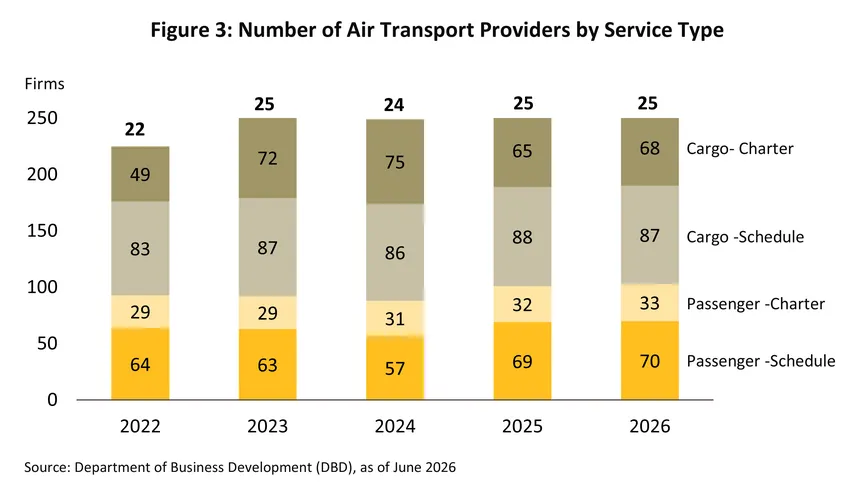
Air transport operators can be divided into two types: (i) operators that hold an Air Operating License (AOL) and an Air Operator Certificate (AOC), either own or lease aircraft, and operate scheduled and charter flights; and (ii) operators without their own aircraft but instead act as agents, booking capacity from operators in the first category and reselling it to customers such as tour operators and freight forwarders. As of June 2026, 258 air transport operators were registered and active in Thailand (Source: Department of Business Development, Ministry of Commerce), comprising both Thai-owned companies and Thai–foreign joint ventures (Figure 3), as follows:
-
Passenger carriers comprised 103 operators, accounting for 39.9% of all air transport operators. Of these, 70 operated scheduled services, including eight large operators, most of which provided commercial airline and helicopter passenger services. Thai-owned scheduled operators included Thai Airways International PCL and Nok Airlines PCL, which was undergoing business rehabilitation, while Thai–foreign joint ventures included Thai AirAsia X (Malaysian) and Thai Vietjet Air Joint Stock Company (Irish–Vietnamese). The remaining 33 passenger carriers did not operate scheduled services, of which only two were large operators—SFS Aviation Co., Ltd. and Siam Land Flying Co., Ltd.—both Thai-owned.
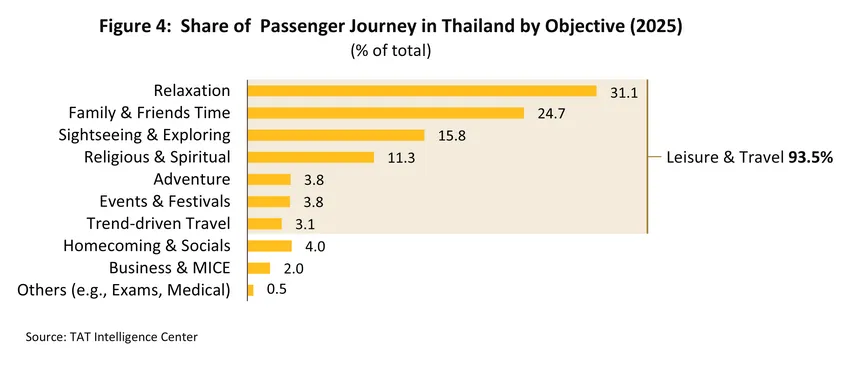
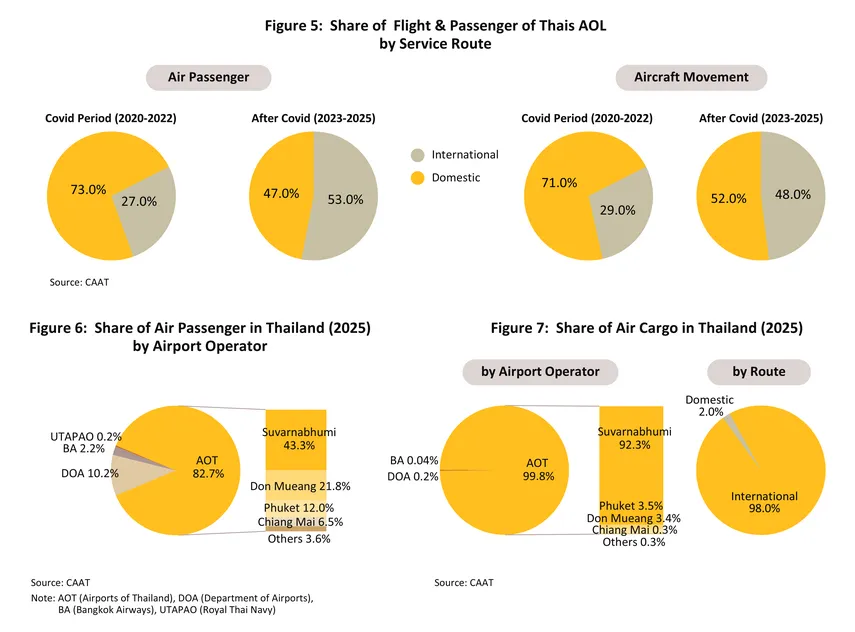
Growth in this segment is closely linked to the expansion of the tourism sector, as 93.5% of air passengers travel primarily for tourism purposes (Figure 4). However, the COVID-19 crisis forced most airlines to shift their service focus toward domestic routes (Figure 5) and expand air cargo operations to offset the decline in passenger revenue. Following Thailand’s reopening and the recovery in post-pandemic travel, the service mix gradually returned to normal, with domestic and international flights accounting for broadly similar shares. In 2025, Suvarnabhumi and Don Mueang were the country’s principal passenger airports, jointly accounting for 65.2% of total air passenger traffic (Figure 6).
-
Cargo carriers comprised 155 operators, accounting for 60.1% of all air transport operators. Of these, 87 operated scheduled services, including eight large operators, such as Bangkok Airways PCL, which operates cargo warehouses at Suvarnabhumi Airport and three privately owned commercial airports; Federal Express (Thailand) Co., Ltd. (U.S.-owned); K-Mile Air Co., Ltd. (Thai-Swiss); DHL Express International (Thailand) Ltd. (Thai-German); and Teleport (Thailand) Co., Ltd., an affiliate of Malaysia’s AirAsia. The remaining 68 cargo carriers did not operate scheduled services, and only two were large operators: Rise Again Co., Ltd. (Thai-Chinese) and RNP Express Co., Ltd., a Thai-owned provider of integrated international logistics and freight services, including door-to-door delivery in Taiwan, the United Arab Emirates, China, South Korea, and the United States. Other Thai-foreign joint ventures included Air Mail Logistics Co., Ltd. (Thai-Hong Kong), Strong Tower Co., Ltd. (Thai-Chinese), Global Freight Services Co., Ltd. (Thai-Hong Kong), and Karten International Logistics Co., Ltd. (Thai-Singaporean).
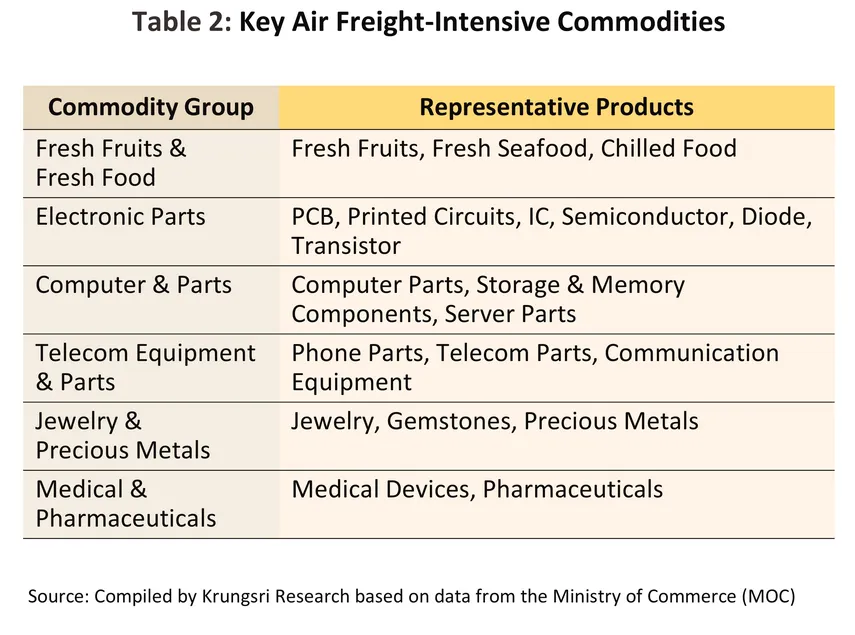
Goods transported by air are generally small and lightweight, have high value added per item, or require special handling, including electronic components, computer parts, communications equipment, fresh fruit and food, gems and precious metals, and medical supplies and pharmaceuticals. International routes accounted for 98.0% of these shipments (Figure 7). Given the higher cost of air freight relative to other transport modes, domestic cargo is generally transported by road, while large-volume shipments to overseas markets are typically moved by water or sea. In 2025, 99.8% of air cargo passed through international airports operated by Airports of Thailand (AOT), notably Suvarnabhumi (92.3%), Phuket (3.5%), and Don Mueang (3.4%) (source: CAAT).
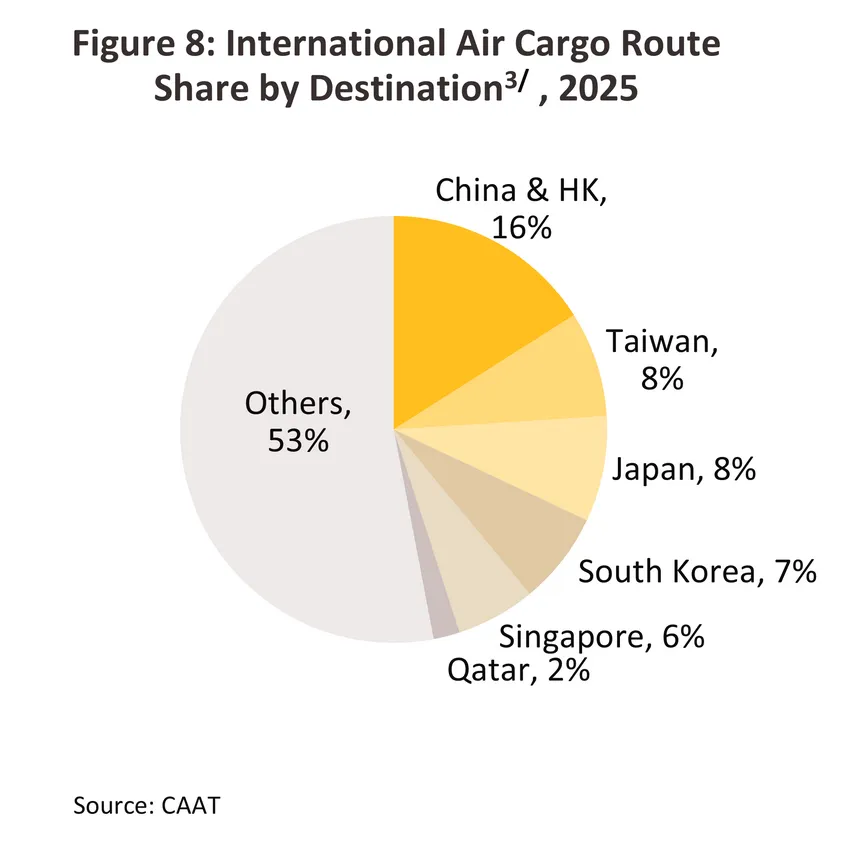
Thailand’s international air cargo routes remained concentrated in China and Asia’s major logistics hubs. China and Hong Kong together accounted for the largest share, at approximately 16% of total international air cargo volume, followed by Taiwan and Japan at 8% each, South Korea at 7%, Singapore at 6%, and Qatar at 2% (Figure 8). This reflected Thailand’s continued reliance on major Asian trade routes, particularly markets linked to technology supply chains. Hong Kong, Singapore, and Qatar also served as transshipment and distribution hubs for other markets, meaning that some Thai cargo was not shipped directly to its final destination but connected through these hubs before onward delivery to other countries or regions. However, air cargo continued to focus on urgent, high-value, and time- and quality-sensitive goods, particularly electronic components, fresh fruit and food, and medical supplies and pharmaceuticals. Moreover, reliance on China as a major cargo market may expose operators to several challenges, including weaker freight demand amid China’s economic slowdown, increasingly volatile climate conditions that may constrain agricultural output, and stricter plant inspection and quarantine measures in destination markets, which could become more significant non-tariff trade barriers.
Air transport operators in Thailand are required to obtain an Air Operating License (AOL) from the Civil Aviation Authority of Thailand (CAAT). In 2025, there were 42 AOL holders, although only 32 were operational. These comprised: (i) nine passenger and cargo carriers operating both scheduled and charter flights, most of which had established fleets, personnel, and operational support systems; (ii) 15 charter or ad hoc service operators without scheduled routes; and (iii) eight specialized aviation service providers, including flight training, helicopter operations, and other specialized air services.
Thailand’s air transport services industry has expanded steadily since 2008, supported by: (i) the government’s progressive aviation liberalization, including the liberalization of air cargo services in 2008 and inter-city passenger services in 2010, while the establishment of the ASEAN Economic Community in 2015 led to further liberalization of air services between ASEAN and other regions; and (ii) the growth of low-cost carriers (LCCs), whose fares are approximately 40–50% lower than those of full-service carriers (FSCs), making air travel more accessible. These developments intensified competition as new FSC and LCC operators entered the market. Operators consequently accelerated investment to expand market share, including enlarging their fleets and improving aircraft capacity management4/, adding routes, and targeting niche customer segments such as charter flights.
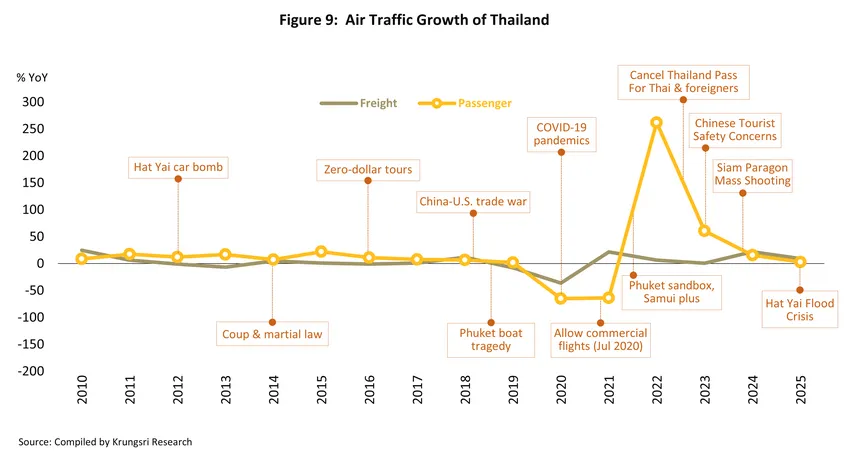
The COVID-19 crisis in 2020 and 2021 forced air transport operators to rapidly reduce costs, including suspending passenger flights, returning aircraft to overseas parent companies, terminating aircraft leases, and modifying passenger aircraft for cargo operations. However, Thailand’s gradual removal of international travel restrictions in 2022, combined with pent-up demand accumulated during the pandemic, accelerated the recovery in air travel demand (Figure 9). Total passengers on Thailand’s domestic and international routes increased by 261.9% to 75.8 million in 2022. During the initial recovery, the three largest international passenger markets remained regional destinations—Singapore, South Korea, and Malaysia. Nevertheless, airlines continued to face pressure from the slow recovery in Chinese tourism. In 2025, Chinese arrivals totaled only 4.47 million, down 33.6% from 2024 and well below the pre-COVID level of approximately 10 million annually. The main constraints were concerns over travel safety in Thailand and weaker Chinese consumer purchasing power amid China’s economic slowdown.
Airlines generally operate as combined service carriers, allocating aircraft capacity between passenger and cargo services to improve flexibility in line with market conditions. Operators may increase cargo capacity when passenger demand weakens or allocate more capacity to passengers when travel demand strengthens. This flexibility helps mitigate revenue risk during periods of crisis.
Situation
Thailand’s air transport industry continued to expand year-on-year during the first five months of 2026, supported by increases in both passenger traffic and air cargo volume, owing to: (i) the continued recovery in domestic and international travel demand in line with tourism activity, as foreign passengers gradually returned, comprising both leisure and business travelers, primarily from regional markets, particularly China and India; (ii) an increase in the number of full-service carriers (FSCs) and low-cost carriers (LCCs) expanding routes, flight frequencies, and seat capacity, thereby improving Thailand’s connectivity with domestic and international markets. For example, Thai Lion Air launched the Bangkok (Don Mueang)–Seoul route, while Thai Vietjet Air opened services from Bangkok (Suvarnabhumi) to Tokyo (Narita), Kolkata, and Nha Trang. Thai airlines also continued to expand capacity in high-growth Asian markets, with Thai Airways targeting North and South Asia; (iii) government measures to boost tourism through cooperation with airlines and related aviation agencies, including approvals for additional flights, extended airport operating hours, discounts on aviation service charges, reduced air navigation charges for incremental flights, increased flight frequencies and seat capacity, and promotional fares on selected routes. These measures accommodated higher domestic travel demand during festival periods, particularly on key tourism routes to Chiang Mai, Phuket, Krabi, Samui, and Hat Yai, increasing passenger traffic and flight movements while supporting revenue for airport operators, ground-handling providers, and other aviation-related businesses; and (iv) stronger air cargo demand following disruptions to maritime transport amid the Middle East conflict, as exporters sought to mitigate supply-chain risks and improve delivery-time certainty, particularly for lightweight, high-value goods such as electronics and medical supplies.
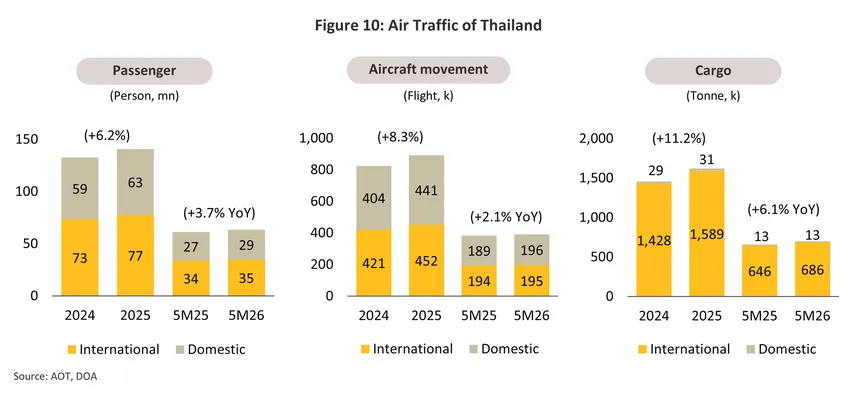
However, the Middle East conflict continued to adversely affect the air transport industry through higher operating costs and disruptions to international flight networks, particularly from late Q1 2026, as follows.
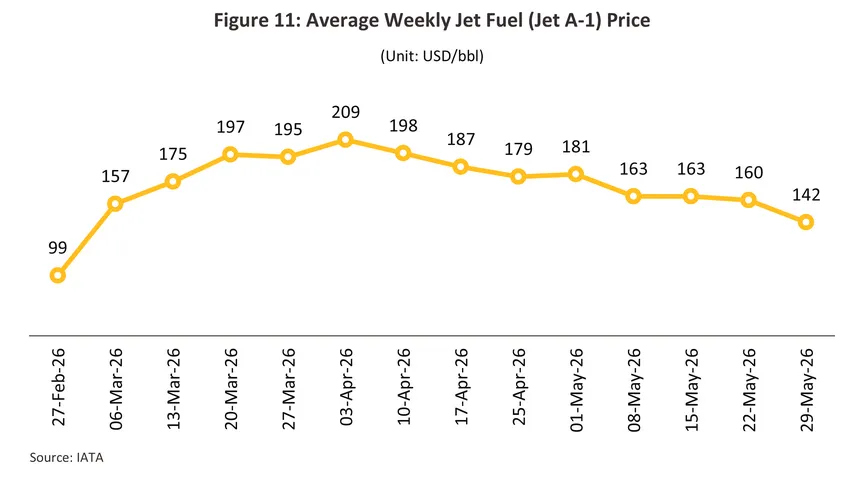
- Rising jet fuel costs pressured airline earnings. Concerns over disruptions to global oil supplies and a potential closure of the Strait of Hormuz, a major global oil shipping route, amid the Middle East conflict pushed Jet A-1 prices sharply higher from USD 99/barrel in late February 2026 to a peak of USD 209/barrel in early April (Figure 11). The International Air Transport Association (IATA) reported that the average jet fuel price in Q1 2026 rose by 36% YoY, reflecting pressure on Middle Eastern crude oil supplies. Although jet fuel prices began to fall gradually in May 2026 as markets anticipated an easing of the conflict, intermittent renewed fighting suggested that tensions would remain protracted through the second half of 2026. Airlines are therefore expected to remain exposed to cost risks from global energy-price volatility. Meanwhile, their ability to pass higher costs on through airfares is likely to remain limited by intense competition, particularly among low-cost carriers, placing continued pressure on operator profitability.
-
Flight rerouting increased airline operating costs. Airlines serving routes to the Middle East and parts of Europe were required to divert flights to avoid high-risk areas and airspace. This lengthened flight times, increased fuel consumption, and raised operating costs per flight.
-
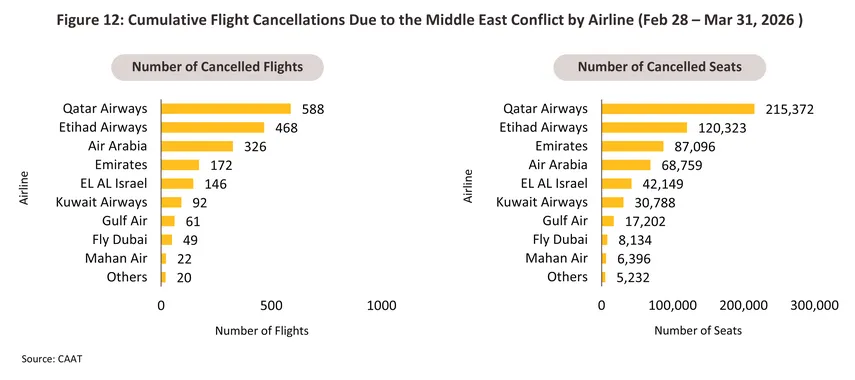
Flight cancellations by foreign airlines disrupted international air connectivity. Between 28 February and 31 March 2026 (Figure 12), a total of 1,944 flights were cancelled, representing approximately 601,451 seats. Qatar Airways recorded the highest number of cancellations at 588 flights, accounting for 30.2% of all cancelled flights, followed by Etihad Airways at 468 flights and Air Arabia at 326 flights. In addition to the direct impact on flight movements, airport passenger traffic, and ground-handling services, the cancellations indirectly weakened traveler confidence and disrupted international flight connections. Airlines consequently had to manage flight frequencies, routes, and passenger load factors more cautiously amid uncertain demand on affected routes.
Developments in passenger and air cargo transport during the first five months of 2026 were as follows:
-
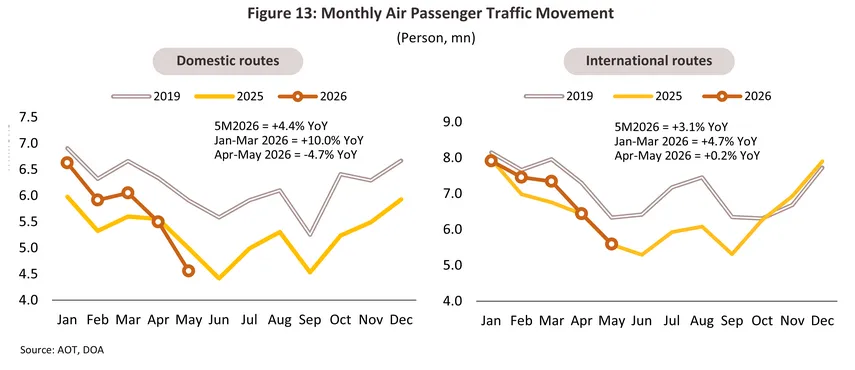
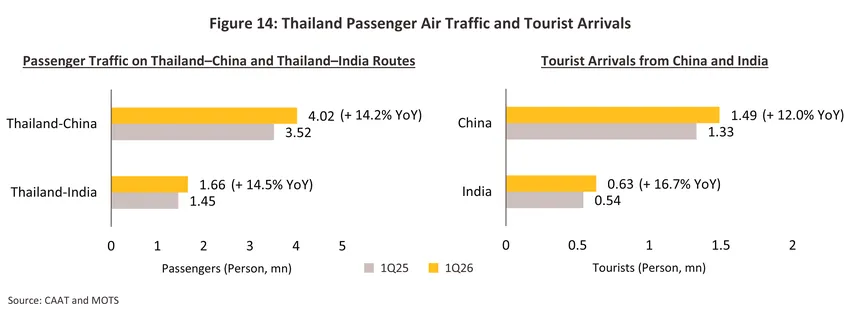
Total passenger traffic reached 63.38 million, up 3.7% YoY. Growth was concentrated around the New Year and Lunar New Year holiday periods, with domestic passenger traffic increasing markedly from the same period a year earlier. Growth in international passenger traffic was driven primarily by the Chinese and Indian markets. In Q1 2026, passenger numbers on Thailand–China and Thailand–India routes rose by 14.2% YoY and 14.5% YoY, respectively (Figure 14), broadly in line with increases of 12.0% YoY in Chinese tourist arrivals and 16.7% YoY in Indian arrivals. This indicated that short-haul Asian markets remained key source markets for Thailand’s aviation industry. Supply-side measures by airlines also contributed to market growth, including the launch of new routes, increased flight frequencies, and promotional campaigns, alongside government and industry measures to facilitate travel during major holiday periods.
However, passenger demand weakened after Q1 2026. Total passenger traffic declined by -0.4% YoY in April and -4.0% YoY in May. Domestic traffic, which had recorded strong growth during January–March, contracted by -4.7% YoY during April–May, while international traffic increased by only 0.2% YoY over the same period. The Middle East conflict pushed up airfares and overall travel expenses through higher jet fuel costs and global oil prices. Combined with weaker domestic purchasing power, this prompted some consumers to postpone trips, travel less frequently, or shift to lower-cost transport alternatives, despite the Songkran festival being a major travel season in Thailand. This reflected the high price sensitivity of air travel demand amid a weak economic recovery and elevated living costs, in addition to concerns over travel safety. Meanwhile, airlines continued to face pressure from high jet fuel costs, geopolitical uncertainty, and operational constraints on selected routes, particularly those connecting Thailand with the Middle East and Europe.
-
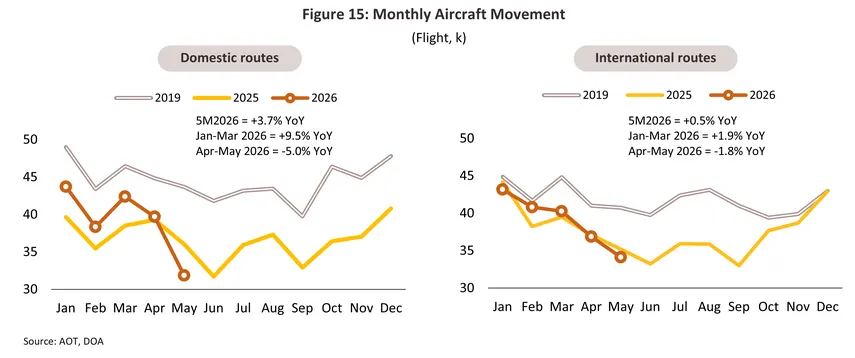
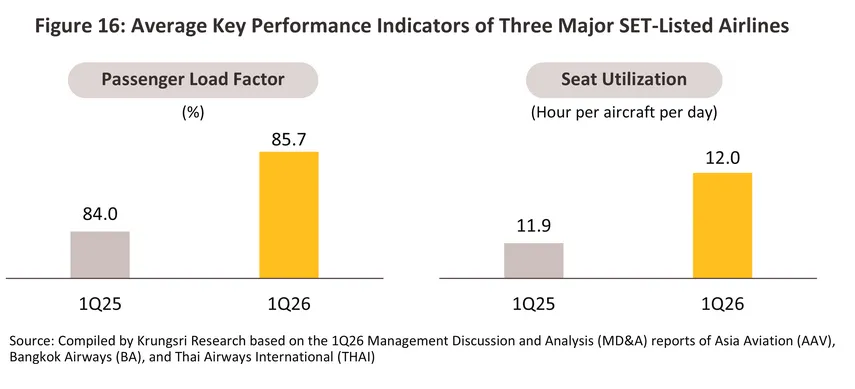
Total flight movements reached 391,166, up 2.1% YoY, with domestic and international flight movements rising by 3.7% YoY and 0.5% YoY, respectively. As flight movements grew more slowly than total passenger traffic, passenger load factor (PLF) and seat utilization appeared to have improved. This was consistent with the average PLF and seat utilization reported by SET-listed airlines in Q1 2026, both of which increased from a year earlier (Figure 16). However, flight movements began to decline after Q1 2026, in line with weaker passenger traffic. Domestic flight movements increased by 9.5% YoY during January–March before contracting by -5.0% YoY during April–May, while international flight movements rose by 1.9% YoY before declining by -1.8% YoY over the corresponding periods. This reflected a slowdown in new route launches amid elevated fuel costs, weaker purchasing power, and geopolitical uncertainty.
-
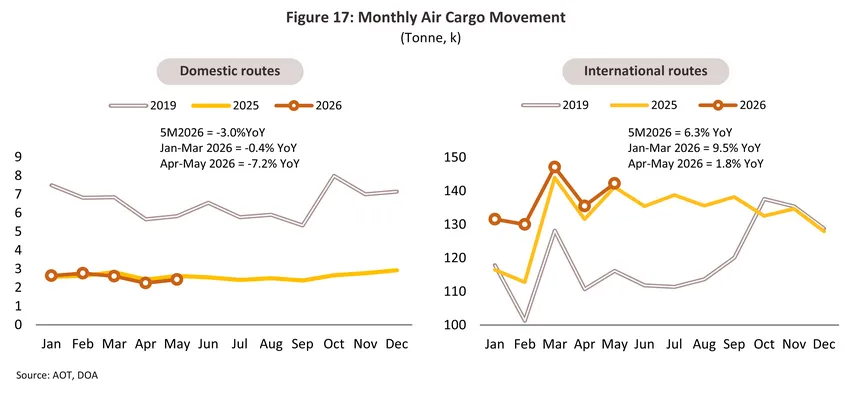
Total air cargo volume reached 699,093 tonnes, up 6.1% YoY, driven by a 6.3% YoY increase in international cargo. International air cargo volume was above the corresponding pre-COVID-19 level, consistent with Thailand’s export value, which rose by 17.0% YoY during the first five months of 2026. Fresh fruit exports increased by 37.0% YoY, mainly from durian and rambutan. Likewise, electronics exports surged by 50.6% YoY amid an upcycle in high-technology products, including computers, communications equipment, and electronic components, particularly those related to investment in artificial intelligence (AI) and data centers. This indicated that air freight continued to play an important role in Thailand’s international supply chains, particularly for high-value, urgent, and time-sensitive goods. In addition, heightened geopolitical tensions and uncertainty along global logistics routes prompted exporters to adopt more flexible inventory strategies, thereby bolstering air freight demand to maintain delivery speed and mitigate the risk of supply chain delays.
However, domestic air cargo volume contracted by -3.0% YoY. High unit costs remained commercially unattractive given the relatively small market, while air freight continued to face competition from lower-cost road transport. This was particularly evident for general parcels, consumer goods, and e-commerce shipments, which could be delivered overnight or within one to two days through increasingly efficient road networks and distribution centers. Moreover, the domestic air cargo market relied largely on belly-hold capacity on passenger aircraft and was therefore affected by reduced flight frequencies on selected routes as passenger demand began to weaken, particularly after fuel prices rose during the Middle East crisis.
Air cargo remained an important source of ancillary revenue for airlines, particularly through belly cargo on international routes. Its growth also benefited airport-related businesses, including air cargo warehousing, cargo handling, ground services, temperature-controlled logistics, and customs clearance, particularly at major airports connected to Thailand’s electronics, fresh food, and international trade supply chains. Nevertheless, air cargo growth remained concentrated in the international market, while domestic demand was constrained by a cargo mix that generally required neither high-speed transport nor strict delivery schedules.
Outlook
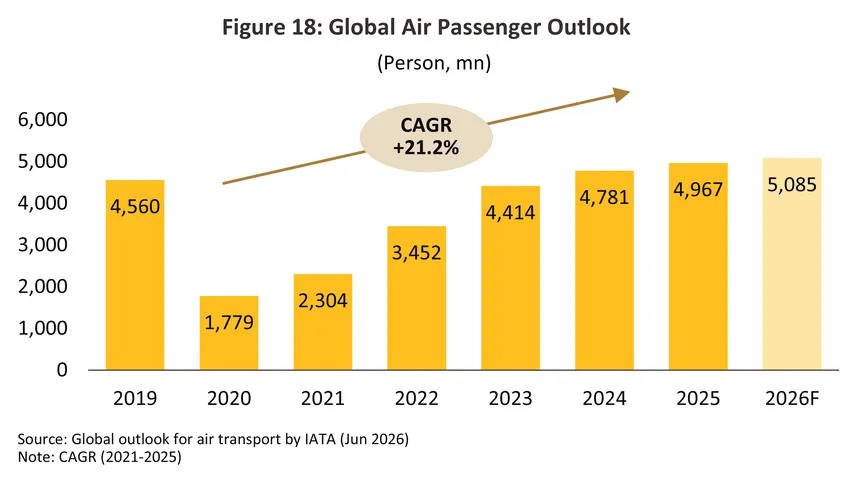
The International Air Transport Association (IATA) projected that global airline industry revenue would continue to grow at a modest pace in 2026, as growth in air travel demand slowed amid higher travel costs stemming from the Middle East conflict, following the sharp post-COVID-19 rebound. Nevertheless, continued recovery in leisure and business travel, particularly in Asia and emerging markets where the middle class was expanding, was expected to underpin demand. Global passenger numbers were therefore projected to rise by 2.4% to 5.1 billion (Source: IATA, June 2026; Figure 18).
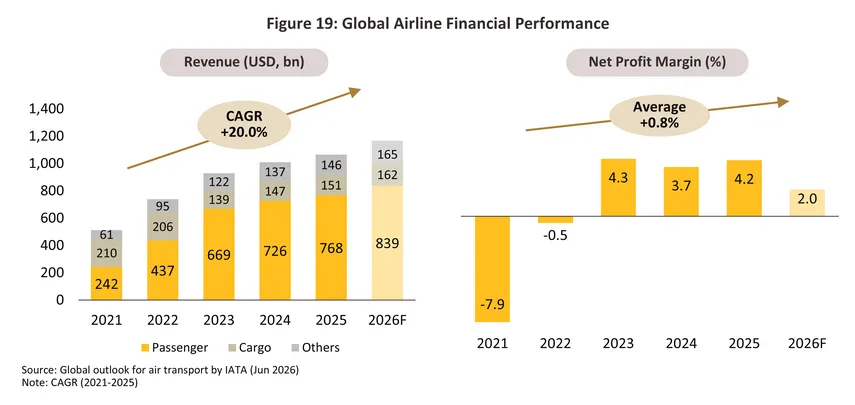
Cargo revenues, although still representing a relatively small share of total revenue, were expected to bolster growth, rising by 7.3% to USD 162 billion in 2026. This reflected demand for transporting high-value, urgent, and time-sensitive goods, particularly advanced-technology electronics entering a replacement cycle. Meanwhile, other and ancillary revenues, including baggage fees, seat selection, and in-flight meals, were projected to increase by 13.0% to USD 165 billion.
However, the industry’s net profit margin was forecast to fall from 4.2% in 2025 to 2.0% in 2026 (Figure 19). The main pressure came from jet fuel costs, which remained volatile as crude oil prices were affected by the Middle East conflict. Other operating expenses sensitive to energy prices, including ground-handling, transportation, and maintenance costs, were also expected to increase.
Krungsri Research expects Thailand’s air transport industry to continue expanding in 2026, albeit at a slower pace. The main headwinds are: (i) a slower-than-expected recovery in international travel demand, reflected in foreign tourist arrivals, which are forecast to decline from 33.0 million in 2025 to 32.5 million in 2026, below the previous forecast of 35.5 million made in February 2026, due to weaker travel confidence and purchasing power constrained by elevated living costs; (ii) slower domestic travel demand in line with the economy, which will limit domestic tourism and discretionary travel by Thai consumers; (iii) persistently high jet fuel costs, despite intermittent signs of easing in the Middle East conflict during the second half of the year following the severe crisis in Q2. Sporadic conflict and military hostilities are nevertheless expected to continue, keeping airlines’ unit costs elevated, particularly for low-cost carriers (LCCs) that compete primarily on price; and (iv) flight reductions and more cautious schedule management, particularly on routes connecting Thailand with the Middle East and Europe. Airspace closures and restrictions imposed by several Middle Eastern countries prompted some airlines to cancel services on routes with relatively low passenger load factors or passenger yields, as well as routes requiring commercially unviable detours. Airlines are therefore likely to reduce frequencies or adjust flight schedules to preserve passenger load factors (PLFs) and control unit costs.
However, factors expected to sustain growth in Thailand’s air transport industry in 2026 include: (i) air cargo, which will remain an important revenue contributor, particularly electronics, technology products, and other high-value goods, as volumes continue to expand in line with trade and exports. This will partially offset weaker passenger revenue while the passenger market has yet to fully recover; (ii) middle- to high-income passengers and the meetings, incentives, conferences, and exhibitions (MICE) segment, which will help sustain demand and passenger yield on selected routes, particularly international services and routes to Bangkok. The IMF–World Bank Annual Meetings, scheduled for 12–18 October 2026, are expected to stimulate travel by corporate executives, government officials, financial institutions, and international organizations, although the benefit will be temporary and concentrated in Bangkok; and (iii) planned year-end tourism stimulus measures, which may help sustain the domestic market, particularly the “Thai Tiew Thai Plus” program. Under the plan, the government will co-pay accommodation expenses and subsidize tourism spending, alongside proposed airfare subsidies for travel to primary and secondary cities. These measures would lower travel costs, stimulate domestic travel, and partially lift airlines’ passenger load factors on selected routes.
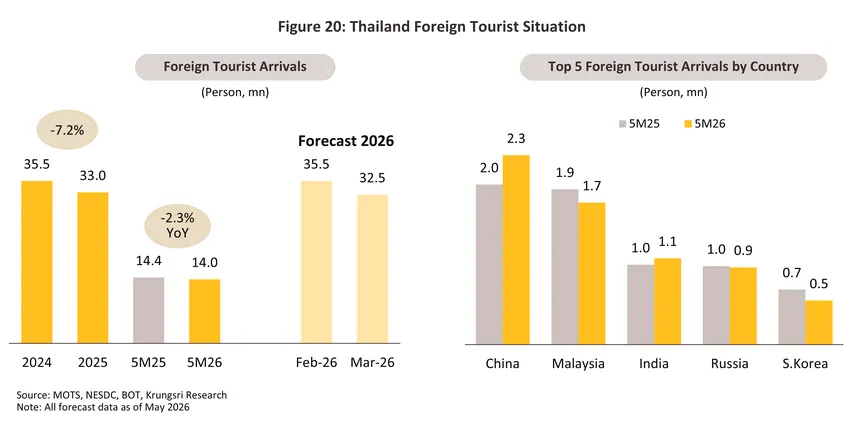
Thailand’s air transport industry is expected to recover gradually during 2027–2028 from the weakness seen in 2026, assuming that the Middle East conflict progressively eases. Growth will be underpinned by: (i) stronger economic growth in Thailand, with GDP projected to gradually recover in 2027-2028. This should strengthen consumer purchasing power and private investment, bolstering domestic and business travel to tourist destinations and strategically important provinces that serve as regional hubs; (ii) rising foreign tourist arrivals, which are forecast to increase from 32.5 million in 2026 to 34.0 million in 2027 and 35.5 million in 20285/, underpinning demand on international routes, particularly short-haul services to and from Asian markets such as China, India, and ASEAN, as flight operations become more predictable. Growth is also expected in high-value and niche tourism segments, including long-stay, health and medical, sports, meetings, incentives, conferences, and exhibitions (MICE), and inclusive tourism6/, under government policies that increasingly prioritize tourism value over visitor volume alone; (iii) easing energy costs in 2027–2028, which should reduce pressure on jet fuel expenses, unit costs, and airline profitability, particularly for low-cost carriers (LCCs), which are highly sensitive to fuel prices. The average U.S. wholesale price of Jet A-1 was projected to rise from USD 91.6/barrel in 2025 to USD 141.5 per barrel in 2026 before declining to USD 120.1/barrel in 2027 (Source: EIA, Short-Term Energy Outlook, June 2026); (iv) capacity expansion by airlines in response to recovering demand. As of end-Q1 2026, Thai AirAsia (AAV) had a fleet of 62 aircraft, up from 61 a year earlier (Source: AAV’s Q1 2026 MD&A). Bangkok Airways operated 22 aircraft and planned to take delivery of two ATR 72-600s in late 2026, while potentially leasing an additional one or two Airbus A320s, subject to lease terms and negotiations with lessors (Source: BA’s Q1 2026 MD&A and 2026 Annual General Meeting report). The airline is expected to expand capacity selectively on high-revenue-potential routes, particularly services to Samui. Meanwhile, Thai Airways planned to increase its fleet to 102 aircraft in 2026, 111 in 2027, and 128 in 2028 (Source: THAI’s 1Q2026 Earnings Call presentation); and (v) air cargo, which will remain an important source of ancillary revenue, underpinned by the continued upcycle in high-technology products and demand for food-security-related goods that are high-value and time-sensitive, including electronic components, telecommunications equipment, fresh fruit, and fresh food. These segments will benefit from Thailand’s growing role in Asian manufacturing supply chains, production relocation under the China+1 strategy, and the development of airport free zones, cold-storage facilities, and perishable-goods distribution centers at major airports.
However, the recovery of Thailand’s air transport industry during 2027–2028 will still face several challenges:
-
Competition is likely to intensify as incumbent airlines expand capacity and foreign carriers restore flight frequencies, particularly on major domestic routes and international services linked to key tourism markets. The Civil Aviation Authority of Thailand (CAAT) reported that 86 airlines participated in consultations during the 2026 summer scheduling process to revise flight timings and apply to open new routes. If capacity expands faster than demand recovers, price competition and promotional activity may intensify.
-
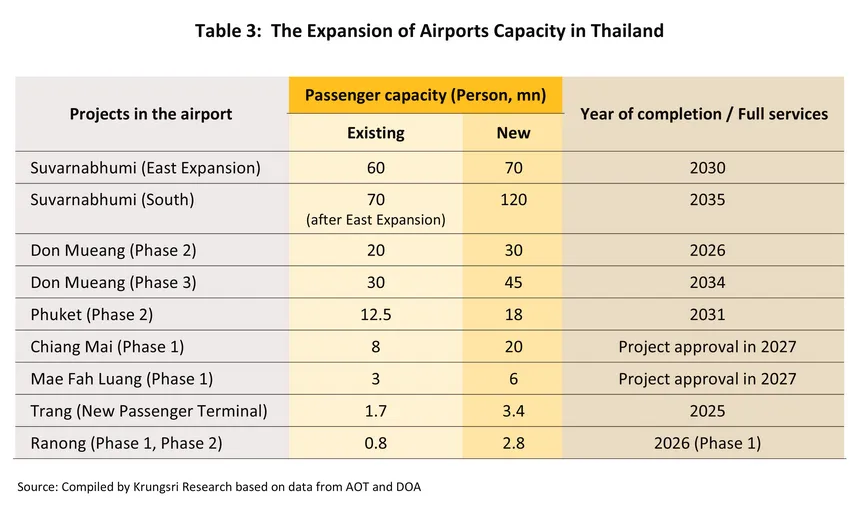
Capacity constraints at major airports may persist while infrastructure expansion projects await completion. Although most large airport capacity projects are already under construction, including the East and South expansions at Suvarnabhumi Airport, Don Mueang Airport Phase 3, and Phuket Airport Phase 2, they are expected to be completed only after 2028. Several other projects remain subject to approval, design revisions, or investment-budget reviews. Airport infrastructure may therefore remain insufficient to accommodate industry growth during 2027–2028, particularly in terms of slot availability and airport congestion. This could limit airlines’ flexibility to add flights during peak-demand periods and reduce aircraft utilization and turnaround efficiency.
-
Policy changes may weigh on demand from selected visitor segments. The withdrawal of the 60-day visa-exemption scheme and reversion to the previous 30-day short-stay limit may reduce flexibility for visitors seeking to remain in Thailand for more than 30 days, including long-stay visitors, digital nomads, retirees on temporary stays, and European tourists seeking winter escapes. The change may weaken Thailand’s competitiveness relative to other regional destinations, including Vietnam, which continues to offer more flexible stay arrangements to attract international visitors and travelers.
-
Aircraft delivery delays and maintenance constraints will continue to restrict airlines’ capacity expansion over the next 2–3 years. Aircraft and engine manufacturers continue to face supply-chain problems, component shortages, and production-capacity constraints, while aircraft order backlogs remain elevated. In addition to delays in new-aircraft deliveries, some airlines may need to ground aircraft periodically for maintenance, leaving the number of serviceable aircraft below the registered fleet. These constraints will delay fleet expansion, route launches, and frequency additions, and may require airlines to extend the service lives or leases of existing aircraft. This will increase maintenance and leasing costs while reducing flexibility in fleet and capacity management.
-
Costs associated with international standards and the transition to sustainable aviation are expected to rise. Airlines will need to comply with stricter safety standards, monitor, report, and offset carbon emissions, and increase the use of Sustainable Aviation Fuel (SAF). International routes covered by the Carbon Offsetting and Reduction Scheme for International Aviation (CORSIA) may incur higher carbon-credit costs, while major destination markets have begun tightening SAF mandates. The European Union, for example, has required aviation fuel supplied at EU airports to contain at least 2% SAF since 2025. In Thailand, the government has outlined a four-phase SAF roadmap based on the availability of feedstock, technology, and domestic production capacity. The initial target was set at 1% in 2026 using Hydroprocessed Esters and Fatty Acids (HEFA), rising to 1–2% during 2027–2029 and 3–5% during 2030–2032 using HEFA together with Alcohol-to-Jet (AtJ), before reaching 5–8% from 2033 onward. However, IATA estimated that SAF would remain approximately 2.5 times more expensive than conventional jet fuel in 2026. Airlines will also need to progressively invest in newer-generation aircraft and emissions-reduction technologies to meet the net-zero carbon emissions target by 2050. These factors will raise the industry’s structural costs and weigh more heavily on smaller carriers, which have more limited access to capital, smaller fleets and route networks, and weaker bargaining power with suppliers than larger airlines that can spread and absorb transition costs more effectively.
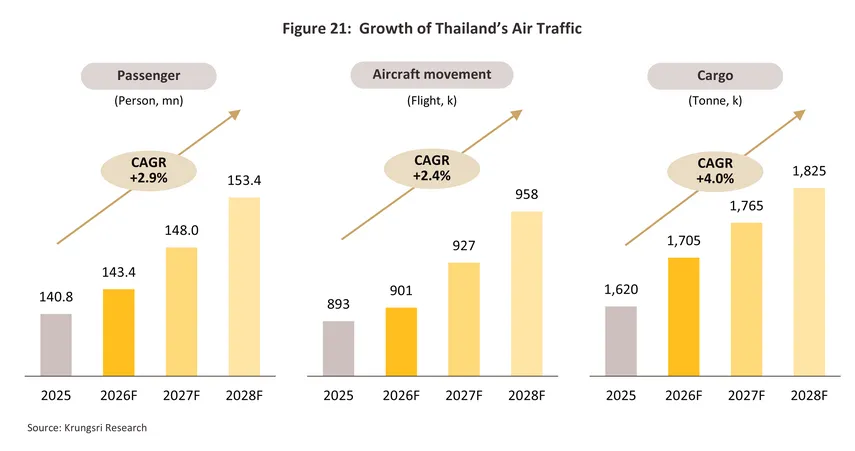
Based on the aforementioned growth drivers and challenges, Krungsri Research expects Thailand’s air transport industry to continue expanding during 2026–2028, across both passenger and air cargo segments. Air cargo traffic is likely to grow slightly faster than passenger traffic, as follows:
-
Total passenger traffic (arrivals and departures) is expected to grow by 2.4–3.4% per year. Passenger numbers are projected to increase from 140.8 million in 2025 to 143.4 million in 2026, 148.0 million in 2027, and 153.4 million in 2028, equivalent to average annual growth of 2.9%.
-
Total flight movements are expected to grow by 1.9–2.9% per year. The number of flights is projected to increase from 893,000 in 2025 to 901,000 in 2026, 927,000 in 2027, and 958,000 in 2028, equivalent to average annual growth of 2.4%.
-
Total air cargo traffic is expected to grow by 3.5–4.5% per year. Cargo volume is projected to increase from 1.62 million tonnes in 2025 to 1.71 million tonnes in 2026, 1.77 million tonnes in 2027, and 1.83 million tonnes in 2028, equivalent to average annual growth of 4.0%.
1/ More than 370 airlines across over 120 countries are members of the International Air Transport Association (IATA), collectively accounting for 85% of global air traffic. IATA reported that five aviation accidents resulted in fatalities in 2022, down from seven in 2021. The fatal accident rate declined from 0.27 per million sectors in 2021 to 0.16 in 2022, while air travel recorded fewer fatalities than other modes of transport, including cars, buses, motorcycles, trains, and boats.
2/ Airlines commonly use fuel hedging to mitigate exposure to future volatility in jet fuel prices.
3/ Refers to international air cargo volume by route, including both outbound and inbound cargo.
4/ This is measured by the unit cost of passenger capacity (Cost per ASK: CASK), calculated by dividing total operating costs by total capacity, measured as the number of passenger seats multiplied by the flight distance in kilometers (Available Seat Kilometers: ASK)
5/ For more information, please visit Industry Outlook 2026-2028: Hotel Business
6/ Refers to tourism designed to ensure that all groups can access and use services equally, regardless of gender, age, race, religion, disability, income, or gender identity.







.webp.aspx)