EXECUTIVE SUMMARY
During 2027-2029, Thailand's electronic component production and exports are likely to continue expanding. Integrated circuit (IC) production and export value are projected to increase by an average of 2.6-3.6% and 4.6-5.6% per year, respectively, while hard disk drive (HDD) production and export value are expected to rise by an average of 5.5-6.5% and 6.7-7.7% per year, respectively. Key growth drivers include: (i) expanding global demand for electronic components and data storage devices from downstream industries reliant on modern technologies, including data centers, AI, information technology and telecommunications, home appliances, and electric vehicles; (ii) investment by electronic component manufacturers in Thailand to expand production capacity and upgrade technological capabilities; and (iii) stronger domestic market growth, benefiting from investments by downstream players in Thailand's supply chain in recent years, such as data centers, smart appliances, PCB manufacturing, and electric vehicles. However, Thai electronic component manufacturers will continue to face risks that may constrain production and export growth, including: (i) Middle East tensions, which could affect the industry's supply chain through higher production costs and shortages of raw materials; (ii) uncertainty surrounding U.S. tariff measures, with the U.S. being Thailand's key export market; and (iii) intensifying competition in global markets, particularly from ASEAN competitors.
Krungsri Research view
The electronics industry is likely to continue expanding, underpinned by both demand from downstream industries related to digital technologies and supply-side investment in advanced electronics, which will enhance production potential and strengthen domestic supply-chain linkages.
-
Manufacturers of IC will benefit from: (i) the global expansion of data centers and AI; (ii) continued growth in electric vehicle production both domestically and overseas, which uses more chips per vehicle than internal combustion engine vehicles; and (iii) the expansion of the domestic supply chain, driven by investment promotion across industries from upstream to downstream, including data centers, PCB, HDD, and smart appliances.
-
Manufacturers of HDD will benefit from: (i) the continued expansion of global data center and cloud businesses in line with rising AI adoption; (ii) the growth of Thailand's domestic production chain, spanning upstream to midstream industries such as semiconductors and PCBs and downstream industries such as data centers, which will strengthen the readiness of the manufacturing base; and (iii) increased investment in HDD production in recent years to expand capacity and develop technologies that increase storage capacity per unit, improve data transfer speeds, and reduce unit costs, in response to long-term growth in data storage demand.
Overview
The electronics industry is primarily export-oriented1/ and has Thailand's highest export value, amounting to USD 42.5 billion, or THB 1.4 trillion, equivalent to 12.5% of Thailand's total exports in 2025. During 2021-2025, Thailand's electronic product exports grew at a high compound annual growth rate (CAGR) of 11.2%.
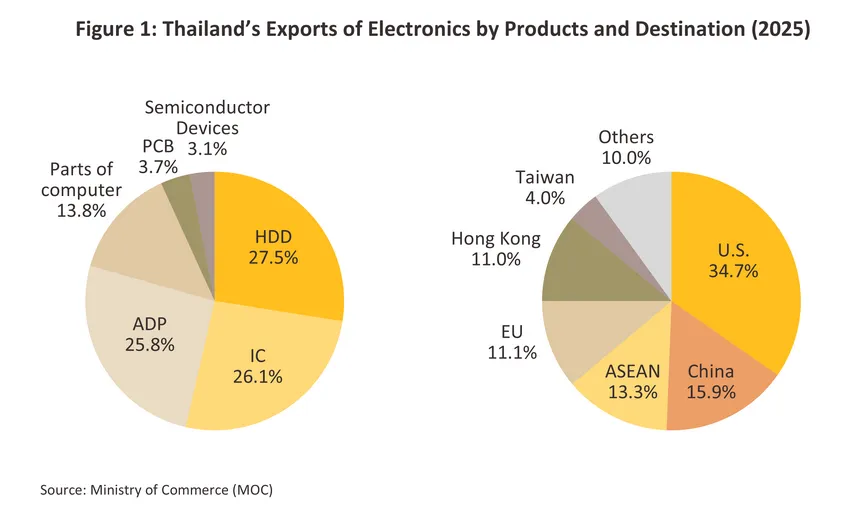
By product category (Figure 1), HDD2/ accounted for the largest share, at 27.5% of Thailand's total electronic product exports, followed by IC3/ at 26.1%, automatic data processing machines4/ (ADP) at 25.8%, computer parts and accessories5/ at 13.8%, printed circuit boards6/ (PCB) at 3.7%, and semiconductors7/ at 3.1%. Thailand's key export markets include the U.S. (34.7% of total Thai electronic product export value), China (15.9%), ASEAN (13.3%), the European Union (11.1%), Hong Kong (11.0%), and Taiwan (4.0%).)
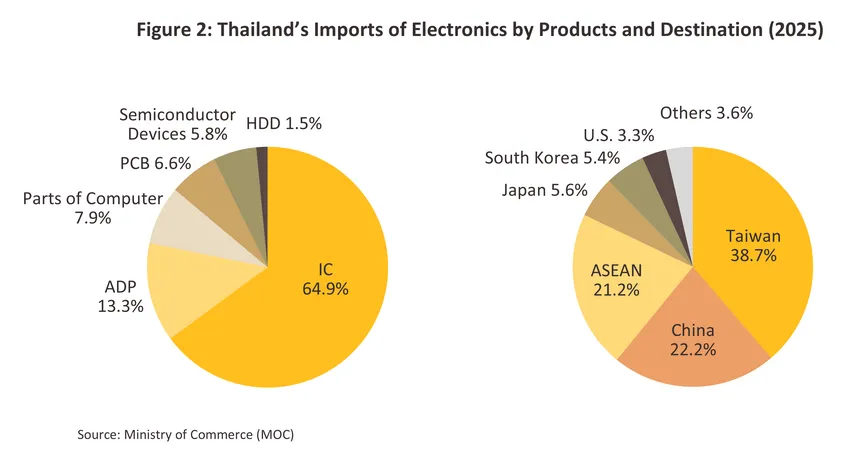
By product category (Figure 2), IC accounted for the largest share of Thailand's electronic product imports, at 64.9%, followed by automatic data processing machines at 13.3%, computer parts and accessories at 7.9%, PCBs at 6.6%, semiconductors at 5.8%, and HDD at 1.5%. In 2025, electronic product imports totaled USD 53.5 billion, or THB 1.8 trillion, accounting for more than 15.6% of Thailand's total imports. During 2021-2025, Thailand's electronic product imports grew at a CAGR of 21.0%. Key import sources include Taiwan (38.7% of total Thai electronic product import value), China (22.2%), ASEAN (21.2%), Japan (5.6%), South Korea (5.4%), and the U.S. (3.3%).
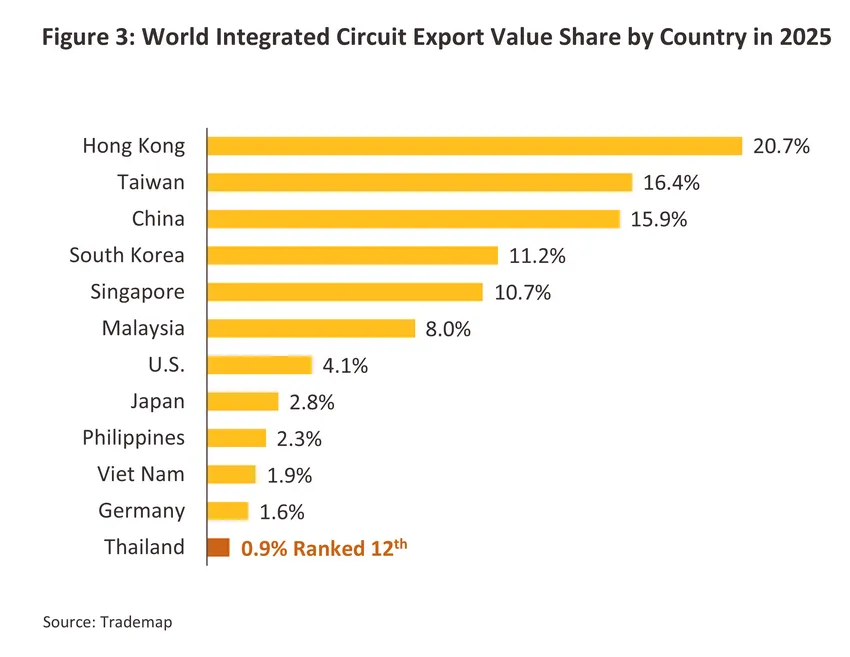
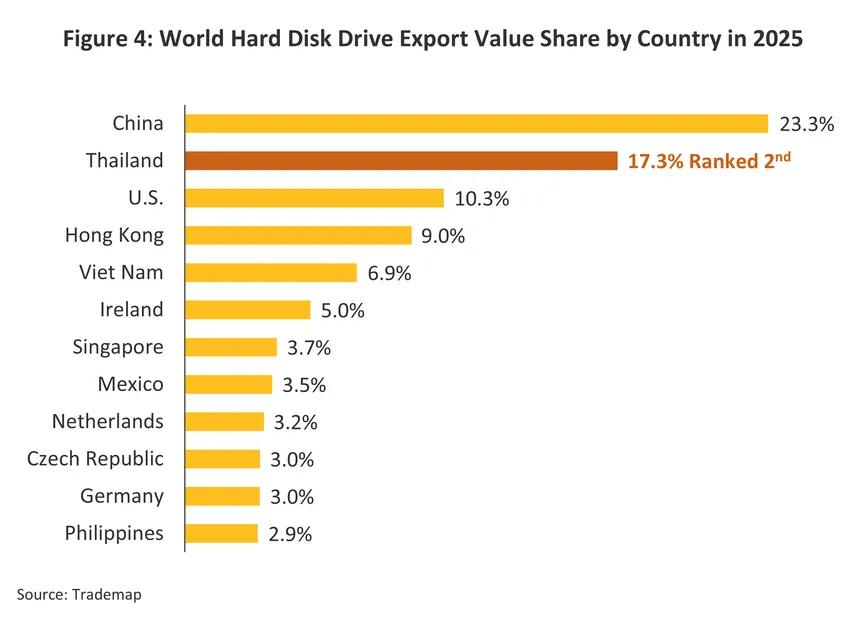
Compared with Thailand's exports in the global market (Figures 3-4), focusing on the two electronic product categories with the highest export values, namely IC and HDD, Thailand remains an important global IC production base, ranking 12th worldwide by export value. However, it accounted for only 0.9% of global IC export value in 2025. By contrast, Thailand was the world's second-largest HDD exporter, accounting for 17.3% of global HDD export value, behind only China at 23.3%. Thailand is therefore more clearly an important global export-oriented production base for HDD than for IC.
Domestic production for local consumption remains relatively small. Most products are assembled with other components for further processing into finished goods, such as communication equipment, automotive equipment, electrical and office appliances, medical equipment, and equipment used in various industries.
In recent years, the government has continuously supported investment in the electronics industry and designated it as one of the target S-curve industries under the Thailand 4.0 policy since 2016. The industry has also been elevated to a strategic industry by the Board of Investment (BOI), and since 2021 tax incentives have been offered to proactively attract investment in smart electronics using advanced technologies. Another key supporting factor has been widening geopolitical tensions, which have encouraged investors to relocate production to ASEAN, including Thailand, to diversify risks.
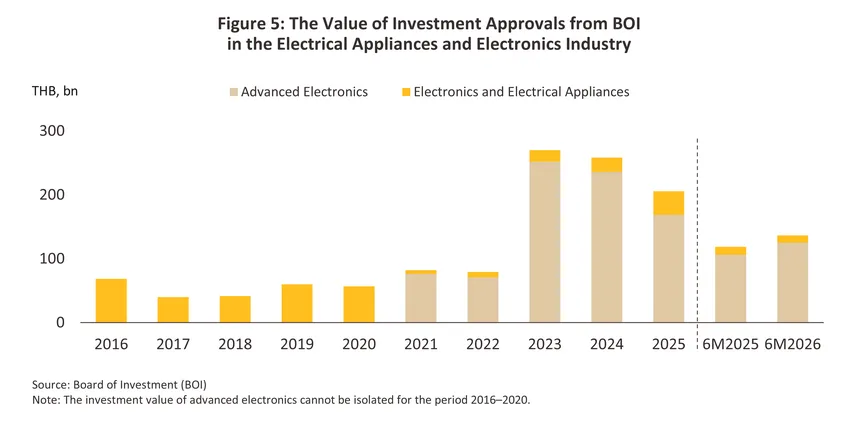
In 1H26, the value of investment promotion approvals in the electronics and electrical appliances industries reached THB 136.37 billion, up 14.8% YoY from the same period in 2025 (Figure 5). Most investments were in the Advanced Electronics segment, totaling THB 125.17 billion, or 91.8% of total investment in Thailand's electronics industry, up 17.9% YoY from the same period in 2025. The current transition therefore marks a period of structural development in Thailand's production base, with the industry moving further upstream in the electronics supply chain to support other modern target industries that rely heavily on electronics as a key upstream sector, including electric vehicles, data centers, and comprehensive healthcare
Integrated Circuit (IC) Industry
-
The Semiconductor Industry Association (SIA) and World Semiconductor Trade Statistics (WSTS) classify semiconductor products by downstream industry demand. In 2025, demand was concentrated in the PC, Computers, and AI segment, which accounted for as much as 45.5% of global semiconductor demand, followed by communications (28.7%), automotive (10.9%), electrical appliances (7.0%), industrial applications (7.0%), and government (0.9%). Global semiconductor sales growth has been driven by:
-
Growth in Computing and Communication businesses, driven by rapid advances in AI, Machine Learning, Neural Networks, and Data Analytics, has increased demand for advanced semiconductors, particularly Memory products with high density, capacity, speed, and bandwidth.
-
Growth in the electric vehicle (EV) industry, which requires more semiconductor devices in the production process than internal combustion engine (ICE) vehicles. The value of semiconductors used in producing one EV is approximately six times higher than for an ICE vehicle. These semiconductors are mainly installed in motor drive systems and battery management systems, such as Inverters, DC-DC Converters, On-board Chargers, and Battery Management Systems (BMS).
-
The integrated circuit industry is one of the priority industries targeted to attract foreign investment, as reflected in investment promotion approvals for smart electronics, which increased at an average rate of 22.0% per year during 2022-2025. In addition to investment promotion policies, the industry has strong growth potential to serve rising demand from other target industries that have received increased investment in recent years, particularly modern industries emphasizing advanced technologies, such as automated manufacturing, healthcare, and next-generation automotive. However, Thailand still faces shortages of critical mineral resources and high capital requirements for upstream technology development and R&D. As a result, Thailand has continued to focus on midstream and downstream production within global supply chains. The government's investment-support policies are therefore essential for developing Thailand's advanced semiconductor capabilities in the future.
-
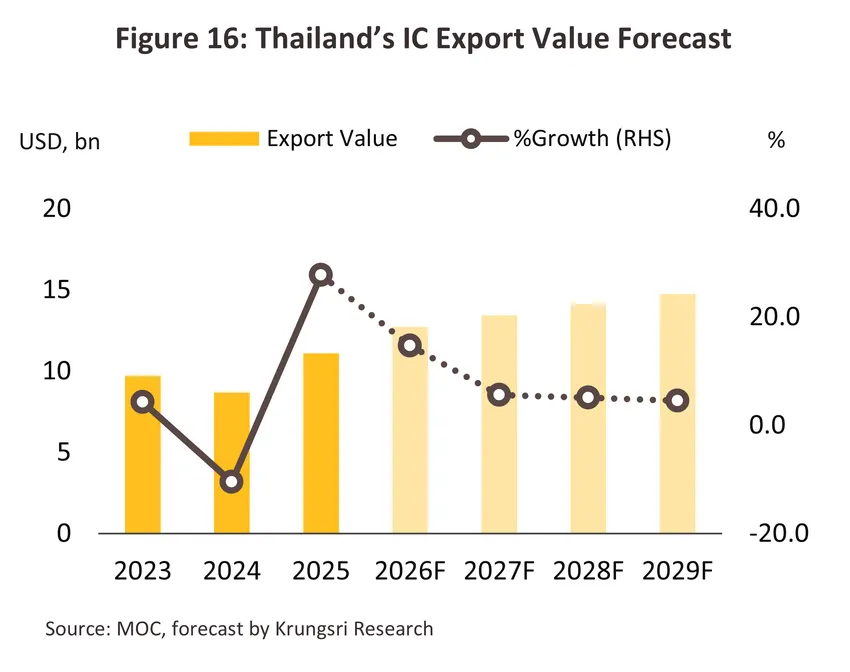
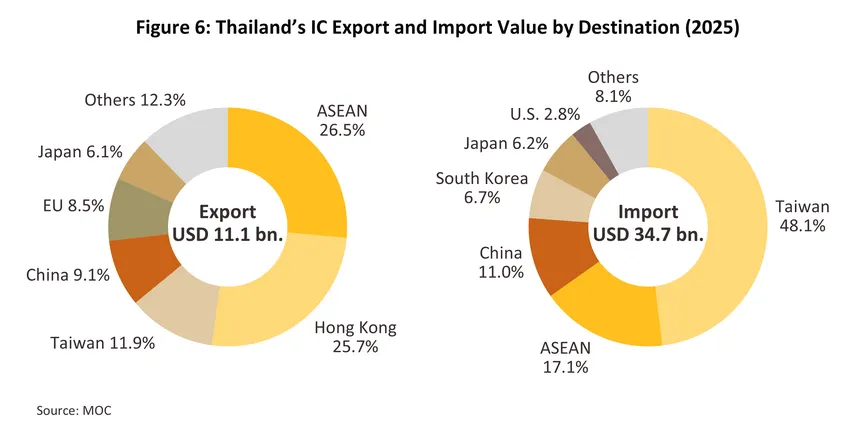
In 2025, IC exports totaled USD 11.1 billion, with ASEAN accounting for the largest share at 26.5% of Thailand's total IC exports. This reflects ASEAN's position as a major global electronics and semiconductor production base, where demand for IC for further processing/assembly and re-export has increased. Meanwhile, IC imports totaled as much as USD 34.7 billion, with Taiwan as the main source, accounting for more than 48.1% of total IC import value (Figure 6), as Taiwan is a leading global base for advanced semiconductor manufacturing, particularly advanced foundry and advanced packaging. Thailand therefore remains dependent on imported advanced IC for production and exports.
Hard Disk Drive (HDD) Industry
-
The HDD industry moves broadly in line with the growth of the electronics, data storage, and data processing industries. At present, HDD are increasingly used in data centers in line with the development of AI, a technology that requires large-scale data storage. In addition, modern electronic devices are becoming more intelligent, with greater capabilities to process and store data and connect online, driving strong growth in demand for storage devices.
-
Key global players include Seagate, Western Digital, and Toshiba. Manufacturers are currently focusing on improving HDD performance, such as through Heat-Assisted Magnetic Recording (HAMR), which enables storage devices to become smaller. Major HDD manufacturers in Thailand include Western Digital Storage Technologies (Thailand) Co., Ltd. and Seagate Technology (Thailand) Co., Ltd.
-
In recent years, the global HDD market has faced pressure from replacement by SSDs, which offer advantages in durability, data transfer speed, and energy efficiency. However, the higher unit price of SSDs means HDD retain an advantage in cost per capacity and the ability to store large volumes of data.
-
Domestic investment is trending upward to support future HDD demand after a prolonged market downturn. Major HDD manufacturers, including Seagate Technology (Thailand) Co., Ltd. and Western Digital Storage Technologies (Thailand) Co., Ltd., have invested to expand domestic production capacity and develop more advanced HDD technologies with higher capacities and smaller form factors, enabling them to compete with SSDs, which remain more expensive. Investment is focused on the expanding Data Center business, reflecting the continued potential for Thailand's HDD segment to return to growth.
-
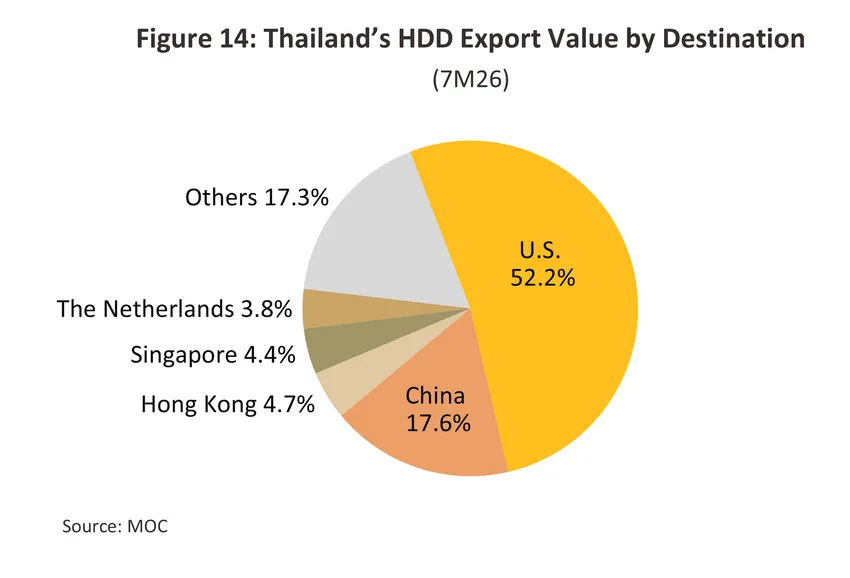
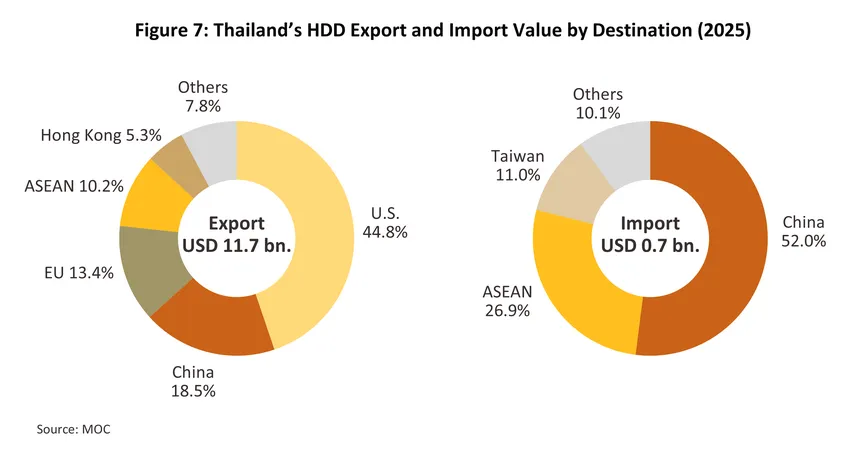
In 2025, Thailand exported HDD worth USD 11.7 billion, with the U.S. as the main market, accounting for 44.8% of total Thai HDD exports. Thailand imported only USD 0.7 billion worth of HDD, mainly from China, which accounted for 52.0% of total HDD imports (Figure 7), as China is the world's largest production base for data storage devices and HDD and continues to benefit from production cost advantages arising from economies of scale.
Integrated Circuit (IC) Industry
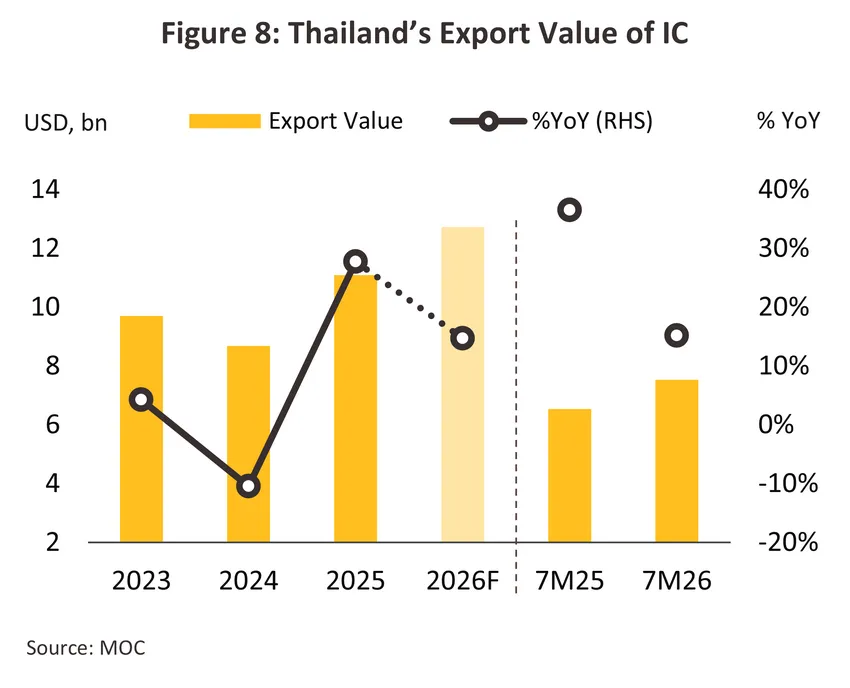
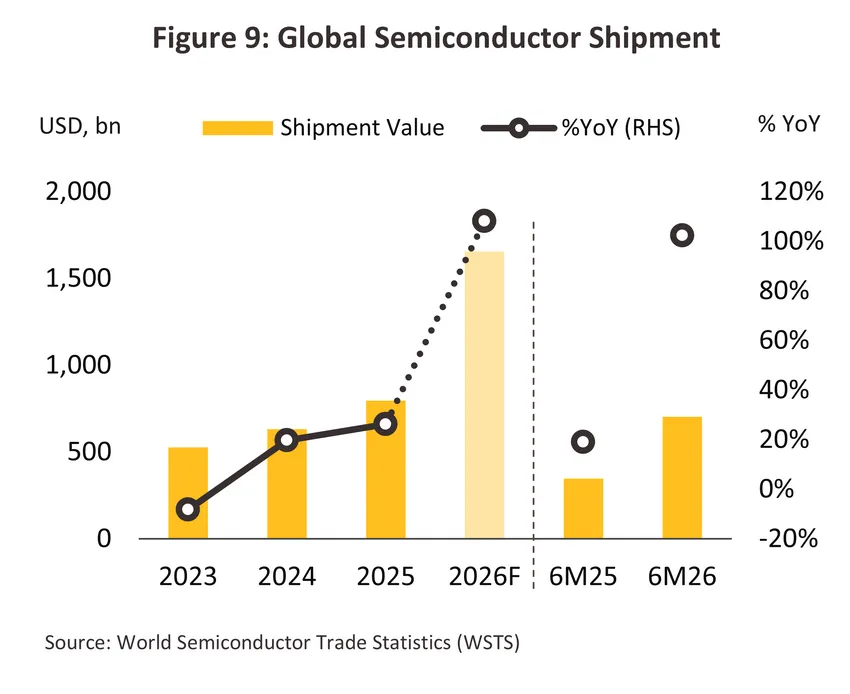
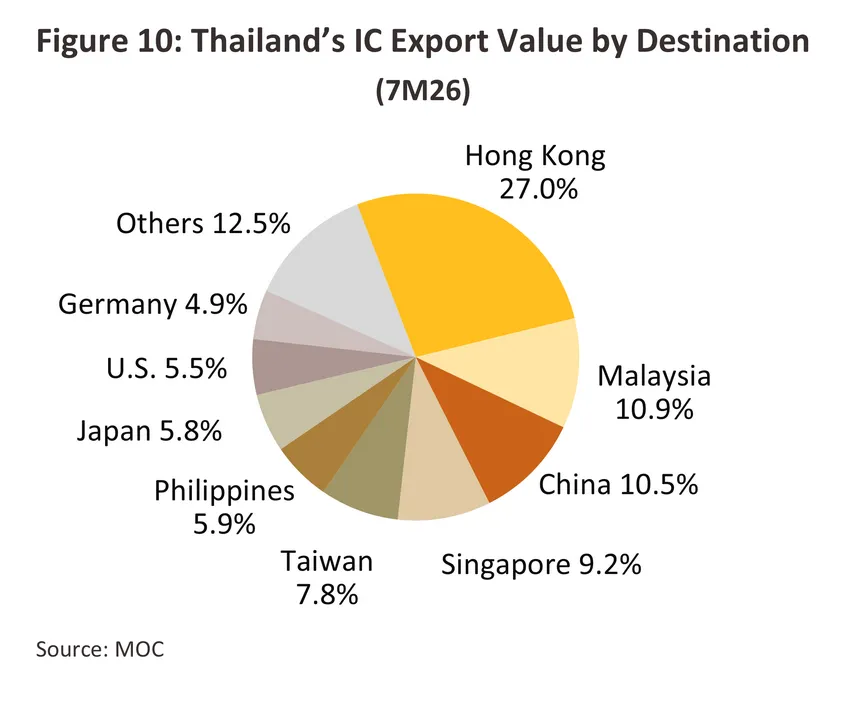
In 7M26, Thailand's IC export value increased by 15.1% YoY to USD 7.5 billion (Figure 8), in line with global semiconductor sales, which grew by 102.3% YoY in 1H26. WSTS forecasts global IC sales to expand by as much as 108.1% for full-year 2026 (Figure 9). Thailand's top three IC export markets were Hong Kong, Malaysia, and China, respectively (Figure 10). The increase in IC exports was driven by:
-
Global sales growth of electrical appliances and IT equipment, driven by a new replacement cycle for electrical appliances, mobile phones, and notebooks/PCs, together with the launch of new devices capable of supporting AI technology more efficiently. However, mobile phone sales are likely to contract in 2026 because Memory chips have become more expensive and are in short supply, which could push average global mobile phone selling prices up by more than 20.7%. At the same time, global purchasing power is weakening amid slower economic growth and a higher cost of living, partly due to the impact of Middle East tensions. Global mobile phone sales contracted by -4.2% YoY in 3M26 and are expected to contract by -13.9% for the full year.8/
-
Rising investment in data centers to support Generative AI processing has sharply increased demand for advanced Logic and Memory chips. Although Thailand does not produce these chips directly, it benefits indirectly from exports of other chips required in data centers. Gartner expects global investment in AI-related infrastructure to reach USD 2.59 trillion in 2026, up 47.0%9/, while global IT investment in data centers is expected to reach USD 822 billion, up 62.5%.
-
Continued growth in global electric vehicle production, driven by policies promoting EV adoption to meet carbon-reduction targets in the transport sector. Global Battery Electric Vehicle (BEV) sales totaled 7.6 million units in 1H26, up 19.2% YoY. These vehicles use a greater number and value of semiconductor chips in production than ICE vehicles, particularly Power semiconductors, Logic chips, and various sensors.
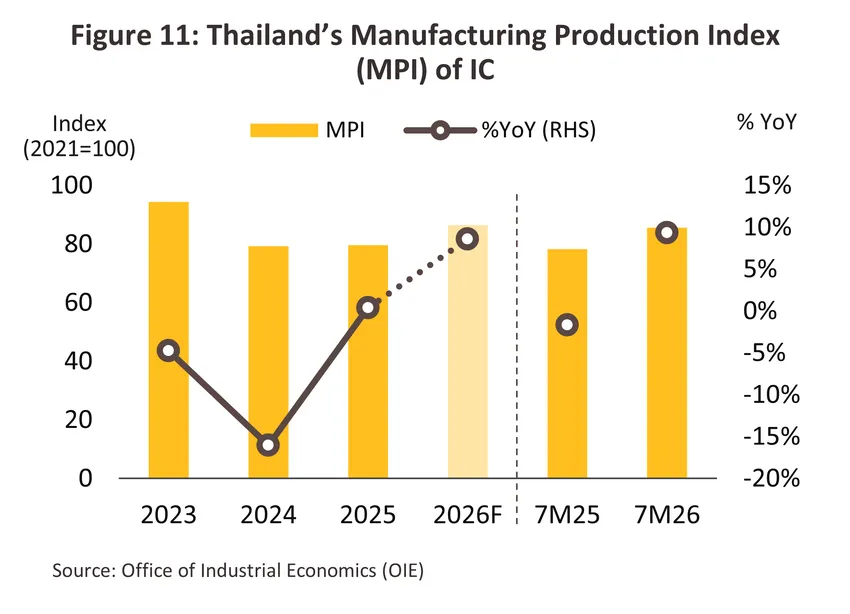
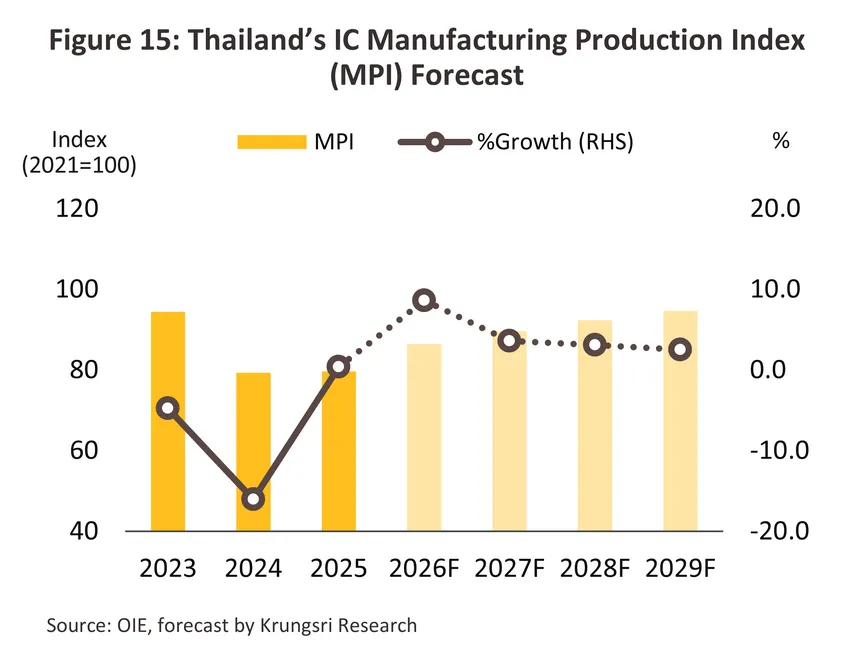
Thailand's IC Manufacturing Production Index (MPI) expanded by 9.3% YoY in 7M26 (Figure 11), driven by restocking, while the inventory index contracted by -8.1% YoY over the same period. Production was also bolstered by export growth, in line with global demand for electronic products, particularly in digital technology and data-processing applications.
Over the same period, Thailand's IC imports increased significantly, particularly from Taiwan and South Korea, which rose by 279.9% YoY and 196.7% YoY, respectively. This reflected rising demand for Logic and Memory chips following continued investment expansion in data centers and the use of imported chips as inputs for production in response to stronger export demand.
Hard Disk Drive (HDD) Industry
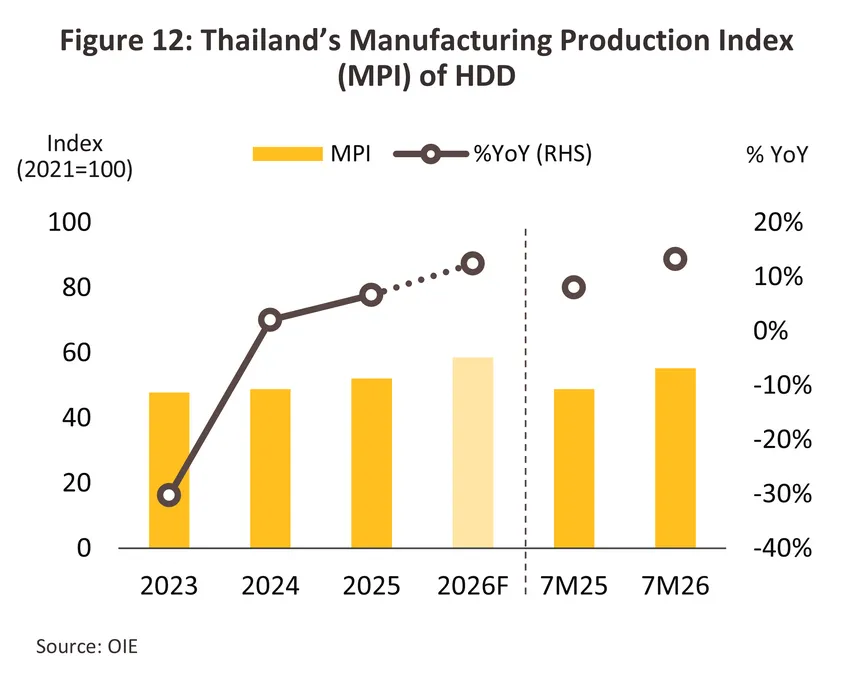
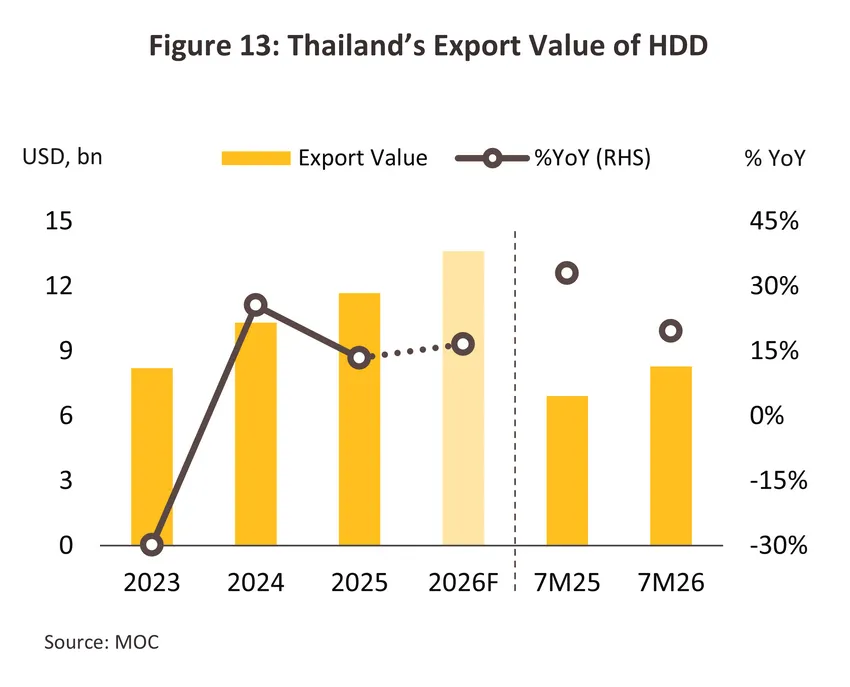
The HDD production index increased by 13.2% YoY in 7M26 (Figure 12), in line with export value, which rose by 19.6% YoY to USD 8.3 billion over the same period (Figure 13). Thailand's top three HDD export markets were the U.S., China, and Hong Kong, respectively (Figure 14). Key factors supporting the recovery in HDD production in recent months include:
-
Continued growth of data center and cloud businesses, driven mainly by the development of AI, which requires large storage capacity for massive volumes of data. This is reinforced by businesses increasingly shifting their operations to cloud-based IT infrastructure. In 2026, AI infrastructure is expected to generate additional storage demand of around 363 exabytes, equivalent to approximately 18% of total HDD shipments.10/ This is consistent with market commentary from Western Digital, a major global HDD manufacturer, which reported that HDD bookings had filled production capacity for 2026, driven by the substantial expansion of data center construction, particularly in the U.S.11/ These developments are supporting a significant increase in global HDD demand.
-
Advantages in storage capacity and cost per unit. The average price of high-capacity HDD is currently around USD 15/TB, below the average price of NAND flash memory (the flash memory used in SSDs) at USD 262/TB (Bloomberg Intelligence), representing a price gap of more than 17 times, up from 7 times in 2025. NAND prices have risen due to continued tight production capacity, which is expected to remain constrained through late 2027. As a result, HDD are expected to retain their cost advantage. HDD manufacturers are also continuing to invest in technology development to produce new HDD models with higher storage capacity and faster data recording, enabling HDD to remain widely used in data centers worldwide. Bloomberg Intelligence estimates that global HDD demand will increase by 31.0% in 2026. AI data centers require approximately 60-70 exabytes of storage capacity per gigawatt of capacity, comprising 10-20 exabytes of SSDs and 40-60 exabytes of HDD (Solidigm). This highlights the continued importance of HDD in the construction of AI-enabled data centers.
For the remainder of the year, Thailand's electronics industry is likely to continue benefiting from the factors outlined above, particularly ongoing investment in global data center and AI businesses, EV production, and the new replacement cycle for electrical appliances and IT equipment. Thailand's electronic equipment exports are therefore expected to continue expanding. In 2026, IC export value is projected to increase by 14.2-15.2%, in line with production volume growth of 8.1-9.1%. HDD production and export value are forecast to increase by 11.9-12.9% and 16.1-17.1%, respectively.
Outlook
Integrated Circuit (IC) Industry
During 2027-2029, the IC production index is expected to grow by 2.6-3.6% per year (Figure 15), while IC export value is projected to rise by 4.6-5.6% per year (Figure 16), underpinned by:
-
Continued expansion of global data center and AI industries. Thailand is not yet a major direct beneficiary because it cannot produce domestically the advanced processing chips used to develop and train AI models, such as GPUs and high-bandwidth memory (HBM). However, Thailand benefits indirectly as a production and assembly base for other components required for data centers, particularly Analog and Power Management chips manufactured using mature-node technologies, an area in which Thailand has production capabilities. SIA and Deloitte estimate that the global AI data center market will grow at a CAGR of more than 88.8% during 2022-2028.12/ Meanwhile, 42 data center projects in Thailand received investment promotion approval between 2024 and March 2026, representing a combined IT load of 3,400 MW and total investment of more than THB 750 billion. This indicates that the expansion of data centers in Thailand and worldwide to support AI and cloud computing will be a key driver of continued growth in Thailand's IC production and exports.
-
Expansion of EV production both globally and domestically. EVs use more chips per vehicle than ICE vehicles, particularly in three core systems: energy management, Advanced Driver Assistance Systems (ADAS) and autonomous driving, and infotainment. As a result, semiconductor value per vehicle is expected to rise continuously as the transition to EVs progresses. Bloomberg Intelligence forecasts global BEV sales to grow at a CAGR of 11.0% during 2026-2029. Thailand's BEV production is also expected to expand faster than the global average because manufacturers are required to produce at 2-3 times the volume of earlier imports for domestic sales during 2026-2027 under government incentive conditions. This is expected to support an acceleration in Thai passenger BEV production during 2026-2027.13/ Rising global end-market demand together with a growing domestic production base will therefore be an important driver of demand for automotive chips that Thailand is capable of producing.
-
Expansion of related domestic supply chains, bolstered by stronger investment promotion in recent years. This covers a range of industries from upstream to downstream, including data centers, raw materials and PCB production, HDD manufacturing, and smart appliances and electronics. These industries all generate demand for domestically produced IC. The BOI has introduced measures to promote greater local content, particularly in the data center industry, alongside efforts to strengthen domestic supply-chain linkages. This should allow local manufacturers to benefit more from the expanding domestic market. In addition, the government is pursuing structural measures to strengthen Thailand's semiconductor industry, including the establishment of the National Semiconductor and Advanced Electronics Industry Policy Committee, which aims to attract a total of THB 2.5 trillion in investment, develop highly skilled talent, and promote the development of Made in Thailand chips by 2050. The policy focuses on five semiconductor groups in which Thailand already has an industrial base and strong potential to build on: Power, Sensor, Photonics, Analog, and Discrete. These products are largely mature-node semiconductors using well-established manufacturing technologies and are widely traded in global markets, providing a foundation for Thailand to build on existing capabilities and strengthen its global competitiveness.
However, Thailand's IC production and exports may face the following risks that could limit growth:
i. Uncertainty surrounding U.S. tariff measures. Section 301 measures concerning forced labor may have a limited impact on Thailand, as Thailand's major competitors in the U.S. market face similar tariff measures. However, the investigation into structural excess capacity launched by the U.S. in March 2026 remains under consideration and covers Thailand and some trading partners. If this results in country- or product-specific measures and Thailand is placed at a disadvantage, costs could rise and the competitiveness of Thai electronic products in the U.S. market could weaken.
ii. Geopolitical tensions in the Middle East could affect the chip manufacturing supply chain if the Strait of Hormuz were to be closed for an extended period, raising the cost of raw materials and high-purity chemicals used in manufacturing processes.
iii. Intensifying global competition as ASEAN competitors continue to accelerate investment and upgrade their semiconductor capabilities.
Hard Disk Drive (HDD) Industry
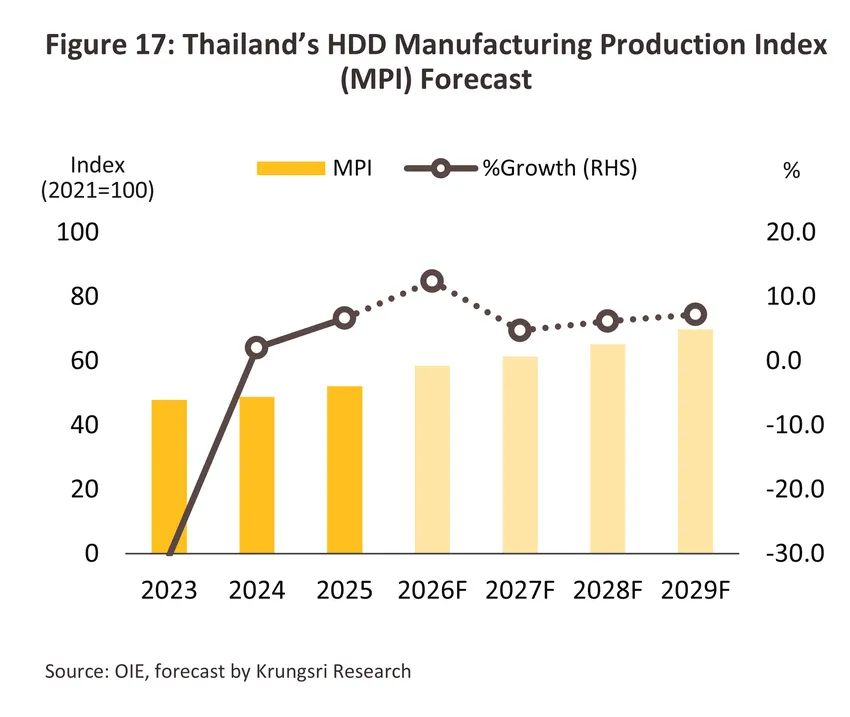
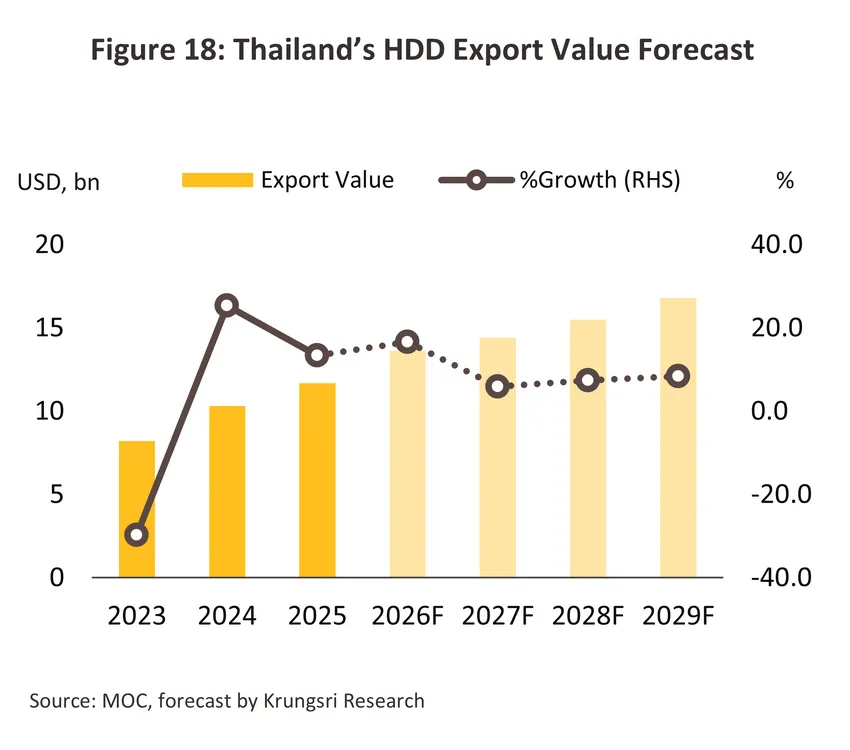
During 2027-2029, HDD production is expected to increase by an average of 5.5-6.5% per year (Figure 17), in line with projected export value growth of 6.7-7.7% per year (Figure 18), underpinned by:
-
Continued expansion of global data center and cloud businesses, bolstered by rising AI adoption, will increase demand for storage capacity, particularly as AI models are increasingly deployed in real-world applications (Inference). This supports HDD demand structurally because each inference generates new data that must be stored over the long term, including usage histories, data for governance, and data used to train subsequent model generations. In the AI era, data is less likely to be deleted because it retains value for future model development, unlike in the past when older data was often deleted to manage the cost of limited storage capacity. HDD demand also has a cumulative character as usage increases over time. Even if new data center construction slows, existing data centers continue to generate data and require additional storage, making HDD demand more stable and less volatile than demand for processing equipment such as chips, which follows investment cycles. As a result, HDD, which offer relatively stable performance and low cost per capacity, are likely to see continued demand growth in the period ahead.
-
Growth of related domestic production chains, particularly downstream businesses such as data centers and digital services, which continue to expand investment in Thailand (as discussed in the IC industry outlook). Meanwhile, upstream-to-midstream investment in key electronic inputs, such as semiconductors and PCBs with higher value added, will benefit HDD manufacturers. This will support the production of high-performance HDD, enhance the competitiveness of Thailand's HDD industry, and support export growth over the period ahead.
-
Expansion of investment in HDD production in recent years, covering both capacity expansion and technology development to increase storage capacity per unit, improve data transfer speeds, and reduce unit costs. This has strengthened Thailand's ability to produce large volumes of high-performance HDD to meet rising global demand. In March 2026, the BOI approved a new investment project by Western Digital worth around THB 2.3 billion to establish an R&D center in Thailand focused on developing Heat-Assisted Magnetic Recording (HAMR) technology. This underscores Thailand's growing role in producing higher-value-added HDD and responding to global demand.
Downside risks to HDD production and exports remain mainly associated with Middle East tensions, which could raise logistics costs and cause periodic disruption to the global electronics supply chain, as well as uncertainty over U.S. tariff measures that could affect import demand in the U.S. market. Such uncertainty may lead some operators in the electronics supply chain to delay investment decisions while awaiting greater clarity. However, this is expected to be a short-term effect rather than a change in the industry's long-term growth direction, as demand for HDD for large-scale data storage is likely to continue growing with the increasing use of AI, data centers, and cloud services worldwide.
1/ Based on data from the Office of Industrial Economics (OIE), Krungsri Research estimates that exports account for around 75-80% of total production value.
2/ HS Code: 8471.70
3/ HS Code: 8542
4/ HS Code: 8471 (excluding 8471.70)
5/ HS Code: 8473
6/ HS Code: 8534
7/ HS Code: 8541 (excluding 8541.42-43)
8/ Source: International Data Corporation (IDC) (May 26, 2026)
9/ Source: Gartner (May 19, 2026)
10/ Source: Forbes (May 30, 2026)
11/ Source: Yahoo Finance (May 30, 2026)
12/ Source: SIA (June 1, 2026)
13/ Source: Krungsri Research (December 2, 2025)







.webp.aspx)