EXECUTIVE SUMMARY
During 2027–2029, domestic sales volume of ready-to-eat (RTE) food is expected to grow by an average of 2.8–3.8% annually, underpinned by: (i) fast-paced consumer lifestyles, driving greater demand for RTE foods that are convenient to prepare and have a long shelf life; (ii) new product development targeting specific consumer needs, alongside expansion into the premium segment;
(iii) the expansion of convenience store branches, broadening distribution channels; and (iv) a gradual recovery in domestic purchasing power in line with improving economic conditions. Nevertheless, the market continues to face pressure from the health-conscious consumption trend, as consumers increasingly turn to minimally processed, low-sodium, and more nutritious products, while competition from freshly prepared and health-focused food is set to intensify. In addition, rising production costs from both fuel and packaging amid the uncertainty surrounding Middle East tensions, along with volatile raw material prices linked to climate change, will weigh on manufacturers’ profitability.
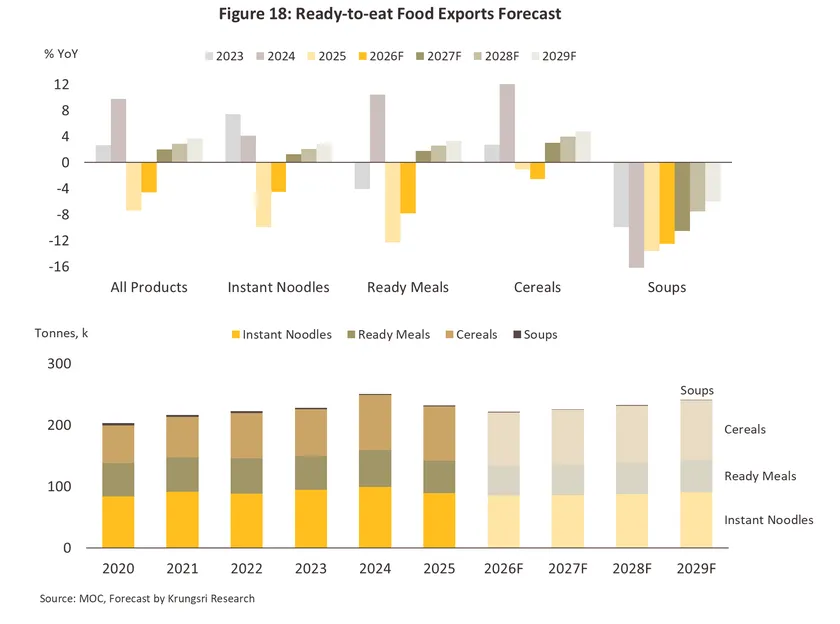
Meanwhile, export volume is expected to grow by an average of 2.4–3.4% annually, gradually recovering, as trading partners’ purchasing power improves and global demand for RTE food among urban consumers is likely to strengthen. Further growth potential lies in new export markets in countries with which Thailand has free trade agreements (FTAs). Nevertheless, export growth will remain constrained by: (i) the prolonged Thailand-Cambodia border conflict and continued anti-Thai product sentiment; (ii) geopolitical tensions in several regions worldwide, affecting both imported raw material and logistics costs; (iii) U.S. import tariff measures, which may dampen U.S. consumers’ demand; (iv) the health-conscious trend, which will reduce demand for processed food and RTE food; and (v) increasingly stringent nutrition and environmental requirements, affecting production process costs.
Krungsri Research view
-
Manufacturers of instant noodles: Revenue is expected to continue growing, underpinned by the products’ affordability and fit with the needs of price-sensitive consumers during the economic slowdown, alongside new product development and operators’ proactive marketing strategies, amid intense industry competition. However, growth in business performance may be constrained by: (i) the Thailand-Cambodia border closure, which may continue to affect exports to Cambodia; (ii) geopolitical tensions in several regions, affecting production costs such as wheat and plastic packaging; and (iii) government measures and the sodium-reduction trend, which are compelling manufacturers to reformulate their products, entailing adjustment costs across R&D investment, sourcing of substitute raw materials, and production process improvements.
-
Manufacturers of chilled and frozen ready meals: Fast-paced lifestyles, the expansion of convenience stores, and diversified product development targeting specific consumer needs continue to underpin demand growth for chilled and frozen ready meals. However, business performance faces challenges from: (i) intensifying competition from restaurants and freshly prepared food delivery services; (ii) volatile plastic packaging costs in line with fuel prices; (iii) the sodium-reduction trend; and (iv) U.S. import tariff measures, which may affect exports to the U.S. market — a key export destination.
-
Manufacturers of ready-to-eat cereals: Revenue is expected to continue growing, driven by expanding e-commerce distribution channels and growth in products emphasizing nutritional value, such as high-protein or high-fiber options, or those made from natural ingredients. However, business performance may be pressured by rising grain prices amid intensifying climate risks, as well as exposure to U.S. import tariff measures, which may affect import demand in the U.S. market.
-
Manufacturers of ready-to-eat soups: The market faces pressures from its narrow target consumer base, as well as competition from freshly prepared food and other RTE categories. Meanwhile, the health-conscious trend and sodium-reduction policies, both domestically and abroad, will weigh on market demand, particularly in export markets, limiting overall market growth potential. In addition, manufacturers face rising costs for raw materials such as soup bases, non-dairy creamers, and other seasonings, as well as higher packaging costs.
Overview
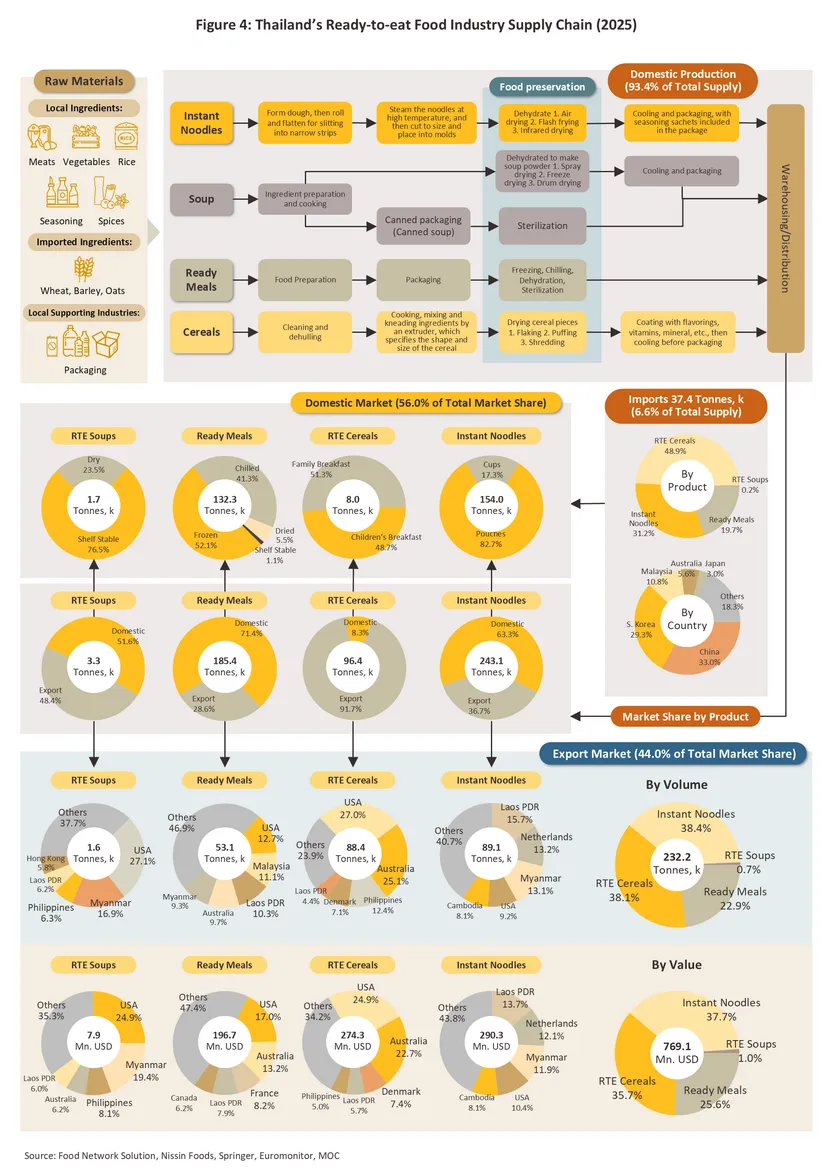
Ready-to-eat (RTE) food refers to meals that have been pre-cooked or processed for convenient consumption. Before serving, they can be reheated to enhance freshness, offering consumers speed and ease in meal preparation. In 2025, Thailand’s RTE food industry recorded a combined domestic and export sales volume of 528.2 thousand tons, valued at USD 2.5 billion. The domestic market accounted for 296.0 thousand tons, representing 56.0% of total domestic sales and export volume, and contributed USD 1.8 billion, or 69.6% of total domestic sales and export value. Domestically sold RTE foods can be categorized into two main segments (Figure 1):
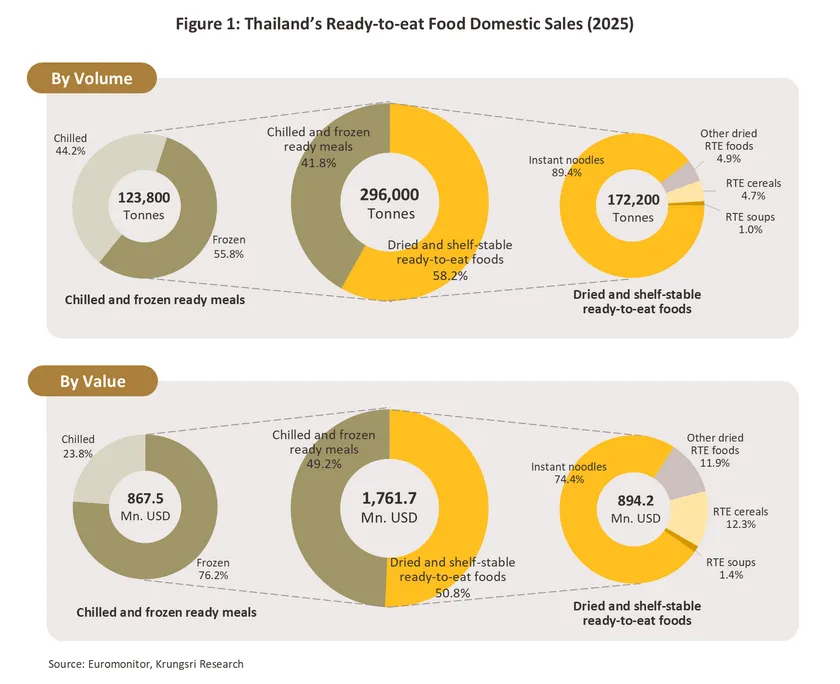
The domestic sales volume and value of Thailand’s RTE food industry in 2025, together with its key manufacturers and distributors, can be classified by product5/ as follows:
-
Instant noodles: Domestic sales volume and value of instant noodles stood at 154.0 thousand tons and USD 665.0 million, representing 63.3% and 69.6% of Thailand’s total instant noodle sales and export volume and value6/, respectively. The segment primarily targets the mass market — consumers who prioritize value for money, affordability, and convenience. Major manufacturers and distributors comprise Thai President Foods PCL. (Mama brand), Thai Preserved Food Factory Co., Ltd. (Wai Wai brand), Ajinomoto (Thailand) Co., Ltd. (Yum Yum brand), Samyang Foods Co., Ltd. (Samyang brand), Nongshim Co., Ltd. (Nongshim brand), and Nissin Foods (Thailand) Co., Ltd. (Nissin brand). Collectively, these manufacturers account for over 95.5% of Thailand’s instant noodle market value.
-
Chilled and frozen ready meals: Domestic sales volume and value of chilled and frozen ready meals stood at 132.3 thousand tons and USD 974.2 million, representing 71.4% and 83.2% of Thailand’s total chilled and frozen ready meal sales and export volume and value6/, respectively. This segment primarily serves urban consumers and working professionals with fast-paced lifestyles who seek convenient meals with quality comparable to freshly prepared food. Major manufacturers and distributors comprise Charoen Pokphand Group (EzyGo, 7-Fresh, EzyChoice, CP, and Jade Dragon brands), Surapon Foods PCL. (Surapon Foods brand), Unilever Thai Group (Knorr brand), S&P Syndicate PCL. (Quick Meal brand), and Thai Agri Foods PCL. (Little Chef brand). Collectively, these manufacturers account for over 84.9% of Thailand’s chilled and frozen ready meal market value. Most market leaders operate their own in-house distribution networks, giving them easy access to consumers, while economies of scale allow them to price their products close to those of regular meals in the market, along with various promotions to attract consumers.
-
Ready-to-eat cereals: Domestic sales volume and value of RTE cereals stood at 8.0 thousand tons and USD 110.0 million, representing 8.3% and 28.6% of Thailand’s total RTE cereal sales and export volume and value6/, respectively. This segment primarily targets health-conscious consumers, as well as those seeking nutritious breakfast or snack options. Major manufacturers and distributors comprise Brunchtime Co., Ltd. (Diamond Grains brand), Nestlé (Thailand) Co., Ltd. (Koko Krunch, Fitnesse, Milo, and Honey Stars brands), Kellanova (Thailand) Co., Ltd. (Kellogg’s brand), and European Snack Food Co., Ltd. (COPP brand). Collectively, these manufacturers account for over 77.6% of Thailand’s RTE cereal market value. Most products are made from a variety of raw materials, such as corn (cornflakes), wheat (wheat flakes), oats (oatmeal), rice (rice cereal), and granola.
-
Ready-to-eat soups: Domestic sales volume and value of RTE soups stood at 1.7 thousand tons and USD 12.5 million, representing 51.6% and 61.4% of Thailand’s total RTE soup sales and export volume and value6/, respectively. The segment serves a niche market of consumers with strong purchasing power who seek convenience and distinctive products, as well as consumers who favor Western-style food. Major manufacturers and distributors comprise Sino-Pacific Trading (Thailand) Co., Ltd. (Campbell’s brand), Jim’s Group Co., Ltd. (Lady Anna brand), and River Kwai International Food Industry Co., Ltd. (River Kwai brand). Collectively, these manufacturers account for over 53.2% of Thailand’s RTE soup market value
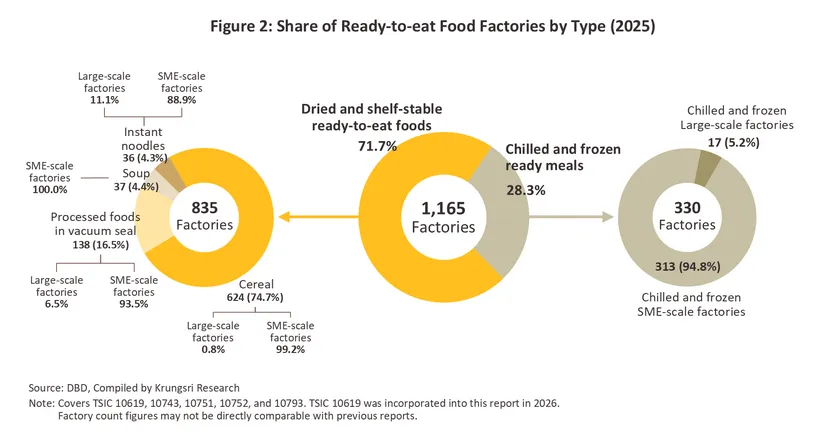
In 2025, Thailand’s RTE food industry7/ comprised 1,165 factories registered with the Department of Business Development (DBD) and actively operating. The majority were small and medium-sized enterprises (SMEs), totaling 1,130 factories, while the remaining 35 were large-scale factories. These can be categorized into two main groups: (i) Dried and shelf-stable RTE food manufacturers, numbering 835 factories, or 71.7% of all RTE food producers. Among these, 817 were SMEs and 18 were large-scale factories. By product type, this group included 624 manufacturers of cereal and other grain-based products, 138 manufacturers of vacuum-packed RTE foods, 37 manufacturers of soups and specialty foods, and 36 manufacturers of instant and semi-instant flour-based foods; and (ii) Chilled and frozen ready meal manufacturers, totaling 330 factories, or 28.3% of all RTE food producers. Of these, 313 were SMEs and 17 were large-scale factories (Figure 2).
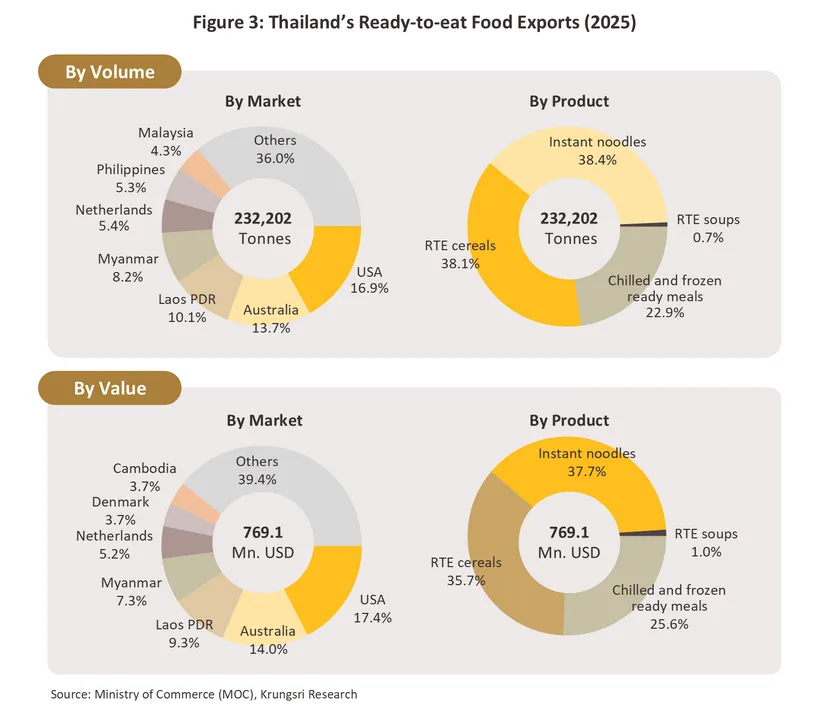
In 2025, Thailand’s ready-to-eat food exports totaled 232.2 thousand tons, accounting for 44.0% of total RTE food sales and export volume6/, with export value reaching USD 769.1 million, representing 30.4% of total RTE food sales and export value6/ (Figure 3). The United States was Thailand’s largest export market, accounting for 16.9% of total export volume, followed by Australia (13.7%), Laos PDR (10.1%), Myanmar (8.2%), and the Netherlands (5.4%). Exports can be categorized into the following product groups:
-
Instant noodles8/: Export volume and value stood at 89.1 thousand tons and USD 290.3 million, representing 38.4% of total RTE food export volume and 37.7% of export value, respectively. Laos PDR ranked as the largest export market, accounting for 15.7% of instant noodle export volume, followed by the Netherlands (13.2%), Myanmar (13.1%), the United States (9.2%), and Cambodia (8.1%).
-
Chilled and frozen ready meals9/: Export volume and value stood at 53.1 thousand tons and USD 196.7 million, representing 22.9% of total RTE food export volume and 25.6% of export value, respectively. The United States was the largest export market, accounting for 12.7% of chilled and frozen ready meal export volume, followed by Malaysia (11.1%), Laos PDR (10.3%), Australia (9.7%), and Myanmar (9.3%).
-
Ready-to-eat cereals10/: Export volume and value stood at 88.4 thousand tons and USD 274.3 million, representing 38.1% of total RTE food export volume and 35.7% of export value, respectively. The United States was the largest export market, accounting for 27.0% of RTE cereal export volume, followed by Australia (25.1%), the Philippines (12.4%), Denmark (7.1%), and Laos PDR (4.4%).
-
Ready-to-eat soups11/: Export volume and value stood at 1.6 thousand tons and USD 7.9 million, representing 0.7% of total RTE food export volume and 1.0% of export value, respectively. The United States was the largest export market, accounting for 27.1% of RTE soup export volume, followed by Myanmar (16.9%), the Philippines (6.3%), Laos PDR (6.2%), and Hong Kong (5.8%).
Situation
Domestic sales of ready-to-eat food
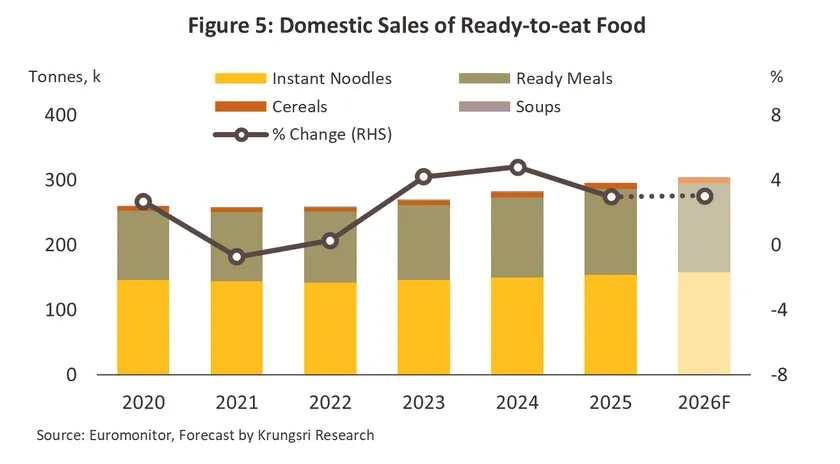
In 2025, domestic sales volume of RTE food products stood at 296.0 thousand tons, up 4.8%, with sales value reaching USD 1,761.7 million, up 11.8% (Figure 5). Growth was underpinned by consumers’ increasingly fast-paced lifestyles, which encourage demand for convenient, quick meal solutions. Combined with the wide availability of RTE products at convenience stores at prices comparable to freshly prepared food, these trends resonated strongly with consumers, particularly amid the rising number of small urban households. In addition, manufacturers have intensified marketing efforts to capture new-generation consumers through: (i) premiumization — products using quality ingredients and modern packaging, particularly health-oriented and high-protein formulations; (ii) expanding distribution through social media and e-commerce channels; and (iii) offering promotional campaigns through discounts and giveaways. Domestic sales volume in 2026 is projected to grow at a moderated pace of 2.5–3.5%, dampened by Middle East tensions, which have triggered an economic slowdown amid rising living costs in line with oil prices — together pressuring purchasing power and undermining consumer spending confidence. Nevertheless, growth will be bolstered by: (i) the affordability of RTE products; (ii) convenient accessibility through the expansion of convenience stores and e-commerce channels, which align well with consumers’ increasingly fast-paced, convenience-oriented lifestyles; (iii) expanding cold chain logistics systems among convenience store operators, helping preserve product quality; and (iv) government economic stimulus policies that help ease pressure on consumer purchasing power. The breakdown by product is as follows:
-
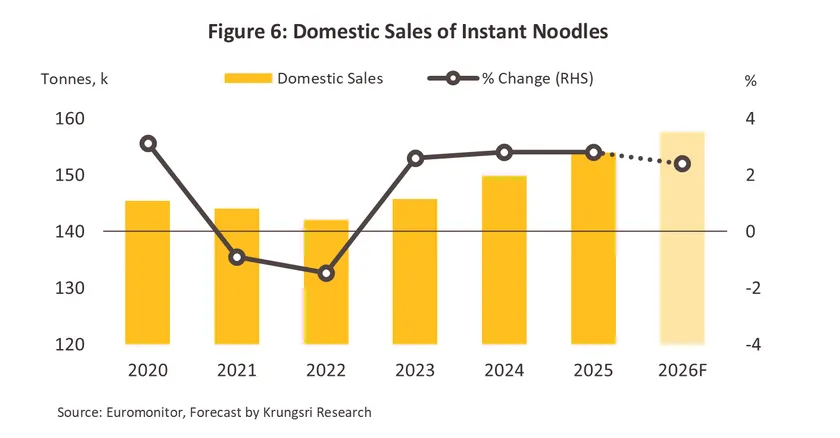
Instant noodles: In 2025, domestic sales volume of instant noodles stood at 154.0 thousand tons, up 2.8%. Most sales came in pouches, accounting for 82.7% of total volume, with the remaining 17.3% sold in cups. Domestic sales value reached USD 665.0 million, up 8.2% (Figure 6), underpinned mainly by: (i) the products’ affordability and their role as a substitute for freshly prepared food during busy, time-pressed occasions; (ii) more effective marketing strategies targeting specific consumer segments, alongside the use of brand ambassadors to project a modern image and attract younger consumers; and (iii) the continuous launch of new products with novel flavors that cater to consumers’ diverse preferences. These factors have kept instant noodles a popular choice among Thai consumers, reflected in Thailand’s ranking as the world’s 8th largest instant noodle market by total consumption volume, and 3rd largest in per-capita consumption terms12/. In 2026, sales volume is expected to grow at 1.9–2.9%, broadly in line with 2025, amid a slowdown in the domestic economy and weakening purchasing power, prompting consumers to become more cautious in their spending and increasingly prioritize affordable food products — particularly pouch-type instant noodles, given their accessible price point, even as demand growth for premium instant noodles, which carry higher price points, may slow.
-
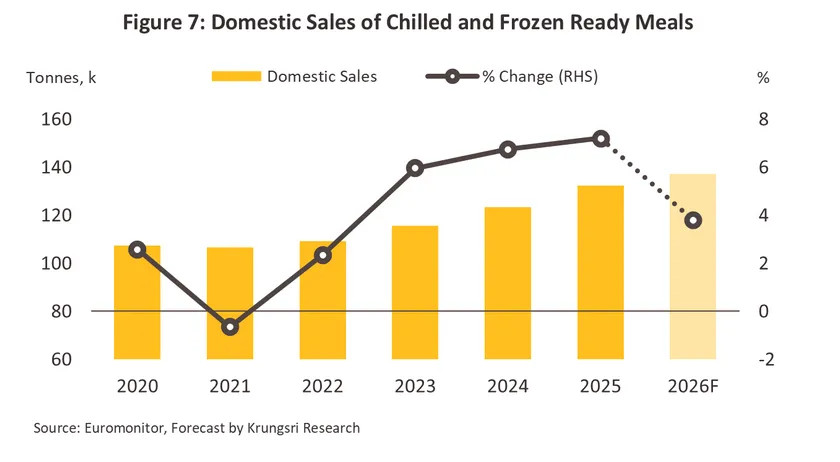
Chilled and frozen ready meals: In 2025, domestic sales volume of chilled and frozen ready meals stood at 132.3 thousand tons, up 7.2%, while sales value grew by 14.2% to USD 974.2 million (Figure 7). Growth was supported by: (i) the fast-paced lifestyles of urban consumers, driving demand for convenient food options; (ii) the nationwide expansion of convenience store branches, making ready meals more accessible to consumers, alongside operators’ development of cold chain logistics systems that help preserve product quality; and (iii) the development of new products catering to health-conscious consumers and offering greater flavor variety — such as Thai, Chinese, Japanese, Korean, and Italian cuisines — expanding consumer choice and driving greater interest. However, domestic sales volume in 2026 is expected to grow at a slower pace of 3.3–4.3%, tempered by weaker purchasing power and declining spending confidence amid the economic slowdown, together with intensifying competition from restaurants and freshly prepared food providers. Nevertheless, growth will continue to be underpinned by the products’ value for money, time-saving convenience, and easy availability at convenience stores.
-
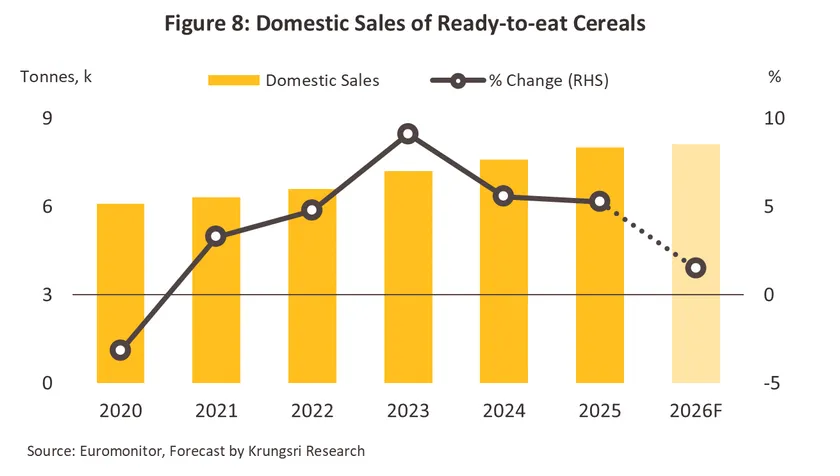
Ready-to-eat cereals: In 2025, domestic sales volume of RTE cereals stood at 8.0 thousand tons, up 5.3%, with sales value reaching USD 110.0 million, up 13.8% (Figure 8). Growth was driven by: (i) health-consciousness, prompting consumers to seek nutritious, long-shelf-life breakfast options; (ii) fast-paced lifestyles, particularly among urban consumers, driving a shift toward convenience-oriented and time-saving options; (iii) manufacturers’ ongoing product development to compete with other RTE food categories, targeting health-conscious consumers, with a recent shift toward smaller, portable sizes for snacking or single-serve meals, increasingly meeting evolving consumer needs; and (iv) manufacturers’ use of online channels across multiple platforms to reach consumers directly. In 2026, domestic sales volume growth is expected to moderate to 1.0–2.0%, as relatively high price points leave demand sensitive to weakening purchasing power amid cost-of-living pressures, prompting most consumers to prioritize filling, better-value food options. RTE cereals will also face competition from alternative breakfast choices such as boxed rice meals, ready meals, bread or sandwiches, and high-energy or high-protein beverages — which offer convenient, health-oriented options and may deliver better value for consumers. Nevertheless, health-focused RTE cereals — distinguished by quality ingredients and modern packaging — are expected to remain popular among consumers with higher purchasing power. This premium and health-focused segment, which currently accounts for approximately 37.5% of the total RTE cereal market (Source: Euromonitor, 2025), has stronger growth potential than the overall RTE cereal market and continues to expand.
-
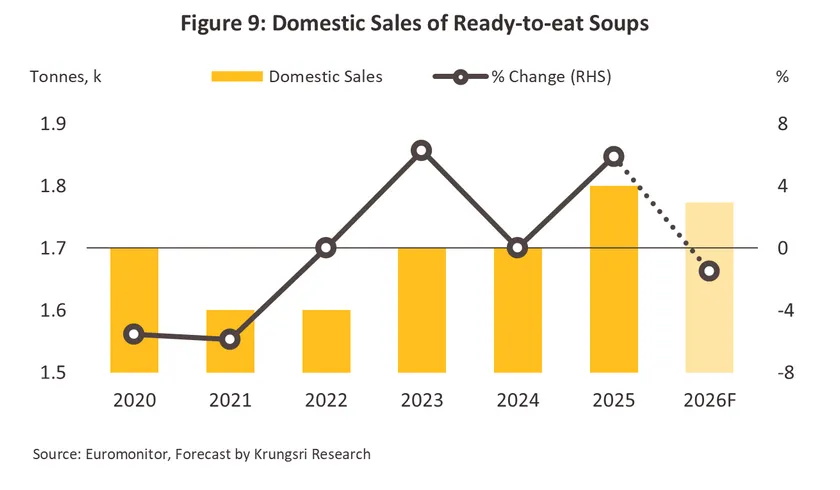
Ready-to-eat soups: In 2025, domestic sales volume of RTE soups stood at 1.7 thousand tons, up 5.9%, while sales value reached USD 12.5 million, up 8.7% (Figure 9). The market remains volatile given its small consumer base, compounded by a relatively high price point compared with other RTE food categories. In addition, most RTE soup products in Thailand are cream-based, offering Western-style flavors that may not fully align with the preferences of Thai consumers, who still generally favor freshly made soups and strongly flavored dishes. As a result, RTE soups remain popular only among a niche group of consumers. Meanwhile, the health-conscious trend has led some consumers to favor clear soups and freshly made alternatives instead. In 2026, domestic sales volume is expected to contract slightly by -1.0% to -2.0%, dragged down by the economic slowdown, which has made consumers more cautious with spending. The market also faces intense competition from freshly prepared food products, including freshly made soups and other RTE products that can serve as substitutes at similar or lower price points. Nevertheless, the contraction is expected to be cushioned by: (i) the launch of new products emphasizing health and nutritional value alongside greater versatility — such as ready-to-cook soup pouches that can be used directly in cooking; and (ii) the expansion of distribution through convenience stores, broadening consumer access to RTE soup products.
Exports of ready-to-eat food
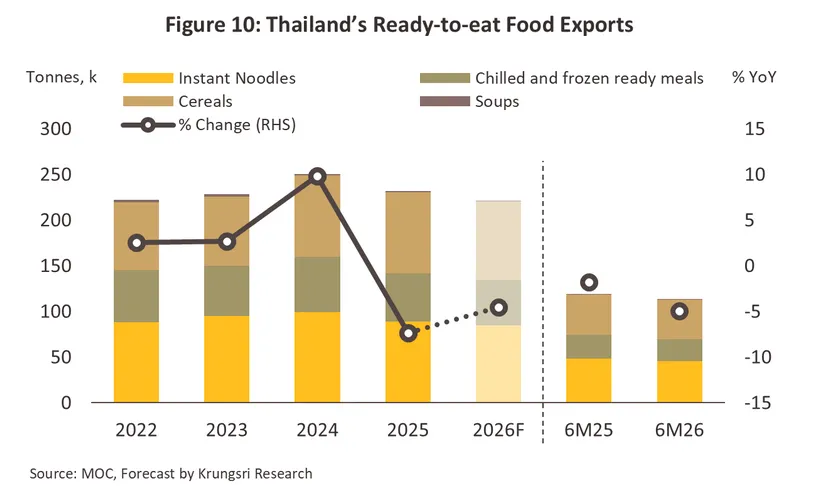
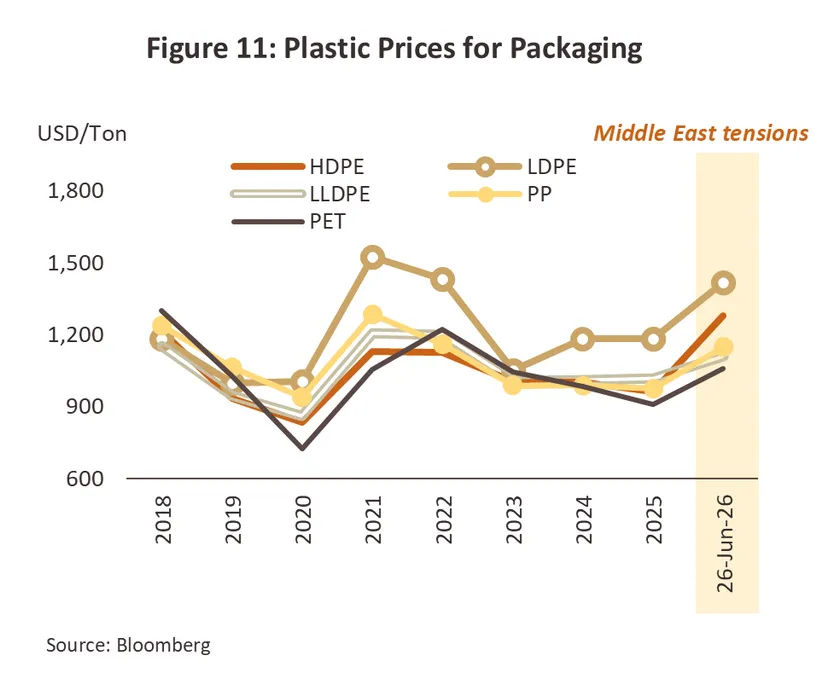
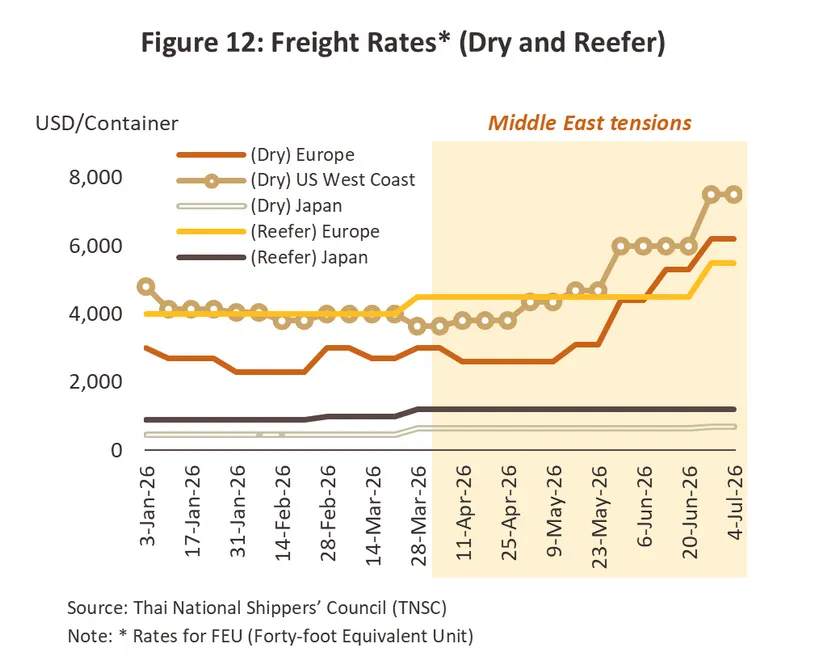
In 2025, total RTE food exports contracted by -7.4% to 232.2 thousand tons, with export value down -8.7% to USD 769.1 million (Figure 10), pressured by: (i) U.S. import tariff measures, which affected import demand and squeezed the purchasing power of consumers in the United States — Thailand’s top export market (Figure 3); and (ii) the conflict and border closure between Thailand and Cambodia, which disrupted cross-border trade, compounded by anti-Thai sentiment in Cambodia that continued to reduce orders for Thai goods, directly impacting Thailand’s instant noodle exports, given Cambodia’s status as a key market. In addition, certain products such as RTE soups faced headwinds from the health-conscious trend and policies to reduce high-sodium food consumption in key export markets such as Australia and South Korea. RTE food exports continued to contract during the first six months of 2026, down -5.0% YoY in volume and -4.8% YoY in value, weighed down primarily by tensions in the Middle East, which have driven up energy prices, fueled inflationary pressure across many countries, and weakened consumer purchasing power in key overseas markets such as the United States and Europe. These tensions have also raised operating costs for both manufacturers and exporters of RTE foods, as plastic packaging prices rose in line with resin prices, alongside higher freight and shipping costs amid heightened maritime risk (Figures 11 and 12). In addition, the protracted Thailand-Cambodia border dispute continues to drive contraction in Thai exports to the Cambodian market. Nevertheless, the pace of contraction for full-year 2026 is expected to ease to -4.0% to -5.0% in both volume and value, as food security concerns in several countries — amid ongoing uncertainty from geopolitical conflicts worldwide — may prompt increased imports of Thai RTE food products to build up national reserves, particularly dried and shelf-stable products.
-
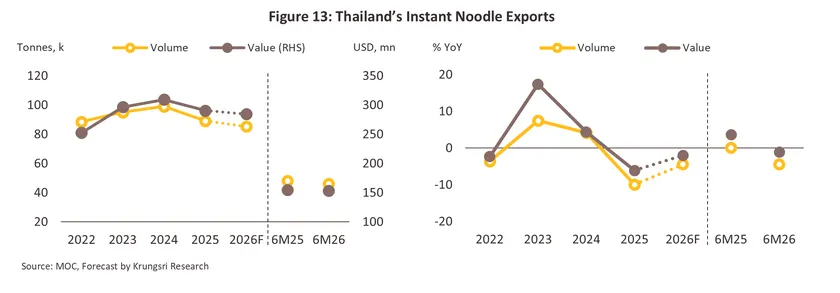
Instant noodles: In 2025, export volume contracted by -10.0% and export value contracted by -6.1% (Figure 13), dragged down by declining exports to key markets such as the United States (-9.8%), as U.S. import tariff measures raised import costs and squeezed consumer purchasing power, and the Netherlands (-22.7%), amid moderating demand in the European market. This was compounded by Thailand-Cambodia tensions, which led to border closures and anti-Thai product sentiment, causing export volume to Cambodia to plunge by -53.5%. As a result, Cambodia — Thailand’s largest export market in 2024, accounting for 15.7% of total instant noodle export volume — fell to 5th place in 2025, with its share dropping to 8.1%. During the first six months of 2026, exports continued to contract, down -4.5% YoY in volume and -1.1% YoY in value, weighed down primarily by: (i) Middle East tensions, which have affected trading partners’ purchasing power and raised Thai product prices via higher production costs, dampening overall consumer import demand; and (ii) the prolonged Thailand-Cambodia border closure, which continues to weigh on exports to Cambodia. For full-year 2026, export volume is expected to contract by -4.0% to -5.0%, with export value contracting by -1.5% to -2.5%.
-
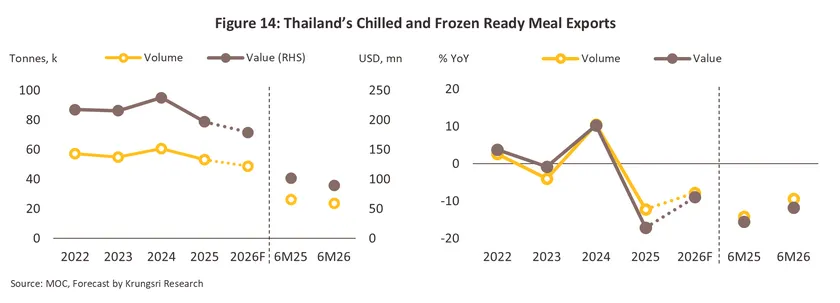
Chilled and frozen ready meals: In 2025, export volume contracted by -12.3% and export value contracted by -17.2% (Figure 14), directly impacted by U.S. import tariff measures, which pushed up import prices and squeezed U.S. consumer purchasing power. The export volume to the United States, Thailand’s top export market, plunged by -40.6%. Meanwhile, other key markets — including Australia (-20.2%) and Laos PDR (-30.7%) — were also affected by weaker purchasing power amid economic headwinds. During the first six months of 2026, exports continued to contract, down -9.5% YoY in volume and -11.9% YoY in value, weighed down by an overall weakening of trading partners’ purchasing power, particularly among markets that contracted sharply, such as Laos PDR (-65.6% YoY). However, some key markets regained growth momentum, with exports to the United States and Australia expanding by 7.6% YoY and 6.3% YoY, respectively, helping keep the contraction lower than in the previous year. Looking ahead, full-year 2026 export volume is expected to contract by -7.3% to -8.3%, with export value contracting by -8.5% to -9.5%, as a slowing economy and rising cost of living erode purchasing power across overall trading partner markets. Nevertheless, positive factors are expected to provide some support, including consumers’ continued preference for convenient, cost-effective options amid fast-paced lifestyles. In addition, Thailand’s diverse domestic agricultural ingredients give Thai exporters a cost advantage and allow menus to be adapted seasonally. This helps most Thai manufacturers manage supply and raw material costs effectively, cushioning the impact of still-weak purchasing power.
-
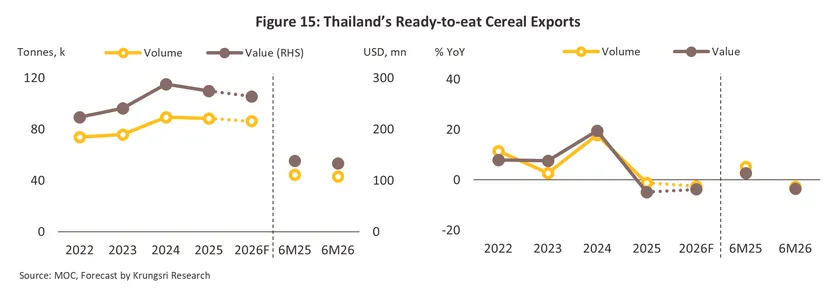
Ready-to-eat cereals: In 2025, export volume contracted slightly by -1.1%, while export value contracted by -4.8% (Figure 15). The United States, a key export market, saw a -1.1% decline against a high base in the previous year, when growth had reached 59.0%. Other key markets similarly weakened, such as Denmark, which contracted by -13.6%, although key ASEAN markets overall continued to grow, with Laos PDR and the Philippines expanding by 9.4% and 53.9%, respectively. During the first six months of 2026, exports continued to contract, down -2.8% YoY in volume and -3.5% YoY in value, weighed down primarily by key markets — particularly long-haul markets affected by rising freight costs on top of already weak purchasing power — including Denmark and the United States, which continued to contract by -7.1% YoY and -9.2% YoY, respectively, while ASEAN markets saw only slight declines, such as the Philippines (-1.2% YoY) and Laos PDR (-2.2% YoY), as rising energy prices and the cost of living eroded consumer confidence and curbed spending. For full-year 2026, export volume is expected to contract by -2.0% to -3.0%, with export value contracting by -3.3% to -4.3%. Nevertheless, some Thai exports continue to be supported by the development of new products — such as high-fiber, low-sugar, gluten-free, and plant-based protein-enriched cereals — catering to the health-focused trend in certain markets that still hold growth potential, such as Australia, which expanded by 12.4% YoY during the first six months of 2026.
-
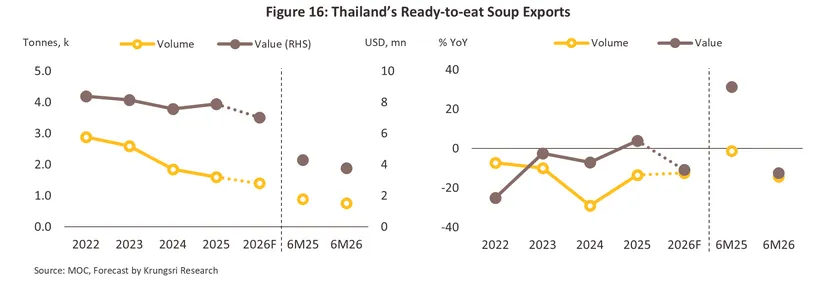
Ready-to-eat soups: In 2025, export volume contracted by -13.6% (Figure 16), dragged down mainly by declining exports to certain markets such as Hong Kong (-32.3%) and Australia (-66.1%) — together accounting for 11.2% of total export volume in 2025 — partly reflecting the health-conscious trend and sodium-reduction campaigns, which prompted consumers in these markets to cut back on high-sodium foods in favor of low-sodium options or freshly prepared alternatives. Nevertheless, export value still grew by 3.9%, supported by a 20.2% increase in the average export price of RTE soups — driven partly by product development toward higher-grade, premium formulations — which cushioned the impact of lower shipment volumes. During the first six months of 2026, exports continued to contract, down -14.4% YoY in volume and -12.5% YoY in value, weighed down by weaker purchasing power and spending confidence across key markets. The United States, Thailand’s top export market (accounting for 27.1% of export volume in 2025), saw only marginal growth of 0.4% YoY, while Myanmar and Laos PDR — Thailand’s 2nd- and 4th-largest markets (a combined 23.1% of 2025 export volume) — contracted by -57.8% YoY and -26.2% YoY, respectively. For full-year 2026, export volume is expected to contract by -12.0% to -13.0%, with export value contracting by -10.5% to -11.5%.
Outlook
During 2027–2029, domestic sales volume of RTE food is expected to grow by an average of 2.8–3.8% annually (Figure 17). Growth in the overall industry will be underpinned by: (i) fast-paced lifestyles, prompting consumers to prioritize food that is convenient to prepare and has a long shelf life; (ii) new product development targeting specific consumer needs and premium segment expansion, which add value and elevate the brand experience; (iii) the expansion of convenience stores, broadening consumer access; and (iv) a gradual recovery in domestic purchasing power alongside improving economic and investment conditions, supporting consumer spending confidence.
Nevertheless, the market continues to face pressure from: (i) the health-conscious consumption trend, particularly efforts to reduce high-sodium food consumption, as some consumers may perceive RTE foods as containing high levels of additives and sodium13/, prompting a shift toward freshly prepared foods; (ii) potential government-imposed sodium content standards, which would require manufacturers to accelerate R&D investment to reformulate products with lower sodium content; (iii) intensifying competition from both RTE food manufacturers, which continue to expand and diversify their product offerings, and a growing number of freshly prepared and health-focused restaurants that provide consumers with alternative dining options, given the ease of market entry for new restaurant operators; (iv) volatile raw material prices amid increasingly severe climate variability; and (v) uncertainty from the Middle East conflict, which may remain protracted and continue to affect energy and transportation costs — keeping production costs elevated and cost management challenging.
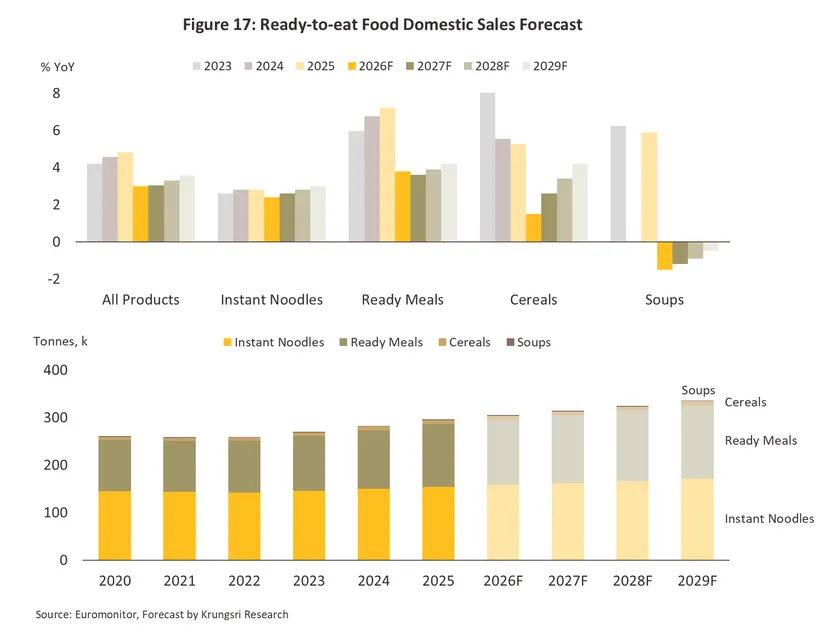
By product, Krungsri Research expects growth rates to vary according to each segment’s market potential and consumer behavior. Chilled and frozen ready meals and RTE cereals are expected to be the key growth drivers, outpacing the market average on the strength of their ability to meet consumer demand for both convenience and nutritional value, as well as ongoing product development targeting consumer needs — such as high-protein, low-sodium, low-sugar, and functional food formulations — together with expansion into the premium segment. Instant noodles, meanwhile, are expected to grow at a moderate pace as the market matures, while RTE soups are projected to contract slightly, weighed down by a small consumer base and competition from freshly made soups. Accordingly, Krungsri Research forecasts: (i) instant noodles to grow by 2.3–3.3% annually; (ii) chilled and frozen ready meals to grow by 3.4–4.4% annually; (iii) RTE cereals to grow by 2.9–3.9% annually; and (iv) RTE soups to contract slightly by -0.4% to -1.4% annually.
During 2027–2029, export volume of RTE food is expected to grow by an average of 2.4–3.4% annually (Figure 18), supported by: (i) fast-paced lifestyles boosting demand for RTE products, particularly among consumers in major cities; (ii) new market opportunities in countries and regional blocs that have recently concluded free trade agreements (FTAs) with Thailand, such as the European Free Trade Association (EFTA)14/, and in those with which Thailand is actively pursuing ongoing trade negotiations, including the European Union, Canada, and the United Arab Emirates15/ — markets that have a strong appetite for Thai flavors and where Thai food products are already widely available in major-city supermarkets at affordable prices. According to Mordor Intelligence, the global Thai cuisine market is projected to grow at a CAGR of approximately 8.4% during 2025–2030; (iii) Thailand’s potential as the “Kitchen of the World,” underpinned by its abundant agricultural resources, supporting high-quality, diverse food products; and (iv) food security concerns in several countries, which may drive increased imports of Thai dried and shelf-stable RTE products.
Nevertheless, RTE food exporters will face pressure from several key challenges: (i) the protracted Thailand-Cambodia border conflict, causing border closures and anti-Thai product sentiment, which continue to weigh on exports to Cambodia amid a persistent contraction trend; (ii) geopolitical tensions in several regions worldwide, keeping production and logistics costs elevated; (iii) U.S. import tariff measures, which will affect import demand in the U.S. market; (iv) the health-conscious consumption trend among consumers in trading partner countries, which may constrain future RTE demand growth; and (v) increasingly stringent food nutrition standards, packaging safety requirements, and environmental regulations in trading partner countries, such as the European Union’s Packaging and Packaging Waste Regulation (PPWR)16/, which will raise costs and require Thai operators to adapt to international regulations and standards.
Krungsri Research expects RTE cereals to be the primary driver of export growth, supported by the health-conscious trend and value-added product development amid a gradual recovery in purchasing power, followed by chilled and frozen ready meals, backed by fast-paced urban lifestyles despite elevated energy and logistics costs. Instant noodles, meanwhile, are expected to grow modestly, weighed down by the protracted border trade dispute, while RTE soups are projected to contract, dragged down by sodium-reduction campaigns in trading partner markets. Accordingly, Krungsri Research forecasts: (i) instant noodles to grow 1.6–2.6% annually; (ii) chilled and frozen ready meals to grow 2.1–3.1% annually; (iii) RTE cereals to grow 3.4–4.4% annually; and (iv) RTE soups to contract by -7.5% to -8.5% annually.
Challenges
-
The ongoing conflict and border closure between Thailand and Cambodia have significantly pressured Thailand’s RTE food exports. In addition, anti-Thai sentiment has prompted some Cambodian consumers to shift toward products from competing countries. Border control measures have also raised logistics costs, as Thai exporters have had to reroute shipments through a third country (Laos PDR) before entering Cambodia.
-
Geopolitical tensions in several regions worldwide, including the situation in the Middle East and the protracted Russia-Ukraine war, have kept global energy prices volatile, driving up logistics costs. These tensions have also pushed up the prices of imported raw materials such as wheat and plastic packaging, driving up production costs. In addition, elevated living costs constrain the recovery of both domestic and overseas consumer purchasing power. Nevertheless, these conflicts may also heighten food security concerns in several countries, potentially boosting Thailand’s RTE food exports, particularly dried and shelf-stable products.
-
U.S. import tariff measures under Section 301 of the Trade Act of 197417/ pose a direct risk to Thailand’s RTE food exports, given that the United States is a key export market. Higher import tariffs would raise the price of Thai products, dampening overall U.S. consumer import demand. Meanwhile, the ability to adopt price-cutting strategies to maintain market share is limited, as production costs — including raw materials, packaging, and energy — remain elevated.
-
Policies to reduce sodium intake, both in Thailand and globally, are becoming increasingly stringent, in line with World Health Organization (WHO) guidelines encouraging manufacturers to lower sodium content in their products to reduce the risk of non-communicable diseases (NCDs). The WHO recommends a daily sodium intake of less than 2,000 milligrams, equivalent to less than 5 grams of salt; however, Thai consumers currently consume an average of 3,650 milligrams per day18/. The Thai government and responsible agencies are expected to introduce a sodium tax, along with sodium content caps for RTE foods, which would raise costs for RTE food manufacturers19/.
-
The global health-conscious trend, which favors more beneficial food choices, is prompting consumers to seek products with natural ingredients, minimal processing, and more complete or targeted nutritional value — such as higher protein or fiber content — as well as products bearing quality certification marks. As a result, manufacturers of conventional ready-to-eat foods, which are classified as ultra-processed foods20/, must develop new products or reformulate their products to enhance nutritional value, raise quality standards, and improve labeling to meet consumer demand — all of which add to manufacturers’ costs.
-
Environmental and sustainability requirements are drawing growing attention — for example, the European Union has enacted a new Packaging and Packaging Waste Regulation (PPWR)21/, with general provisions taking effect from August 12, 2026, before requirements are progressively tightened through 2040. The regulation requires all packaging placed on the EU market to limit residual chemical content — including “forever chemicals” (per- and polyfluoroalkyl substances, or PFAS) — starting in 2026, and to adopt an EU-standardized labeling system during 2027–2029. It also sets recyclability thresholds of at least 70% by weight from 2030, rising to at least 80% from 2038, along with minimum recycled-content requirements for contact-sensitive plastic packaging — which covers most RTE product packaging — at 30% for PET-based packaging and 10% for other plastics from 2030, rising to 50% and 25%, respectively, from 2040. As a result, manufacturers must redesign packaging and prepare conformity documentation to remain competitive and meet demand from environmentally conscious consumers in the European market.
-
Increasingly volatile weather conditions, particularly the possibility of a Super El Niño22/ occurring between late 2026 and mid-2027, could heighten risks from: (i) more frequent droughts and heatwaves, along with rainfall running 10–30% below normal in Southeast Asia, including Thailand, creating uncertainty in grain and agricultural output; and (ii) rising sea temperatures, which would reduce aquatic catch volumes. These factors may affect raw material costs and the stability of production supply chains.
1/ Sterilization is a heat treatment process conducted at temperatures above 100 degrees Celsius, in which all microorganisms in the food are destroyed. This allows the product to have a long shelf life and be stored at room temperature. (Source: technosoft.eu)
2/ Pasteurization is a heat treatment process conducted at temperatures below 100 degrees Celsius, in which only some of the microorganisms in the food are destroyed. As a result, the product has a shorter shelf life compared to sterilized foods and must be stored at low temperatures. (Source: technosoft.eu)
3/ A retort pouch is a flexible packaging material with heat-resistant, light- and moisture-proof, and impermeable properties. It allows consumers to conveniently reheat the food either in a microwave or by boiling in hot water. (Source: Office of Industrial Economics)
4/ The packaging material commonly used by manufacturers is Crystallized Polyethylene Terephthalate (CPET), a product developed from PET that can withstand temperatures ranging from –40 to 220 degrees Celsius and offers a low-cost solution. (Source: Office of Industrial Economics)
5/ Based on the classification by Global Brand Owner (GBO), referring to companies that own brands at the global level, and Euromonitor.
6/ Total sales volume/value comprises both domestic and export sales volume/value.
7/ The ready-to-eat food industry in this context is classified based on producer categories as follows: (i) manufacture of frozen prepared foods,
(ii) manufacture of ready-to-eat foods packaged in hermetically sealed containers using vacuum methods, (iii) manufacture of soups, broths, and specialty foods, (iv) manufacture of instant and semi-instant flour-based food products, and (v) manufacture of grain-based products (Source: DBD)
8/ HS Code: 19023040
9/ HS Code: 190220, 19023020, 19023030, 19023090, 190240
10/ HS Code: 1904
11/ HS Code: 21042019, 21042099
12/ Thailand ranked as the world’s 8th largest instant noodle market (2025 data), with total consumption of 4.2 billion servings and a per-capita consumption rate of 58.6 servings per year, placing it 3rd globally after Vietnam (81.0 servings per person per year) and South Korea (78.6 servings per person per year), compared with the global average of 15.1 servings per person per year (Source: World Instant Noodles Association, World Bank Group, Krungsri Research)
13/ Source: Health Systems Research Institute (HSRI) and Faculty of Medicine Ramathibodi Hospital, Mahidol University
14/ The European Free Trade Association (EFTA) comprises Switzerland, Norway, Iceland, and Liechtenstein (Source: Department of Trade Negotiations (DTN))
15/ Source: Department of Trade Negotiations (DTN)
16/ The PPWR requires all packaging placed on the EU market to limit residual chemical content and use EU-standardized labeling, and to meet minimum recyclability thresholds as well as minimum recycled-content requirements for contact-sensitive plastic packaging that comes into direct contact with food. (Sources: Department of International Trade Promotion (DITP), European Commission, Krungsri Research (2026), “The EU’s Packaging and Packaging Waste Regulation (PPWR): A New Challenge for Thai Businesses”)
17/ Source: Office of the United States Trade Representative (USTR)
18/ Source: The 7th National Health Examination Survey (NHES VII), 2024–2025, Faculty of Medicine Ramathibodi Hospital, Mahidol University
19/ Source: National Health Foundation, Health Systems Research Institute (HSRI), Excise Department
20/ Source: NOVA Classification (Monteiro et al., University of São Paulo) and Food and Agriculture Organization (FAO)
21/ Source: Department of International Trade Promotion (DITP), European Commission, Krungsri Research (2026), “The EU’s Packaging and Packaging Waste Regulation (PPWR): A New Challenge for Thai Businesses”
22/ Source: The Institute for the Promotion of Teaching Science and Technology (IPST), Krungsri Research (2026), “Super El Niño and the Risks of Extreme Drought and Flooding in 2026–2027”







.webp.aspx)