EXECUTIVE SUMMARY
The ethanol industry is expected to improve in 2026, bolstered by rising demand for gasohol, particularly E20, amid elevated crude oil prices resulting from the conflict in the Middle East. In response, the government has introduced energy relief measures through the Oil Fuel Fund mechanism by subsidizing the retail price of E20 to keep it 5 Baht per liter below the prices of Gasohol 91 and Gasohol 95. Therefore, Krungsri Research expects ethanol demand to increase by 3.8% from 2025 before returning to a more gradual growth rate of 1.0–2.0% per year. This growth will be driven by 1) a gradual recovery in economic activity and the tourism sector, 2) the continued high share of gasohol-powered vehicles relative to total registered vehicles, 3) maintaining an attractive retail price differential between E20 and E10 (Gasohol 95), and 4) policies promoting the use of ethanol in other industries, such as sustainable aviation fuel (SAF) and bioplastics.
However, the ethanol industry continues to face several challenges, including 1) policy uncertainty over the choice of base gasoline between E10 and E20, 2) the growth of electric vehicles, which could weaken long term demand for gasoline, 3) volatility in feedstock availability and prices due to climate change, crop diseases, and competition for feedstock from other industries, and 4) persistent overcapacity, which continues to intensify competition and constrain operators’ profitability.
Krungsri Research view
Krungsri Research assesses that operators with a fully integrated ecosystem for ethanol chain, from production to distribution, will have a competitive advantage. However, volatility in feedstock supply and prices could put pressure on operator’s profit margin.
-
Molasses-based ethanol manufacturer: Income is expected to remain stable to slightly higher, supported by continued growth in sugarcane production, alongside a shift among farmers toward sugarcane cultivation rather than cassava. This is expected to increase the supply of sugarcane and molasses entering the market. Lower molasses prices will help reduce the production costs of molasses-based ethanol, thereby supporting improved margins.
-
Cassava-based ethanol manufacturer: Income is expected to remain stable, while profitability is likely to decline, driven by higher feedstock costs, particularly for fresh cassava roots and cassava chips. Concurrently, production risks from El Niño, cassava mosaic disease, and shortages of planting materials could further tighten feedstock supply.
Overview
Ethanol1/, also known by its chemical name “ethyl alcohol,” is produced from agricultural crops containing starch and sugar, such as sugarcane, cassava, molasses, corn, as well as agricultural industrial residues, including cellulose and hemicellulose. Ethanol is refined through chemical processes to achieve a high purity level of 99.5–99.9% by volume. The resulting product is a clear, colorless, highly flammable liquid with a high-octane rating, making it suitable for use as a fuel or as a blending component in vehicle fuels. Ethanol is also used as an input in other industries, such as the food and beverage, pharmaceutical and medical, chemical, and cosmetics industries.
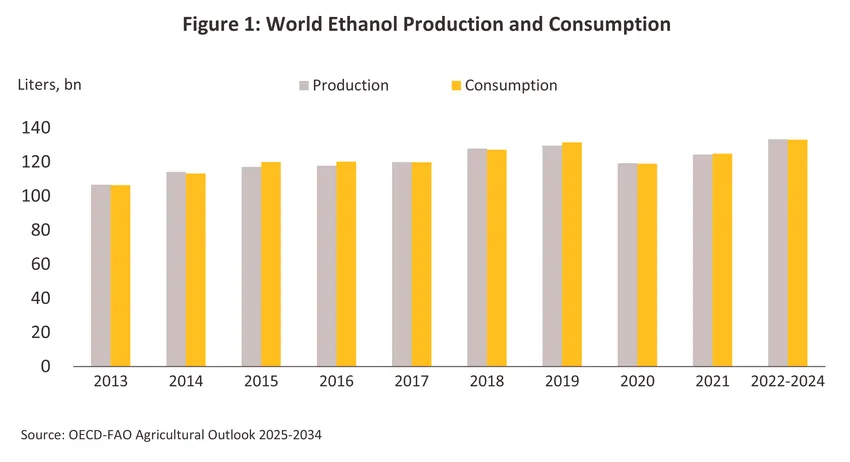
Global ethanol demand has gradually recovered following the COVID-19 pandemic and has surpassed pre-crisis levels, averaging 133 billion liters during 2022–2024, compared with 131 billion liters in 2019. The recovery was driven by normalization in domestic, international travel and transportation activities, while many countries have implemented policies to promote ethanol use, including minimum ethanol blending requirements for gasoline and retail price subsidies, to enhance energy security and reduce greenhouse gas emissions. Currently, the United States, Brazil, and China are the world’s major ethanol producers and consumers, accounting for a combined 73.5% of global production and consumption (Figures 1 and 2). The main feedstocks used for ethanol production are corn and sugarcane.
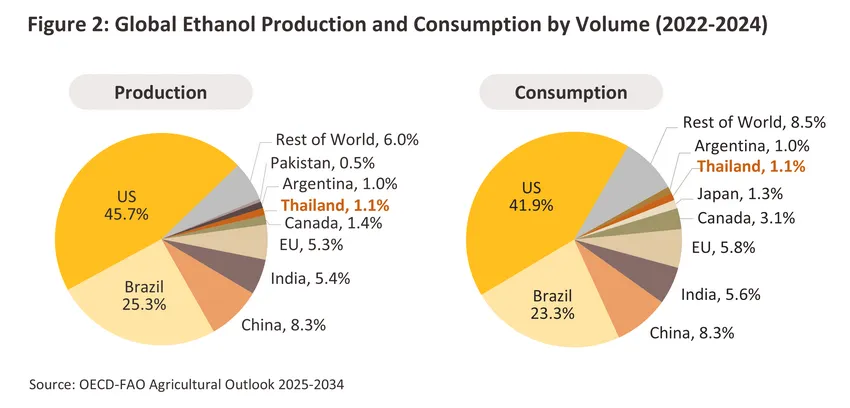
Thailand ranked in 7th and 8th largest ethanol producers and consumers. Most ethanol produced in Thailand is used for blending with gasoline2/ to produce gasohol3/. Production volumes therefore depend primarily on domestic demand and government policies supporting ethanol use. Since 2008, producers have blended ethanol with gasoline for fuel production and distribution at three blending ratios: 10% (E10, comprising Gasohol 91 and Gasohol 95), 20% (E20), and 85% (E85). Ethanol consumption has subsequently increased, recording an average annual growth rate of 7.3% per year during 2010–2024. However, domestic ethanol distribution remains subject to legal restriction, as ethanol can only be sold to fuel traders under the Fuel Trade Act B.E. 2543. As a result, the use of ethanol in other industrial sectors remains limited, as expanding such applications requires amendments to relevant laws and regulations administered by the Excise Department, the Customs Department, and the Board of Investment (BOI)4/.
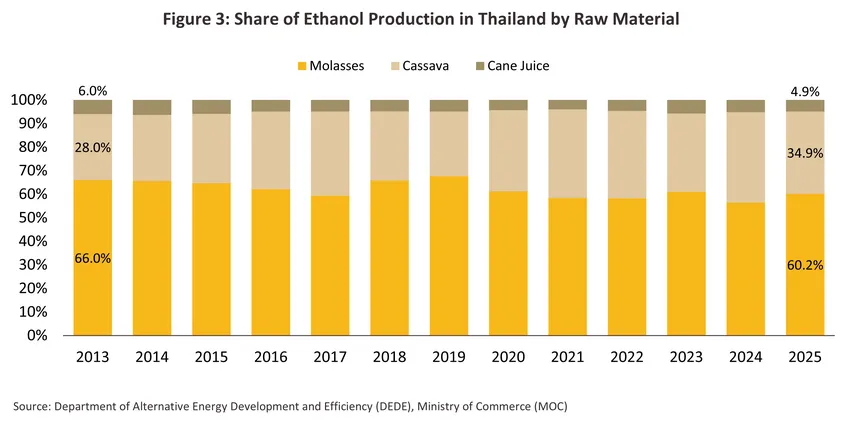
Thailand’s ethanol production relies primarily on molasses, cassava, and cane juice as feedstocks. According to data from the Department of Alternative Energy Development and Efficiency (DEDE), in 2025, molasses-based ethanol accounted for 60.2% of total ethanol production, while cassava-based ethanol accounted for 34.9%, followed by cane juice-based ethanol at 4.9% (Figure 3). Although feedstock selection depends on prevailing prices, molasses-based ethanol production has historically accounted for a larger share than cassava-based ethanol due to the availability of feedstock supply, as most ethanol producers are integrated operators that have expanded from sugar manufacturing businesses. Meanwhile, cassava-based ethanol production often faces competition for feedstock from other industries, as well as uncertainty in feedstock costs arising from government subsidies or price intervention measures introduced to support farmers during certain periods.
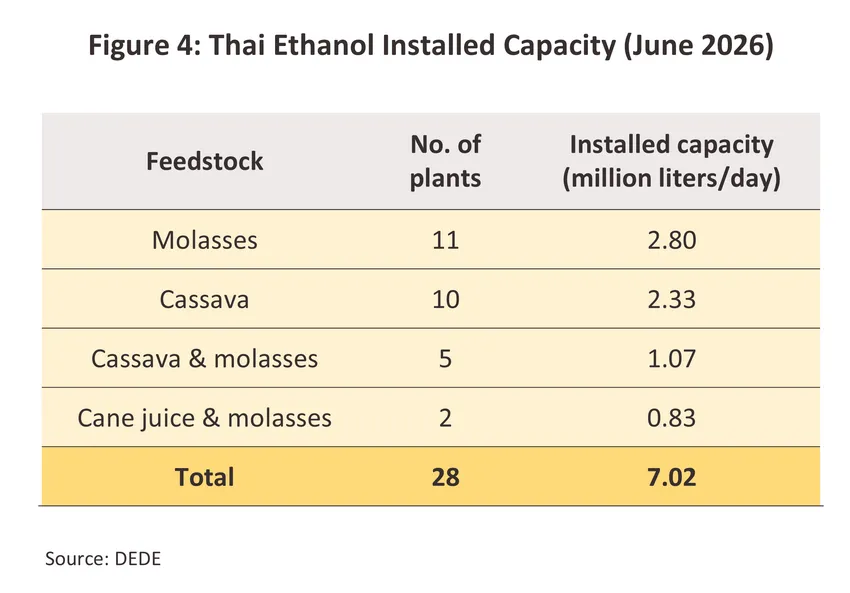
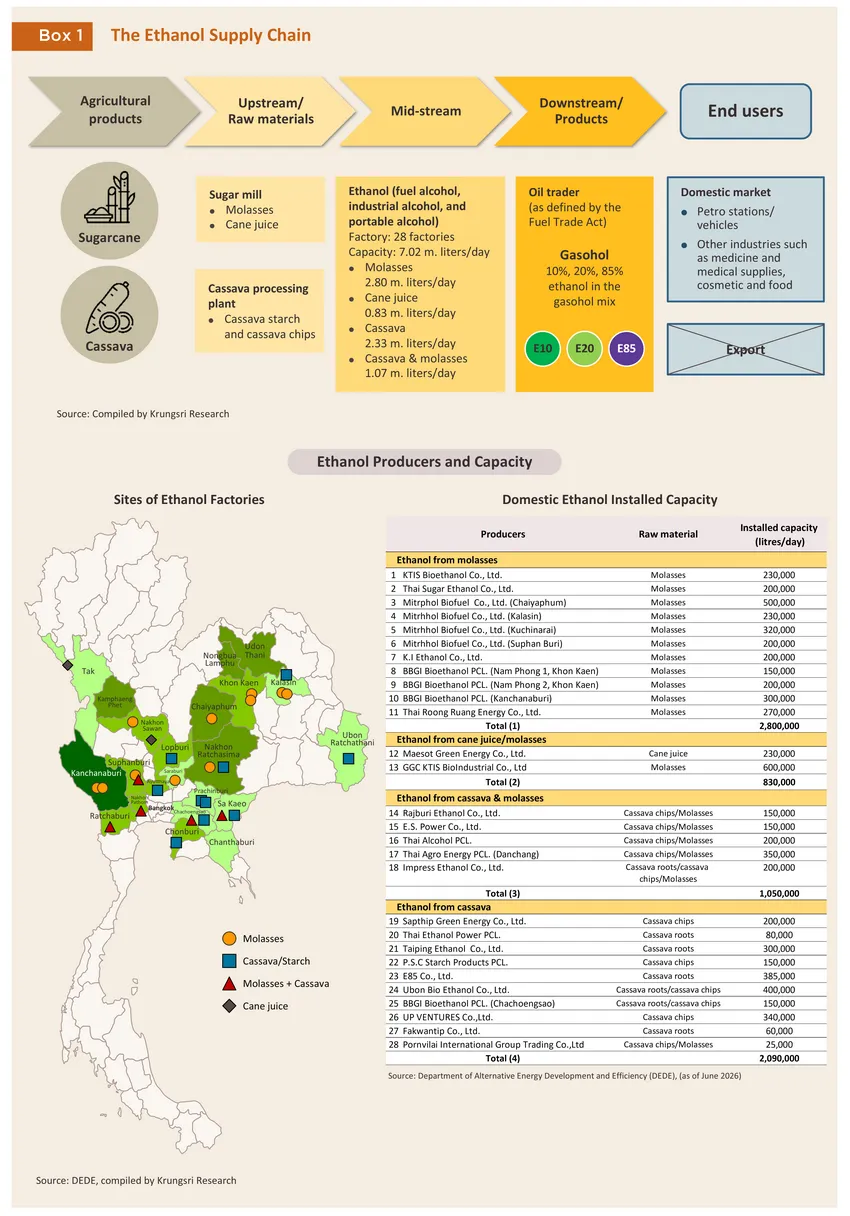
As of June 2026, Thailand has 28 operating plants producing fuel-grade ethanol, with installed capacity of 7.0 million liters per day. These comprise of 11 plants using molasses as feedstock, with a combined capacity of 2.9 million liters per day; 10 cassava-based plants, with a capacity of 2.4 million liters per day; 5 plants using both cassava and molasses, with a capacity of 1.1 million liters per day; and 2 plants using both cane juice and molasses, with a capacity of 0.8 million liters per day (Figure 4). Most plants are located in the Central and Northeastern regions and are integrated into sugar manufacturing and cassava processing businesses (Box 1).
Thailand’s ethanol production cost structure can be classified by feedstock types, is as follows:
-
Molasses-based ethanol: Feedstock costs account for 60–70% of total production costs, while operating costs account for 25–35% and fixed costs for 5%.
-
Cassava-based ethanol: Feedstock costs account for 55–60% of total production costs, while operating costs account for 35–40% and fixed costs for 5%. Operating costs are higher than those of molasses-based ethanol because cassava starch must first be converted into sugar before ethanol can be produced.
The reference ethanol price is determined in accordance with resolutions of the Energy Policy Committee (EPC), with the Energy Policy and Planning Office (EPPO) announcing the reference price on the first day of each month. Since January 2012, the reference price has been determined by comparing the actual transaction prices reported by ethanol producers to the Excise Department with the prices reported by fuel traders under Section 7 to EPPO. In general, the lowest prices is adopted. Therefore, the spread between ethanol selling prices and production costs depends on both the reference price and feedstock costs, which vary according to the proportion of molasses and cassava used, as well as a marketing margin of approximately 1–2 Baht per liter.
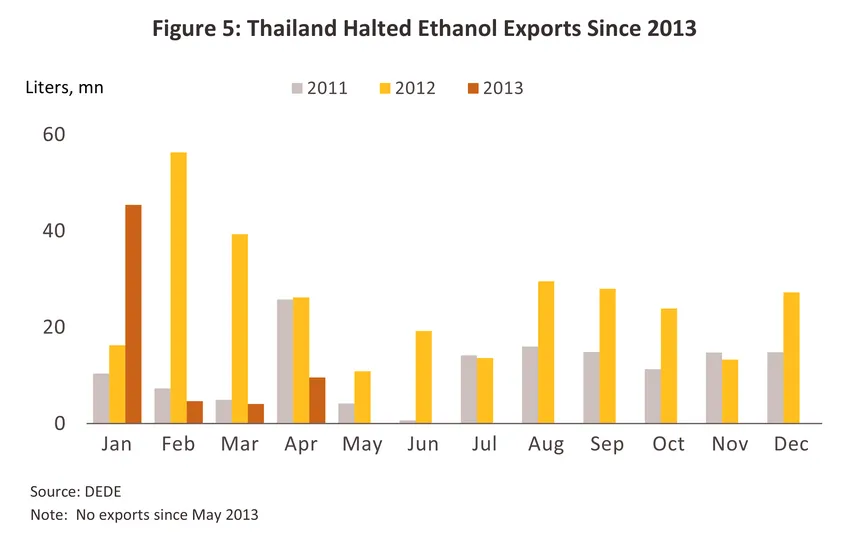
In terms of export market, Thailand exported ethanol during 2007–2011, with major export destinations including the Philippines, Japan, and the United Kingdom. Exporters were required to obtain discretionary approval from the Director General of the Excise Department. However, since May 2013, the government has generally suspended ethanol exports to maintain sufficient domestic supply amid rising demand following the discontinuation of ULG91 gasoline sales on January 1, 2013 (Figure 5). Nevertheless, the Excise Department may still grant export approvals on a case-by-case basis, such as the export of 4 million liters in March 2014 and 5.4 thousand liters in December 2020, based primarily on two factors: 1) the level of surplus supply and domestic ethanol inventories, and 2) the type of ethanol proposed for export, which must not adversely affect domestic fuel-grade ethanol supply.
On the policy front, the government has introduced measures to support the ethanol industry under the Alternative Energy Development Plan (AEDP), which is currently in effect. These measures include 1) setting targets for ethanol use in the transport sector alongside promoting gasohol consumption, 2) expanding biofuel service stations to cover a wider geographic area, and 3) providing price subsidies through the Oil Fuel Fund mechanism to ensure that gasohol with a higher ethanol blend, such as E20, is sold at a lower retail price than gasohol with a lower ethanol content. In addition, the government provides tax exemptions for ethanol used as a feedstock in fuel production. These policies have supported the growth of the ethanol industry in recent years.
Thailand’s ethanol industry generally comprised of three market segments:
1) Purified ethanol: The market has a monopoly structure on the supply side, with the Liquor Distillery Organization (LDO) as the sole distributor. At the same time, it has a monopsony structure on the demand side, as licensed producers are not permitted to sell pure ethanol directly and must sell through the LDO, which is the sole purchaser. The ethanol is subsequently distributed or exported as pure ethanol (extra-neutral alcohol).
2) Denatured ethanol5/ under the three formulations prescribed by the Excise Department: The market has an oligopoly structure, with 12 producers and distributors, comprising the LDO and 11 ethanol producers for export. Industrial operators are the main buyers, using denatured ethanol as a raw material or input in the production of products such as pharmaceuticals, food and beverages, cosmetics, and various extracts.
3) Fuel ethanol: The market has a monopolistic competition structure, with 28 producers and distributors. Buyers are limited primarily to domestic fuel traders. Under current regulations, producers are not permitted to sell pure ethanol directly to the domestic market.
Situation
Gasohol has been one of the main gasoline products since January 2013, following the government’s discontinuation of ULG91 gasoline, which previously accounted for 41% of total gasoline consumption. This helped alleviate the high level of excess ethanol production capacity during 2007–2012, while E20 consumption continued to increase alongside the growing number of flexible fuel vehicles (FFVs) entering the market. However, ethanol demand in the transport sector remains at only 3.4–3.5 million liters per day, equivalent to 48–50% of total installed capacity, amid pressure from the increasing adoption of electric vehicles and the gradual decline in E85 demand. Meanwhile, expanding ethanol applications into industries beyond transportation remains constrained by regulations governing its production and distribution. As a result, domestic ethanol demand remains significantly below production capacity, leaving the industry in a persistent state of overcapacity.
In 2025, gasohol demand increased by 1.2% from 2024 to an average of 31.3 million liters per day, in line with the recovery in economic activity and domestic travel, supported by the export sector, tourism, and private consumption. E10 consumption increased by 2.9%, driven mainly by a 9.4% increase in demand for Gasohol 95, while E20 consumption declined by -6.6%, as consumers continued to prioritize fuel efficiency and remained concerned about long-term vehicle use, despite E20’s average retail price being 2 Baht per liter lower than E10. Nevertheless, the Fuel Fund Administration Committee (FFAC) continued to promote Gasohol E10 and E20 as the base gasoline products by gradually narrowing the retail price gap between E85 and E20 through the Oil Fuel Fund mechanism since 2023. This reduced E85’s price advantage and, during some periods, resulted in E85 being priced higher than E20, encouraging some consumers to switch from E85 to E20. However, this shift was insufficient to offset the overall decline in E20 demand, resulting in ethanol demand increasing by only 0.3% in 2025 from 2024.
During the first six months of 2026, the ethanol industry received a short-term boost from the conflict in the Middle East that escalated in late February, pushing Dubai crude oil prices higher and keeping them elevated at USD 65–138 per barrel, which in turn drove domestic retail fuel prices higher. Meanwhile, the government used the Oil Fuel Fund to maintain the price differential between E20 and Gasohol 95 at around Baht 5 per liter, encouraging consumers to shift toward fuels with higher ethanol content. As a result, E20 demand recovered to 5.6 million liters per day after contracting throughout 2025, while Gasohol 95 consumption increased to 19.2 million liters per day. Overall gasohol demand therefore grew by 1.4% YoY to an average of 31.6 million liters per day, while the volume of ethanol blended into E10 and E20 increased by 2.5% YoY to 2.5 million liters per day and 13.1% YoY to 1.12 million liters per day, respectively.
However, ethanol blended into E85 declined by -40% YoY to only 0.03 million liters per day, reflecting the continued decline in E85’s role in the fuel market amid the limited number of vehicles compatible with the fuel, its higher fuel consumption compared with conventional gasoline, and a shift in consumer preferences toward electric vehicles (EVs), particularly battery electric vehicles (BEVs). In addition, changes to the Oil Fuel Fund mechanism, from providing relatively high subsidies for E85 to collecting contributions into the Fund, pushed up E85 retail prices and narrowed the price gap with E20, further reducing consumers’ incentive to use E85.
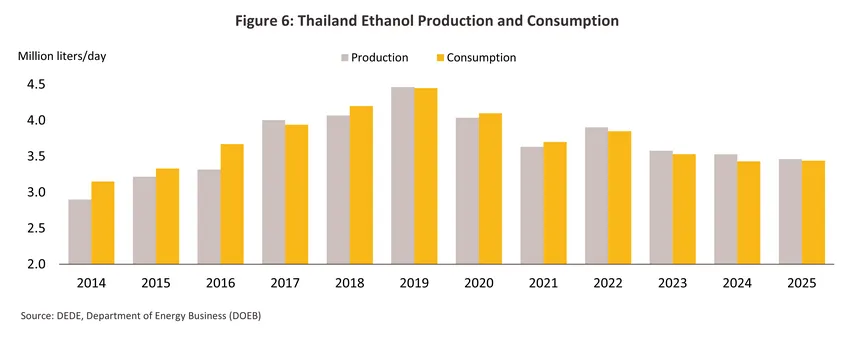
Ethanol demand is expected to continue expanding in 2026, in line with projected growth of 1.2% in gasohol consumption, underpinned by the outlook for private sector investment and expanding international trade. In addition, policy support from measures to mitigate the impact of the cost of living through the Oil Fuel Fund is expected to maintain a price differential that encourages consumers to choose fuels with higher ethanol content. This should support growth in demand for ethanol-blended fuels amid elevated crude oil prices due to the protracted conflict in the Middle East. Therefore, Krungsri Research expects Dubai crude oil prices to average USD 85–90 per barrel during 2026.
However, growth in gasohol and ethanol demand continues to face several headwinds, including 1) a slowdown in the tourism sector and higher travel costs in line with energy prices, particularly restrictions on Jet A-1 exports by Middle Eastern producers, which have increased airlines fuel costs and could weigh on international flight frequencies. Krungsri Research expects the number of foreign tourists in 2026 to reach 32.5 million, down -1.4% from 2025; 2) private consumption, which is expected to slow to 2.4% growth, from 2.7% in 2025, amid structural pressure from high household debt, prompting consumers to remain cautious about spending on goods and services; 3) continued growth in the number of electric vehicles, with cumulative new BEV registrations reaching 144,181 units (+77.8% YoY) in the first seven month of 2026; and 4) the implementation of a common-fare policy for mass transit rail services in Bangkok and surrounding areas, with fares capped at Baht 45 per trip6/, which could encourage greater use of public transportation. Therefore, the outlook for the ethanol industry in 2026 can be summarized as follows:
-
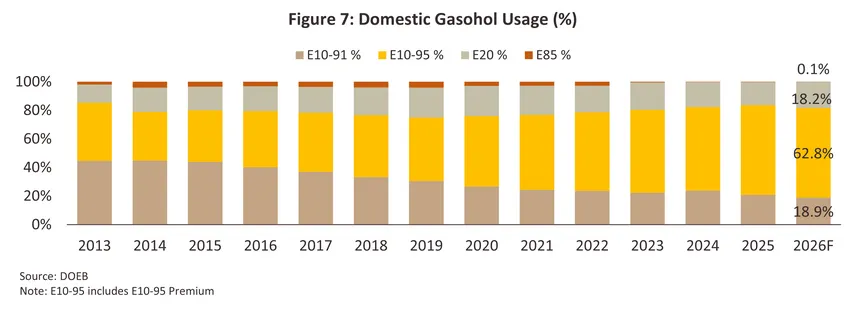
Demand side: ethanol demand in 2026 is expected to average at 3.6 million liters per day, representing a 3.8% increase, accelerating from relatively stable levels in 2025 (but still below the pre-COVID five-year average growth rate of 7.2% per annum). Growth will be strengthened by gasoline consumption, which is expected to increase by 1.0% to an average of 32.0 million liters per day. Among individual products, Gasohol 95 or E10 (95), which accounts for the largest share at 62.8%, is expected to see higher consumption, while E10 (91), with an 18.9% share, is likely to decline as consumers increasingly switch to E10 (95), which offers better combustion efficiency at a similar retail price. Meanwhile, E20, which has a share of 18.2%, similar to E10 (91), is expected to see higher consumption. Although some consumers remain concerned about engine compatibility and fuel efficiency, its retail price, which is around 5 Baht per liter lower than E10, should encourage greater E20 adoption amid elevated refined oil prices. In contrast, E85, which accounts for only 0.1% of consumption, is expected to continue declining as the number of service stations offering the fuel gradually decreases or discontinues sales, in line with persistently weak demand. This is also consistent with the government’s policy direction to end the use of Oil Fuel Fund subsidies for fuels blended with biofuels by September 24, 2026, under the policy framework of the Alternative Energy Development Plan (AEDP) B.E. 2561–2580 (2018–2037) (Figure 7).
-
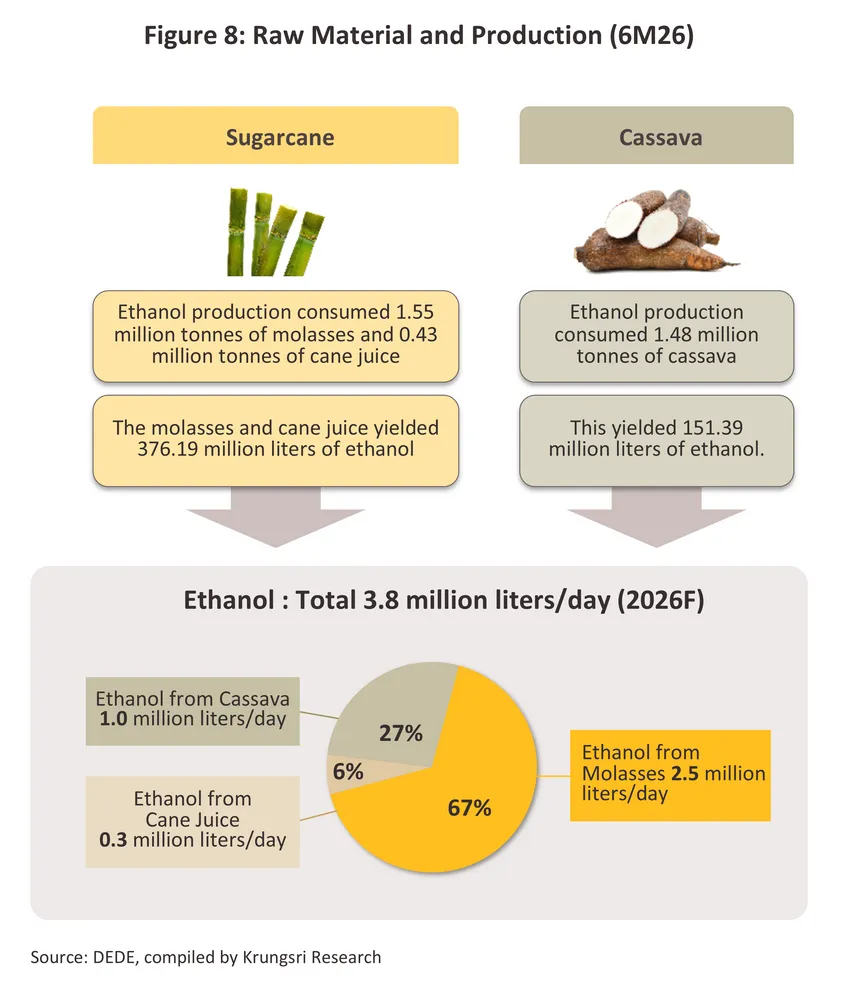
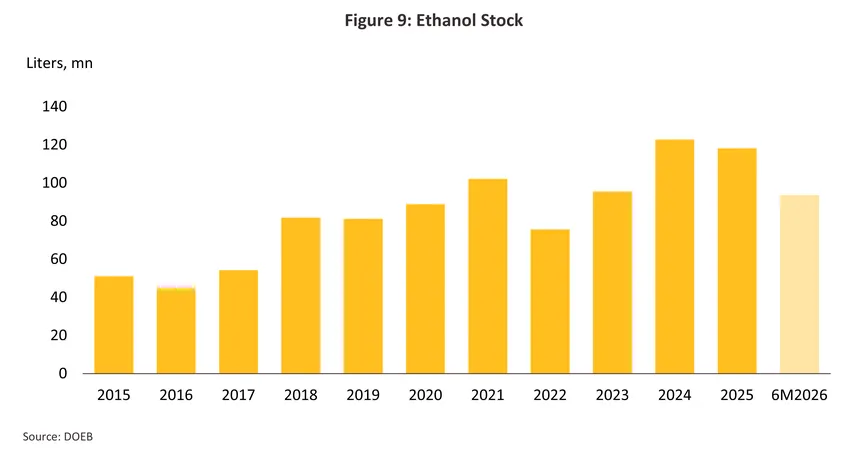
Production side: Ethanol production in 2026 is expected to average at 3.8 million liters per day, representing an 8.6% increase and driven by adjustments in production volumes to align with the recovery in demand. Molasses-based ethanol production is expected to average 2.5 million liters per day (66.7% share), an increase of 15.3%, while cassava-based ethanol production is expected to average around 1.0 million liters per day (27.1% share), a decline of -19.1%. Meanwhile, ethanol inventories are expected to average 94 million liters at end of 2026, compared with an average of 118 million liters in 2025, while the average capacity utilization rate is expected to rise to 54.3%, from 49% in 2025.
-
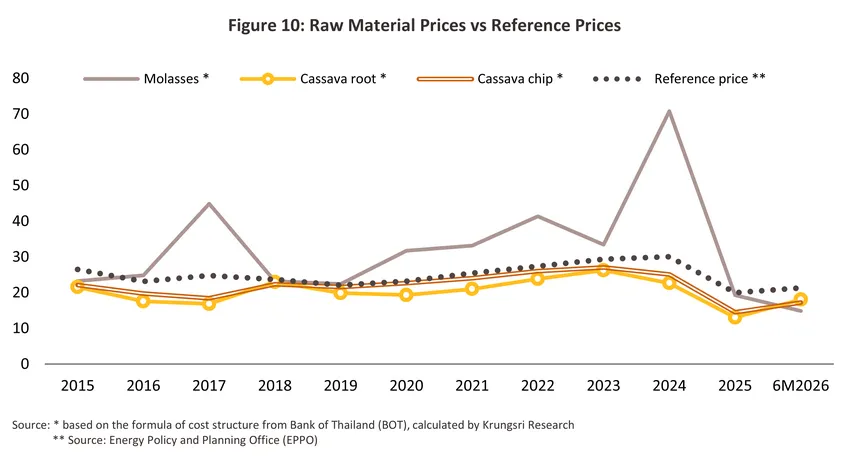
Ethanol price: Ethanol prices increased by 10.1% YoY during the first eight months of 2026, to an average of 22.2 Baht per liter, underpinned by continued growth in demand, a sharp increase in feedstock costs in July (+14.1% MoM), which stay at elevated level following the rise in oil prices, as well as a low base effect in the same period of the previous year. However, prices continued to face downward pressure from domestic oversupply and ethanol inventories that remained high relative to actual demand. As a result, price competition among ethanol producers remained intense throughout 2026. Taking these supporting and constraining factors into account, Krungsri Research expects ethanol prices in 2026 to increase by 13.5% from 2025 to 22.7 Baht per liter. This was driven by 1) continued growth in sugarcane production, partly as farmers shifted toward sugarcane cultivation rather than cassava, increasing the supply of sugarcane and molasses entering the market. The initial sugarcane price for the 2025/2026 crushing season decreased by -23.3%; and 2) global sugar prices falling to a 3–4-year low in April, in line with increased sugar supply from Brazil and India, as well as high global sugar inventories. These factors collectively put downward pressure on prices across the sugarcane, sugar, and molasses value chain.
-
Molasses-based ethanol producer: profitability improved during the first six months of 2026, with production costs averaging 14.9 Baht per liter, down -23% YoY, following a -27.5% decline in molasses prices from 2025 to 3.6 Baht per kilogram. This was driven by 1) continued growth in sugarcane production, partly as farmers shifted toward sugarcane cultivation rather than cassava, increasing the supply of sugarcane and molasses entering the market. The initial sugarcane price for the 2025-26 crushing season declined by -23.3%; and 2) global sugar prices falling to a 3–4-year low in April, in line with increased sugar supply from Brazil and India, as well as high global sugar inventories. These factors collectively put downward pressure on prices across the sugarcane, sugar, and molasses value chain.
-
Cassava-based ethanol producer: profitability declined due to higher feedstock costs during the first six month of 2026, with the average price of fresh cassava roots increasing by 42.4% from 2025 to 2.9 Baht per kilogram, while cassava chip prices rose by 24.0% to 7.1 Baht per kilogram. The main factors were a -6.0% decline in cassava production in 2026, projected at 25.6 million tonnes, as well as a reduction in harvested area due to El Niño, cassava mosaic disease risks, and shortages of planting materials. Meanwhile, demand for cassava from the food and ethanol industries continued to expand, driving up the production cost of ethanol from fresh cassava roots by 42.4% to Baht 18.0 per liter, while the production cost of ethanol from cassava chips increased by 24.0% to Baht 17.2 per liter.
Outlook
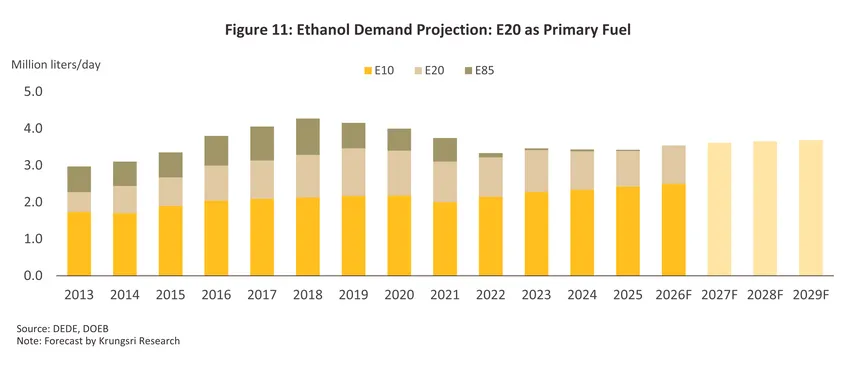
Ethanol demand during 2027–2029 is expected to grow by an average of 1.0–2.0% per year, reaching 3.6–3.7 million liters per day7/ (Figure 11). Growth is expected to soften from 2026, in line with the outlook for crude oil prices, which are expected to remain broadly stable before gradually declining. This would reduce the price incentive for some consumers who have shifted toward fuels with higher ethanol content. In addition, the common-fare policy for mass transit rail services in Bangkok and surrounding areas, with fares ranging from Baht 17–45 per trip, which is scheduled to take effect on January 1, 2027, is likely to encourage greater use of mass transit systems. Nevertheless, the ethanol industry has several factors that are expected to support growth over the coming years, as follows:
-
Thailand’s economy is expected to grow by 2.0–2.3% per year, alongside a recovery in the tourism sector. Krungsri Research expects the number of international tourist arrivals to increase to 34.0 million in 2027 and 35.5 million in 2028, while domestic tourism is expected to rise to 210 million and 215 million trips, respectively. Growth will be aided by government tourism stimulus measures, such as the “Thai Tiew Thai Plus” co-payment scheme, which is expected to implement in late 2026. These measures should support activity across the manufacturing, freight/passenger transportation, and fuel consumption sectors, thereby boosting demand for gasohol and ethanol.
-
The Large gasohol-compatible vehicle base remains a key pillar with 32.4 million registered vehicles8/ that can consume gasohol, which accounting for 97% of all registered gasoline-powered vehicles. This fleet is expected to continue expanding in line with domestic sales of gasoline-powered vehicles, which still account for 70.4% of total vehicle sales. Although new electric vehicle sales continue to grow, the accumulated EV fleet remains relatively small compared with the internal combustion engine vehicle fleet. Cumulative BEV and PHEV registrations account for only 4.0% of all registered gasoline-powered vehicles, suggesting that continued EV expansion is likely to have a limited impact on gasohol demand during 2027–2029.
-
Policy of maintaining an attractive retail price difference between E20 and gasohol 95 (E10) is expected to encourage consumer adoption of fuel ethanol. A study by the Automotive Institute, Ministry of Industry, found that if the government continues to maintain the retail price of E20 8.0–9.0% lower than Gasohol 95 (E10), or by around Baht 5–7 per liter, this encourages consumers with E20-compatible vehicles to switch to E20. Although E20 has fuel consumption approximately 3.0% higher than E109/, the price differential would still allow consumers to save around 8.0% on fuel costs compared with E10. Meanwhile, continue improvements in engine performance and technology to enhance E20 compatibility are expected to alleviate consumer concerns and further support E20 adoption.
Looking ahead, the development of Sustainable Aviation Fuel (SAF) has the potential to become a new source of ethanol demand. Although during 2026–2029, the government’s SAF blending target remains at only 1–2%, using Hydroprocessed Esters and Fatty Acids (HEFA)10/ technology, which does not use ethanol as a primary feedstock, Alcohol-to-Jet (AtJ) technology, which can use ethanol as a feedstock, is expected to play a greater role during 2030–203211/. This could open opportunities for the ethanol industry to expand into the aviation sector.
The direction is consistent with decarbonization goals of the global aviation industry. The sustainable aviation transition framework, “Destination 2050 – A Route to Net Zero European Aviation,” sets a target for commercial aviation from the European Union, the United Kingdom, and European Free Trade Association (EFTA) member states to reduce carbon dioxide emissions by 55% from the 1990 baseline by 2030 and achieve net-zero emissions by 2050. This could create greater opportunities for ethanol to be used as a feedstock for SAF production in the future.
Key industry challenges include 1) uncertainty over biofuel policy direction, particularly the designation of E10 or E20 as the primary gasoline. If the government designates E20 as the base gasoline grade, in line with the draft Oil Plan 202412/, ethanol demand could increase and help alleviate the industry’s excess supply. Demand is estimated to reach a peak of 4.7 million liters per day in 2027, before gradually declining to 4.4 million liters per day in 2032 and 3.3 million liters per day in 2037, respectively. Conversely, if E10 remains the base gasoline grade, ethanol demand is likely to grow only modestly and may be insufficient to absorb excess production capacity. In addition, preparations to end Oil Fuel Fund subsidies for fuels blended with biofuels following the expiration of compensation measures under the Oil Fuel Fund Act B.E. 256213/, together with government policies aimed at reducing fuel consumption in the transportation sector, could constrain ethanol demand growth in the coming years. 2) The long-term transition toward electric vehicles under the government’s policy target for zero-emission vehicles to account for at least 30% of total domestic vehicle production by 2030 (30@30 policy), is expected to drive continued growth in EV sales and the cumulative number of EVs on the road. This transition is projected to soften demand for ethanol-blended gasoline, thereby putting downward pressure on demand for gasohol and ethanol consumption over the longer term. 3) Volatility in feedstock availability and prices, driven by 3.1) climate change, which is increasing the frequency, duration, and severity of droughts, raising the risk of lower sugarcane and molasses output and potentially tightening supply; 3.2) cassava diseases, particularly cassava mosaic disease, which affects fresh cassava root yields and the volume of feedstock supplied to ethanol plants; 3.3) competition for molasses and cassava feedstock from other industries and export markets, including food and beverages, alcohol, and animal feed. In addition, during an upcycle in sugar prices, higher global sugar prices may incentivize producers to allocate sugarcane and molasses to refined sugar production rather than fuel ethanol under the 70:30 benefit-sharing system between sugarcane farmers and sugar mills14/, further tightening molasses supply for ethanol production; and 4) Industry overcapacity due to domestic ethanol demand that remains well below Thailand’s nameplate capacity of more than 7 million liters per day, with the industry’s capacity utilization rate expected to remain at only 50–60% during 2027–2029. This is likely to sustain intense price competition and could pressure operators’ profitability, particularly those with high feedstock costs or limited advantages from an integrated supply chain.
Looking ahead, ethanol demand during 2027–2029 is expected to expand gradually, bolstered by the recovery in economic activity, expansion in the transportation sector, and policies promoting gasohol use. However, the industry will continue to face overcapacity, while government policies aimed at reducing fuel consumption in the transportation sector could constrain demand growth and prolong competitive pressure within the industry.
1/ Ethanol products can generally be classified into three types: 1) fuel-grade ethanol, with a volumetric concentration of no more than 99.5%, which is used as a feedstock for biofuel production; 2) industrial-grade ethanol (Industrial Alcohol), which is not suitable for direct human consumption and is used as a raw material or intermediate in the manufacturing processes of various industries, including food and beverages, pharmaceuticals and medical products, and chemicals; and 3) pharmaceutical-grade ethanol (Extra Neutral Alcohol: ENA), which has a very high level of purity and can be used as an ingredient in products for human consumption and other consumer applications.
2/ Acted as MTBE (Methy Tertiary Butyl Ether) substitution and enhance octane in gasoline
3/ Gasohol 91 and Gasohol 95 are fuels produced by blending unleaded gasoline (ULG) with 10% ethanol, resulting in gasohol with octane ratings of 91 and 95, respectively. They have performance characteristics like conventional ULG91 and ULG95, which can be used in the same engines.
4/ A Cabinet resolution dated June 13, 2023, acknowledged guidelines to promote the use of ethanol in industries beyond biofuels and alcoholic beverage production, with a focus on the bio-based industries, one of the sectors promoted by the Board of Investment (BOI). However, the use of ethanol in other industries requires the development of domestic standards for ethanol production and its sustainability, as well as the establishment of certification bodies to verify compliance with such standards. In addition, the private sector is required to establish MOU between ethanol producers and users as a mechanism for advance procurement and supply arrangements to ensure sufficient ethanol for use in the bioplastics industry under mutually-agreed standards. Ethanol users are required to purchase domestically produced ethanol, while imports will only be permitted when domestic supply is insufficient. Meanwhile, government agencies, including the Ministry of Finance, through the Excise Department and the Customs Department, are considering tax measures to support the use of ethanol in bioplastics production. These measures are currently under consideration.
5/ The Excise Department’s Notification on Tax Exemption for Distilled Ethanol Used as a Raw Material or Component in Fuel Production (Royal Gazette, Volume 135, Special Section 119 Ngor, dated May 24, 2018) also prescribes three permitted denaturing formulas: 1) Formula 1: 99.5 parts of pure alcohol with a strength of 99.5 degrees or higher and 0.5 parts of Gasohol E10; 2) Formula 2: 99.4 parts of pure alcohol with a strength of 99.5 degrees or higher and 0.6 parts of Gasohol E20; and 3) Formula 3: 97 parts of pure alcohol with a strength of 99.5 degrees or higher and 3.0 parts of Gasohol E85.
6/ A Cabinet resolution dated June 23, 2026, acknowledged measures to reduce the public cost of living through a common-fare policy for mass transit rail systems, with the existing contractual base fare capped at Baht 17 and the maximum fare capped at Baht 45 per trip, with no duplicate initial boarding fee. The policy will cover all mass transit rail networks in Bangkok and surrounding areas.
7/ Under the assumption that the government designates E20 as the base gasoline grade, in line with the draft Alternative Energy Development Plan B.E. 2565–2580 (AEDP2022).
8/ Data as of July 31, 2026 (Department of Land Trsnsport – Transport Statistics Group)
9/ E20 has higher fuel consumption than E10 because ethanol requires approximately 3–7% more fuel volume than E10 at the same fuel injection rate.
10/ SAF production remains constrained by limited supply, as it requires large volumes of biomass feedstocks, which are relatively expensive due to high processing costs and higher feedstock costs compared with conventional Jet A-1 fuel.
11/ Thailand mandates 1% SAF blend for jet fuel from January 1, 2026
12/ The key assumptions of the Oil Plan 2024 can be summarized as follows: 1) oil consumption in the transport sector is expected to continue declining; 2) Thailand is expected to reach peak oil demand no later than 2030; and 3) the fuel industry will face increasing challenges from CO₂ emissions reduction targets and the transition toward electric vehicle (EV) technologies.
13/ Section 55, paragraph one, under the transitional provisions of the Oil Fuel Fund Act B.E. 2562 (2019), provides that: “Where compensation has been paid for fuel containing biofuel prior to the date on which this Act comes into force, funds from the Oil Fuel Fund may continue to be used for such purpose for a period of three years from the date on which this Act comes into force.”
14/ This is a benefit-sharing system between sugarcane farmers and sugar mills, designed to provide both parties with opportunities to participate in policymaking and the management of the sugarcane and sugar industry through a committee-based framework. The “70:30” ratio originated from the first revenue-sharing agreement between sugarcane farmers and sugar mills in 1982.







.webp.aspx)