Executive Summary
The construction contractor business is expected to grow at an average rate of 2.8–3.3% per year during 2027–2029. The main growth driver will be public construction investment, which is projected to expand by an average of 3.0–3.5% per year, boosted by the continued implementation of large-scale infrastructure projects, both ongoing and new, including rail systems, transport networks, and public utilities linked to the development of strategic target areas, particularly the EEC. However, delays in budget disbursement, project approvals, and site handovers could affect construction investment in these projects during certain periods.
Private construction investment is expected to grow by an average of 2.5–3.0% per year, with growth largely concentrated in high-potential areas such as Bangkok and its vicinity, the EEC, and major tourist destinations. Growth will be particularly driven by the construction of factories, industrial estates, warehouses, and data centers, supported by production relocation and foreign direct investment. Meanwhile, residential construction is expected to recover gradually as the existing supply in the market continues to decline, although the sector will remain constrained by weak purchasing power and tight housing credit conditions.
Krungsri Research view
During 2027–2029, the revenue of large contractors is expected to grow gradually, in line with public infrastructure investment and large-scale private investment projects. Meanwhile, the revenue of SME contractors is expected to remain relatively flat, due to liquidity constraints, persistently high costs, and intense competitive pressures.
-
Large construction contractors: Revenue is expected to grow in line with the government's planned infrastructure investment, particularly during 2028–2029, driven by large-scale projects such as urban rail transit systems, double-track railways, motorways, transport networks connecting to the EEC, and public utility projects across the country, which are expected to see greater progress in construction investment. In addition, large-scale private construction investment, particularly in industrial and commercial projects, is expected to continue expanding to accommodate investment in targeted industries within strategic areas. Meanwhile, residential construction projects are expected to recover gradually following a period of slowdown in new project development. These factors will help increase the backlog of large contractors. However, delays in public projects, intense bidding competition, fluctuations in material and labor costs, shortages of skilled labor, as well as persistently high financing costs and working capital requirements, may continue to limit revenue growth and put pressure on profitability.
-
Small and medium-sized construction contractors (SMEs): Revenue is expected to remain flat or contract slightly due to competitive pressures and rising costs of construction materials, transportation, and labor. These factors may put pressure on financial liquidity and make access to credit more difficult. Some contractors that are unable to adapt or do not have subcontracting networks with large contractors may gradually exit the market.
Overview
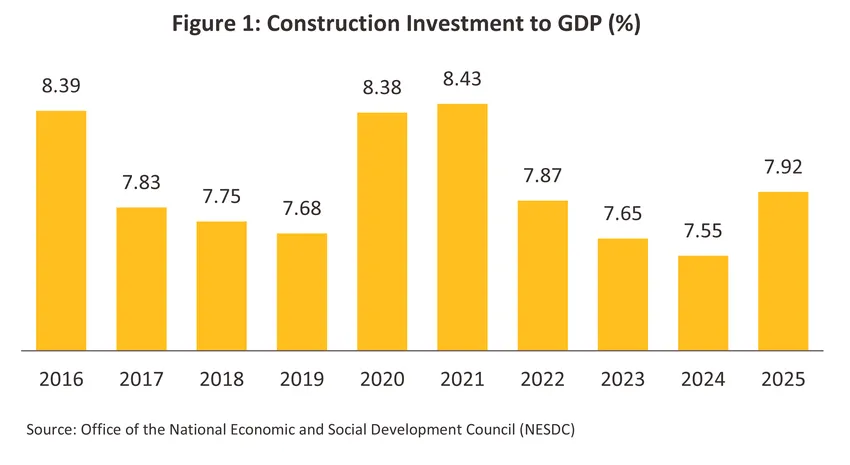
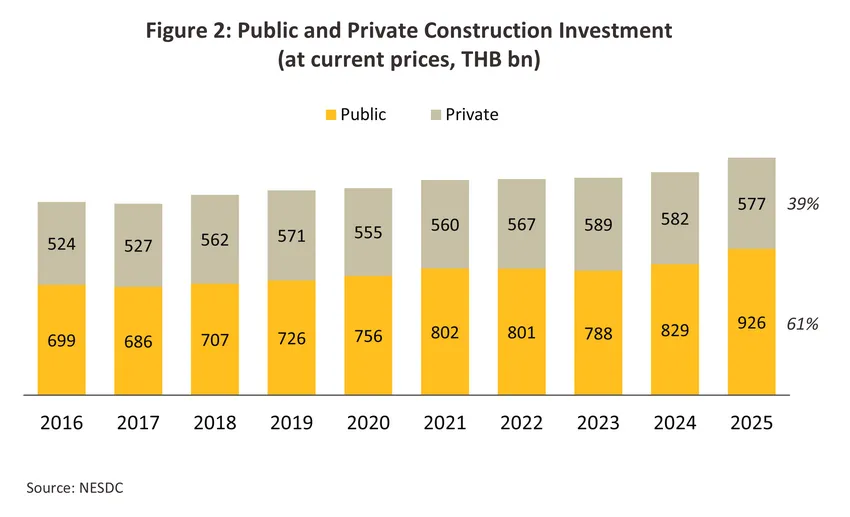
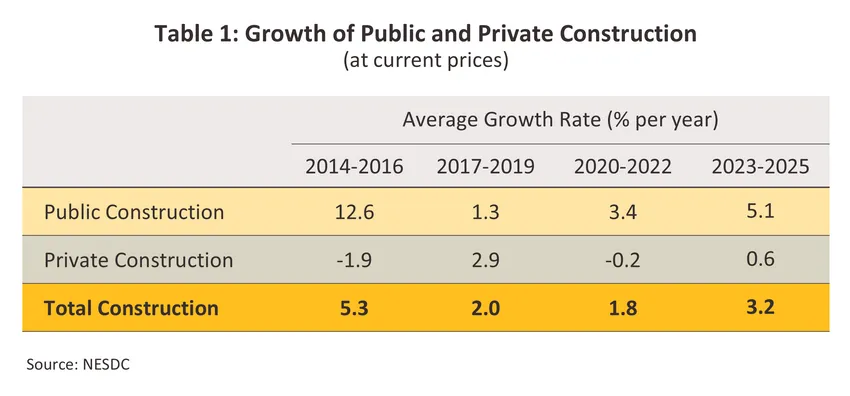
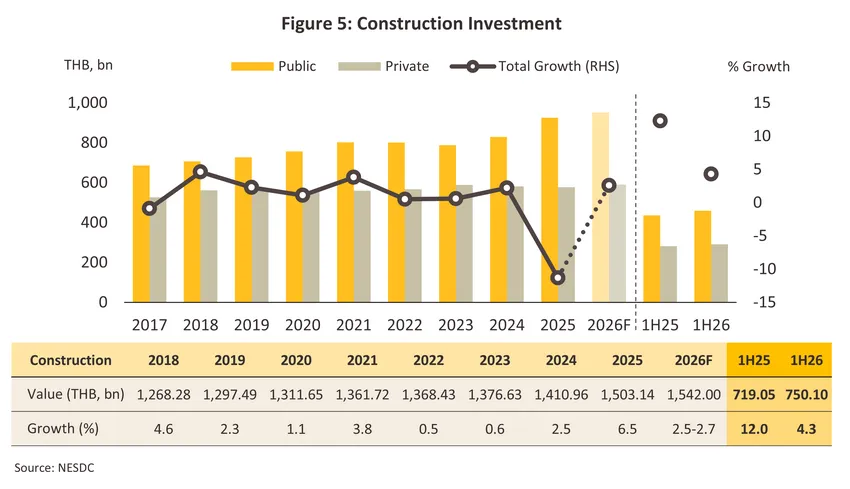
Over the past 10 years (2016–2025), total construction investment accounted for an average of 7.9% of Gross Domestic Product (GDP) (Figure 1). Construction investment can be divided into two categories based on the type of project owner: public and private, with their shares of total construction investment at 62:38 in 2025 (Figure 2). The share of public construction investment has continued to increase, while private construction investment, particularly residential projects, has remained subdued since the COVID-19 crisis through to the present, as the economy has yet to fully recover and household debt remains high. Meanwhile, public construction investment has continued to expand (Table 1), partly driven by government policies that continue to prioritize infrastructure investment to drive economic growth and attract foreign investment. Nevertheless, several projects have experienced delays compared with their planned schedules due to political instability affecting the budget disbursement process, rising energy costs, and labor shortages during certain periods, particularly those resulting from border-related issues.
-
Public construction: Infrastructure investment projects accounted for the majority of public construction, representing 83% of total public construction value in 2025. The remainder comprised government building projects (15%) and housing for government officials (2%). Large construction contractors generally have an advantage in securing public sector projects, particularly large-scale infrastructure projects, due to their experience, specialized expertise, financial capacity, and continuous development of construction technologies. Meanwhile, SME contractors have opportunities to participate in public sector projects as subcontractors.
-
Private construction: Residential construction accounts for the largest share, representing approximately 50% of total private construction value. The remainder comprises the construction of industrial factories and commercial buildings, such as shopping centers, hotels, and hospitals. The direction of private construction depends on economic conditions, investment confidence, political stability, infrastructure investment, and government policies to stimulate investment.
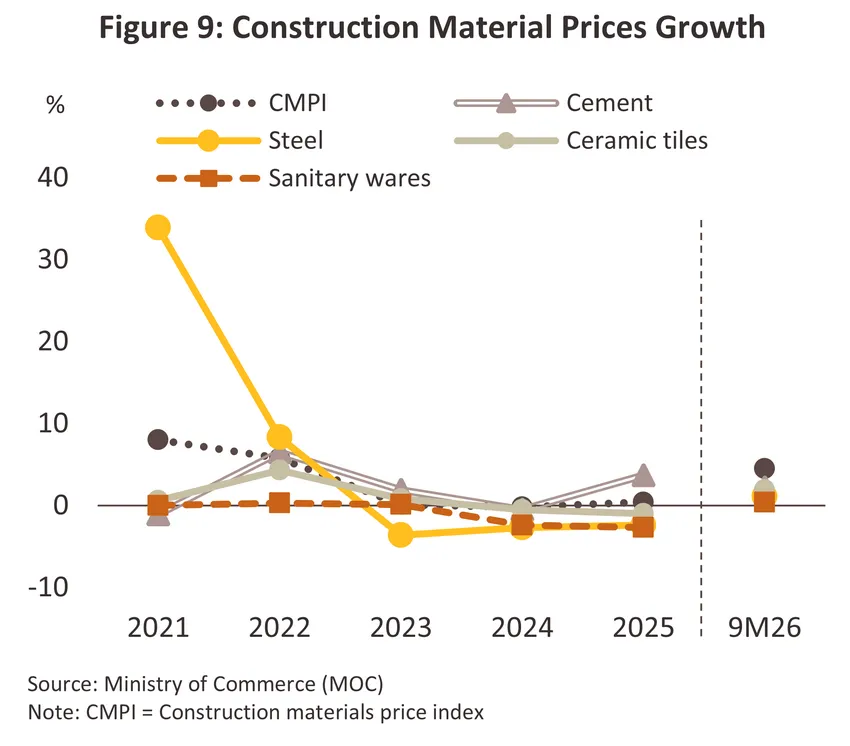
Construction investment growth in recent years: During 2020–2022, total construction value grew by an average of only 1.8% per year, due to the impact of COVID-19, which led to a contraction in the real estate market, a slowdown in private investment, and more severe labor shortages. Private construction investment contracted by an average of 0.2% per year, reflecting declines in both residential (-1.2%) and non-residential (-1.1%) construction investment. In contrast, public construction investment grew by 3.4%, underpinned by infrastructure investment, which helped sustain modest growth in the overall construction market. During 2023–2025, overall construction growth accelerated to an average of 3.2% per year as supply chain disruptions and constraints resulting from COVID-19 gradually eased. Public construction grew by an average of 5.1% per year, mainly boosted by accelerated budget disbursement and continued infrastructure investment, particularly ongoing projects in 2025 that had been delayed in previous years. Meanwhile, private construction returned to modest growth, averaging 0.6% per year, driven by the construction of factories, industrial estates, and commercial buildings, although residential construction remained subdued due to weak purchasing power and persistently high household debt. In addition, rising construction costs, including labor and construction material costs (the overall Construction Materials Price Index increased by an average of 0.1% per year during 2023–2025), also contributed to the growth in the value of construction investment during this period.
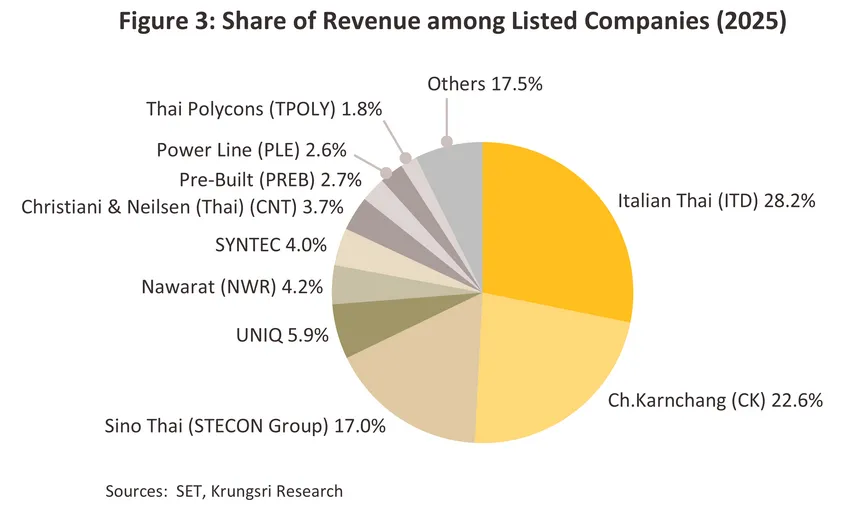
There are approximately 120,000 construction contractor businesses registered as legal entities in Thailand and currently operating (Source: Department of Business Development, 2025). Large contractors number 830, accounting for only 0.7% of all contractors. However, large contractors account for 50.6% of total industry revenue. The three largest listed construction contractors by revenue—Italian-Thai Development Public Company Limited, CH. Karnchang Public Company Limited, and Sino-Thai Engineering and Construction Public Company Limited (STECON Group)—together accounted for 67.8% of the combined revenue of the 18 construction contractors listed on the Stock Exchange of Thailand1/ (Figure 3, 2025 data), equivalent to 15.8% of the total revenue of all large contractors.
In the past, large Thai contractors have expanded their customer base by undertaking overseas projects, mainly in neighboring countries such as Cambodia, Lao PDR, and Myanmar. These countries remain in the process of accelerating the development of infrastructure and various facilities, including road and railway networks, power plants, as well as the construction, renovation, and interior decoration of buildings and residential properties. This also includes industrial estates and factories, which continue to expand under investment promotion policies.
The key factors determining the direction of the construction contracting business include both market and cost factors.
1) On the market side: operators’ opportunities for revenue recognition vary depending on economic and political conditions, the progress of investment in public and private sector projects, as well as the investment regulations of each country, which may either facilitate or hinder business operations.
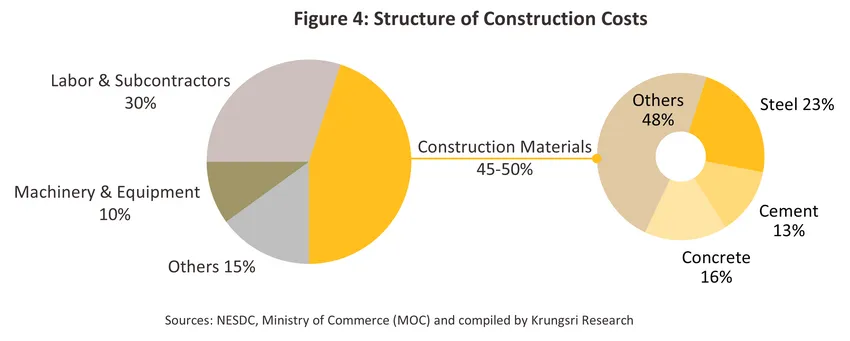
2) On the cost side: costs are mainly affected by changes in construction material prices and labor costs. The cost structure of the construction contracting business consists of (i) construction materials, including steel, concrete, cement, and others, accounting for approximately 45–50% of total costs (depending on the type of construction work); (ii) labor and subcontracting costs, 30%; (iii) machinery and equipment, 10%; and (iv) other expenses, 10–15%²/(Figure 4). At present, in addition to construction material costs, which are trending upward in line with higher energy costs amid the prolonged conflict in the Middle East, Thailand’s construction business is also facing pressure from labor shortages and insufficient workforce skills. As a result, labor productivity remains generally low relative to wage levels, affecting the profitability of construction businesses.
Situation
In 1H26, Thailand’s construction investment expanded markedly, mainly driven by accelerated public infrastructure projects, which accounted for 83% of total public construction investment. Growth also benefited from a low base in the same period last year, allowing public investment to remain a key driver of construction activity. Private construction investment returned to growth, supported by a recovery in residential construction from a low base, including both newly launched projects progressing as planned and the continuation of existing residential projects still under construction. Meanwhile, non-residential construction continued to grow steadily, driven by investment in factories, industrial estates, data centers, hotels, and utilities, particularly in Bangkok and the EEC. Flooding in the BMR and eastern region during September–October may cause delays to construction work in some areas, but the impact is expected to be temporary and unlikely to significantly affect overall construction investment for the year. For full-year 2026, overall construction investment is expected to grow by 2.5–2.7%, with public construction investment expected to grow faster than private investment. Key challenges remain, particularly the prolonged conflict in the Middle East, which could keep energy, transportation, and construction material prices volatile with an upward bias, adding to contractors’ cost burdens and putting pressure on liquidity.
Public Sector Construction
-
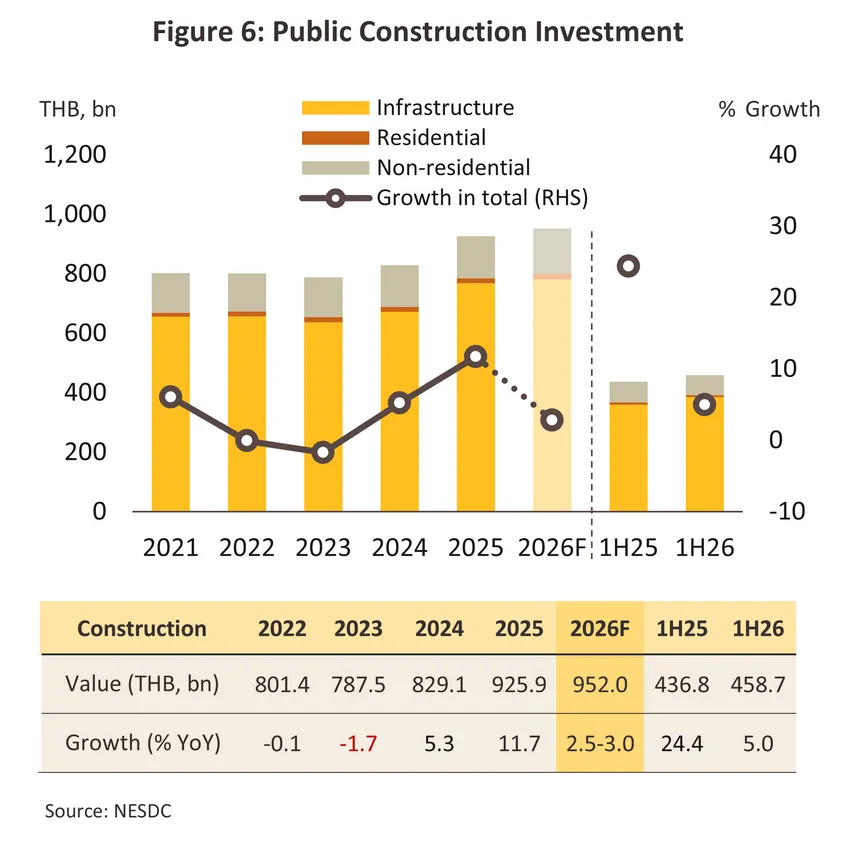
In the first half of 2026, construction investment amounted to THB 458.7 billion, increasing by 5.0% YoY (Figure 6), boosted by the continued construction of transport infrastructure projects carried over from the previous year, as well as higher capital budget disbursement in the first quarter. However, investment growth slowed in the second quarter due to a decline in construction by state enterprises and slower progress in some public sector projects.
-
Infrastructure construction recorded an investment value of THB 384.6 billion (accounting for 84% of total public construction investment in the first half of 2026), increasing by 7.1% YoY. Growth was mainly driven by transport construction and ongoing investment in large-scale infrastructure projects, including the MRT Purple Line, Tao Poon–Rat Burana section, where overall civil works had reached 79.35% of the project’s construction plan, and the MRT Orange Line, Bang Khun Non–Thailand Cultural Centre section, where overall progress had reached 36.87%, comprising 40.66% for civil works and 7.89% for the rail system works (as of September 2026).
In addition, key infrastructure projects in the EEC continued to progress. The Map Ta Phut Industrial Port Development Project, Phase 3, had achieved more than 59% progress (as of August 2026) and is scheduled to commence operations by 2027. Meanwhile, the Laem Chabang Port Development Project, Phase 3, had reached 74% overall completion, with marine construction works at 98.8% and construction of buildings, berths, roads, and utility systems at 29% (as of October 18, 2026). Railway system works, machinery, and information technology systems are still under procurement. The commencement of operations at the F1 berth, the project’s main container terminal, has been postponed to 2031 (from the previously expected 2027–2028), due to issues related to site handover and unresolved requirements for land reclamation works.
-
Other types of construction recorded an investment value of THB 74.1 billion, declining by 4.5% YoY, as construction investment contracted in both residential (-7.3% YoY) and non-residential (-4.2% YoY) categories. This was partly due to the government’s investment policy, which continued to prioritize transport infrastructure projects to support its plan to promote investment in targeted industries. As a result, investment in other types of new construction projects declined amid budgetary constraints.
-
For 2026 as a whole, public construction investment is expected to grow by approximately 2.5–3.0% (Figure 6), mainly driven by continued investment in various infrastructure projects. Meanwhile, contractors undertaking public sector projects have benefited from the relaxation of the K-factor adjustment measure,4/ which helps mitigate the impact of changes in construction costs during project implementation. Although this is a short-term measure, it provides contractors with greater flexibility in cost management. However, SME contractors continue to face financial liquidity constraints due to rising construction material and transportation costs in line with higher energy prices, while reference prices used in public procurement may not yet reflect actual costs. As a result, some contractors may be unable to take on new projects or continue ongoing work. In addition, these conditions may make it more difficult for SMEs to access financing as their financial risks increase.
Private Sector Construction
-
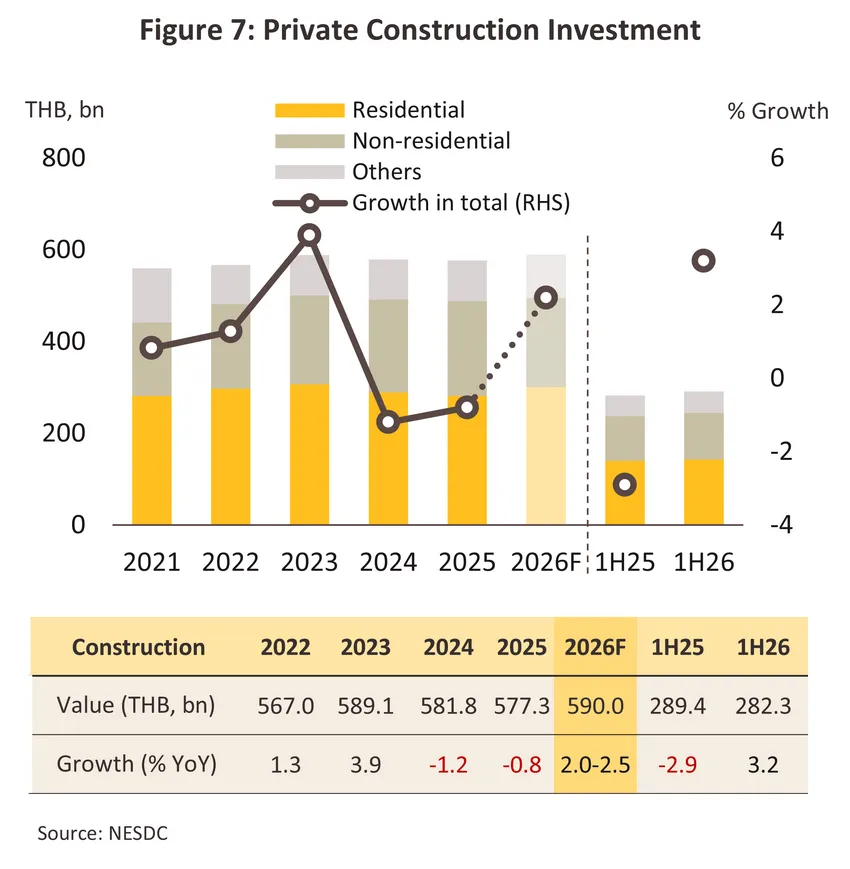
In the first half of 2026, construction investment amounted to THB 291.4 billion, increasing by 3.2% YoY (Figure 7), driven by a gradual recovery in residential construction projects, while non-residential construction continued to grow steadily.
-
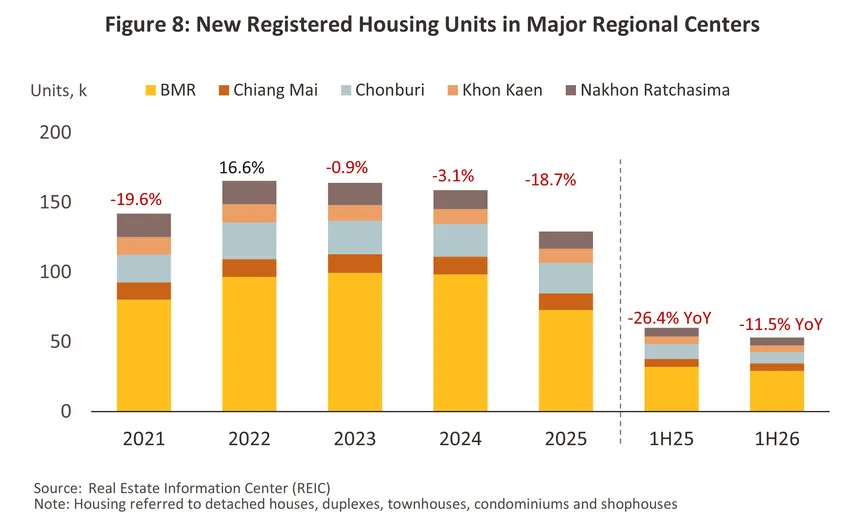
Residential construction returned to growth after contracting in 2025, with construction investment increasing by 2.5% YoY. This was driven by the continued construction of residential projects based on developers’ existing plans, as well as the development of new projects, particularly condominiums, following a slowdown in construction amid persistently subdued market conditions in the preceding period. Growth was also boosted by the reduction in property transfer and mortgage registration fees to 0.01% and the relaxation of Loan-to-Value (LTV) requirements, which helped stimulate property ownership transfers. However, the overall market has yet to fully recover, as reflected in the number of newly completed and registered residential units nationwide, which continued to decline by -3.7% YoY, although improving from a contraction of -16.0% in the first half of 2025. Meanwhile, Bangkok and its vicinity, together with four key regional provinces—Chiang Mai, Chonburi, Khon Kaen, and Nakhon Ratchasima—recorded a combined sharp contraction of -11.5% YoY (Figure 8), as developers remained cautious about launching and constructing new projects amid fragile purchasing power, high household debt, and continued tight housing loan approvals.
-
Non-residential construction, including commercial buildings (shopping centers and commercial buildings), service and transport facilities, and industrial factories, recorded a total construction investment value of THB 148.1 billion, increasing by 4.0% YoY. Growth was supported by the construction of office and commercial buildings, as well as factory and other building projects in industrial estates carried over from the previous year. However, growth began to slow in the second quarter, as the value of industrial factory construction declined for the first time in 13 quarters (Source: Thai Economic Performance in Q2 2026 and Outlook for 2026, NESDC, Aug 17, 2026). This was due to economic uncertainty and risks arising from the conflict in the Middle East, which pushed up operating costs in line with higher energy prices and weakened investment confidence. In the first half of 2026, the value of industrial factory ownership transfers nationwide amounted to THB 5.5 billion, contracting by -35.7% YoY. The Eastern region, a strategic area for targeted industries and home to the EEC, recorded an even sharper decline of -43.8% YoY.
-
For 2026 as a whole, private construction investment is expected to grow by approximately 2.0–2.5% (Figure 7), with the main growth driver continuing to come from investment in non-residential construction. Although residential construction began to recover in the first half of the year, the recovery was concentrated in condominium construction, while most low-rise residential projects continued to face pressure from weak purchasing power amid high household debt and remaining unsold supply. Although the extension of the reduction in property transfer and mortgage registration fees for another year will help support the market to some extent, challenges remain. Contractors undertaking private sector projects also face constraints in cost management, as private construction contracts do not provide K-factor compensation as in public sector projects. Contractors therefore have to bear the full impact of changes in construction material and labor costs. As a result, some contractors, particularly SMEs, face financial liquidity problems that may affect project progress. Meanwhile, financial institutions continue to apply stringent criteria when considering loans for residential projects, as the construction business is exposed to cost volatility and requires substantial working capital.
-
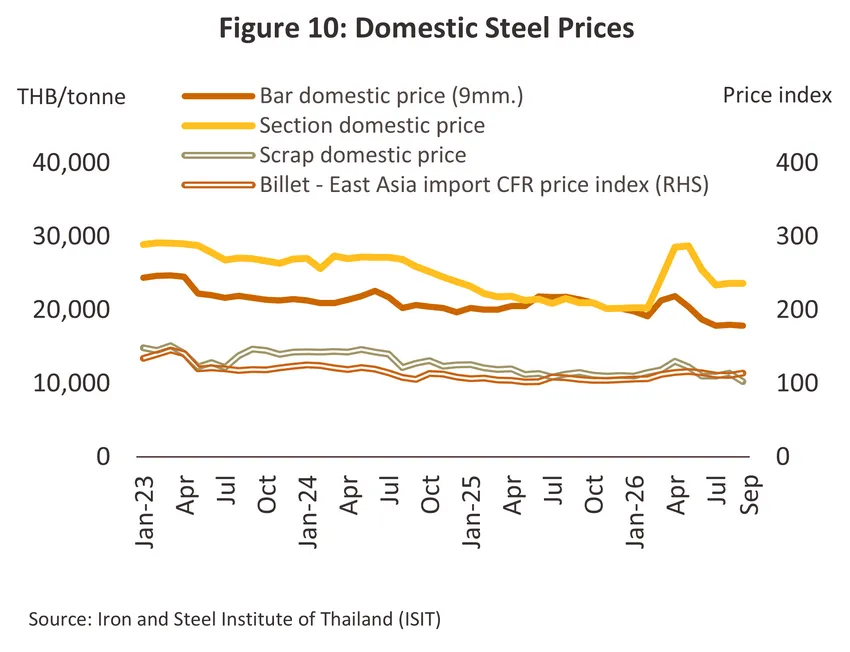
The Construction Materials Price Index (CMPI) increased by 4.5% YoY in the first nine months of 2026, with prices in most major categories continuing to rise. Cement prices increased by 2.2% YoY, while iron and steel product prices rose by 1.1% YoY, as producers adjusted prices in response to higher energy costs and demand from ongoing public projects. Domestic steel prices remained volatile, rising by 13.2% and 9.2% YoY in April and May, respectively, due to higher raw material costs, including billet5/ and scrap, as well as higher energy, freight, and transportation costs amid the Middle East conflict. Steel prices then declined by an average of -9.4% YoY per month during June–September, following weaker Chinese steel prices and a high base in the previous year, while domestic demand slowed amid weak economic activity and purchasing power. Meanwhile, sanitary ware prices increased only slightly (+0.4% YoY), in line with the property sector, which has yet to fully recover. For full-year 2026, construction material prices are expected to increase from 2025, driven by high energy, raw material, and transportation costs, together with stronger demand for cement and steel from accelerated public infrastructure construction. However, price increases will remain constrained by competition from low-priced imports, particularly Chinese steel, and the continued weakness in the residential construction market.
Outlook
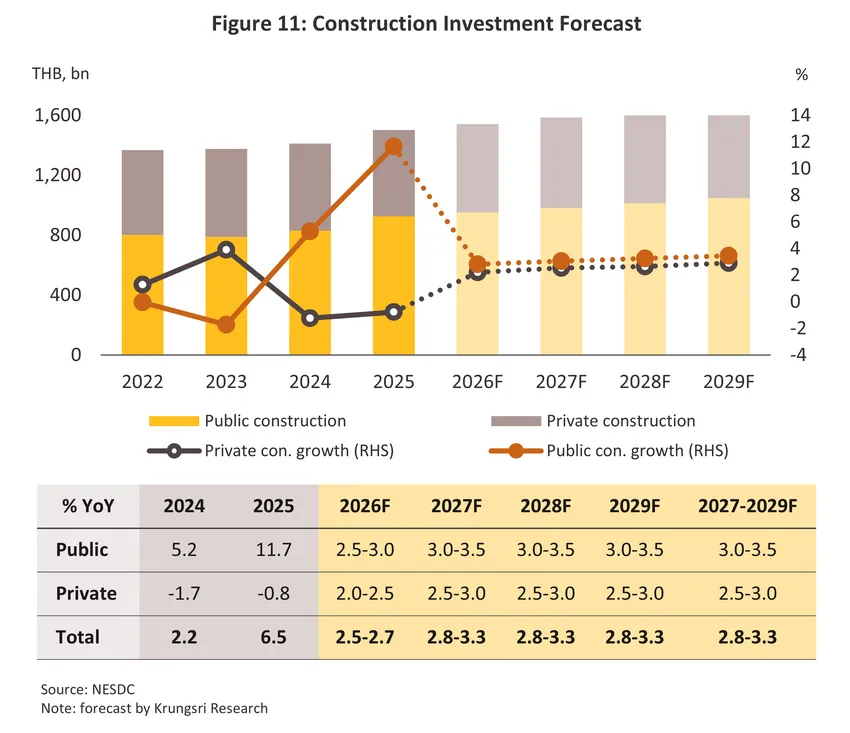
The construction business is expected to grow during 2027–2029, in line with overall construction investment, which is projected to expand by an average of 2.8–3.3% per year (Figure 11). Growth will continue to be mainly driven by large-scale public projects, particularly the development of rail networks, intercity motorways, and key projects in the EEC. However, some ongoing projects may face delays in budget disbursement in certain years, while some new megaprojects may encounter obstacles from unresolved contractual issues between government agencies and private contractors. Private construction investment is expected to recover gradually in line with economic conditions. The residential market will remain under pressure from weak purchasing power, high household debt, tight housing loan approvals, and high levels of unsold inventory, particularly in the low-rise housing segment, which has yet to recover. As a result, private construction investment is likely to accelerate only modestly. In contrast, investment in industrial-related real estate projects is expected to perform better, including industrial estates, factories, warehouses, and data centers, supported by investment promotion policies for strategic target industries. The recovery in private construction investment is therefore likely to be concentrated in certain projects and high-potential areas, such as Bangkok and its surrounding provinces, the EEC, tourism cities, major economic centers, and areas along transport and logistics networks. Secondary cities may recover more slowly, as they still depend on further infrastructure development to improve connectivity with regional economic centers. In addition, contractors will continue to face risks from construction material and labor costs, which are likely to remain volatile with an upward trend. This could put pressure on profit margins even as the value of construction work increases.
-
Public construction investment during 2027–2029 is expected to grow by an average of 3.0–3.5% per year, mainly driven by public infrastructure construction, including both ongoing and new projects. Key projects include domestic and cross-border rail networks, highways and motorways, ports, airports, utilities, and EEC-related projects. However, support from large-scale projects may not fully materialize as planned, as some projects still face uncertainties over approvals, financing, site handovers, and contract amendments, particularly key projects in the EEC. These issues could delay project bidding and revenue recognition for contractors.
-
Large-scale construction projects linked to the EEC are expected to gradually enter a new investment cycle. These include the U-Tapao Airport and Eastern Aviation City Development Project, where investment during 2027–2029 is expected to focus on the passenger terminal, aviation city, and key infrastructure, alongside the construction of the second runway and taxiways, following the commencement of initial supporting works in 2026. Other major projects expected to begin construction include the railway capacity enhancement project on the Hua Mak–Chachoengsao–Si Racha route and the Si Racha–Map Ta Phut double-track railway. These projects will improve passenger and freight connectivity between industrial areas, ports, and airports. However, most EEC-related projects are still likely to face delays. In particular, contractual terms for the high-speed rail project linking three airports are not expected to be finalized in 2026. Meanwhile, the double-track railway project, which the government is considering as an alternative, still requires a review of feasibility studies, preparation of an environmental impact assessment, and budget approval. For Laem Chabang Port Phase 3, although marine construction works are nearly complete, technical issues related to buildings, berths, and utility systems remain unresolved, pushing back the opening of the F1 berth to 2031. Therefore, construction investment in EEC-related projects is expected to gradually increase in the coming years. However, progress in resolving disputes, delays in project approval processes, and uncertainties over policy continuity may continue to constrain the pace of growth.
-
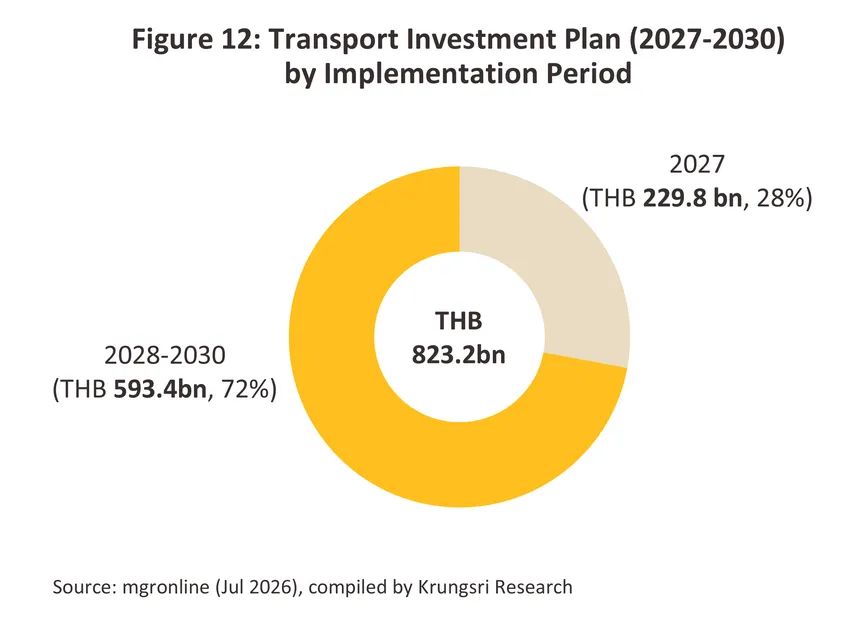
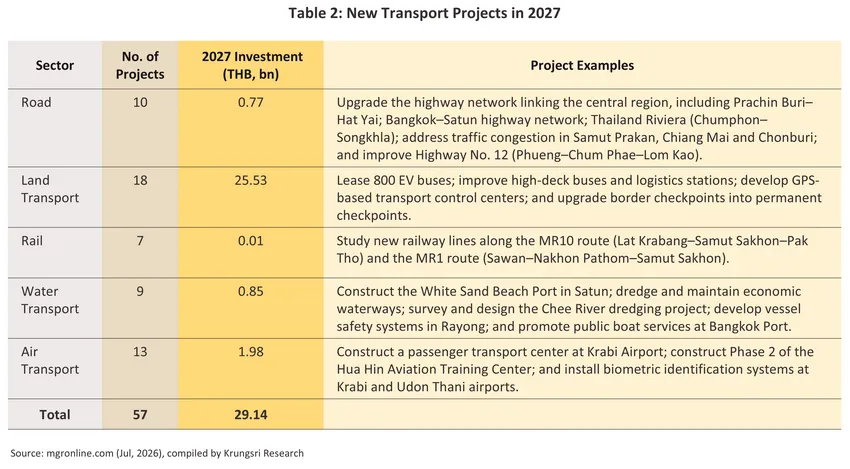
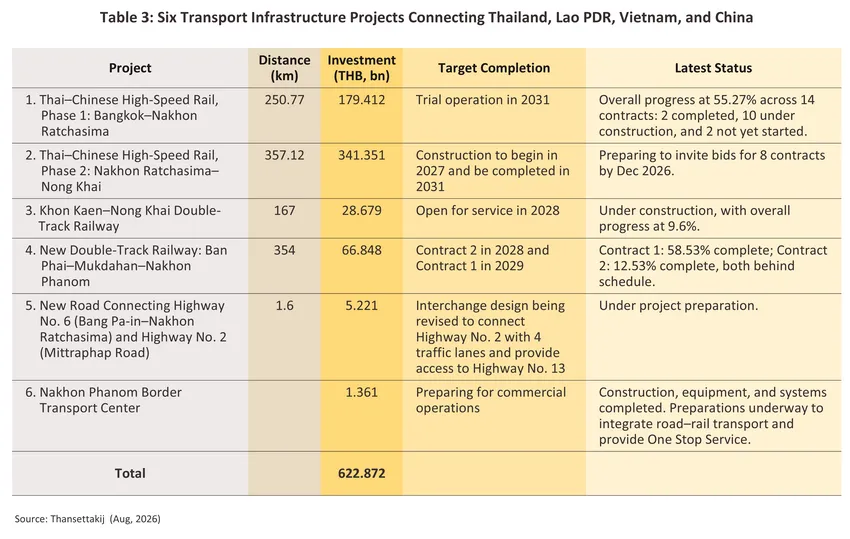
Major projects in other areas focus on enhancing domestic and cross-border transport and logistics capacity by integrating road, rail, water, and air transport networks. The Ministry of Transport plans to implement a total of 313 projects during 2027–2030, with investment of approximately THB 823.2 billion. Of these, 262 projects worth THB 229.8 billion are scheduled to begin in 2027, including 57 new projects with investment of THB 29.1 billion for the year. Another 51 projects worth THB 593.4 billion are planned for 2028–2030 (Manager Online, July 13, 2026) (Figure 12). Key projects include Phase 2 of the Thai–Chinese high-speed railway (Nakhon Ratchasima–Nong Khai), the Southern double-track railway, the Missing Link project connecting Bangkok’s rail network, new motorways and expressways, as well as the development of regional ports and airports. These include the Koh Samui cruise terminal, the expansion of Chiang Mai and Phuket airports, and capacity upgrades at several regional airports. The government is also expected to make greater use of Public-Private Partnerships (PPPs) and infrastructure funds to ease budget constraints and help keep projects on track.
Recently (September 29, 2026), the Cabinet approved the state enterprises’ investment disbursement framework for fiscal year 2027, totaling THB 279 billion. This comprises THB 229 billion for investments under state enterprises’ core missions and ongoing projects, with a focus on the energy and transport sectors, accounting for 40.6% and 36.2%, respectively, and an additional THB 50 billion allocated for further investments during the fiscal year. This is expected to support continued growth in public construction investment, particularly in transport infrastructure and power systems. However, this will depend on project progress and disbursements proceeding as planned.
-
Private construction investment is expected to grow by an average of 2.5–3.0% per year during 2027–2029, with the residential sector expected to return to modest growth amid continued pressures, while industrial and commercial construction continues to grow well.
-
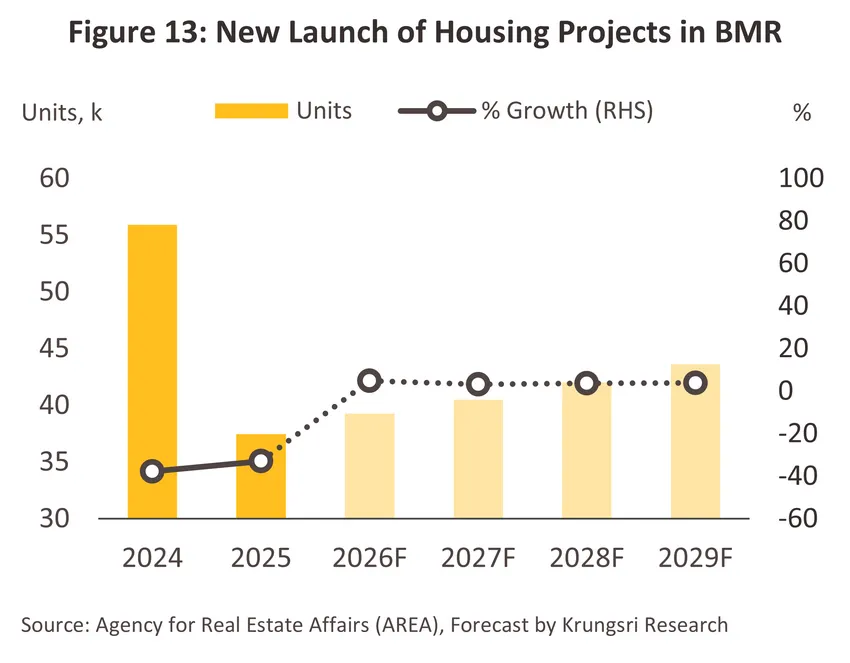
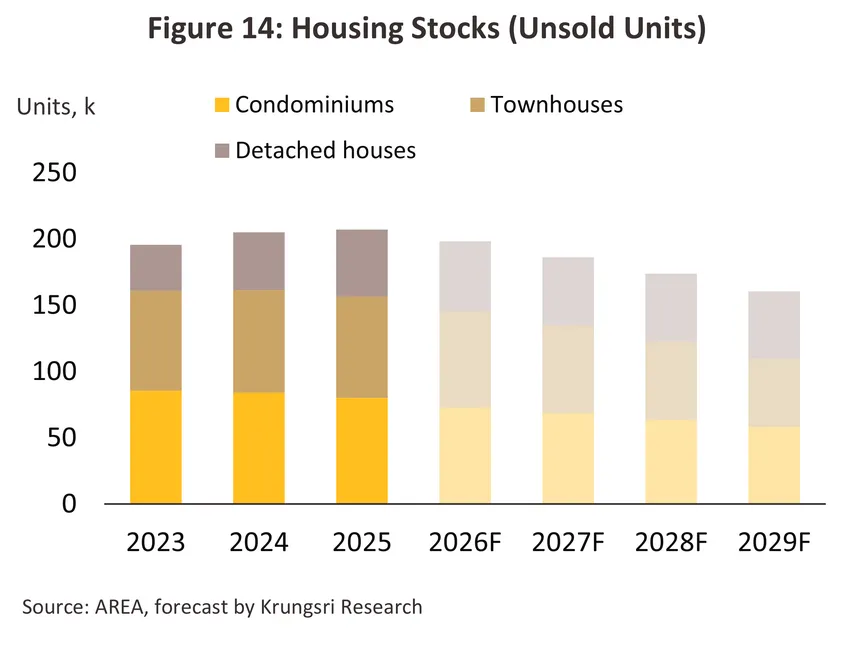
Residential construction is expected to gradually recover during 2027–2029, following developers’ slowdown in new project launches and efforts to reduce inventories during 2025–2026. New housing units launched in Bangkok and the surrounding provinces (BMR) are expected to return to growth of 3.2–4.0% per year, reaching around 40,000–44,000 units annually during 2027–2029 (Figure 13) (Source: Krungsri Research, Oct 2026). In particular, condominium and townhouse construction is likely to recover faster than single-detached houses. Following a slowdown in new project launches over the past 2–3 years amid a prolonged property market downturn, housing inventory is expected to decline (Figure 14).Construction investment is likely to be concentrated in locations with strong purchasing power and high potential, such as city centers, areas along mass transit lines, and tourism or industrial provinces. Growth will be supported by the gradual economic recovery, the extension of transfer and mortgage fee reductions through mid-2027, and the expansion of mass transit and motorway networks. However, growth is likely to remain modest as purchasing power will take time to recover amid high household debt and persistently high loan rejection rates, large accumulated housing inventories, and construction costs that remain volatile with an upward trend. As a result, developers are likely to continue focusing on the upper-mid to high-end segments, which will benefit large contractors more than smaller ones.
-
Factory and industrial estate construction is expected to continue expanding during 2027–2029, particularly in the EEC, driven by the relocation of foreign investors’ production bases to ASEAN, investment in advanced technology, and government investment promotion measures. This is reflected in BOI investment promotion applications and approvals in 1H26, which totaled THB 1.47 trillion (+36.7% YoY) and THB 1.31 trillion (+44.5% YoY), respectively. Growth was led by digital businesses and data centers, as well as electronics, logistics, and automotive industries. In particular, the number of projects and the value of investment promotion approvals for digital businesses and data centers surged by 79.6% YoY and 161.2% YoY, respectively. On the supply side, construction activity is expected to increase, as reflected in investment plans by industrial estate developers such as AMATA Corporation PCL (AMATA) and WHA Corporation PCL (WHA), which plan to invest more than THB 19 billion in land and infrastructure development. However, factory and industrial estate construction remains exposed to risks from geopolitical conflicts, higher energy and transportation costs, and a lack of continuity in government policies.
-
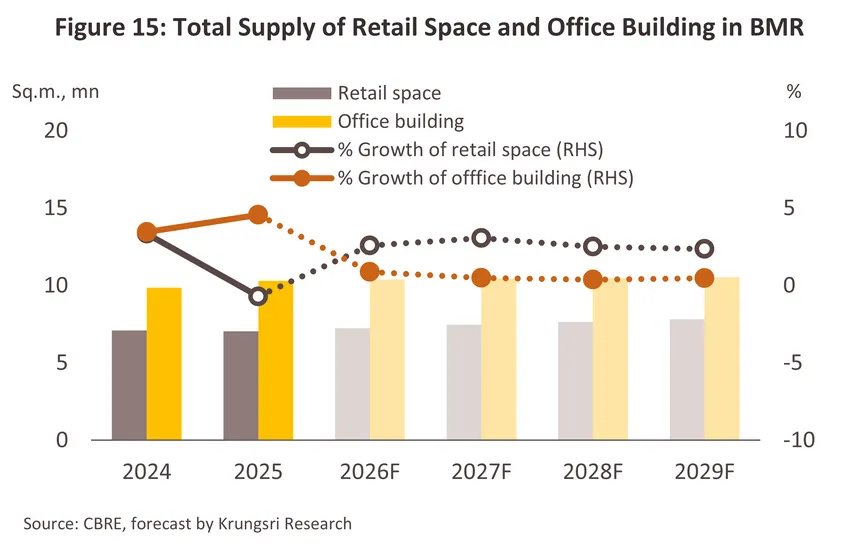
Commercial building construction is expected to see limited growth during 2027–2029, with investment concentrated in high-potential locations. Retail space supply will gradually increase, driven by mixed-use developments and large shopping centers, supported by the gradual recovery in consumption and tourism, as well as the expansion of communities along mass transit lines. New retail space supply in the BMR is expected to grow by an average of 2.2–3.0% per year, reaching around 7.6 million sq.m. per year. For office buildings, new construction is likely to slow due to oversupply and a limited recovery in leasing demand. Demand will be concentrated in Grade A and A+ buildings that meet environmental standards, leading investment to focus more on upgrading existing buildings rather than developing new projects. As a result, office space supply is expected to grow at a low rate of only 0.1–0.7% per year (Figure 15).
-
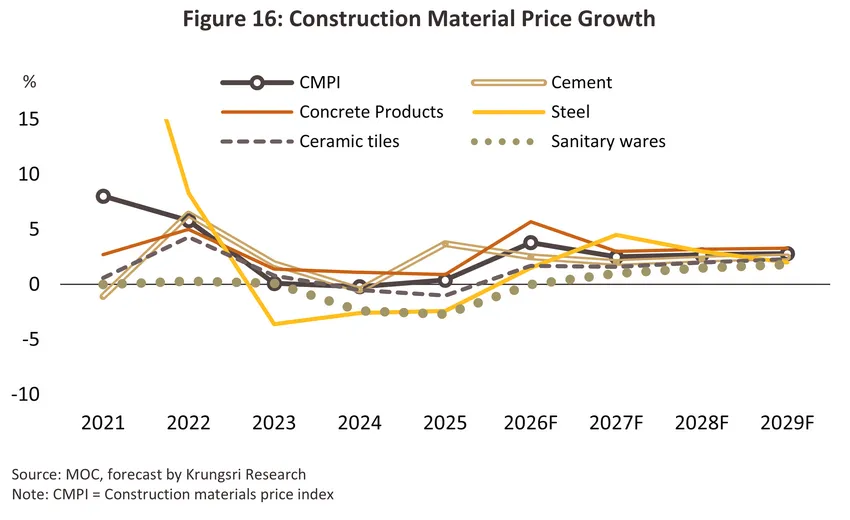
Overall domestic construction material prices are expected to gradually increase by around 2.0–3.0% during 2027–2029, supported by demand from public infrastructure projects and private investment, particularly for cement, concrete, and electrical equipment. However, prices may remain under pressure from energy and transportation costs, as well as copper prices. Construction steel prices are expected to grow at a slower pace due to China’s excess supply, capacity expansion in ASEAN, and trade barriers imposed by major economies, including the U.S. Section 232 measures.ุ6/ These factors could redirect excess Chinese steel into ASEAN markets, intensifying domestic price competition despite improving domestic demand.
-
Opportunities for Construction Contractors in Overseas Markets: Large contractors with strong financial positions, experience in managing large-scale projects, and engineering expertise have opportunities to expand into overseas construction markets, particularly in ASEAN, the Middle East, and Africa, where infrastructure investment continues in transport, energy, utilities, industrial estates, and urban development. Thai contractors may participate through direct bidding, joint ventures with local partners, or as subcontractors for large-scale projects, while SMEs have opportunities to undertake specialized construction, engineering systems, installation and maintenance works, as well as subcontracting for large local projects, although most still face constraints in capital, technology, and bidding qualifications. However, expansion into overseas markets still faces risks from competition with Chinese, Indian, and Korean contractors, exchange rate volatility, transportation costs for construction materials, political and regulatory uncertainties in individual countries, and broader geopolitical risks, which could affect the stability of project revenues.
-
Key factors limiting business growth during 2027–2029 include:
-
Political uncertainty remains a risk that could arise periodically and affect the continuity of public infrastructure projects, particularly through delays in budget approval and disbursement, as well as policy reviews or changes in project priorities. These could delay bidding and the commencement of some construction projects. Political uncertainty may also weaken private sector confidence, leading to delays in new investment and business expansion.
-
Construction labor shortages remain a structural issue and are likely to become more severe due to the return of Cambodian workers amid the prolonged Thai–Cambodian border dispute, stricter inspections and enforcement of laws governing foreign workers, and restrictions on migrant labor inflows. These factors could increase labor costs and intensify competition for workers with the manufacturing and service sectors. Labor shortages may also increase the risk of project delays, particularly for medium and small contractors, which have limited capacity to invest in labor-saving technologies. As a result, some contractors may face labor shortages or be forced to suspend operations.
-
Competition from foreign contractors in Thailand’s construction market is intensifying, particularly from large Chinese contractors participating in megaprojects through joint ventures (JVs) with Thai contractors, such as double-track and high-speed rail projects. Chinese construction companies are also making direct investments in medium- and small-scale projects, increasing competitive pressure on Thai contractors in terms of price, technology, and innovation, particularly on smaller operators. However, competitive pressure may gradually ease following the building collapse caused by the earthquake in March 2025, which prompted the government to strengthen its oversight of construction contractors. The “Contractor Performance Record” system has been improved to monitor and evaluate contractors’ performance, with provisions allowing contractors that fail to meet the required criteria to be downgraded or have their registration revoked. These measures are in accordance with the Ministerial Regulation Prescribing the Criteria for Persons Eligible to Apply for Business Operator Registration (No. 2), B.E. 2569 (2026), which was published in the Royal Gazette on January 13, 2026 and has already taken effect (Comptroller General’s Department, 2026). These measures may provide greater opportunities for Thai contractors, particularly large firms that meet the qualification and track-record requirements, to secure more projects and build up their backlogs.
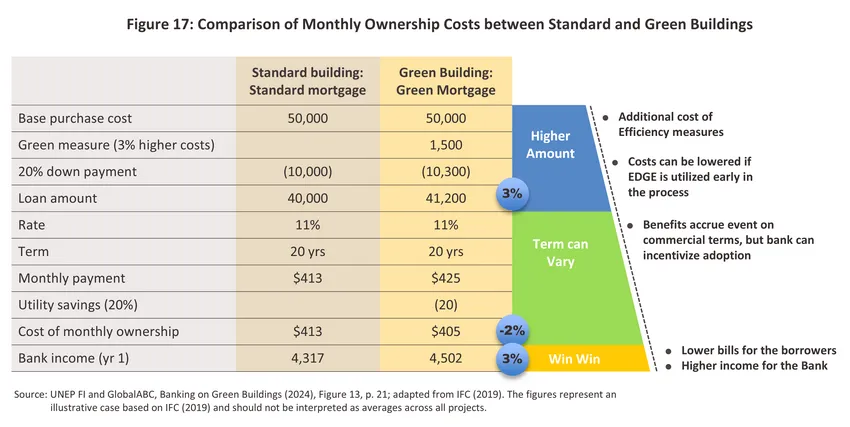
- Green construction presents both business opportunities and challenges, supported by growing environmental awareness, demand for energy-efficient buildings, government measures promoting investment in green building7/ development, and changing consumer behavior toward more sustainable living. In particular, long-term energy cost savings are increasing interest in green construction and green buildings. According to the Banking on Green Buildings report, although green buildings may require higher upfront development costs and additional financing burdens in the early stages, savings in electricity and other energy costs can offset the additional investment and reduce the building’s overall operating costs over the long term (Figure 17). However, the payback period varies by project, depending on the type of building, construction materials, and technologies used.
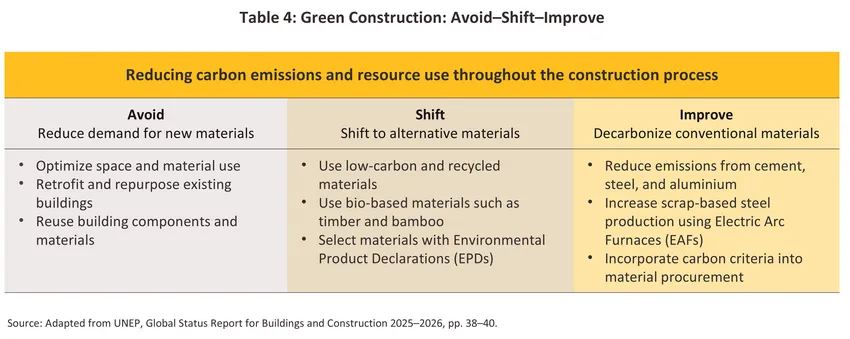
Green construction is an important starting point for the development of green buildings. It covers building design, the use of low-carbon and circular materials, the reduction of resource use and construction waste (Table 4), and efficient management of the construction process. Modern technologies such as drones and robotics, 3D printing, BIM, modular construction, and Digital Twin will play an important role in improving efficiency, reducing reliance on labor, and promoting efficient use of resources. Combined with energy- and water-efficient building management systems, renewable energy, and consideration of occupants’ health and well-being, these practices can lead to green building projects that reduce environmental impacts throughout the building life cycle, from construction and operation to demolition and material reuse.
However, these technologies require high investment and involve complex management, giving large contractors with strong financial and human resources an advantage. They can use these technologies to improve quality and safety, strengthen their competitive advantage, and respond to growing demand in the green construction market. In contrast, most SME contractors face constraints in capital, skilled personnel, and technological readiness, making their transition to green construction more gradual. They are likely to begin with more accessible technologies, the use of environmentally friendly materials, or subcontracting for large contractors involved in green projects. However, greater access to workforce development, financing, and government support measures would help contractors expand their opportunities to secure projects and strengthen their long-term competitiveness
1/ Including: (1) Italian-Thai Development Public Company Limited, (2) CH. Karnchang Public Company Limited, (3) STECON Group Public Company Limited,
(4) Unique Engineering and Construction Public Company Limited, (5) Nawarat Patanakarn Public Company Limited, (6) Syntec Construction Public Company Limited, (7) Christiani & Nielsen (Thai) Public Company Limited, (8) Pre-Built Public Company Limited, (9) Power Line Engineering Public Company Limited, (10) Thai Polycons Public Company Limited, (11) Right Tunnelling Public Company Limited, (12) Sriracha Construction Public Company Limited, (13) Well Graded Engineering Public Company Limited, (14) Seafco Public Company Limited, (15) Pylon Public Company Limited, (16) TRC Construction Public Company Limited, (17) Bangkok Dec-Con Public Company Limited, and (18) EMC Public Company Limited.
2/ Average cost breakdown from large contractors
3/ 4D/5D BIM extends three-dimensional building modeling (3D BIM) by integrating the building model with project schedules, construction timelines, and costs. This helps track project progress, control budgets, and reduce errors during project execution.
4/ The K-factor is an index used to adjust construction contract payments in line with changes in construction costs, providing compensation for cost changes to contractors undertaking public-sector projects. Under a temporary measure, the cost-change threshold for claiming compensation was reduced from ±4% to ±2% during 28 February–30 September 2026, allowing contractors to claim compensation more quickly.
5/ Billet, or semi-finished steel, is an upstream raw material used in the production of reinforcing bars, structural steel, and steel wire, with its price directly affecting domestic steel production costs. Currently, Thai steel producers continue to face pressure from low-priced imported billets, particularly from China, which affects their competitiveness.
6/ For steel and aluminum, the U.S. imposes a 50% tariff on general steel and aluminum imports, while certain derivative products are subject to a 25% tariff. Qualifying products from the United Kingdom are subject to a preferential tariff rate of 15–25% (Source: The White House, Jun 1, 2026).
7/ A green building is a building designed and constructed to use natural resources efficiently and to be environmentally and socially responsible throughout its life cycle.