Introduction
Over the past decade, artificial intelligence (AI) has played a significant role in the digital world, primarily operating through screen-based interfaces.
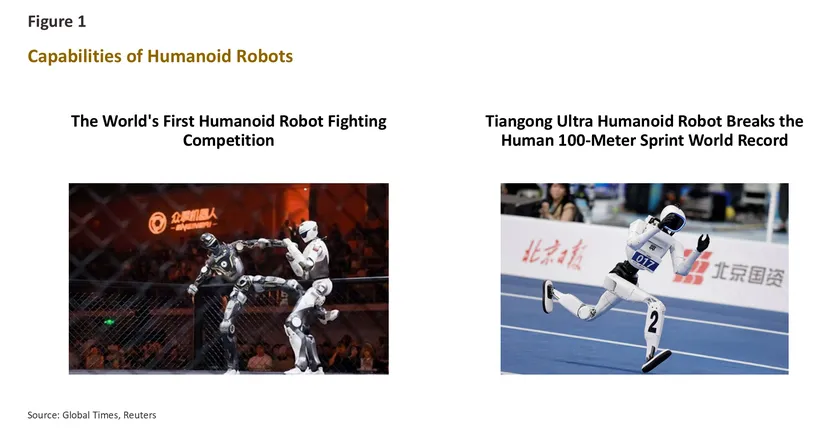
However, the world is entering a new era in which AI is moving beyond screens and into the physical world through the emergence of “Physical AI” that can perceive and interact with its surroundings, making decisions, and performing tasks autonomously. Among the technologies attracting the greatest attention in this field are
“humanoid robots,” which are capable of performing complex tasks in ways that closely resemble human capabilities. Although the technology remains in its early stages, humanoid robots could become commonplace in the coming years, playing an increasingly important role in driving economic and industrial growth worldwide.
This emerging shift highlights the need for all sectors to prepare for the transition towards a new ecosystem, including commercial banks, which will play a key role in supporting its development through financing, tailored financial products, and the adoption of robotics to enhance operational efficiency. The key challenge, therefore, lies in how businesses, including commercial banks, will prepare for this wave of transformation and to what extent they will be able to capitalize on the future growth of the robotics and Physical AI industries.
Understanding Humanoid Robots: The Face of Physical AI
Physical AI represents the next stage in the evolution of artificial intelligence, building on the capabilities of Agentic AI. Physical AI can make decisions and perform tasks in the physical world in real time by integrating with cameras, sensors, robotic arms, machinery, robots, and automated control systems. It can also learn and adapt to new situations, transforming AI from a tool that merely supports decision-making into a form of "digital workforce" capable of performing tasks in the real world.
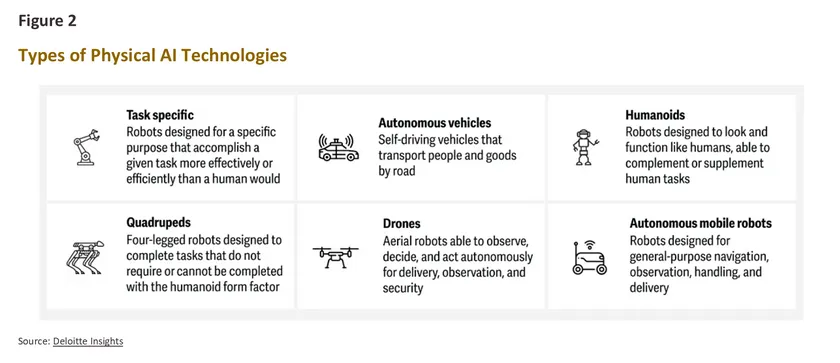
If Generative AI is considered the "brain," Physical AI takes this concept a step further by connecting the brain to a "body." This enables devices such as smart vehicles, drones, machinery, and robots to grasp objects, move, and respond to changing environments. For example, they can avoid obstacles or adjust their routes autonomously without waiting for human instructions (Figure 2). This distinguishes Physical AI from traditional robots, which require human intervention when unexpected situations arise.
Physical AI encompasses a wide range of applications, from robots designed for specific tasks and drones to autonomous vehicles and humanoid robots (Figure 2). Among these, humanoid robots stand out as one of the most rapidly advancing forms of Physical AI in recent years. With human-like structures, including a head, torso, arms, hands, and legs, these robots can also learn skills and movement patterns directly from human demonstrations.
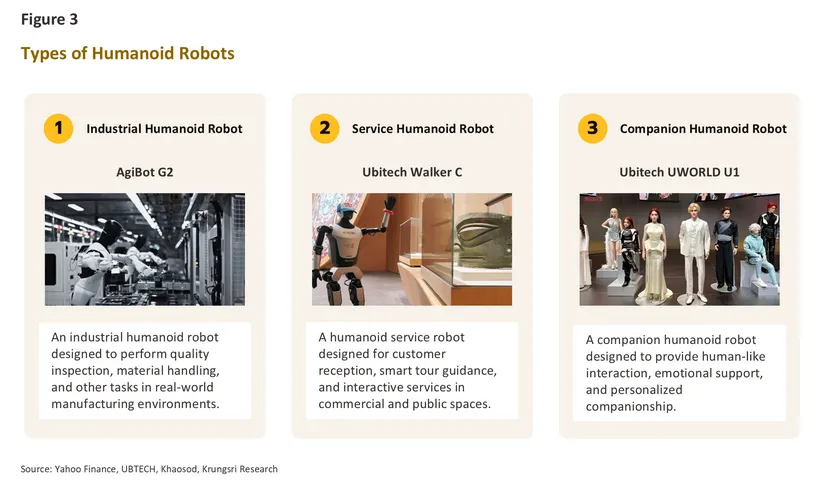
Rapid advances in AI technologies, including machine learning, computer vision, and robotics hardware, have continuously enhanced the capabilities of humanoid robots, enabling their deployment across a wide range of applications (Figure 3). Key examples include:
-
Industrial Humanoid Robots: Designed primarily for material handling, quality inspection, and repetitive tasks in environments built for humans, such as manufacturing plants, warehouses, and logistics facilities
-
Home humanoid robots: Assist with household chores and interact with everyday objects, including home appliances and kitchen equipment, while also providing support and care for household members.
-
Service humanoid robots: Perform customer-facing tasks, such as welcoming visitors, providing information, and interacting with customers in commercial establishments and public spaces.
-
Companion humanoid robots: Designed as lifelike companions capable of moving, performing basic human-like gestures, and interacting with users. Their primary appeal lies in providing companionship and helping alleviate loneliness.
Key Technologies Enabling Humanoid Robots to Think and Perform Tasks
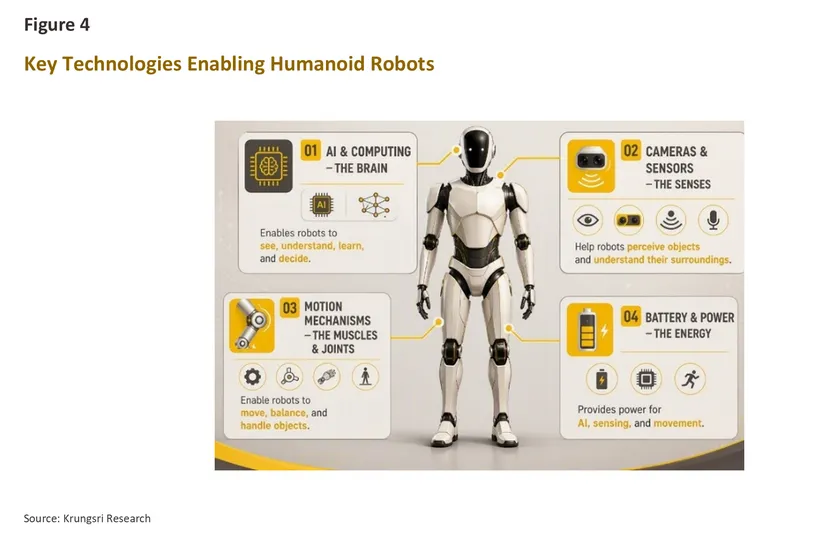
The capabilities of humanoid robots are driven by the integration of Embodied AI, which enables AI to connect perception, analysis, decision-making, and physical action. This process relies on the coordinated operation of AI models, sensors, and robotic hardware through several key technologies, including:
-
AI Technologies and Computing Systems: The intelligence of humanoid robots is driven by advances in AI technologies that enable them to perceive their surroundings, understand instructions, plan multi-step tasks, and adapt to real-world situations. A key example is the Vision-Language-Action (VLA) model, which integrates visual perception, language understanding, and motion control,1/ allowing robots to "see" their surroundings, "interpret" what they observe, and "move" in response to real-world conditions in ways that closely resemble human capabilities. However, these advanced capabilities require high-performance computing systems, including Central Processing Units (CPUs), Graphics Processing Units (GPUs), and Neural Processing Units (NPUs),2/ to process large volumes of data from sensors and AI models in real time with low latency.3/ This enables robots to respond promptly to real-world situations, such as navigating around obstacles or grasping objects, thereby improving operational safety and precision.
-
Environmental Perception Systems: These systems rely on the integration of cameras and various types of sensors (sensor fusion), including 3D vision systems, tactile sensors, microphones, and Light Detection and Ranging (LiDAR),4/ to detect objects and assess the surrounding environment. Visual data captured by cameras are processed using computer vision technology, while sensors and LiDAR measure distances to objects and create three-dimensional (3D) representations of the environment. When these data are integrated with VLA models, which combine perception with motion control, robots can identify the objects they observe, understand the situations they encounter, and determine how to respond appropriately.
-
Motion Mechanisms: These systems consist of key components, including electric motors, gears, and actuators,5/ which are essential for movement, balance, and object manipulation. Actuators are considered the core components of robotic motion systems and represent the largest cost component in humanoid robot manufacturing, accounting for approximately 50% of total production costs.6/
-
Batteries and Energy Management Systems: These systems provide the power required to run AI models, operate cameras and sensors, and control the movement of components and joints throughout the robot's body. They therefore play a critical role in ensuring continuous robot operation. Improvements in battery life, reduced battery weight, and faster battery swapping capabilities would help overcome limitations in operating time and enable robots to perform tasks more continuously.
Technology Companies Accelerate Humanoid Robot Development to Capitalize on Emerging Opportunities
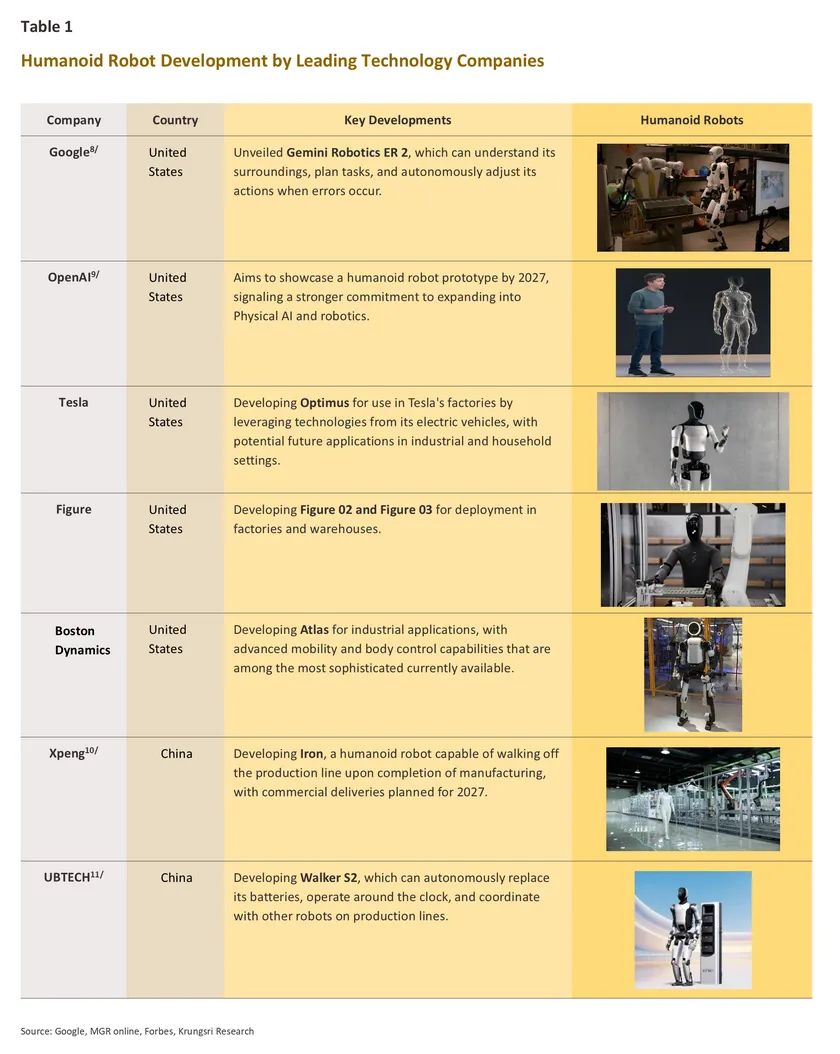
Leading technology companies worldwide are pursuing plans to develop humanoid robots for commercial applications (Table 1), focusing on advancements in both AI software and hardware to enhance robot intelligence, improve performance in real-world environments, and enable learning from human feedback to support increasingly complex tasks. However, the commercial adoption of humanoid robots remains at an early stage. According to IDC,7/ more than 85% of humanoid robot shipments in 2025 were intended for exhibitions, education and research, and product demonstrations, while practical deployment in industrial settings remained limited.
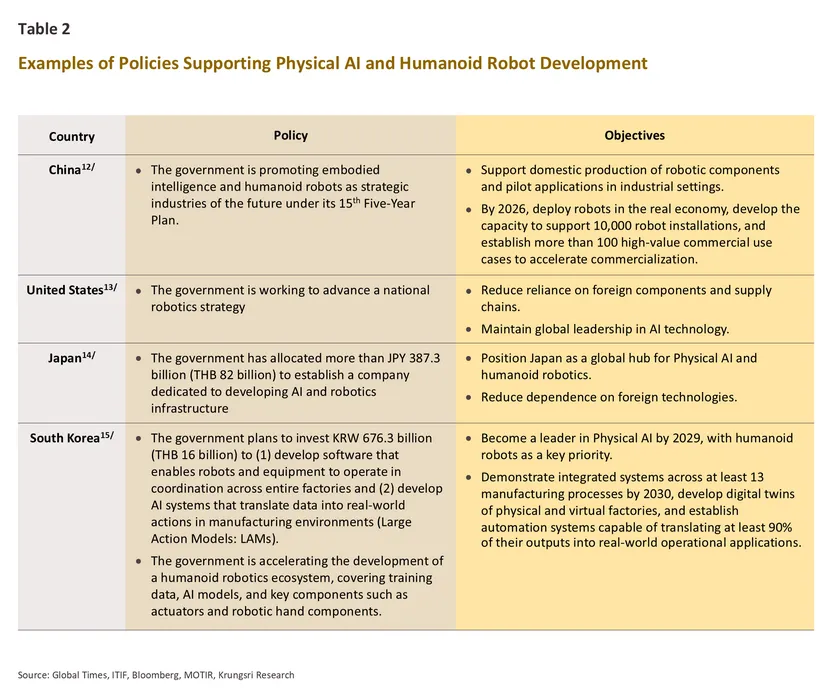
As the world enters a new phase of technological competition driven by Physical AI, many countries are stepping up efforts to support the development of this technology, particularly humanoid robots. As a result, the robotics industry is poised to become one of the key drivers of the global economy in the future (Table 2).
Limitations of Humanoid Robots
Despite their impressive capabilities, humanoid robots still face several limitations that require further development, including
-
Perception and Reliability: Humanoid robots continue to face challenges in accurately assessing the position, distance, speed, and direction of moving objects, particularly in complex environments. As a result, they remain less capable than humans in making decisions and responding to unexpected situations, potentially affecting their safety and ability to operate fully autonomously. To date, humanoid robots have therefore primarily been deployed in controlled environments or settings with clearly defined movement paths, such as manufacturing plants and warehouses.
-
Dexterity: The joints and fingers of humanoid robots still lack the flexibility and range of motion of human hands,16/ making it challenging to perform tasks requiring a high degree of precision, such as folding clothes or handling small objects and objects of varying shapes. Furthermore, achieving human-like hand movements requires multiple actuators, which increase the robots' weight, heat generation, and development costs.
-
Energy Efficiency: Humanoid robots continue to face limitations in energy efficiency, both in terms of the power required for data processing and movement, as well as their relatively short operating time on a single battery charge. Increasing battery capacity would add to the robots' weight, requiring even more energy for movement. These constraints remain a significant barrier to deploying humanoid robots in applications that require extended periods of continuous operation.17/
How Humanoid Robots Will Transform the Business Landscape
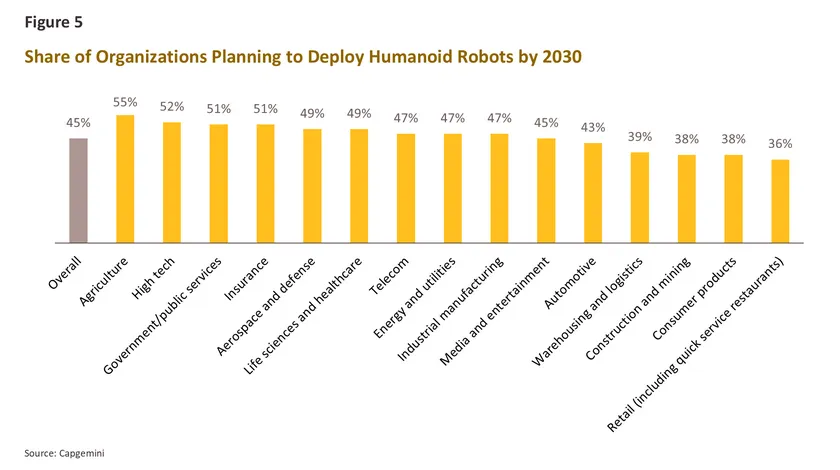
Humanoid robots have now moved beyond the prototype stage and are increasingly being tested in commercial applications. Businesses are therefore paying closer attention to their potential. According to a 2026 survey by Capgemini, more than two-thirds of executives expect humanoid robots to transform business operations
18/ by helping address labor shortages and rising labor costs, while 78% anticipate adopting humanoid robots in the future (Figure 5).
Humanoid robots are expected to play an increasingly important role in business operations in several key areas, including:
-
Enhancing Productivity: Humanoid robots can operate continuously across work shifts and replace humans in physically demanding tasks or those constrained by human physical limitations, such as tightening bolts overhead and installing electrical wiring in confined spaces, as well as performing hazardous tasks. Businesses are therefore expected to increasingly deploy humanoid robots for sorting, packaging, and transporting goods, allowing human workers to shift toward higher-value activities, such as supervision and operational efficiency improvements.
-
Increasing Flexibility in Production Processes: Humanoid robots can autonomously adapt their operations to changing conditions, enabling businesses to quickly modify product designs or production processes. This enhances flexibility in mass production while allowing greater product customization to meet customer needs, with less time and lower costs required to reconfigure production lines. Unlike conventional automation systems, which require reprogramming whenever changes occur, humanoid robots can adjust their operations more flexibly.
-
Supporting Sustainability Goals: Humanoid robots can perform tasks consistently and minimize operational errors, helping reduce resource consumption and waste generation in production processes.19/ They can also reduce energy consumption in areas where human workers are not present, such as by lowering the need for lighting and temperature control. However, their overall environmental impact requires further consideration of factors such as electronic waste from obsolete robots, energy consumption during robot operation, and the responsible disposal and reuse of robotic components.
Humanoid Robots in Real-World Work Environments
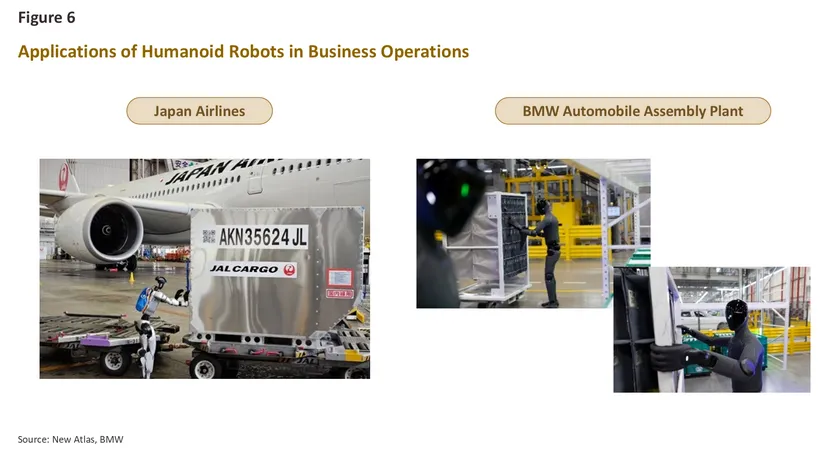
Humanoid robots are beginning to be deployed in real-world work environments overseas to help address labor shortages. Notable examples include Japan Airlines, which began trialing robots at Haneda Airport in May 2026 for ground handling operations, such as baggage and cargo transportation.20/ In the manufacturing sector, factories and logistics facilities have been among the earliest adopters of humanoid robots, as their human-like structures allow them to operate within existing infrastructure without requiring major redesigns. In China, humanoid robots are being deployed across production lines, sorting lines, and commercial service operations. Meanwhile, in the United States, Figure AI has partnered with BMW to deploy Figure 03 robots for parts sorting and sequencing before components enter production lines (sequencing and logistics).21/ This follows the deployment of Figure 02 robots in 2024, which performed material handling and hazardous tasks for more than 10 months (Figure 6). In South Korea, Hyundai Motor Group plans to deploy more than 25,000 Atlas robots developed by Boston Dynamics across its factories worldwide, beginning in 2028. Meanwhile, Samsung Electronics, in collaboration with Rainbow Robotics, aims to transform its manufacturing facilities worldwide into AI-driven factories by 2030.
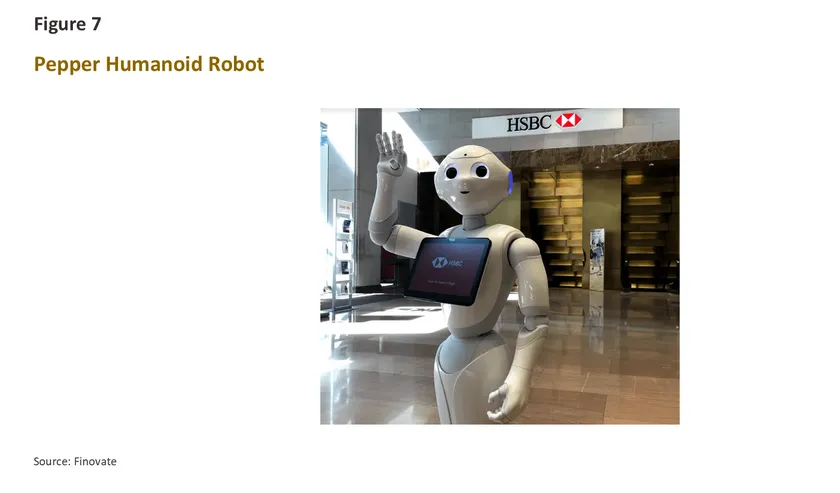
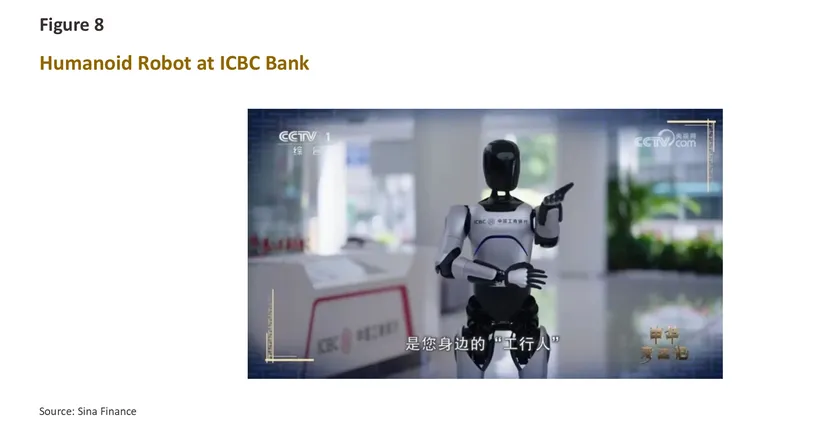
In the financial sector, HSBC became the first bank in the United States to deploy Pepper robots in 2018 to welcome customers and provide basic information22/ (Figure 7). Meanwhile, ICBC in China has deployed robots to provide information about financial products and guide customers through document completion procedures. Although these applications have improved service efficiency and enhanced customer experience23/ (Figure 8), the robots still operate within predefined instructions and scenarios, limiting their ability to provide complex advice or exercise human-like judgment.
Looking ahead, businesses are expected to deploy humanoid robots across a broader range of applications, extending beyond manufacturing and services to include roles as personal assistants and companions in residential settings.
The Global Humanoid Robotics Market
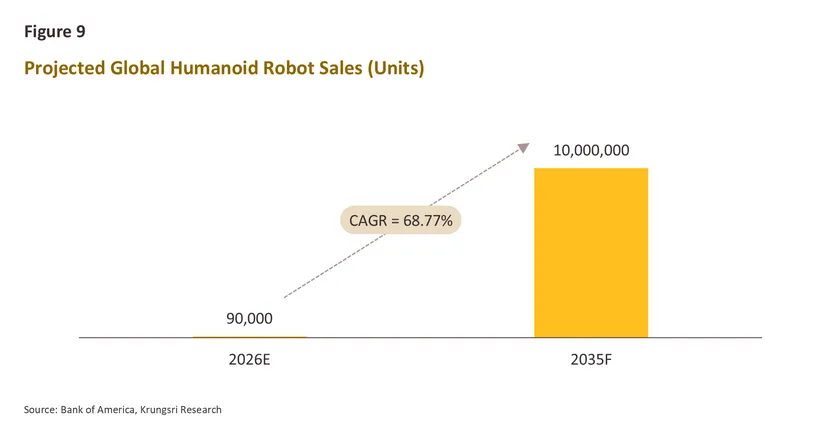
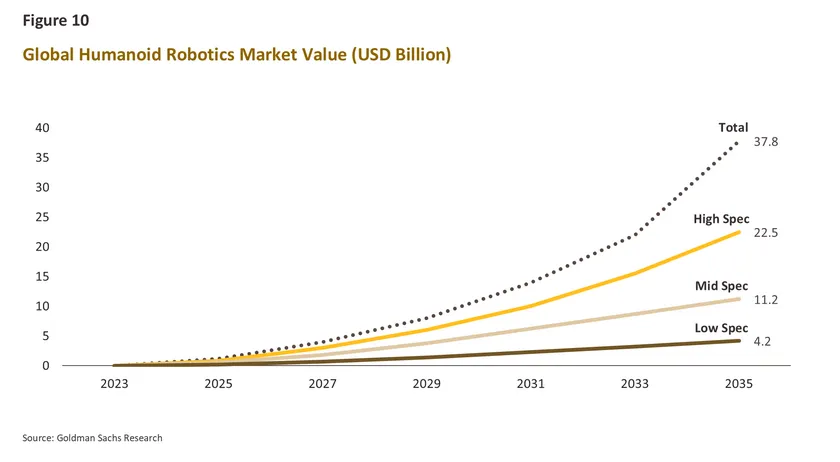
Rapid advances in humanoid robot development have led Bank of America (BofA) to project that global robot sales will increase from 90,000 units in 2026 to 10 million units by 2035, representing a compound annual growth rate (CAGR) of 68.8% (Figure 9). Meanwhile, Goldman Sachs Research estimates that the global humanoid robotics market will reach USD 38 billion by 2035 (Figure 10), up from its previous forecast of just USD 6 billion. In addition, the International Data Corporation (IDC) reported that global humanoid robot shipments reached 25,000 units in the first half of 2026, more than quadrupling from the same period a year earlier. Currently, China is the world's leading manufacturing hub for humanoid robots, supported by its comprehensive supply chain and low production costs. Nearly 90% of global humanoid robot shipments in 2025 came from Chinese manufacturers, particularly AgiBot and Unitree (Source: Axis Intelligence Research). In contrast, the United States holds a competitive advantage in AI software, focusing on the development of high-quality humanoid robots with strong safety features and technological self-reliance, including chip design and advanced semiconductor manufacturing equipment. The country is also home to several leading technology companies at the forefront of advanced AI model development.
Beyond the factors discussed above, several additional drivers are accelerating the development of humanoid robots for commercial applications, including:
- The working-age population is projected to decline steadily worldwide, from 70.9% of the global population in 2020 to just 53.1% by 2100 (Source: UN). In Thailand, the corresponding share is expected to decrease from 64.8% to 59.6% over the same period (Figure 11), reflecting increasingly severe labor shortages across many countries. As businesses face growing challenges in securing sufficient workers while simultaneously seeking ways to improve productivity, humanoid robots are emerging as a potential solution to these challenges.

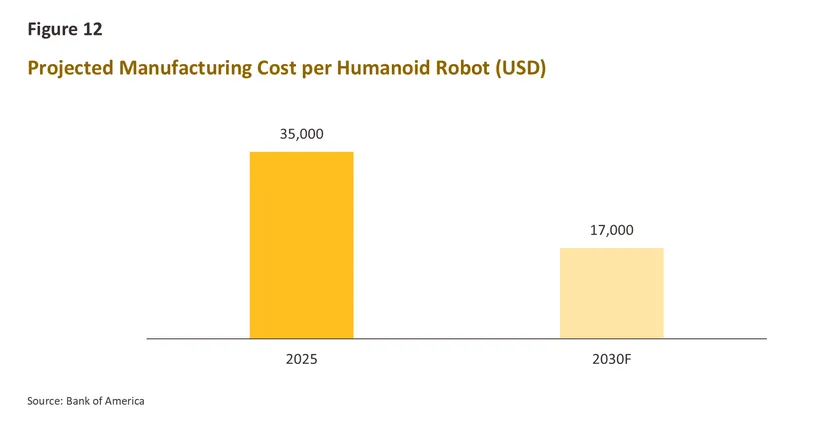
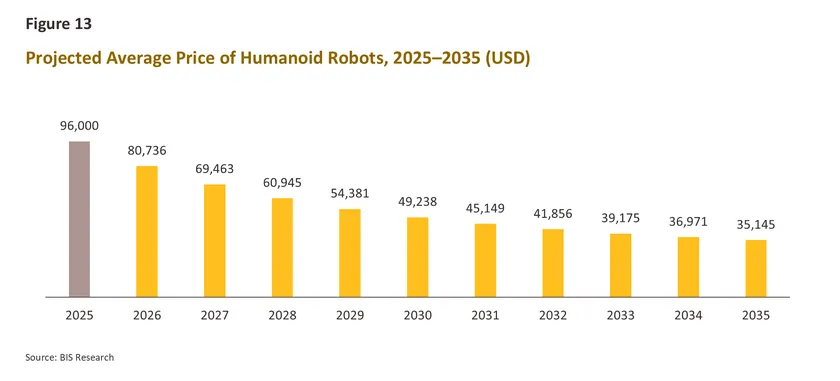
- Humanoid robot prices are expected to decline as component costs fall. Bank of America (BofA) projects that the manufacturing cost of humanoid robots will decrease from USD 35,000 per unit in 2025 to USD 17,000 per unit by 2030,24/ representing a reduction of approximately 51% (Figure 12). This decline is driven by economies of scale resulting from mass production, alongside the ability to leverage established supply chains and technological expertise from the electric vehicle (EV) and AI hardware industries. These industries share key components and technologies, including batteries, motors, sensors, and processing chips. Similarly, BIS Research estimates that the average selling price of humanoid robots will fall by more than 60%, from USD 96,000 per unit in 2025 to just USD 35,145 per unit by 2035. Lower production costs are therefore expected to improve the economic viability of investing in humanoid robots and facilitate their wider adoption (Figure 13).
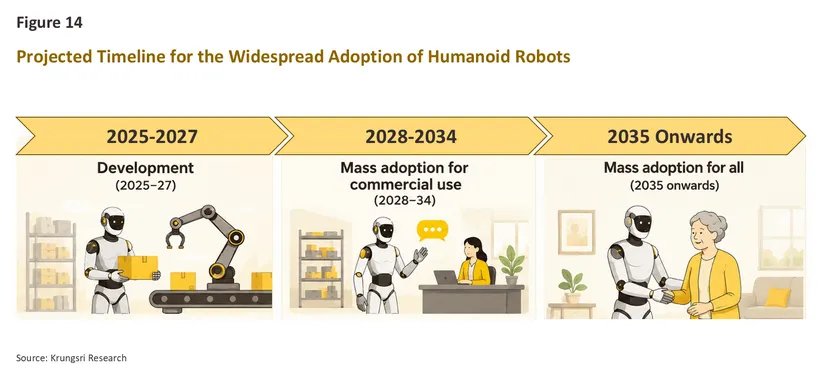
These factors have brought humanoid robots into the spotlight. Bank of America (BofA) expects humanoid robots to achieve mass adoption in commercial applications by 2028, followed by household applications, including elderly care, by 2035 (Figure 14). By 2050, the number of humanoid robots in operation worldwide could reach 300 million units,25/ equivalent to approximately 3.5% of the global population.26/
Robots Are Getting Ready, but Is the World? Risks Associated with Humanoid Robot Adoption
Humanoid robots can make autonomous decisions and perform tasks in the physical world, potentially introducing more complex and far-reaching risks than today's AI systems, which operate primarily in the digital environment. The adoption of humanoid robots therefore requires careful consideration of several key issues, including:
Developing Robot Intelligence Requires Real-World Data27/
Humanoid robot development requires data collected from real-world environments and operations to enable robots to learn and respond appropriately to different situations, such as navigating various environments, manipulating objects, and interacting with humans. However, collecting such data is more complex and challenging than obtaining digital data from the internet. Certain types of data may also be sensitive or raise ethical concerns, such as medical information and data collected within private residences, requiring strict compliance with data protection laws and privacy regulations. Consequently, limitations in the quantity, quality, and diversity of real-world data remain a significant challenge that could constrain the performance, reliability, and safety of humanoid robots.
Regulations and Governance Frameworks Are Still Evolving
In the era of Physical AI, where humans and robots will increasingly work alongside one another,
regulatory standards must address risks to both property and the surrounding environment. The deployment of humanoid robots should therefore be governed by safety standards, governance frameworks, and operational guidelines aligned with international standards, such as ISO 25785-1,
28/ which is currently at the Committee Draft stage. These standards cover key aspects of robot operation, including predictable behavior, safe human–robot interaction, and robot stability. Such regulations may influence the design and application of different types of humanoid robots in the future.
Cybersecurity
The adoption of humanoid robots may introduce new forms of cybersecurity risks, as this technology integrates AI systems, software, sensors, and physical hardware. The consequences of cyberattacks may therefore extend beyond conventional risks, such as data breaches or system disruptions, to directly affect human safety in the physical world. For example, hackers could compromise robots to steal sensitive information or remotely control their operations, potentially causing robots to perform unauthorized actions or inflict harm on people and property. Organizations deploying humanoid robots must therefore prioritize cybersecurity measures alongside physical safety to mitigate potential risks throughout the robots' operational lifecycle.
Human-Robot Collaboration
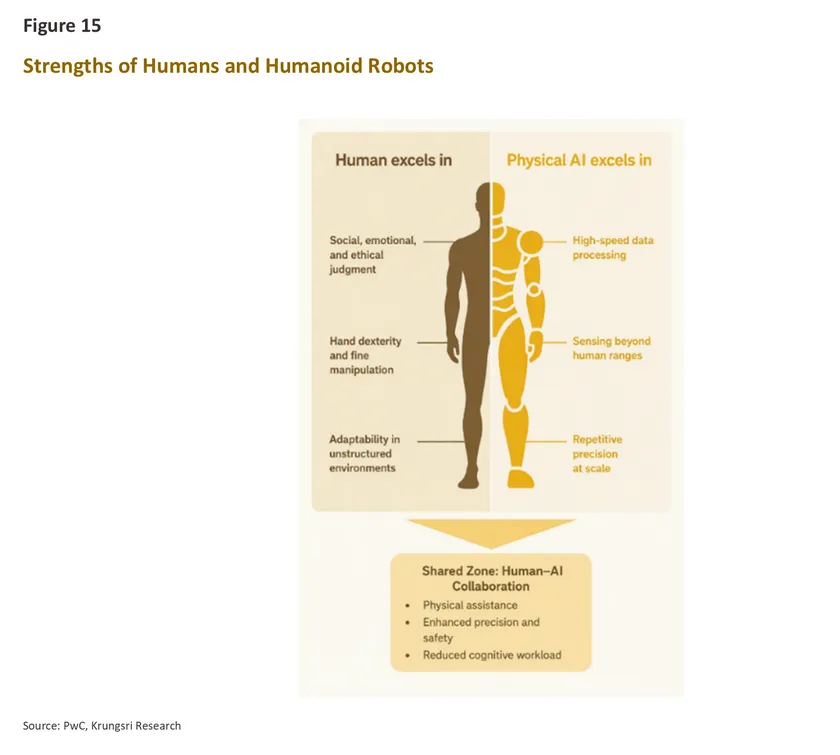
Although humanoid robots are not intended to diminish the role of humans, their adoption will require workers to shift toward tasks involving analytical thinking, creativity, and interpersonal interaction (the human touch), which are the skills that robots cannot fully replicate. Organizations should therefore accelerate workforce development to equip employees with the skills needed for new forms of human–robot collaboration. This includes encouraging employees to focus on higher-value or specialized tasks, robot supervision and control, communication, and complex problem-solving. Such efforts will be essential to building trust and fostering long-term acceptance of human–robot collaboration.
Acceptance of Robots in Everyday Life
At present, the use of robots in activities involving close human interaction has yet to gain widespread acceptance, particularly in family caregiving, healthcare services, and tasks that require trust and interpersonal relationships. These are areas where humans retain a distinct advantage. A 2026 survey conducted in the United Kingdom found that only 5% of respondents would be willing to allow robots to care for patients, older adults, and children, while more than 46% expressed fear about having robots as coworkers.
29/ These findings suggest that although people are becoming more receptive to robots in the workplace, concerns remain about living and interacting alongside them. Therefore, integrating robots into everyday life will require building confidence in their safety while ensuring positive user experiences to foster long-term acceptance of human–robot coexistence.
Krungsri Research's View
Although humanoid robots are still at an early stage of development, advances in AI technology and growing pressures from labor shortages are positioning robotics as a key industry of the future. However, widespread adoption will depend on whether robot prices, maintenance costs, and reliability reach levels that are acceptable to users and economically viable for businesses.
For businesses, this may be just the beginning of the preparation process. Organizations should assess their strategies and technology investments to identify ways to seamlessly integrate Physical AI into their operations. Doing so could enhance their competitive advantage and operational flexibility while strengthening their ability to respond to pressures arising from global megatrends.
Although Thailand is not a leader in robotics development, the country is well positioned to benefit from its role as a major manufacturing hub for the automotive, electronics, logistics, and data center industries, which form part of the robotics industry supply chain. Thailand can also leverage Physical AI technologies, such as intelligent robots and real-time data analytics systems, to strengthen its national competitiveness while helping address structural challenges arising from increasingly severe labor shortages.
Safety and ethical considerations are among the key challenges in adopting humanoid robots in business operations, and are no less important than technological advancements. In 1942, writer Isaac Asimov introduced the
“Three Laws of Robotics,” which serve as a foundational ethical framework for robots. These laws state that
(1) a robot must not harm a human being; (2) a robot must obey human orders unless they conflict with the First Law; and (3) a robot must protect its own existence as long as doing so does not conflict with the First or Second Law.30/ However, in the era of Physical AI, robots may introduce increasingly complex risks, such as financial losses, privacy violations, and the spread of misinformation. This has prompted discussions within the technology community about additional ethical principles, such as “robots must not deceive humans” and “humans must retain control over robot decision-making.” Looking ahead, appropriate and timely standards and regulatory frameworks will be essential to ensure that humans can effectively control, monitor, and oversee robot operations.
References
English
Bank of America Institute. (2026). “Physical AI, Part 2: Humanoid Robots.” Retrieved August 6, 2026, from https://institute.bankofamerica.com/content/dam/transformation/physical-ai-part-2.pdf
Capgemini Research Institute. (2026). “Physical AI: Taking Human-Robot Collaboration to the Next Level.” Retrieved August 5, 2026, from https://www.capgemini.com/wp-content/uploads/2026/05/CRI_Physical-AI-Report-8th-draft-web-version.pdf
Chen, M. & Liu, K. (2025). “Insurance Policy for Humanoid Robots.” Retrieved September 12, 2026, from https://www.chinadaily.com.cn/a/202512/12/WS693b6d05a310d6866eb2e404.html
Chin, M. & Goh, S. (2026). “Japan Airlines Begins Humanoid Robot Trials at Tokyo’s Haneda Airport as Labor Shortages Bite.” Retrieved August 26, 2026, from https://www.cnbc.com/2026/05/01/japan-airlines-humanoid-robots-haneda-labor-shortage.html
Circus Group. (2026). “Circus and MMV Leasing Enter Strategic Financing Partnership to Scale AI Robotics Systems.” Retrieved September 10, 2026, from https://www.circus-group.com/articles/circus-and-mmv-leasing-enter-strategic-financing-partnership-to-scale-ai-robotics-systems
Edwards, D. (2026). “The Engineering Challenges Behind Humanoid Robots: Locomotion, Dexterity and Power Efficiency.” Retrieved 21 October 5, 2026, from https://roboticsandautomationnews.com/2026/03/12/challenges-in-bipedal-locomotion-dexterous-manipulation-and-power-efficiency/99584/
Hansen, S. & Xu, P. (2026). “Introducing Gemini Robotics ER 2.” Retrieved September 11, 2026, from https://blog.google/innovation-and-ai/models-and-research/google-deepmind/gemini-robotics-er-2/
International Organization for Standardization (ISO). (2026). “ISO/CD 25785-1: Robotics — Safety Requirements for Dynamically Stable Industrial Mobile Robots (Legged, Wheeled, or Other Forms of Locomotion) — Part 1: Robots.” Retrieved November 6, 2026, from https://www.iso.org/standard/91469.html?.
Jang, W. J. (2026). “South Korea Invests 700 Billion Won in Manufacturing AI Transformation.” Retrieved October 19, 2026, from https://www.chosun.com/english/industry-en/2026/02/25/HTWOBHAJRRCXBOJQZNCJNS3W4A/
Jiang, X. (2026). “Finance Sector Keen to Boost Robotics Industry.” Retrieved October 6, 2026, from https://en.qstheory.cn/2026-06/12/c_1190143.htm
Koetsier, J. (2026). “OpenAI Is Making a Humanoid Robot. Sam Altman Says Everyone Should Have One.” Retrieved October 5, 2026, from https://www.forbes.com/sites/johnkoetsier/2026/09/03/openai-is-making-a-humanoid-robot-everyone-should-have-one/
Lee, M. J. (2026). “Japan to Buy Nvidia Rubin Chips to Build an AI for Robots.” Retrieved September 15, 2026, from https://www.bloomberg.com/news/articles/2026-07-16/japan-to-buy-nvidia-rubin-chips-to-build-sovereign-ai-for-robots
Li, X. & Zhang, W. (2026). “As Embodied Intelligent Robots Proliferate in China, a Vast Insurance Market Emerges.” Retrieved September 16, 2026, from https://www.globaltimes.cn/page/202604/1360004.shtml
Long, T. (2026). “The U.S. Humanoid Robot Industry Is Falling Behind.” Retrieved October 13, 2026, from https://itif.org/publications/2026/07/14/the-u-s-humanoid-robot-industry-is-falling-behind/
Mingyang, T. (2025). “China’s MIIT Sets Up Standardization Committee for Humanoid Robots to Reinforce Sector’s Global Competitiveness.” Retrieved November 5, 2026, from https://www.globaltimes.cn/page/202512/1351625.shtml
Ministry of Trade, Industry and Resources (MOTIR). (2026). “MOTIR Maps Out the Future of K-Humanoid Robotics.” Retrieved September 17, 2026, from https://english.motir.go.kr/eng/article/EATCLdfa319ada/2521/view?pageIndex=1&bbsCdN=2
Schadt, T. & Niebuhr, J. (2026). “Physical AI: Intelligence in Motion.” Retrieved September 13, 2026, from https://www.strategyand.pwc.com/de/en/industries/telecommunication-media-and-technology/physical-ai.html
Shamsuddoha, M., Nasir, T. & Fawaaz, M. S. (2025). “Humanoid Robots like Tesla Optimus and the Future of Supply Chains: Enhancing Efficiency, Sustainability, and Workforce Dynamics.” Retrieved October 5, 2026, from https://www.mdpi.com/2673-4052/6/1/9
Streeter, B. (2019). “Seriously Successful Results From HSBC Bank’s Branch Robot Rollout.” Retrieved August 14, 2026, from https://thefinancialbrand.com/news/banking-branch-transformation/hsbc-banks-branch-robot-pepper-digital-transformation-phygital-84245
TechRadar. (2026). “‘Ask People If They Want to Be Cared for by a Robot, and Most Say No’: People Are Warming Up to Robots at Work, but They Don’t Want Them in Hospitals or Schools.” Retrieved November 6, 2026, from https://www.techradar.com/pro/ask-people-if-they-want-to-be-cared-for-by-a-robot-and-most-say-no-people-are-warming-up-to-robots-at-work-but-they-dont-want-them-in-hospitals-or-schools?utm
The Editors of Encyclopaedia Britannica. (2026). “Three Laws of Robotics.” Retrieved September 26, 2026, from https://www.britannica.com/topic/Three-Laws-of-Robotics
The Robot Report. (2024). “Vision-Language-Action Models Are the Next Leap in Autonomous Robotics.” Retrieved September 5, 2026, from https://www.therobotreport.com/vision-language-action-models-are-the-next-leap-in-autonomous-robotics/
Todorova, Z. (2026). “10 Things You Need to Know About Humanoid Robots.” Retrieved September 8, 2026, from https://www.ib.barclays/our-insights/10-things-you-need-to-know-about-humanoid-robots.html
Torka, B. (2026). “BMW Group Advances the Use of Physical AI in Production with Figure 03 Project in Spartanburg.” Retrieved August 28, 2026, from https://www.press.bmwgroup.com/global/article/detail/T0458778EN/bmw-group-advances-the-use-of-physical-ai-in-production-with-figure-03-project-in-spartanburg?language=en
UBS. (2026). “Beyond the Hype: The Real Economic Upside of AI and Robotics.” Retrieved September 20, 2026, from https://www.ubs.com/global/en/investment-bank/insights-and-data/articles/ai-and-robots.html
United Nations, Department of Economic and Social Affairs, Population Division. (2024). “World Population Prospects 2024.” Retrieved November 6, 2026, from https://population.un.org/wpp/downloads?folder=Standard%20Projections&group=Most%20used
Thai
TNN Thailand. (2025). “UBTECH ส่งมอบหุ่นยนต์ฮิวแมนนอยด์ Walker S2 ล็อตใหญ่ชุดแรกของโลก ตอบรับคำสั่งซื้อทะลุ 3,650 ล้านบาท.” Retrieved October 15, 2026, from https://www.tnnthailand.com/tech/217450/
ผู้จัดการออนไลน์. (2026). “วิเคราะห์ XPENG เปิดสายการผลิต ‘หุ่นยนต์สร้างหุ่นยนต์’ แห่งแรกของโลก.” Retrieved October 21, 2026, from https://mgronline.com/cyberbiz/detail/9690000089750
1/ Source: Vision-language-action models are the next leap in autonomous robotics | The Robot Report
2/ A Neural Processing Unit (NPU) is a specialized chip designed specifically for AI processing tasks.
3/ Edge computing refers to processing data directly on a device rather than transmitting it to a cloud-based system.
4/ LiDAR is a type of sensor used to measure distances and create three-dimensional (3D) representations of the surrounding environment.
5/ An actuator converts energy into mechanical motion.
6/ Source: 10 things you need to know about humanoid robots | Barclays IB
7/ Source: Humanoid Robotics Commercialization Trends 2026 | IDC
8/ Source: Gemini Robotics ER 2 | News from Google
9/ Source: OpenAI Is Making A Humanoid Robot. Sam Altman Says Everyone Should Have One | Forbes
10/ Source: วิเคราะห์ XPENG เปิดสายการผลิต "หุ่นยนต์สร้างหุ่นยนต์" แห่งแรกของโลก | mgronline
11/ Source: UBTECH ส่งมอบหุ่นยนต์ฮิวแมนนอยด์ Walker S2 ล็อตใหญ่ชุดแรกของโลก ตอบรับคำสั่งซื้อทะลุ 3,650 ล้านบาท | TNN
12/ Source: China’s MIIT sets up standardization committee for humanoid robots to reinforce sector’s global competitiveness | Global Times
13/ Source: The U.S. Humanoid Robot Industry Is Falling Behind | Blogs | Jul 14, 2026 | ITIF
14/ Source: Japan to Buy Nvidia Rubin Chips to Build an AI for Robots | Bloomberg
15/ Source: MOTIR Maps Out the Future of K-Humanoid Robotics, South Korea Invests 700 Billion Won in Manufacturing AI Transformation | Ministry of Trade, Industry and Resources
16/ Humans have 20–27 degrees of freedom (DoF) in their hands, enabling independent and precise movements of the fingers and wrists.
17/ Source: The engineering challenges behind humanoid robots: locomotion, dexterity and power efficiency | Robotics & Automation News
18/ Source: Physical AI : Taking human-robot collaboration to the next level | Capgemini
19/ Source: Humanoid Robots like Tesla Optimus and the Future of Supply Chains: Enhancing Efficiency, Sustainability, and Workforce Dynamics | MDPI
20/ Source: Japan Airlines to trial robots at Tokyo's Haneda airport to load baggage | CNBC
21/ Source: BMW Group advances the use of Physical AI in production with Figure 03 project in Spartanburg | BMW Group
22/ Source: Seriously Successful Results From HSBC Bank's Branch Robot Rollout | The Financial Brand
23/ Source: Finance sector keen to boost robotics industry | Qiushi
24/ Source: Physical AI, part 2: Humanoid robots | Bank of America Institute
25/ Source: Technology - AI and robots | UBS Global
26/ Population projections based on World Population Prospects |United Nations
27/ Real-world data refers to data collected from real-world situations, including human behavior and environmental conditions.
28/ Source: Safety requirements for dynamically stable industrial mobile robots (legged, wheeled, or other forms of locomotion) | International Organization for Standardization
29/ Source: ‘Ask people if they want to be cared for by a robot, and most say no': People are warming up to robots at work - but they don't want them in hospitals or schools | TechRadar
30/ Source: Three laws of robotics | Definition, Isaac Asimov, & Facts | Britannica