EXECUTIVE SUMMARY
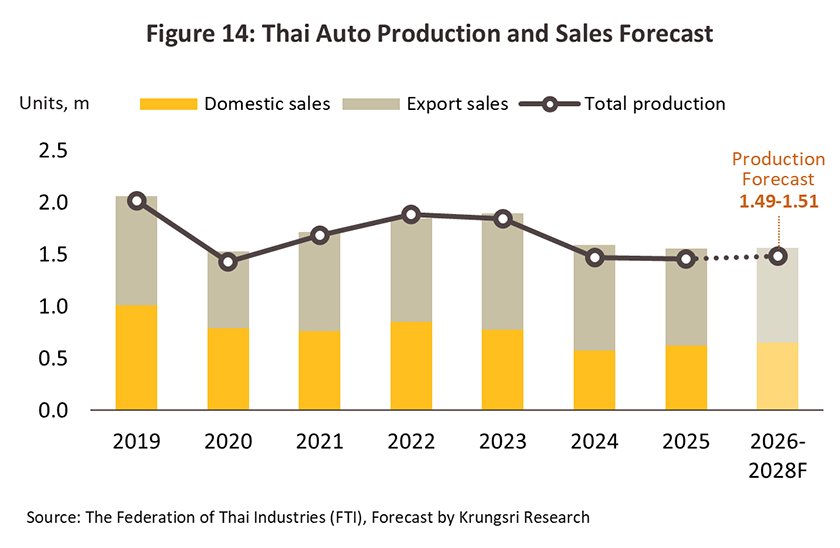
Automobile production is projected to expand gradually by 0.5-1.5% per year during 2026-2028, driven by increased manufacturing investment and excise tax reductions for hybrid vehicles (HEVs and MHEVs). Additional support will come from compensatory production of passenger BEVs under the EV 3.5 scheme, with manufacturers required to produce 2-3 BEVs domestically for every BEV previously imported under the EV 3.5 scheme, THB 200 billion financial support for local EV manufacturers under the government's THB 200 billion clean energy project loan program, and the expansion of cleaner-energy ICE pickup truck production. Meanwhile, domestic sales are expected to grow by an average of 2.0-3.0% per year, bolstered by a new pickup truck replacement cycle, rising private-sector investment, sales promotions for domestically produced passenger BEVs under the EV 3.5 scheme, and lower road taxes for HEVs and PHEVs. However, exports are projected to decline by an average of -1.0% to -2.0% per year, weighed down by stricter environmental standards in trading partner countries, accelerated clearance of excess Chinese EV inventories, and the prolonged impact of conflicts in the Middle East.
Krungsri Research view
During 2026-2028, overall automaker performance is expected to grow modestly, particularly in 2026. Prolonged conflict in the Middle East is likely to weaken purchasing power, especially in this key export market. Costs of several raw materials, including aluminum, alloys, plastics, rubber, and steel, are also expected to rise, while shortages of certain key parts and materials may occur periodically. In addition, intensifying price competition from Chinese EVs will remain a challenge. Nevertheless, industry performance is projected to gradually improve in 2027-2028, with segment-specific outlooks as follows:
-
ICE passenger car manufacturers are likely to face headwinds from the accelerating global transition toward electric vehicles, stricter vehicle safety requirements, gradual increases in excise tax rates, and the implementation of Euro 6 standards, all of which will raise production costs.
-
EV manufacturers will benefit from lower excise taxes, financial support under the THB 200 billion clean energy loan decree, and continued investment incentives across related supply chains. However, China's export controls on rare earth minerals, a key input for EV production, may pose challenges.
-
1-ton pickup truck manufacturers will be supported by a new domestic replacement cycle following delayed purchases in previous years. However, weak purchasing power, particularly in the agricultural sector, which may be affected by more severe El Niño droughts, could weigh on performance.
-
Other commercial vehicle manufacturers will see mixed prospects. Truck manufacturers are expected to benefit from rising private investment, while bus and van manufacturers are likely to remain challenged by slow tourism recovery, particularly in 2026, when tourist arrivals are projected to decline from the previous year.
Overview
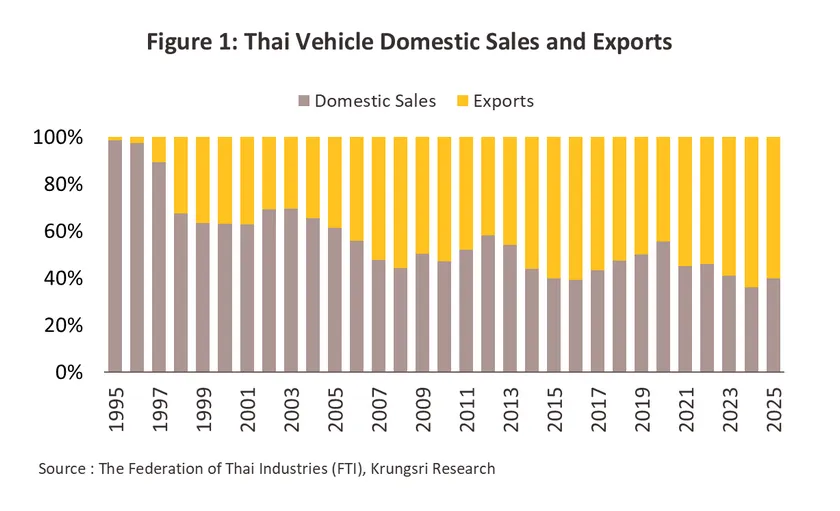
Thailand's automotive industry has benefited from continuous government support, with a range of measures introduced to attract investment in vehicle assembly, including tax incentives, supply chain development through local content requirements, the promotion of foreign direct investment and technology transfer from multinational corporations, and support for investment in export-oriented manufacturing. As a result, the industry's export-oriented production structure has steadily expanded, with exports accounting for an average of 56% of total output during 2015-2025 (Figure 1). This has been achieved through investment promotion policies focused on vehicle segments where Thailand holds competitive advantages through its well-established supply chains (Product Champion), as follows.
1-ton Pickup Truck Production Promotion Policy
During 1997-2008, the government promoted 1-ton pickup trucks as the country's first Product Champion, introducing incentives to attract major global automakers to establish production bases in Thailand. These measures were backed by demand stimulus policies, including maintaining diesel prices below gasoline prices and setting pickup truck excise tax at 3%, compared with 30-50% for passenger cars. As a result, commercial vehicle production accounted for over 70% of Thailand's total automobile output.
Eco-car Production Promotion Policy
The government promoted fuel-efficient passenger cars, or Eco-cars, as the country's second Product Champion during 2009-2015 through two rounds of tax incentives to attract investment, with export production requirements attached: Eco-car Phase I (2009) and Eco-car Phase II (2015). The program was further supported by (i) advances in gasoline engine technology, enabling the use of ethanol-blended fuel (gasohol), (ii) government policies promoting biofuel use across all vehicle segments, including Eco-cars, through subsidized gasohol prices, (iii) eligibility for excise tax rebates under the First Car Buyer Scheme1/ during 2012-2013, and (iv) the 2016 excise tax restructuring, which linked tax rates to CO2 emissions and engine size. As a result, Eco-cars, which emit relatively low levels of CO2, became more affordable as excise tax rates were reduced from 17% to 12-15%. However, from 2026 onward, the Eco-car excise tax structure will be revised to 13% for vehicles emitting less than 100 g/km of CO2 (under the Eco-car Phase II criteria) and equipped with Advanced Driver Assistance Systems (ADAS) as required, with the rate rising by 1% every two years to 15% by 2030, broadly in line with the previous structure. Manufacturers that fail to install ADAS in accordance with government requirements will face a higher tax rate of 25% in 2026, increasing to 30% by 20302/.
Promotion Measures for Battery Electric Vehicle (BEV) Production
The transition of the transport sector toward green energy through EV technology has become one of Thailand's key energy policy priorities. Promoting EVs plays an important role in supporting the country's Net Zero Greenhouse Gas Emissions target by 2050. Following Thailand's ratification of the United Nations Framework Convention on Climate Change (UNFCCC) in 2016, the National Electric Vehicle Policy Committee established EV promotion guidelines under the 30@30 policy. The policy aims to increase zero-emission vehicle (ZEV) production to 30% of total vehicle output and raise EV adoption to 50% of new vehicle registrations by 20303/.
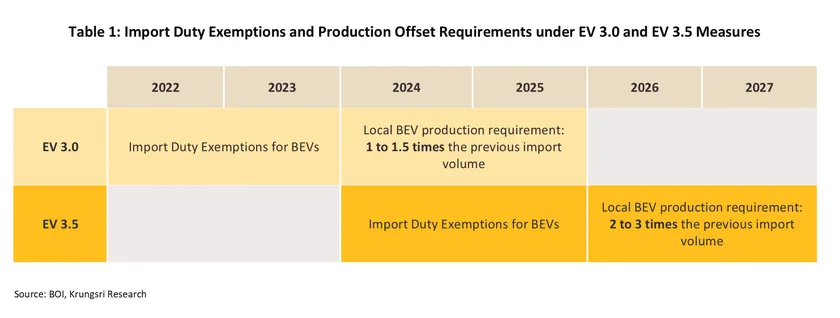
Thailand's EV industry has been promoted under the EV 3.0 scheme (2022–2025) and the EV 3.5 scheme (2024–2027), both aimed at stimulating market growth and supporting investment. Key measures include purchase subsidies of THB 70,000–150,000 per vehicle under EV 3.0 and THB 50,000–100,000 per vehicle under EV 3.5, import duty reductions, excise tax restructuring, and production compensation requirements. Importers of BEVs for domestic sales are required to offset imports through local BEV production at a ratio of 1–1.5 times their previous sales volumes during 2024–2025 under EV 3.0 and 2–3 times during 2026–2027 under EV 3.54/ (Table 1). As a result, Thailand recorded cumulative passenger BEV compensation production of 80,433 units during 2024–20255/, most of which was intended for the domestic market. On July 30, 2025, however, the Committee approved a revision to the compensation criteria for passenger BEVs, allowing vehicles produced for export to be counted at a ratio of 1.5 compensation units per vehicle produced. Effective from August 2025, the measure was introduced to encourage EV manufacturers to expand into export markets. This subsequently helped accelerate passenger BEV exports, lifting total exports to 12,695 units in 2025, equivalent to 5.5% of overall passenger car exports.
Policy Measures for Hybrid Electric Vehicle (HEV) Production
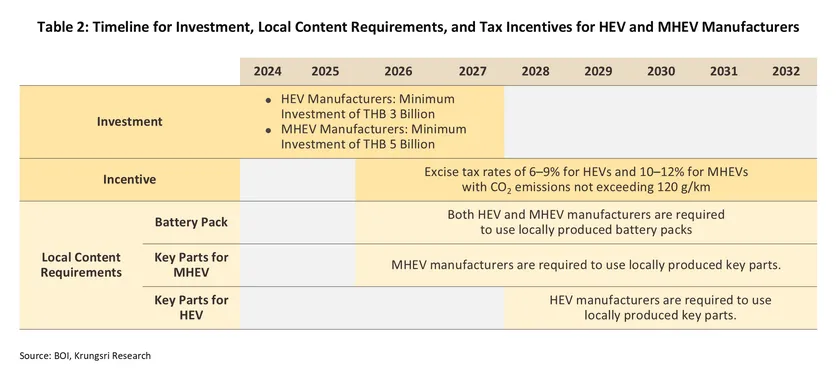
The Board of Investment (BOI) and the National Electric Vehicle Policy Committee (EV Board) approved measures to support Thailand's transition to the EV industry by reducing excise tax rates for hybrid passenger cars and passenger vehicles with up to 10 seats for a period of seven years (2026–2032) (Table 2)6/. The measures are intended to encourage domestic investment and are divided into the following categories:
-
HEVs with CO2 emissions not exceeding 120 g/km are subject to excise tax rates of 6–9%. To qualify for investment incentives, manufacturers must meet three key requirements: (i) a minimum investment of THB 3 billion during 2024–2027, (ii) the use of domestically produced battery packs and other key components specified by the BOI, and (iii) the installation of at least 4 out of 6 Advanced Driver Assistance Systems (ADAS) designated by the BOI.
-
MHEVs (Mild Hybrid Electric Vehicles), or HEVs powered by a low-voltage direct current system of less than 60 volts, with CO2 emissions not exceeding 120 g/km, are subject to excise tax rates of 10–12%. Eligibility conditions include: (i) a minimum investment of THB 5 billion during 2024–2028, (ii) the use of domestically produced battery packs and compliance with BOI requirements regarding the production process of key engine components, and (iii) the installation of at least 4 out of 6 ADAS features specified by the BOI.
Prior to the introduction of the EV 3.0 support measures, Thailand's automotive production capacity stood at approximately 3.9 million vehicles in 20227/. Passenger cars accounted for around 40% of capacity, while commercial vehicles represented the remaining 60%, of which more than 90% were 1-ton pickup trucks. Japanese automakers held an estimated 80% share of national automotive production capacity. During the transition toward the EV industry under the EV 3.0 and EV 3.5 support schemes, 16 passenger BEV manufacturers and 10 electric pickup truck manufacturers established production bases in Thailand, boosting EV production capacity to 386,000 units per year as of July 20258/. Almost all of this capacity was contributed by Chinese automakers. However, the growing popularity of EVs, coupled with intense price competition, has directly affected Japanese automakers (incumbent manufacturers). Companies yet to introduce new models and facing sales pressure have begun shifting from domestic production to importing completely built-up (CBU) vehicles for sale, including Suzuki and Subaru. Meanwhile, major manufacturers that continue to maintain production bases in Thailand have opted to restructure production lines to reduce costs and improve competitiveness, such as Nissan9/.
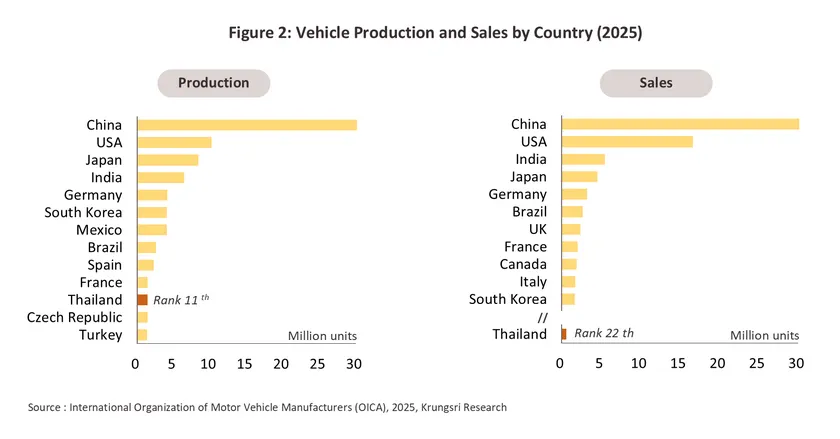
An assessment of Thailand's position in the global automotive industry (based on 2025 data) shows that the country ranked as the world's 11th-largest vehicle producer, the 5th-largest in Asia, and the largest in ASEAN in terms of total vehicle production. Based on domestic sales, Thailand's automotive market ranked 22nd globally, 6th in Asia, and 3rd in ASEAN (Figure 2), as follows:
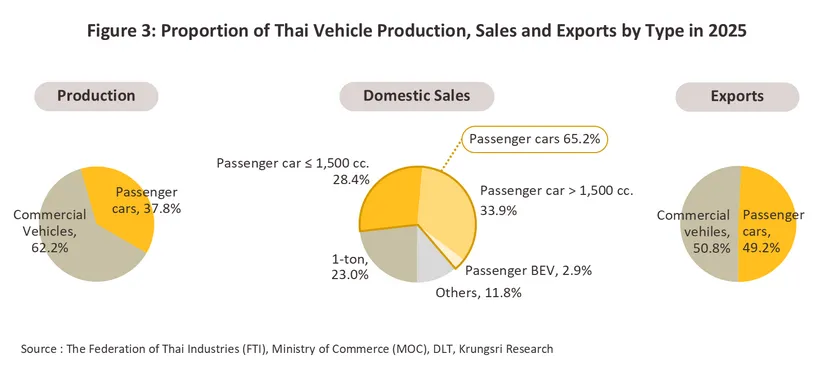
Passenger Cars (2025): Domestic sales accounted for 65.2% of total vehicle sales in Thailand, comprising passenger cars with engine displacements of up to 1,500 cc (including eco-cars), which represented 28.4% of total domestic vehicle sales, passenger cars with engine displacements above 1,500 cc (33.9%), and passenger BEVs (2.9%) (Figure 3). In terms of exports, passenger cars represented 49.2% of Thailand's total automotive export value. Export volumes accounted for 50–60% of passenger car production, with key markets including ASEAN, Australia, and the Middle East.
Commercial Vehicles (2025): Domestic sales accounted for 34.8% of total vehicle sales in Thailand, comprising 1-ton pickup trucks, which represented 23.0% of total domestic vehicle sales, and other commercial vehicles (e.g., trucks, buses, and vans), accounting for 11.8%. In terms of exports, commercial vehicles represented 50.8% of Thailand's total automotive export value. Export volumes of 1-ton pickup trucks accounted for 50–60% of total 1-ton pickup truck production, with Australia, Malaysia, and the Philippines serving as key export markets. Meanwhile, exports of other commercial vehicles (e.g., trucks, buses, and vans) accounted for 10–15% of total production of other commercial vehicles.
Investment Promotion in the Automotive Industry
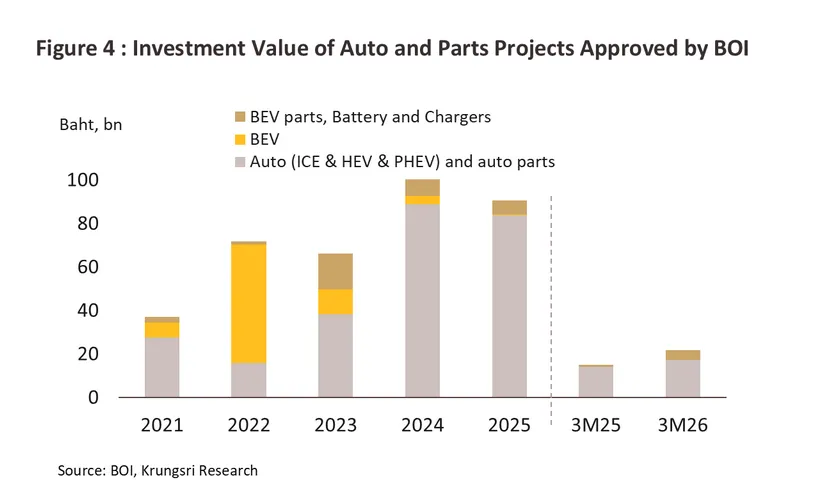
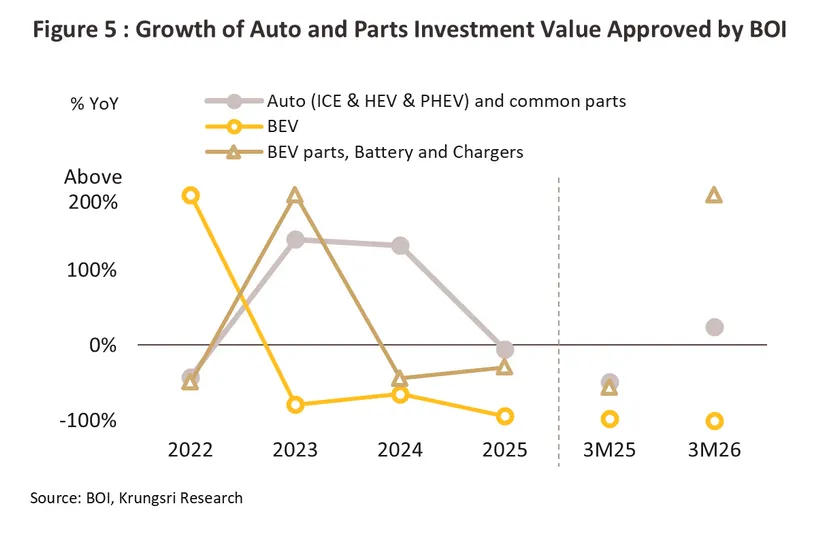
During the first 3 months of 2026, the value of investment promotion approvals in Thailand's automotive and auto parts supply chain rose 45.2% YoY to THB 21.7 billion (Figures 4 and 5), driven by (i) measures supporting investment in HEV and MHEV production during 2024–2027, including a seven-year excise tax reduction scheme (2026–2032), which encouraged automakers to accelerate investments in vehicle production and high-value components such as integrated inverters, traction motors, and reduction gears. As a result, investment promotion approvals for vehicle production (excluding BEVs) and auto parts increased 24.3% YoY to THB 17.3 billion; and (ii) rising investment across the supply chain to support continued growth in domestic EV production and sales, in response to the government's local content policy. This propelled investment promotion approvals for EV components, batteries, and charging equipment 344.9% YoY higher to THB 4.4 billion. However, no additional investment promotion approvals were recorded for BEV production during the quarter, as major Chinese automakers had already invested in assembly plants in Thailand under the EV 3.0 and EV 3.5 schemes. This suggests that Thailand's EV industry has moved beyond the initial investment phase and is gradually transitioning toward expanding its domestic EV parts supply chain.
Situation
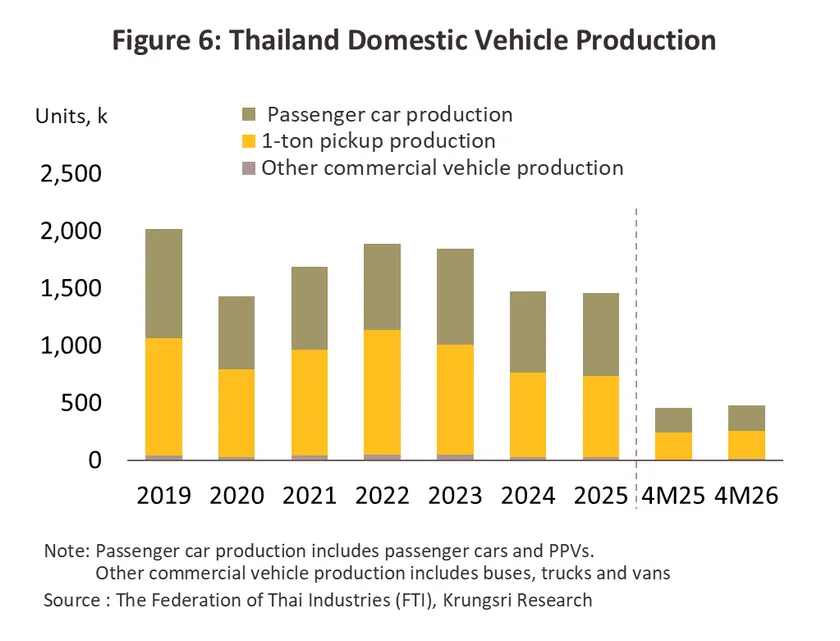
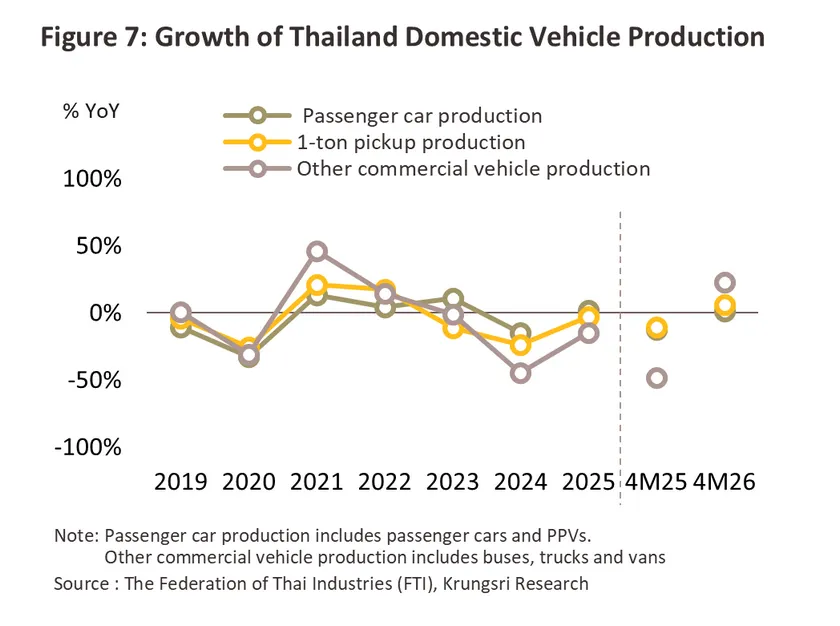
Total vehicle production during the first 4 months of 2026 increased 4.0% YoY to 473,545 units (Figures 6 and 7), underpinned by stronger domestic demand and a decline in finished goods inventories10/. The increase also reflected the normalization of production following the ramp-up in passenger BEV compensation production under the EV 3.0 requirements in late 2025, as well as the EV 3.5 scheme, which requires production at 2 times previously imported vehicles sold domestically. In addition, overall output was boosted by accelerated production of HEVs and commercial vehicles to support continued export growth.
-
Passenger car production increased 1.4% YoY to 216,791 units. Production of passenger cars with engine displacements of up to 1,500 cc rose 1.9% YoY to 93,504 units, driven by new ICE and HEV passenger car and SUV models launched by leading Japanese automakers in Thailand. Offering affordable prices and fuel efficiency, these models appealed to middle-income consumers amid a sluggish economy and high living costs11/. Meanwhile, production of passenger cars with engine displacements above 1,500 cc increased 1.1% YoY to 40,076 units, supported by new HEV models targeting upper-middle-income consumers who remain reluctant to switch to fully electric vehicles. As a result, overall HEV passenger car production rose 7.7% YoY to 74,435 units, while ICE output continued to decline amid high energy costs and the global shift toward EVs. Passenger BEV production also increased 7.2% YoY to 62,366 units, driven by higher production compensation requirements under the EV 3.5 scheme (2026–2027), which raised the required production ratio to 2–3 times prior imports sold domestically from 1–1.5 times under EV 3.0. Production was also lifted by outstanding passenger BEV compensation obligations that some manufacturers chose to fulfill under the higher EV 3.5 requirements12/.
-
Production of 1-ton pickup trucks increased 5.9% YoY to 248,924 units, driven by a 9.2% YoY rise in double-cab pickup truck production to 202,128 units, supported by continued growth in overseas demand. In addition, finished goods inventories of 1-ton pickup trucks declined by an average of -22.9% per year during 2023–2025, prompting manufacturers to increase output to replenish inventories (restocking). However, production of lower-priced single-cab pickup trucks fell -6.6% YoY to 46,796 units, weighed down by weak domestic demand, particularly among lower- to middle-income consumers whose purchasing power remained constrained amid high household debt and an economy yet to fully recover.
-
Production of other commercial vehicles increased 22.9% YoY to 7,830 units, driven by an 83.6% YoY increase in truck production to 5,656 units, primarily for the domestic market. The increase was in line with stronger business investment, as reflected in a 13.7% YoY expansion in the private investment index during the first 5 months of 2026 (Source: Bank of Thailand). It was also bolstered by ongoing public construction projects following the accelerated disbursement of government investment budgets after the FY2026 Budget Act came into effect, which boosted demand for large commercial vehicles. However, production of vans and minibuses fell -34.0% YoY to 2,174 units due to the impact of conflicts in the Middle East, which weighed on the tourism sector and reduced demand for vehicles used to transport tourist
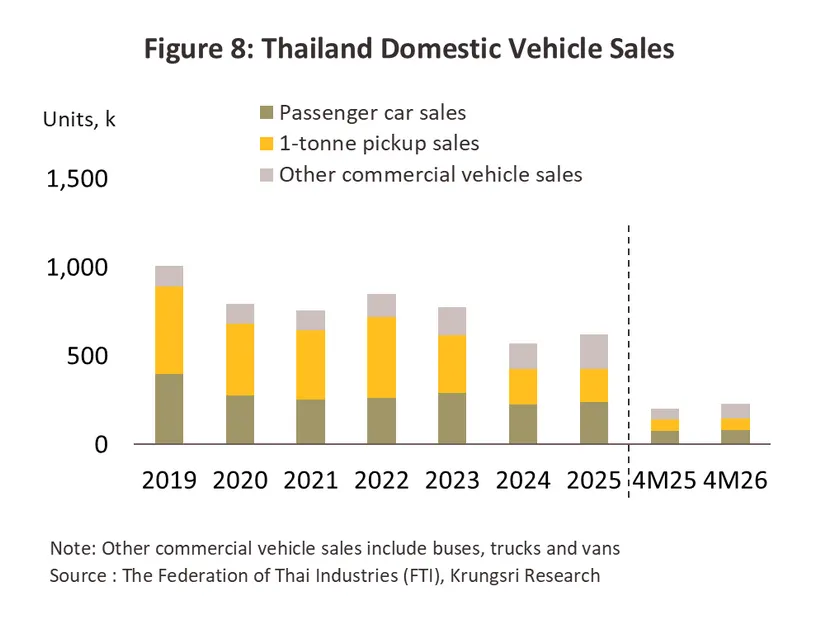
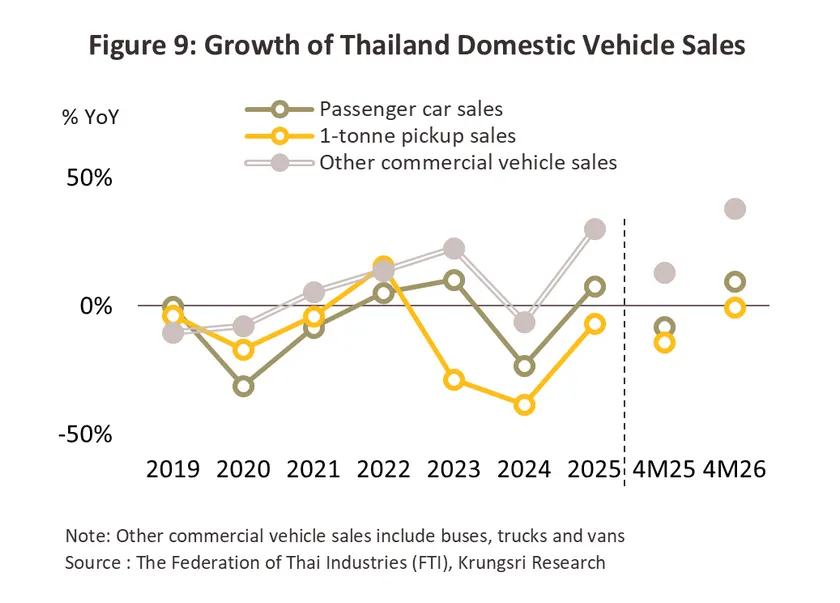
Total domestic vehicle sales during the first 4 months of 2026 increased 15.0% YoY to 230,437 units (Figures 8 and 9), comprising:
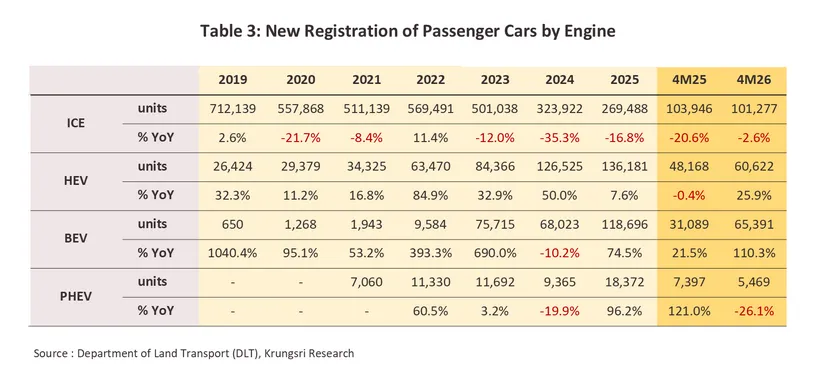
1) Passenger car sales increased 9.7% YoY to 83,508 units, driven by (i) the continued strong purchasing power of upper-middle-income consumers and (ii) more accommodative lending approvals by financial institutions, following a sustained decline in non-performing loans (NPLs) and special mention loans (SMLs) in recent years. Changes in new passenger car registrations in Thailand by fuel type (Table 3) are summarized as follows:
-
ICE passenger cars: New registrations declined -2.6% YoY amid rising EV adoption. Government support measures have encouraged greater imports and local production of small passenger BEVs, particularly by Chinese automakers, which offer more competitive pricing and lower fuel costs than ICE passenger cars.
-
Passenger HEVs: New registrations increased 25.9% YoY, driven by (i) new models from leading Japanese automakers with affordable pricing, improved fuel efficiency, extended driving ranges, and advanced technologies; (ii) reduced excise tax rates for HEVs and MHEVs to 6–9% and 10–12%, respectively, during 2026–203213/, for domestically produced vehicles by BOI-qualified manufacturers; and (iii) rising energy costs, encouraging consumers seeking fuel-efficient vehicles but not yet ready to switch to fully EVs. However, passenger PHEV registrations fell -26.1% YoY to 5,469 units, reflecting fewer new model launches and relatively high prices, as EV buyers shifted to HEVs and BEVs instead.
-
Passenger BEVs: New registrations surged 110.3% YoY, driven by (i) accelerated deliveries of locally produced vehicles registered in January 202614/, the final month for manufacturers to receive the maximum subsidy of THB 150,000 per vehicle under the EV 3.0 scheme; (ii) rising energy cost concerns, which encouraged greater adoption of passenger BEVs, reflected in higher EV bookings at the Motor Show 2026 (March–April 2026)15/ and passenger BEV registrations in April 2026 exceeding levels recorded earlier under the EV 3.5 scheme16/; and (iii) new model launches, particularly by Chinese automakers, offering more advanced technologies and longer driving ranges per charge.
2) 1-ton pickup truck sales declined -0.4% YoY to 63,512 units. Although sales began to recover during September 2025–February 2026 after contracting for 32 consecutive months from January 2023 to August 2025, aided by the launch of new pickup models featuring larger engines with improved fuel efficiency17/, overall sales remained constrained by several factors: (i) the still-fragile financial position of lower- to middle-income consumers, particularly farmers, amid persistent household debt and slow income recovery. As a result, loan approval criteria for pickup truck purchases remain stringent; (ii) an economy yet to fully recover, prompting some SMEs to postpone replacing single-cab 1-ton pickup trucks used for transporting raw materials and goods; and (iii) rising fuel costs stemming from conflicts in the Middle East, which led some consumers to delay purchases of fuel-intensive pickup trucks. As a result, sales in April 2026 fell -9.6% YoY.
3) Other commercial vehicle sales increased 37.9% YoY to 83,417 units, comprising:
-
Multipurpose and four-wheel-drive commercial vehicles (including PPVs, SUVs, MPVs, and four-wheel-drive pickup trucks) increased 44.1% YoY to 73,551 units, supported by more accommodative lending approvals by financial institutions. Demand remained strong among upper-middle-income consumers, who retain solid purchasing power and prefer larger vehicles for multipurpose use, such as family travel and carrying luggage.
-
Buses, trucks, and vans increased 4.5% YoY to 9,866 units, driven by growth in private sector investment, particularly in industries with strong growth potential and strategic economic zones. BOI-approved investment promotion value grew by an average of 46.8% annually during 2023–2025, totaling THB 3.3 trillion, increasing demand for commercial trucks. However, sales of some vans and buses were affected by declining domestic tourist numbers, prompting related businesses to postpone replacing vehicles used for tourist transportation.
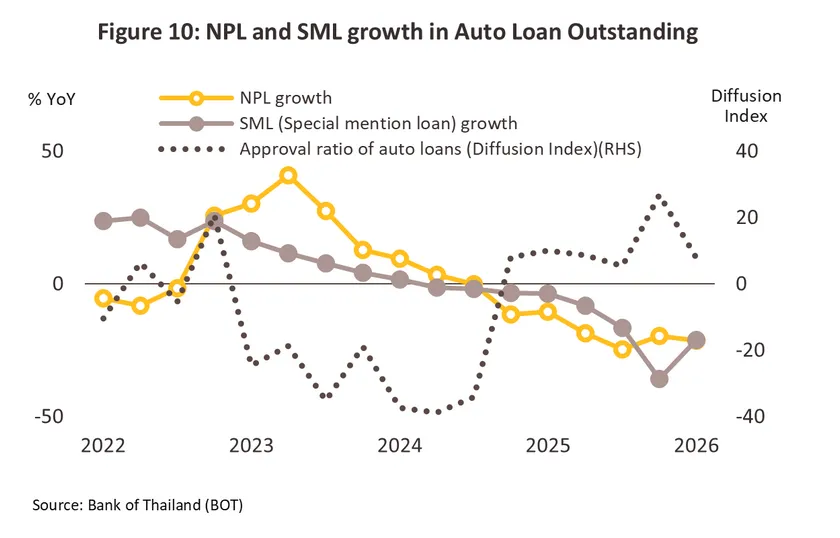
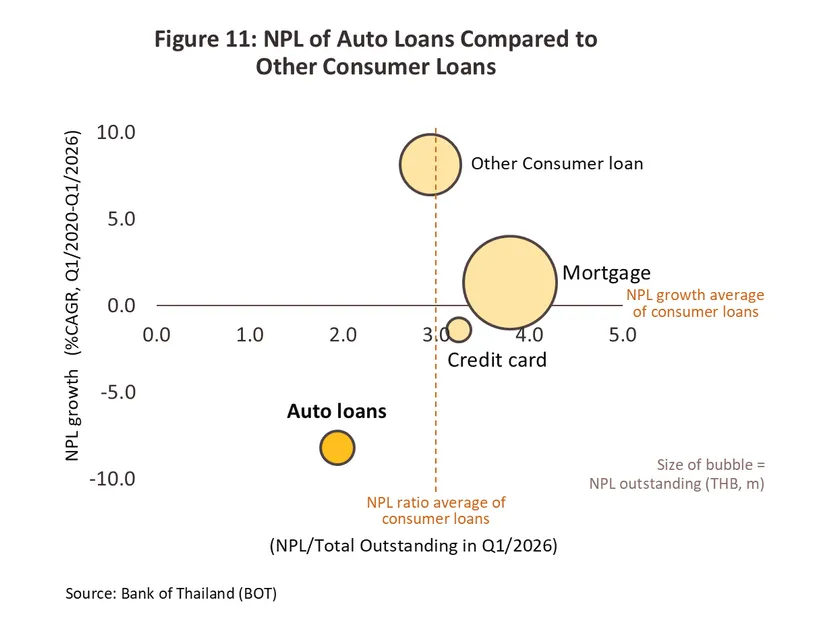
The quality of non-performing loans (NPLs) and special mention loans (SMLs) in Thailand’s auto loan portfolio continued to improve, declining steadily from their peak levels in Q2 2024. In Q2 2026, NPLs fell -21.5% YoY to THB 15 billion, accounting for 1.9% of total auto loans, while SMLs declined -21.2% YoY to THB 100 billion, equivalent to 13.4% of total auto loans (Figure 10). The improvement was largely driven by ongoing measures implemented by financial institutions to prevent loans from becoming non-performing (NPL prevention measures), including debt payment holidays, loan restructuring programs, and stricter underwriting standards for new lending. Moreover, compared with other categories of personal loans, auto loans showed stronger signs of recovery. As of Q1 2026, the NPL ratio for auto loans stood at 1.9%, lower than the 3.5% average for other personal loan segments (Figure 11). This has prompted financial institutions to gradually ease approvals for new auto loans since Q4 2024, reflected in the positive Auto Loan Approval Diffusion Index, which remained at 7.7 in Q1 2026 (Source: Bank of Thailand).
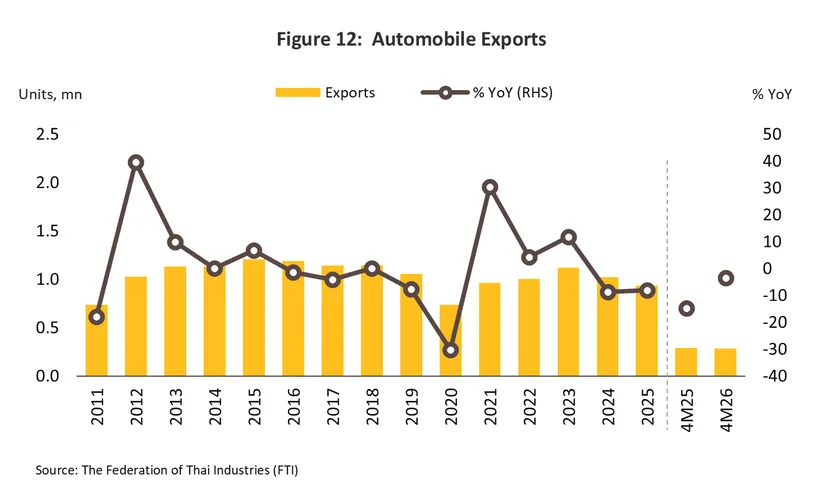
Exports declined -3.5% YoY to 280,184 units (Figure 12) pressured by several factors: (i) conflicts in the Middle East, which led to the closure of the Strait of Hormuz and directly disrupted vehicle exports to the region, a key export market accounting for 16.9% of total export value in 2025. As a result, vehicle exports from Thailand to the Middle East plunged -91.8% YoY in April 202618/; (ii) aggressive export market expansion by Chinese manufacturers of low-cost EVs, resulting in Thailand losing market share in key trading partners; and (iii) stricter environmental regulations in major export markets, including Japan, Europe, and Australia19/, where tighter emissions and exhaust standards have rendered some conventional ICE models produced in Thailand ineligible for export. Nevertheless, Thailand's passenger BEV exports benefited from investment promotion measures for HEVs and MHEVs, which require the installation of ADAS, increasingly valued across many export markets. At the same time, revised compensation production rules for passenger BEVs produced for export (each exported vehicle counts as 1.5 compensation units) have encouraged new EV manufacturers in Thailand to expand overseas sales to meet compensation targets.
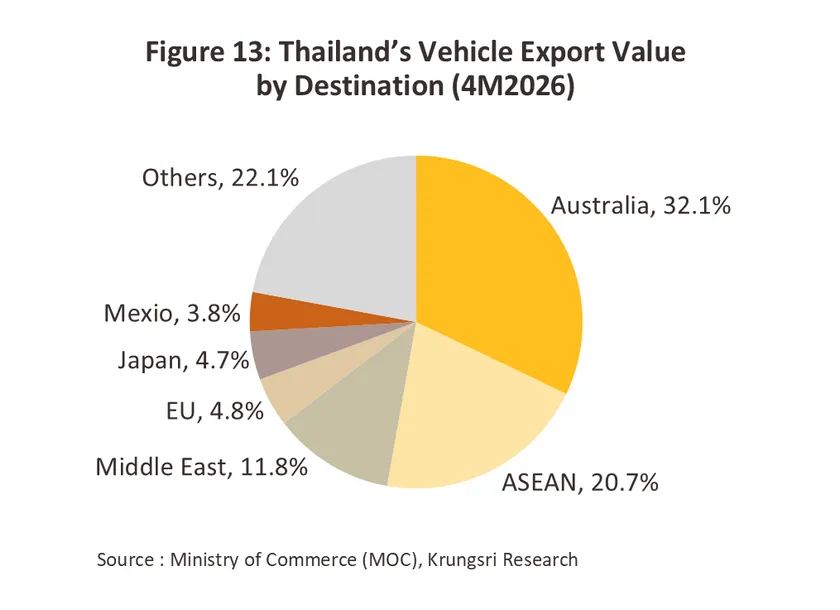
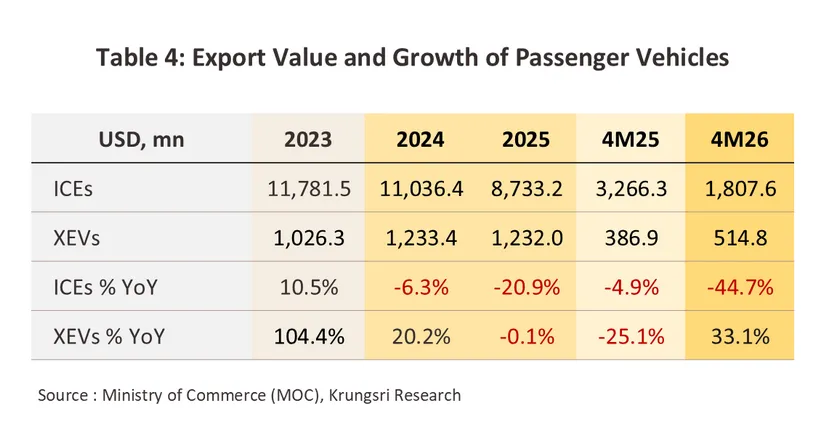
An analysis by market (Figure 13) shows that Australia, ASEAN, and the Middle East remained Thailand's top three automotive export destinations, accounting for 32.1%, 20.7%, and 11.8% of total automotive export value, respectively. By vehicle type (Table 4), continued growth in global EV demand reduced Thailand's ICE passenger car export value by -44.7% YoY to USD 1,807.6 million. In contrast, passenger XEV export value continued to expand, reaching USD 514.5 million, led by passenger BEV exports, which surged 984.2% YoY to 7,156 units, and passenger HEV exports, up 62.9% YoY to 27,759 units. Meanwhile, passenger PHEV exports totaled 649 units, where no exports were recorded during the same period last year.
Outlook
During 2026–2028, production is projected to expand gradually by 0.5–1.5% per year to 1.49–1.51 million units annually (Figure 14 and Table 5), driven by the following factors:
-
Expanded HEV and MHEV production investment by Japanese automakers with established manufacturing bases in Thailand will be supported by continued government investment promotion measures during 2024–2027, excise tax reductions during 2026–2032, and incentives across the supply chain, particularly for high-value HEV components (e.g., integrated inverters, traction motors, and reduction gears) as well as key ADAS components and modules20/.
-
Passenger BEV compensation production under the EV 3.5 scheme will continue to support overall output, as the scheme requires production at a ratio of 2–3 times the volume of BEVs imported for domestic sale during 2024–2025. Additional support will come from outstanding compensation production requirements that have yet to be fulfilled under EV 3.0.
-
Financial support for domestic EV manufacturers will help facilitate the transition toward clean energy in the transport sector. EV production is among the sectors expected to receive funding under the THB 200 billion loan decree for clean energy projects, which is anticipated to begin implementation in 202621/.
-
Capacity expansion for ICE pickup truck production by long-established manufacturers in Thailand will improve production efficiency, increase the use of clean energy in manufacturing processes, and support the development of new pickup truck models compliant with Euro 6 emissions standards for both domestic and export markets, where environmental requirements are becoming increasingly stringent22/
However, Thailand’s automakers are expected to face challenges from rising raw material and component costs, as well as potential shortages of certain components. Key risks include: (i) the prolonged conflict in the Middle East, which may continue to disrupt supply routes for automotive raw materials. Some materials have remained in tight supply since April 2026, when several smelters in the region were damaged by the conflict, including aluminum (used in wheels and body parts)23/, aluminum alloys and secondary alloys derived from scrap metal (used in engine manufacturing) 24/, plastics—particularly polyethylene and polypropylene (used in a wide range of automotive components)25/, rubber (used in tires and other parts), and steel (used in various automotive applications)26/; and (ii) China’s export controls on rare earths, which could increase the risk of supply chain disruptions affecting modern vehicle motors that rely on rare earth materials in multiple components27/. The impact is expected to be more pronounced for EVs, which use approximately twice as much rare earth material as ICE vehicles28/.
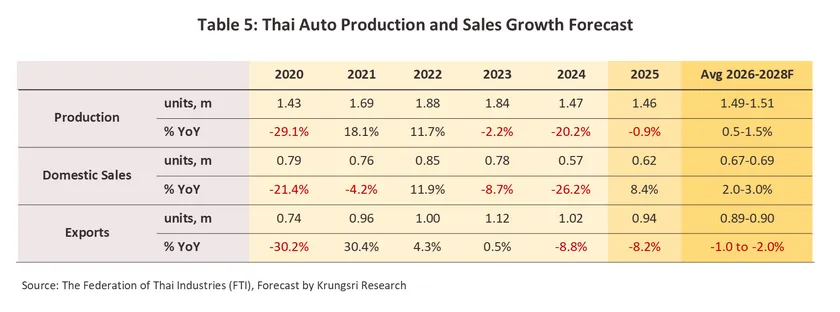
Domestic sales are projected to increase by an average of 2.0–3.0% per year to 0.67–0.69 million units, supported by the following factors: (i) a recovery in 1-ton pickup truck sales as the market enters a new replacement cycle after Thai pickup truck owners—most of whom are middle- to lower-income consumers—have extended vehicle usage since the COVID-19 pandemic29/. Additional support will come from rising private investment, underpinned by Thailand’s strategic position as a strategic location for regional investment, which is expected to boost demand for commercial vehicles used for transport and travel; (ii) sales promotions for domestically produced passenger BEVs during 2026–2027 to accelerate inventory clearance under the EV 3.5 scheme, which provides subsidies of up to THB 100,000 per vehicle. Eligible vehicles must be sold or delivered by December 31, 2027, and registered by January 31, 2028; (iii) a new round of EV promotion measures under the government’s energy restructuring plan, supported by the THB 400 billion loan decree, including THB 200 billion earmarked for clean energy initiatives. The measures are expected to lower financing costs for manufacturers and support more attractive pricing, making EVs—particularly HEVs and PHEVs—more affordable; and (iv) an 80% reduction in annual vehicle tax rates for HEVs and PHEVs registered during 2026–202830/.
However, overall vehicle sales are expected to remain constrained by rising living costs, high household debt, and the slow recovery of the tourism sector, which continue to weigh on consumer purchasing power, particularly among middle- to lower-income groups and agricultural households. These challenges could intensify as Thailand faces a more severe and rapidly developing El Niño, reducing agricultural output and income. In addition, some SMEs are expected to postpone purchases of pickup trucks used for transporting goods and raw materials to preserve liquidity amid an economy yet to fully recover. Meanwhile, ICE passenger car sales are expected to continue declining, contrasting with growing EV adoption among Thai consumers and the government's ongoing EV promotion measures.
Exports are projected to decline by an average of -1.0% to -2.0% per year to 0.89–0.90 million units, weighed down by: (i) increasingly stringent environmental standards in key export markets, including Australia31/, Japan, and Europe, which could prevent exports of certain Thai ICE models that exceed CO2 emission limits; (ii) the accelerated clearance of excess inventories of low-cost Chinese EVs following the Chinese government's tighter controls on price competition since June 2025, likely eroding Thailand’s market share in key trading partners. The risk is particularly pronounced in Australia, Thailand’s largest passenger car export market, where consumers are increasingly shifting to Chinese EV brands32/, while over 80% of Thailand’s passenger car exports remain ICE vehicles; and (iii) the prolonged conflict in the Middle East, which continues to disrupt logistics and weaken purchasing power in one of Thailand’s key export markets. The conflict may also dampen global vehicle demand as consumers delay purchases amid high living costs and a fragile global economy.
Nevertheless, Thailand’s passenger EV exports are expected to benefit from both demand- and supply-side factors. Global EV adoption is projected to continue rising, while earlier investment promotion measures have strengthened domestic production capacity. Japanese manufacturers have accelerated HEV and MHEV development to meet government environmental and vehicle safety requirements. As a result, new models produced in Thailand feature lower CO2 emissions and more advanced ADAS that better align with international standards. In addition, the mechanism allowing one exported passenger BEV to count as 1.5 compensation units is expected to encourage new EV manufacturers in Thailand to expand exports and meet government production compensation targets within the required timeframe.
1/ The First Car Buyer Scheme provided excise tax rebates of up to THB 100,000 (after five years of vehicle ownership) for first-time car buyers purchasing vehicles between September 16, 2011 and December 31, 2012. Eligible vehicles priced below THB 1 million included passenger cars with engines up to 1,500 cc, pickup trucks, and double-cab pickup trucks. No delivery deadline was specified under the scheme.
2/ For additional details, please refer to Industry Outlook 2024-2026: Automobile Industry, p. 6, Table 1, and p. 7, Table 3.
3/ For additional details, please refer to Industry Outlook 2025-2027: Automobile Industry, p. 5.
4/ For additional details, please refer to Industry Outlook 2026-2028: Electric Vehicle Industry, pp. 5–7.
5/ The compensation production volume was primarily driven by leading EV manufacturers, including BYD with a cumulative compensation production volume of 59,694 units and GWM with 14,468 units (Source: Thansettakij, January 19, 2026, and Thansettakij, December 30, 2025).
6/ For additional details, please refer to Industry Outlook 2025-2027: Automobile Industry, p. 6.
7/ Compiled from publicly announced investment plans by automotive manufacturers in Thailand.
8/ Source: Prachachat Turakij, July 30, 2025.
9/ In Q1 2025, Nissan (Thailand) restructured its production operations by consolidating vehicle manufacturing at one of its two plants in Bang Sao Thong District, Samut Prakan Province. The other plant was converted into an automotive parts manufacturing facility, producing components such as body parts, plastic parts, and stamped components (Thansettakij, February 17, 2025).
10/ In 2025, the finished goods inventory index for vehicle production declined -18.3% (Source: OIE).
11/ During the first 4 months of 2026, new registrations of ICE and HEV vehicles with engine displacements below 1,500 cc increased
in Thailand. Examples include the Toyota Yaris ATIV, priced at THB 709,000–729,000, whose new registrations rose 91.3% YoY to 18,956 units, and the Honda City, priced at THB 599,000–799,000, whose new registrations increased 100.3% YoY to 6,214 units (Sources: Toyota, V Group Honda, and DLT).
12/ For additional details, please refer to Industry Outlook 2026-2028: Electric Vehicle Industry, p. 6.
13/ Replacing the previous structure under which excise tax rates were increased by 2% every two years (Source: Autolifethailand, July 26, 2024).
14/ As a result, new passenger BEV registrations in January 2026 surged 228.1% YoY to 40,466 units (Source: DLT).
15/ Total vehicle bookings at the Motor Show 2026 reached 132,951 units, up 71.8%, of which more than 80,000 were EVs, accounting for over 60% of total bookings at the event (Sources: The Standard, April 6, 2026, and EV Roads, April 14, 2026).
16/ New passenger BEV registrations in April 2026 increased 64.5% YoY, exceeding the growth recorded in February–March 2026 under the EV 3.5 scheme, when registrations rose 17.7% YoY (Source: DLT).
17/ For example, the launch of the Isuzu D-Max equipped with the 2.2 Ddi MAXFORCE engine, which offers a larger engine displacement than the 1.9-liter variant while delivering better fuel efficiency (Source: Headlight Magazine, November 20, 2024).
18/ Exports from Thailand to the Middle East fell from 11,053 units in April 2025 to 993 units in April 2026 (Source: FTI, May 25, 2026).
19/ Australia tightened CO2 emissions limits for imported passenger cars from 141 grams per kilometer in 2025 to 117 grams per kilometer in 2026, while the limit for pickup trucks was reduced from 210 to 180 grams per kilometer (Source: Thailand Automotive Institute).
20/ Examples include Advanced Emergency Braking System (AEB), Lane Departure Warning (LDW), Forward Collision Warning (FCW), Blind Spot Detection (BSD), Lane Keeping Assist (LKA), and Adaptive Cruise Control (ACC) (Source: BOI).
21/ The government is preparing to advance its energy transition plan under a THB 400 billion loan decree, with THB 200 billion allocated to support clean energy projects, including EV manufacturing, electric public transport services, and solar rooftop installations (Source: Thansettakij, June 15, 2026).
22/ For example, Ford acquired Suzuki’s vehicle assembly plant in Rayong Province, covering 412.5 rai and located near the Ford Thailand Manufacturing (FTM) facility within a free zone, to support production across multiple vehicle segments and expand export markets regionwide. Meanwhile, Isuzu Motors expanded its investment to improve production efficiency through automation and robotics in manufacturing processes, while developing Euro 6-compliant products (Sources: Prachachat Turakij, January 22, 2026, and Thansettakij, April 7, 2026).
23/ In April 2026, wholesale prices of aluminum ingots in Japan increased by more than 20% from February 2026 to USD 4,585 per metric ton (Source: Nikkei Asia, May 6, 2026).
24/ In April 2026, wholesale prices of aluminum alloys and secondary alloys derived from scrap metal, both used in engine manufacturing, increased 8% from February 2026 (Source: Nikkei Asia, May 6, 2026).
25/ In April 2026, wholesale prices of polyethylene and polypropylene increased 30% from February 2026, driven by higher naphtha prices in Asia, a key feedstock for plastic production (Source: Nikkei Asia, May 6, 2026).
26/ Steel prices began to trend upward in April 2026 as coking coal prices, a key input for blast furnace production, increased. Rising energy and material costs also affected electric arc furnace steel production. As a result, Nippon Steel and JFE Steel announced steel price increases of approximately 10% effective from May 2026 (Source: Nikkei Asia, May 6, 2026).
27/ Examples include side mirrors, audio speakers, oil lubrication systems, windshield wipers, fuel leak detection sensors, and brake sensors (Source: Reuters, June 9, 2025).
28/ According to the International Energy Agency (IEA), an EV uses approximately 0.5 kilograms (about 1 pound) of rare earth materials per vehicle on average, roughly twice the amount used in ICE vehicles (Source: Reuters, June 9, 2025).
29/ During 2021–2025, cumulative registrations of pickup trucks aged 11 years or older increased by an average of 3.8% annually. As a result, Thailand recorded 4,878,397 pickup trucks aged 11 years or older in 2025, accounting for 69.9% of all pickup trucks (Source: DLT).
30/ As of June 2026, the Department of Land Transport had drafted two regulations for public consultation: one providing annual vehicle tax reductions for battery electric vehicles (BEVs), and another for hybrid electric vehicles (HEVs) and plug-in hybrid electric vehicles (PHEVs) (Source: Thansettakij, June 4, 2026).
31/ Australia’s New Vehicle Efficiency Standard (NVES) introduces stricter CO2 emissions limits for imported vehicles. For passenger cars, the maximum CO2 emission level will be reduced from 141 grams per kilometer in 2025 to 58 grams per kilometer in 2029. For pickup trucks and light commercial vehicles, the limit will be lowered from 210 grams per kilometer to 110 grams per kilometer over the same period.
32/ During the first 4 months of 2026, Australia imported 107,196 vehicles from China, up 60% YoY, surpassing Japan as its top vehicle import source for the first time. Meanwhile, imports from Japan fell -23% YoY to 94,500 units, making it the second-largest source. (Source: Krungthep Turakij, May 19, 2026).







.webp.aspx)