EXECUTIVE SUMMARY
In 2026, Thailand’s petroleum refinery business should benefit from the sharp increase in global crude oil prices during the first half of the year, which significantly supported the average gross refining margin (GRM). However, as tensions in the Middle East are expected to ease somewhat in the second half of the year, crude oil prices are expected to decline faster than the adjustment in inventory costs. As a result, some refineries may incur stock losses, particularly during the third quarter. Meanwhile, refining margins are expected to gradually decline toward a more normalized level in the second half of the year.
For 2027 and 2028, Dubai crude oil prices are projected to decrease compared with 2026, mainly due to higher oil supply expected to enter the global market. This will be particularly driven by the United Arab Emirates, which has withdrawn from OPEC and is likely to accelerate oil exports in order to gain market share. At the same time, domestic oil demand is expected to remain stable or increase gradually in line with Thailand’s economic recovery. Consequently, refining margins are expected to remain stable at an average level of THB 2–3 per liter.
Key challenges will stem from uncertainties surrounding geopolitical conflicts, which may intensify occasionally and create volatility in the global crude oil market. In addition, Thailand’s economy is expected to recover gradually, limiting growth in domestic oil demand. Refineries will also face increasing burdens from the need for continuous investment to maintain production system safety, comply with environmental standards, and develop technologies to support future energy demand.
Krungsri Research view
Krungsri Research predicts the outlook for the oil refinery business and related sectors during 2026-2028 as follows.
-
Refineries: Operating performance is expected to remain favorable, supported by rising domestic oil demand in line with Thailand's economic recovery, which should keep GRM stable or slightly higher. In addition, refiners are adapting by expanding investment in clean energy and higher value-added products that are in demand in both domestic and export markets, which should sustain continued revenue growth. However, refineries remain exposed to sharp fluctuations in global oil prices, which could result in stock losses on crude oil inventories.
-
Wholesalers of refinery products and liquid fuels: The segment is expected to benefit from sustained domestic demand for refined petroleum products. Moreover, since most operators are affiliates of oil refineries, marketing risks remain relatively low.
-
Petrol stations/service stations: Rising domestic demand of refined petroleum products will continue to be a positive factor for fuel service stations. Operators are also increasingly expanding investment in green service stations and non-oil businesses to broaden their long-term revenue base, such as leasing retail space and installing EV charging stations within their premises.
Overview
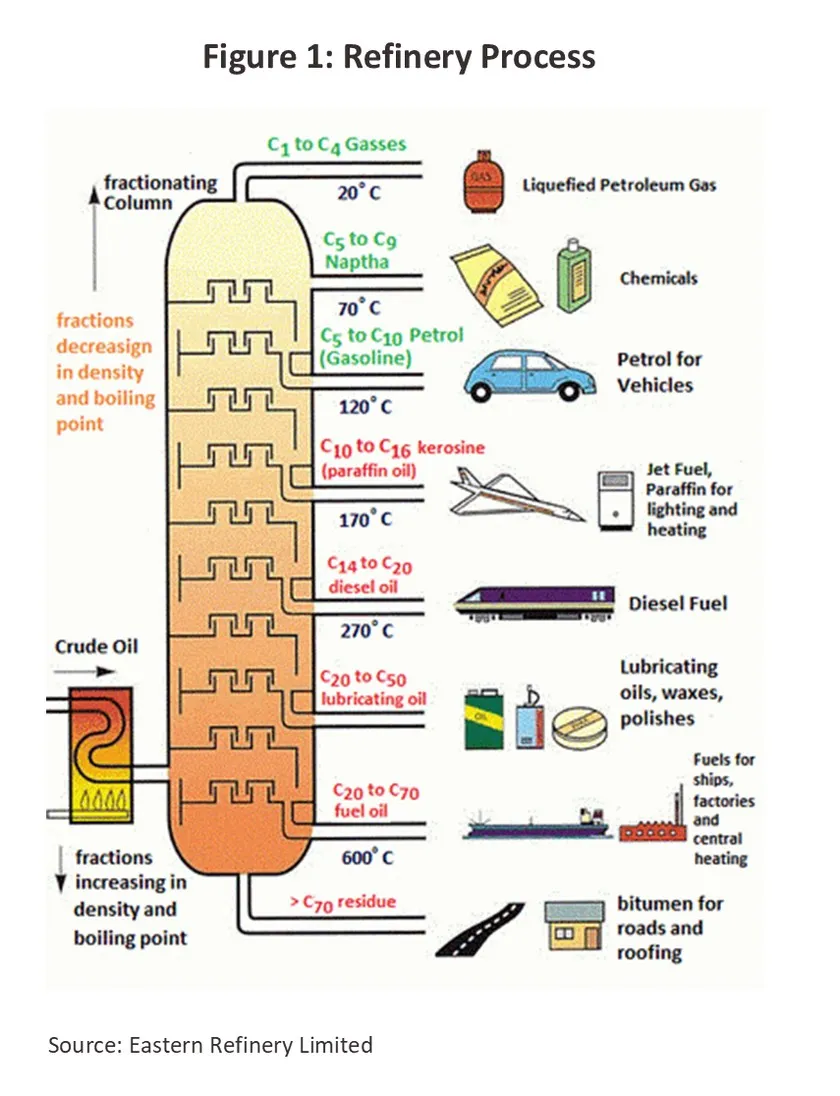
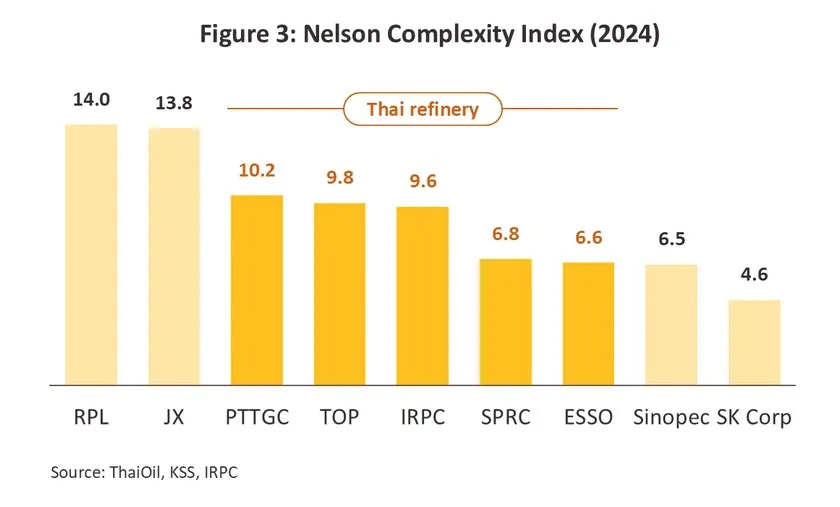
Oil refining is a large-scale, capital-intensive industry that requires substantial investment to achieve economies of scale and heavily relies on technology, resulting in long payback periods and thus, high barriers to entry and exit. The refining process (Figure 1) transforms or separates crude oil into various petroleum products – including LPG, naphtha, gasoline, kerosene, diesel, fuel oil, asphalt, and others – for use according to their distinct properties. The product yield obtained from refining depends on the source of the crude oil. Refineries can be classified into two types: (i) simple refineries, which rely on basic distillation units to separate crude oil into different products according to the composition of each crude type; and (ii) complex refineries, which entail higher capital investment and are equipped with cracking units – an additional process beyond distillation – that can upgrade low-value heavy products into higher-value light products. The upgrading capability of each complex refinery differs and is measured by the Nelson Complexity Index (NCI). Refineries with a higher NCI are in a better position to achieve production of high-value products than those with a lower NCI, and also have greater flexibility in processing crude oil from different sources, which vary in composition1/, allowing them to source crude oil from a wider range of suppliers (Figure 3).
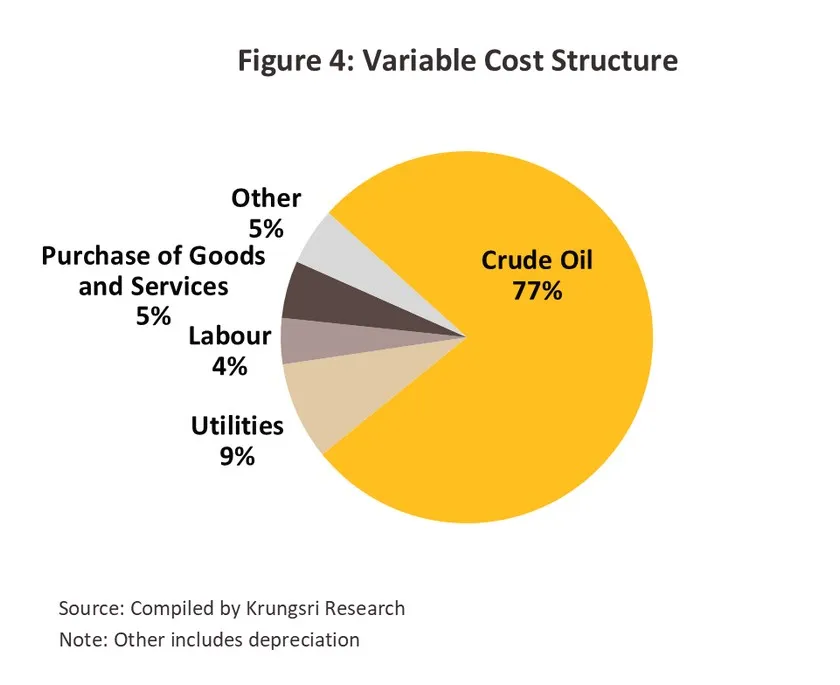
Despite the capital-intensive nature of the industry, refineries have operational lifespan of 30-50 years. Consequently, fixed cost per unit of output relatively low. More than 95% of the cost structure consists of variable costs, of which crude oil accounts for approximately 75-80%, fuel used in the refining process accounts for 10%, and other costs (e.g., depreciation) account for 10–15% (Figure 4). Prices of petroleum products are determined by supply and demand conditions as well as crude oil costs. Demand for petroleum products depends on economic activity, with approximately 70% of all petroleum products consumed as fuel in the transportation sector. The spread between petroleum product prices and crude oil prices therefore serves as an indicator of the profitability, or margin, of each product.
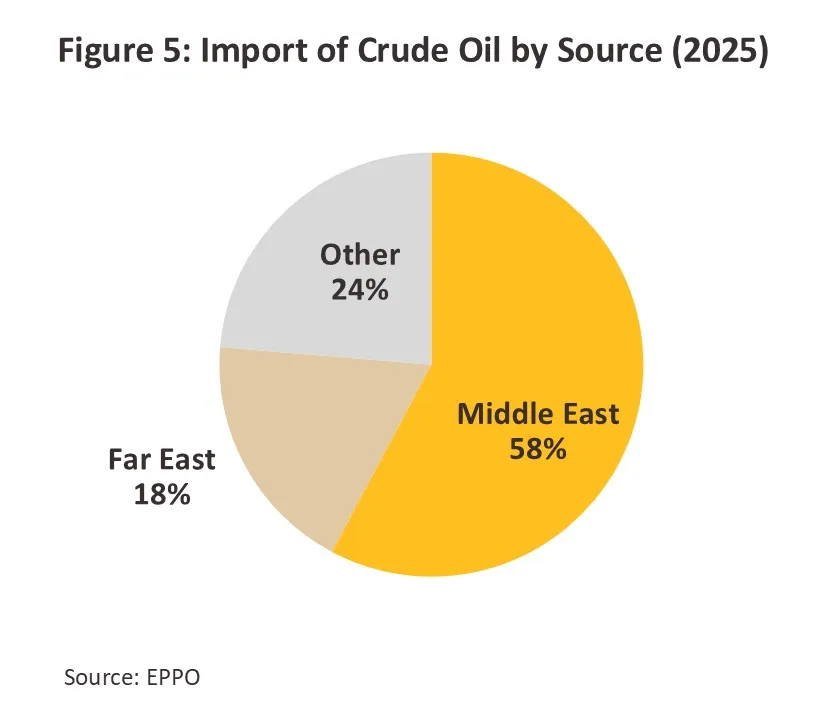
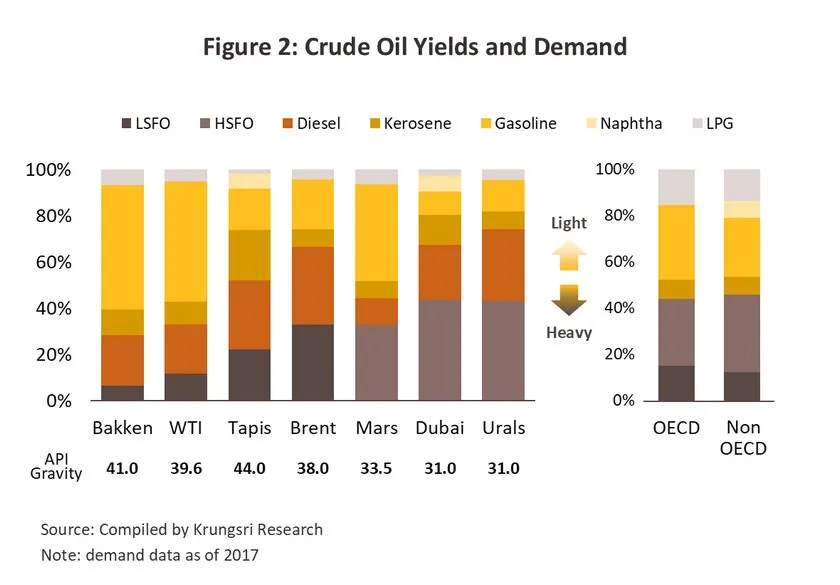
The profitability of the oil refining business is assessed through gross refinery margins (GRM), calculated as the total value of all products obtained from the refining process minus total costs per barrel of crude refined. The determinants of GRM are as follows: (1) Crude oil prices—refining margins increase in two cases: when demand for petroleum products expands, lifting both product and crude prices but with product prices rising faster than crude costs; or when crude supply increases, pressuring crude prices downward such that crude costs fall by more than product prices. (2) Petroleum product prices. (3) Capacity utilization—higher utilization rates translate into higher refining margins; efficient refineries typically operate at utilization rates above 80%2/. (4) The ability to upgrade output toward higher value-added products (compiled data indicate that the NCI of Thai refineries is relatively high and trending upward) (Figure 3). And (5) Management of crude oil sources —refineries processing heavy crude generally earn lower margins than those processing light crude, as the latter yields higher-value products. Since Thailand imports as much as 53%3/ of its crude oil from the Middle East, mostly heavy grades, the refining process yields a relatively large share of heavy products such as diesel and fuel oil (Figure 5). In addition, the profitability of individual refineries also depends on the following supplementary factors: (1) upstream-to-downstream vertical integration, including related businesses, which helps reduce costs and improves production planning; and (2) refinery location—sites with convenient access to resources and markets help lower transportation costs.
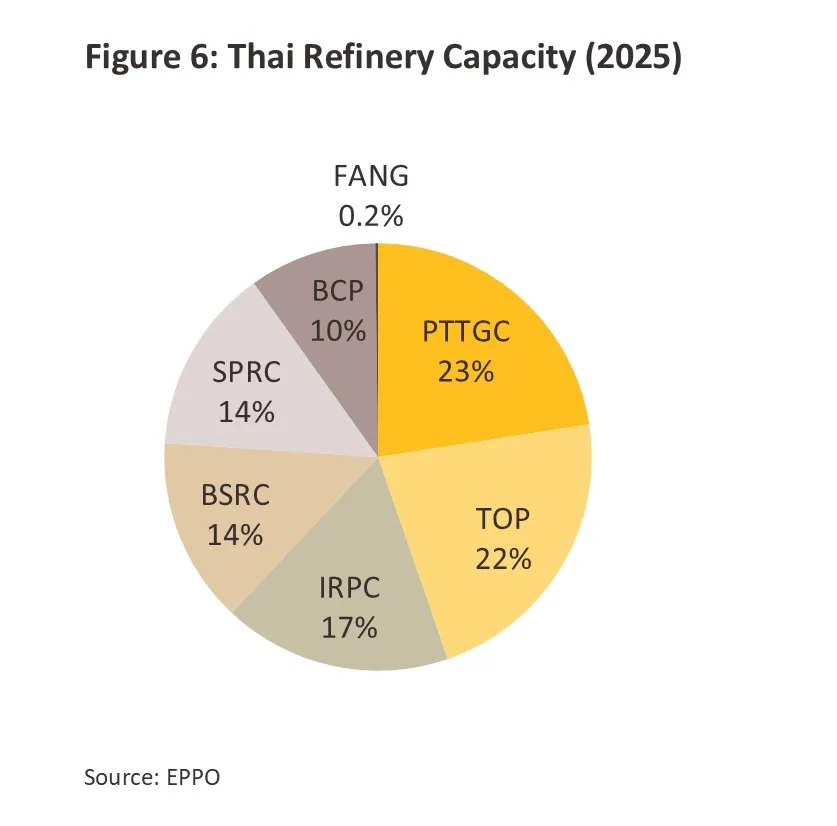
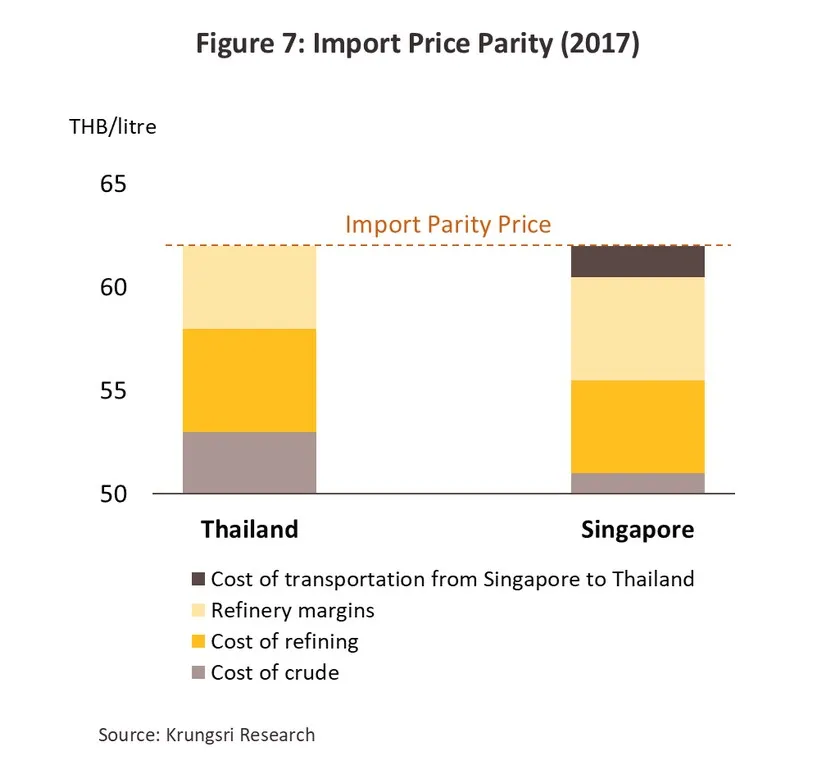
At present, Thailand's oil refining capacity ranks second in ASEAN after Singapore, at approximately 1.242 million barrels per day (bpd)4/ , all of which comes from complex refineries. Operators are: (1) the PTT Group, consisting of the refineries of PTT Global Chemical (PTTGC), IRPC Public Company Limited (IRPC), and Thai Oil (TOP), with a combined refining capacity of 770,000 bpd; (2) the Bangchak Group, consisting of the Bangchak Petroleum (BCP) and Bangchak Sriracha (BSRC, formerly ESSO) refineries5/, with a combined capacity of 294,000 bpd; (3) Star Petroleum Refining Public Company Limited (SPRC), with a capacity of 175,000 bpd; and (4) FANG, with a capacity of 2,500 bpd (Figure 6). Ex-refinery prices of petroleum products from Thai refineries are benchmarked against the Singapore market (SIMEX) price, known as the Mean of Platts Singapore (MOPS), with the import price parity principle applied to set the ceiling on ex-refinery prices—calculated as the Singapore FOB price plus transportation costs. This pricing mechanism indicates that refining margins in the Singapore market have a considerable influence on the margins of Thai refineries (Figure 7).
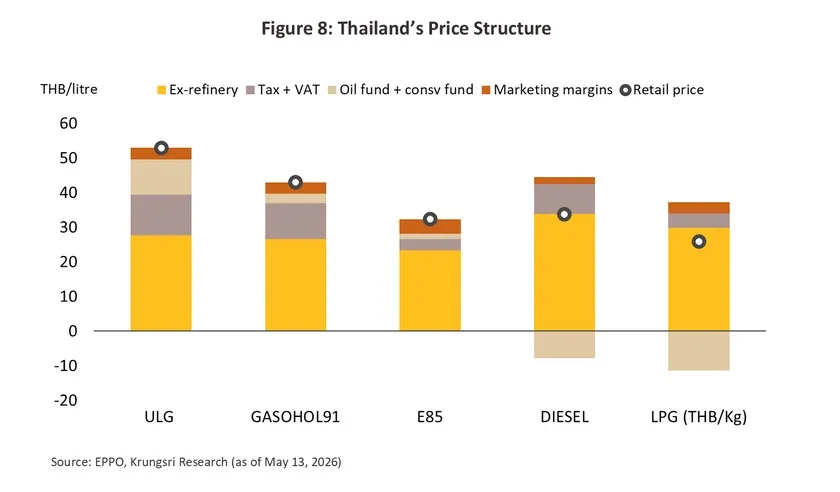
Retail prices of refined petroleum products in Thailand are determined not only by crude-related costs, refining margins, refining costs, and marketing margins (of oil traders), but also by significant government intervention through the collection of taxes and contributions to the Oil Fuel Fund from oil traders (Figure 8). The Fund is used to cushion the impact of domestic refined petroleum prices on household’s cost of living during periods of volatility in global oil markets and also serves as a mechanism to promote the use of certain fuel types under government policy, such as E20 and B7.
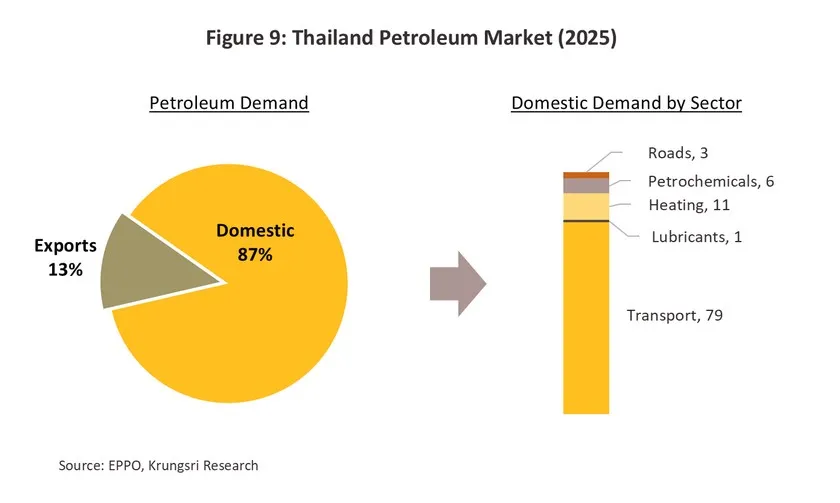
A large majority of all refined petroleum products (87%) are consumed domestically. 79% of such portion is used as fuel in the transportation sector (e.g., gasoline, kerosene, and diesel), 11% as fuel in industry and power generation (e.g., diesel and fuel oil), 6% in the petrochemical industry (e.g., LPG and naphtha), and 3% as asphalt for road construction. Exports account for the remaining 13%, with major export markets being ASEAN (75% of refined petroleum product export value) and East Asia (Figure 9).
Situation
In 2025, the Dubai crude price averaged USD 69.4/bbl, down from USD 79.6/bbl in 2024, owing to a market supply surplus, which the US Energy Information Administration (EIA) estimated at 3.0 million barrels per day (mb/d) for 2025. OPEC+ unwound its voluntary production cuts of 2.2 mb/d between April and September 2025 and lifted an additional 1.65 mb/d of production cuts, while raising output by a further 0.137 mb/d over October-December, amid persistently weak oil demand, with the EIA estimating demand growth at just 1.1 mb/d.
Thailand’s demand for refined petroleum products rose only 0.1% from 2024, partly reflecting a sharp decline in foreign tourist arrivals, fragile consumer purchasing power, which weighed on spending, as well as growing adoption of electric vehicles. Meanwhile, the average GRM rose to THB 1.98 per liter from THB 1.71 in 2024.
In the first half of 2026, the Dubai crude price climbed significantly to average USD 91.1/bbl. The increase was driven by the escalation of the Middle East conflict in late February, with retaliation extending to energy infrastructure and several refineries across the region. The Strait of Hormuz was also closed. This is one of the world’s most strategically important maritime chokepoints, handling as much as 13.4 mb/d of oil shipments, or roughly one-third of global seaborne oil trade.
The resulting contraction in global oil supply drove prices up continuously to a peak of USD 137.82/bbl in March. In response, the International Energy Agency (IEA) authorized a record release of 400 million barrels from strategic petroleum reserves to stabilize prices. Saudi Arabia and the United Arab Emirates (UAE) rerouted oil shipments to mitigate the supply shock. However, following the US-Iran ceasefire agreement, crude prices gradually retreated below USD 100 per barrel from June 3 onward. Prices have since traded at USD 70–80 per barrel after the two countries signed a Memorandum of Understanding (MOU) to end the war and reopen the Strait of Hormuz, with 60 days allotted for detailed negotiations.
As a result, the average oil price in the first half of the year stood at USD 93 per barrel, averaging USD 85 in the first quarter and USD 101 in the second quarter (through June 18). However, tensions in the Middle East intensified again amid periodic clashes, sustaining risks to oil shipments through the Strait of Hormuz and prolonging volatility in global oil prices.
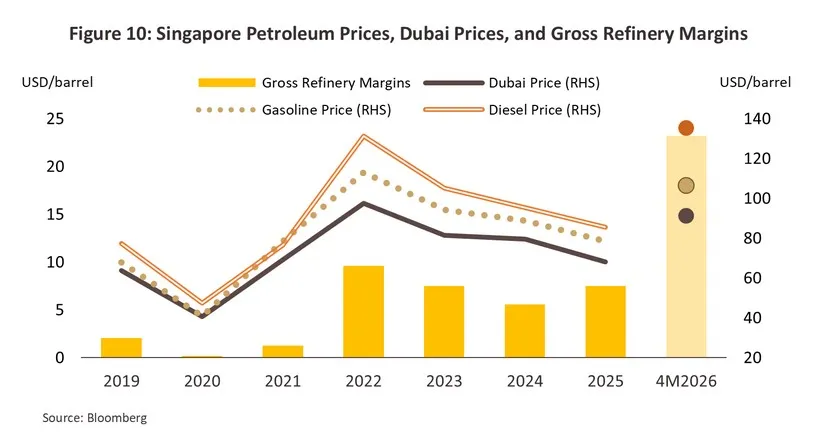
Rising global crude prices pushed refining premiums up at an accelerating pace. This was reflected in the Singapore GRM, which jumped to an average of USD 23.2/bbl in the first four months of 2026, from an average of USD 7.5 in 2025. The surge stemmed from prices of refined products—particularly diesel—rising significantly faster than the Dubai crude price (+34.0% from the 2025 average). The Singapore diesel price averaged USD 135.1 per barrel, up 57.8% from the 2025 average, while gasoline prices in the Singapore market averaged USD 106.4 per barrel, up 35.7%. This greatly strengthened the profitability of the refining business in the early part of the year.
Thailand's oil refining business in the first quarter of 2026 benefited from continued growth in domestic demand. This was driven by: (1) strong expansion in industrial exports, particularly electronics, on the back of rising global demand; (2) growth in both domestic and international air traffic of 7.4% YoY, with passenger transport up 6.7% YoY and air cargo volume up 8.0% YoY; and (3) accelerated stockpiling of refined products and certain petroleum derivatives by oil users to hedge against supply shortages, amid rapidly rising prices (Dubai crude peaked at USD 137.8/bbl on March 19). The price surge reflected tightening global oil supply following the closure of the Strait of Hormuz, which prevented Middle Eastern refineries from exporting refined products as usual, while some Asian refineries also suspended part of their refined product exports. These factors lifted Thai refining margins significantly. The overall situation can be summarized as follows:
-
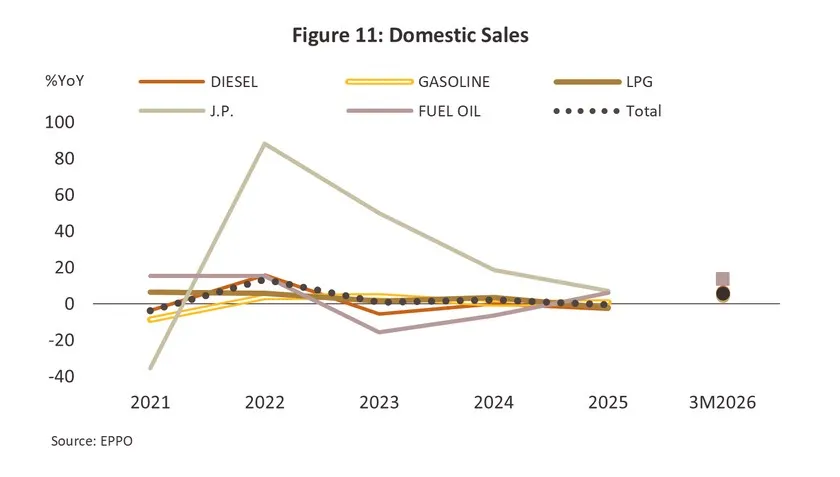
Demand for refined petroleum products rose 4.9% YoY to 153.5 million liters per day (ml/d), with growth accelerating to 12.3% YoY in March. Diesel demand stood at 74.2 ml/d, up 5.1% YoY. Gasoline demand reached 33.2 ml/d, up 6.3% YoY. Fuel oil demand was 6.1 ml/d, up to 13.9% YoY, and jet fuel demand was 20.3 ml/d, up to 4.3% YoY (Figure 11).
-
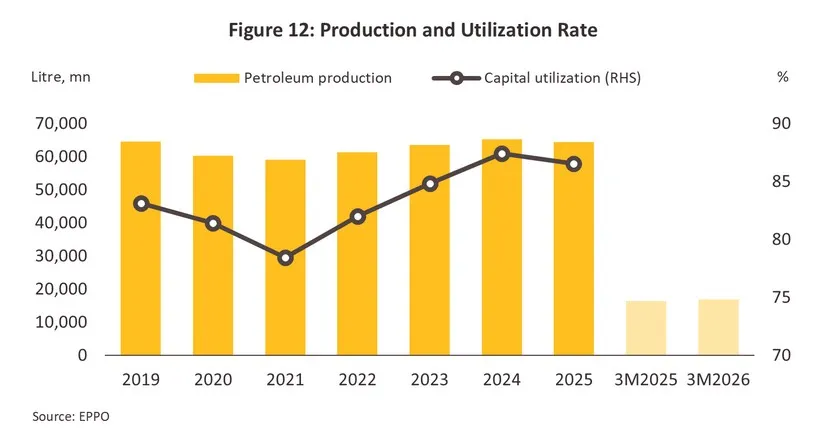
Refined petroleum product output stood at 185.9 ml/d, up 2.2% YoY, with production rising across almost all product types (Figure 12). Gasoline production was 36.5 million liters per day, up 0.2% YoY. Diesel output reached 76.0 million liters per day, up 4.9% YoY. Fuel oil production was 13.4 million liters per day, down 5.4% YoY, while jet fuel output stood at 21.8 million liters per day, up 1.6% YoY.
-
Exports of refined petroleum products fell 15.7% YoY to 20.2 ml/d. The decline resulted from strict government export controls on refined products aimed at safeguarding domestic supply stability. Gasoline exports dropped 35.7% YoY to 274 million liters, while diesel exports fell 13.0% YoY to 794.4 million liters. However, jet fuel exports rose 31.9% YoY.
-
The gross refining margin averaged THB 3.8 per liter in the first quarter, resulting from immediately risen prices of refined products (e.g., jet fuel and diesel) due to market mechanisms, while crude feedstock costs still reflected pre-conflict prices. As a result, the refining margin climbed from THB 2.2 per liter in January to THB 7.2 in March—well above the 2025 average of THB 2.0 per liter—before reaching THB 11.8 in April and easing to THB 6.1 in May. This benefited the operating performance of the refining business.
Therefore, Thai refineries expedited adjustments to their oil supply. These included securing crude oil in advance from sources outside the Middle East (e.g., the US and Africa) to support production, increasing floating storage of crude, and temporarily procuring additional storage tanks for refined products both within and outside refinery premises to stock fuel to meet consumption needs and mitigate potential risks
Outlook
In the 1H2026, the oil refining business benefited from surging global crude prices (Dubai crude averaged USD 82.7/bbl), which lifted prices of refined petroleum products and other petroleum products accordingly. The average GRM consequently rose to THB 5.8 per liter, compared with THB 1.6 in the same period of 2025. In the second half, the Middle East tensions are expected to ease from the first half, following the signing of the provisional peace agreement. As a result, crude oil supply that had been disrupted during the conflict is likely to gradually return to the market. Additional supply may also come from Iran, which could accelerate oil exports to generate revenue after the United States lifted sanctions on Iranian oil sales during 22 June – 21 August 2026 and temporarily eased sanctions on Russian oil. The increase in oil supply has put downward pressure on crude oil prices, causing them to decline rapidly. As of 25 June, Dubai crude stood at USD 79.5 per barrel, close to the pre-war level. Nevertheless, tensions in the Middle East have recently resurfaced amid periodic intensification of US-Iran conflict, potentially causing occasional disruptions to oil transportation through the Strait of Hormuz. As a result, prices of crude oil, refined petroleum, and other petroleum-based products, are expected to remain highly volatile, despite a downward trend compared with the first half of the year.
Domestic oil demand in 2026 is expected to be constrained by slower growth in the Thai economy, which is projected to expand by 1.9%, compared with 2.4% in 2025. Private consumption will likely remain under pressure from high household debt, which stood at 86.7% of GDP at the end of 2025. Meanwhile, the tourism sector is expected to recover at a slower pace, partly due to the global economic slowdown. The IMF forecasts global GDP growth of 2.5% in 2026, compared with 3.2% in 2025. This is expected to weigh on international tourist arrivals to Thailand, which declined by 2.3% YoY in the first half of the year and are projected to fall by 1.5% for the full year compared with 2025. These factors are likely to partially dampen oil demand in the transportation sector. Therefore,
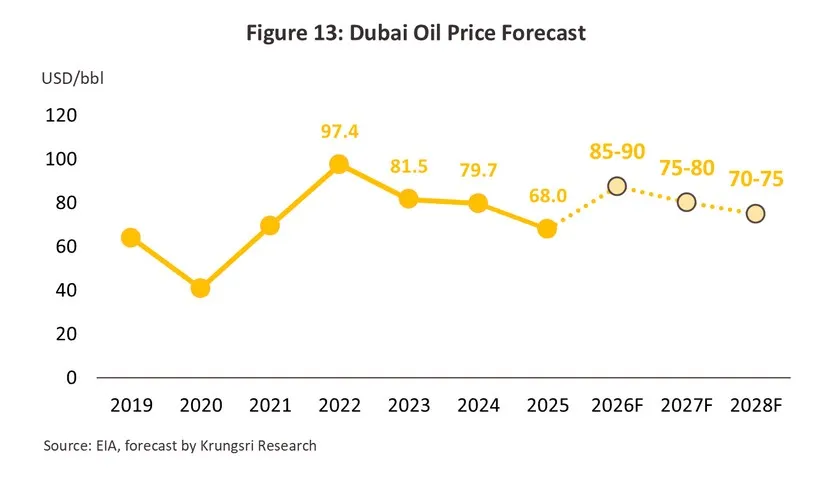
Krungsri Research expects Dubai crude oil prices to average USD 85–90 per barrel in 2026, compared with USD 68.3 per barrel in 2025. Meanwhile,
demand for refined oil products is expected to remain stable or increase by 1.0% from 2025. GRM is projected to average THB 3.0–4.0 per liter. However, during the second and third quarters, some refineries may incur stock losses as crude oil prices decline following periodic easing of geopolitical tensions (Figure 13). At the same time, refineries are required to maintain oil reserves at legally mandated levels to ensure the country’s energy security, including during periods when oil prices remain elevated.
In 2027 and 2028, assuming oil shipment through the Strait of Hormuz proceeds normally, the Dubai crude price is expected to gradually decline to an average of USD 75-80 and USD 70-75/bbl, respectively. Several factors are expected to support a gradual increased oil supply to the global market. The UAE—OPEC's third-largest producer and the world's eighth-largest, accounting for 4% of global supply, with the ability to immediately raise output by around 1 million barrels per day—announced its withdrawal from OPEC (effective May 1, 2026). This will allow the UAE to produce and export oil independently, and the country is expected to swiftly expand exports to capture market share. In addition, crude stocks accumulated during the Strait of Hormuz closure (the Hormuz overhang) are likely to be released to the market continuously. The prospective increase in supply will put downward pressure to oil prices.
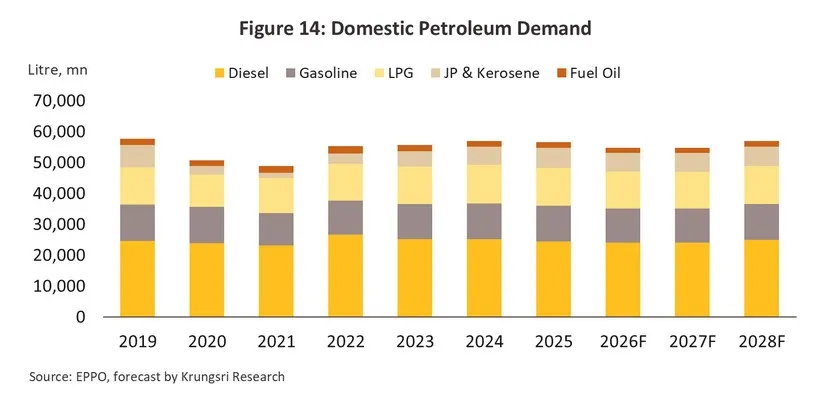
Domestic demand for refined oil products is expected to recover gradually, growing by an average of 1.0-2.0% per year (Figure 16). Key supporting factors include: (1) Thailand’s economic growth, which is projected at 1.9-2.3% per year, compared with an average of 2.6% per year during 2022-2025; (2) the continued recovery in tourism sector, with International tourist arrivals expected to increase to 35.5 million by 2028 from 32.5 million in 2026, supporting oil demand for travel, although arrivals will remain below the pre-pandemic level of 39.9 million; and (3) the expansion of e-commerce, which is projected to grow by an average of 5.1% per year during 2025-2030, underpinning demand for oil used in commercial goods transportation.
However, growth in oil demand will be constrained by two key factors. First, electric vehicles continue to gain popularity. At the end of 2025, battery electric vehicle (BEV) registrations increased by 72.3% from 2024. By May 2026, cumulative BEV registrations reached 370,000 units, up from 90,000 units in 2023. Second, Thailand’s target of Net Zero Emissions for 2050 will drive a gradual reduction in oil consumption. The government has introduced measures to streamline fuel types and promote cleaner fuels. For diesel, B7 will be positioned as the standard fuel, while B20 will serve as an alternative for transport operators and the agricultural and fisheries sectors. For gasoline, either gasohol 95 or gasohol E20 will become the standard fuel, while gasohol 91 is planned to be phased out. The government is also promoting the use of biofuels, including ethanol for sustainable aviation fuel (SAF) and biofuel-blended B24 very low Sulphur fuel oil (VLSFO) for international shipping. Given these factors, diesel demand is expected to increase by an average of 1.0–2.0% per year, while gasoline demand is projected to grow by 1.5–2.5% per year. Overall demand for refined oil products is expected to rise by 1.0–2.0% per year, while gross refining margins are projected to average THB 2.0–3.0 per liter.
If tensions in the Middle East flare up again or remain unresolved, refinery performance might come under pressure from higher costs, particularly from the war –risk premium. Although GRM may increase significantly, the ability to pass higher costs on to refined oil product prices could be limited by Thailand’s moderate economic growth. If crude oil costs rise faster than refined product prices, refining margins could be narrowed due to margin compression, significantly weakening refinery profitability.
Refineries are expected to continue investing in upgrading their plants. These investments will enhance their ability to process crude oil from a wider range of sources and improve crude procurement flexibility across regions, such as West Africa and the United States. This will allow operators to adjust sourcing plans in more timely fashion and help strengthen the country’s crude oil supply security. In addition, operators are likely to expand investment in clean energy projects or transition toward biorefineries. This will support the production of more environmentally-friendly and higher-value products, particularly sustainable aviation fuel (SAF). The new Oil Plan and AEDP might mandate an increase of SAF use in aviation to 1% by 2027. Meanwhile, the EU has required airlines flying to Europe to use 3% SAF in 2025, with the requirement set to rise to 15–50% by 2050.
Key challenges of the industry include: (1) ongoing geopolitical conflict, particularly involving the US–Israel-Iran and Russia–Ukraine conflicts, which may intensify periodically and create risks to global crude oil supply and transportation routes. This could affect Thailand’s crude oil procurement, as around 60% of imports come from the Middle East; (2) Thailand’s moderate economic recovery may limit growth in domestic oil demand; and (3) rising cost burdens from continued investment in production system safety, compliance with environmental standards, and technology development to support future energy demand.
1/ Crude oil is composed primarily of hydrocarbon compounds, mainly alkanes and cycloalkanes, along with small amounts of other elements such as sulfur, nitrogen, and trace metals. The composition varies by source. For instance, crude from the Bakken formation (North Dakota) contains more than 60% light fractions, whereas Russia's Urals crude contains only around 30%. Light crude has a lower density, as it consists of hydrocarbons with fewer carbon atoms, and therefore combusts more efficiently and yields more energy than heavy crude.
2/ Refineries normally operate continuously, as the costs of shutting down and restarting units are relatively high, except during annual maintenance shutdowns—known as planned maintenance—which typically last around 1–2 months.
3/ Information from EPPO, as of the end of 2025.
4/ Thailand's refining capacity will increase by a further 0.125 million bpd by the third quarter of 2028, following the commercial operation of the Clean Fuel Project (CFP).
5/ In 2023, Bangchak Corporation Public Company Limited acquired a 65.99% stake in Esso (Thailand) Public Company Limited from ExxonMobil Asia Holdings Pte. Ltd.







.webp.aspx)