Industry Horizon (July 2026)
22 July 2026
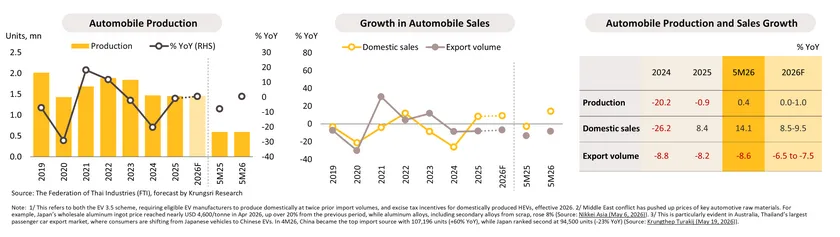
Automobile: Production is expected to edge up slightly, driven by domestic EV sales, while Middle East tensions continue to pose headwinds to exports.
-
In 5M26, vehicle production edged up 0.4% YoY to 596,821 units, backed by higher output of passenger BEVs (+4.4% YoY), HEVs (+6.1% YoY), PHEVs (+11.7% YoY), trucks (+95.5% YoY), and single-cab 1-ton pickups (+2.8% YoY). Growth was lifted by rising EV demand and government support measures.1/ However, production remained constrained by weaker exports amid the Middle East conflict, with total auto production declining -6.7% YoY in Apr–May 2026. Domestic sales increased 14.1% YoY to 288,242 units, bolstered by promotional campaigns, stronger passenger BEV demand ahead of the EV 3.0 deadline in January 2026, higher fuel costs, and rising commercial vehicle demand in line with stronger private-sector investment, with the BOT’s Private Investment Index rising by 13.7% YoY during the same period. Meanwhile, exports fell -8.6% YoY to 339,618 units due to the closure of the Strait of Hormuz, which caused Thailand's auto and parts exports to the Middle East to drop -63.7% YoY during Mar–May 2026, alongside stricter environmental standards in key export markets, including Australia, Europe, and Japan.
-
Production is expected to remain flat or increase slightly by 0.0–1.0% for full year 2026, underpinned by excise tax incentives for HEVs and MHEVs, as well as higher passenger BEV production to meet the two-fold local production requirement under the EV 3.5 scheme. However, automakers are expected to face headwinds from prolonged Middle East conflict and higher costs of key automotive raw materials, including steel, aluminum, plastics, and rubber2/. Domestic sales are projected to increase 8.5–9.5%, helped by more lenient auto loan approvals for passenger cars and the new round of EV promotion measures expected under the THB 200 billion energy transition plan. Meanwhile, exports are forecast to decline -6.5% to -7.5%, weighed down by the Middle East conflict. Logistics disruptions are expected to ease in 2H26 but are likely to persist intermittently, while purchasing power in key markets recovers gradually. In addition, continued clearance of Chinese EV inventories is likely to further erode Thailand's market share across export markets3/.
Electric Vehicles: New registrations of EVs are expected to increase, boosted by rising energy costs and government support measures.
-
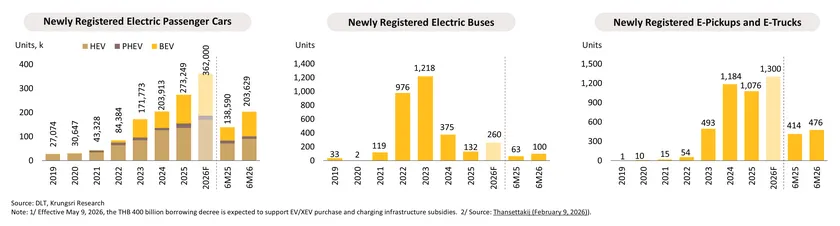
New registrations of passenger XEVs rose by 46.9% YoY to 203,629 units in 1H26, with BEVs and HEVs increasing 85.2% YoY (to 103,347 units) and 26.0% YoY (to 90,031 units), respectively, while PHEVs declined -9.4% YoY (to 10,251 units). Overall XEV registrations were driven by (i) accelerated deliveries of domestically produced passenger BEVs by January 2026, the final month of subsidies under the EV 3.0 scheme, (ii) higher fuel costs since March 2026 amid Middle East tensions, prompting some consumers to shift toward passenger BEVs and lifting registrations in Apr–Jun 2026 by 34.2% YoY, (iii) new HEV model launches by Japanese automakers featuring extended electric driving range, e.g., ADAS safety systems, and more advanced technologies, and (iv) easing passenger car loan approvals by financial institutions. Meanwhile, new registrations of electric buses and commercial BEVs increased 58.7% YoY (to 100 units) and 15.0% YoY (to 476 units), respectively, underpinned by the government’s fleet replacement cycle for electric buses in the Bangkok Metropolitan Region (BMR), following the previous cycle in 2022–2023, as well as higher energy costs since the onset of Middle East tensions, encouraging some businesses to adopt commercial BEVs.
-
In 2026, new registrations of passenger XEVs are expected to increase to 362,000 units, comprising 175,000 BEVs, 170,000 HEVs, and 17,000 PHEVs, boosted by (i) higher fuel prices encouraging greater adoption of passenger XEVs, (ii) THB 200 billion energy transition and clean mobility incentive program under government borrowing decree1/, and (iii) a reduction in excise tax rates for HEVs to 6–9%. Meanwhile, new registrations of electric buses and commercial BEVs are projected to rise to 260 and 1,300 units, respectively, backed by a new round of public investment in electric bus services under the Bangkok Mass Transit Authority (BMTA)’s leasing project for 1,520 units worth THB 15 billion, to be gradually deployed during 2026–20322/, as well as recent increased private investment, lifting demand for commercial electric vehicles used in freight transport, given their advantages in lower fuel costs and reduced emissions.
Motorcycle: Production is expected to decline due to persistently high inventory levels, in contrast to rising domestic sales and exports.
-
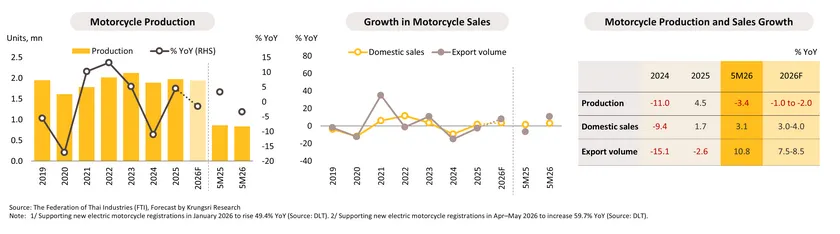
In 5M26, motorcycle production declined -3.4% YoY to 836,824 units as manufacturers reduced output in response to higher inventories, with the finished goods inventory index rising 21.9% YoY, despite stronger domestic sales and exports. Production of manual-transmission motorcycles also fell -17.7% YoY amid declining popularity among younger riders. Domestic sales increased 3.1% YoY to 775,325 units, driven by higher demand for affordable, fuel-efficient 125cc motorcycles (+13.9% YoY) amid a still-fragile economic recovery and rising fuel costs, as well as a 13.8% YoY increase in new electric motorcycle registrations to 11,316 units ahead of the EV 3.0 deadline1/ and in response to higher fuel prices2/. Meanwhile, exports rose 10.8% YoY to 190,446 units, rebounding from a low base and supported by resilient overseas demand for large motorcycles. Thailand's motorcycle exports—predominantly ICE models—also benefited from continued demand in key markets that favor ICE motorcycles, including the Netherlands (+54.5% YoY), Belgium (+30.6% YoY), and Australia (+16.3% YoY).
-
For the full year 2026, motorcycle production is projected to decline -1.0% to -2.0% due to still-elevated inventory levels in the first half of the year. However, production is expected to recover in 2H26, backed by continued growth in domestic sales and exports. Domestic sales are forecast to increase 3.0–4.0%, driven by continued growth in the 125cc motorcycle segment. Moreover, persistently high household debt, elevated living costs, and tight auto lending are expected to encourage some middle- to lower-income consumers to opt for small motorcycles over cars. Meanwhile, exports are projected to increase 7.5–8.5%, underpinned by Thailand's competitive advantage in ICE technology, enabling continued export growth to markets where large ICE motorcycles remain popular for recreational use amid the gradual economic recovery in key trading partners.
ICs and Electrical Appliances: Exports continue to expand on resilient global demand, though domestic sales stay uneven amid external headwinds.
Situation in 5M26
-
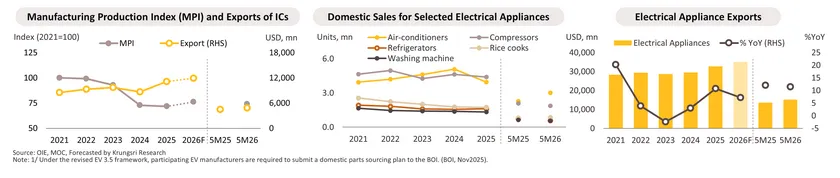
Integrated Circuits (ICs): Production and exports grew by 9.0% YoY and 8.5% YoY, respectively, driven by sustained chip demand from electrical appliance manufacturing, EV production, and global AI infrastructure, alongside a -11.4% YoY decline in IC inventories. However, domestic production remains constrained by rising chip imports from Taiwan (+263.4% YoY) and South Korea (+181.3% YoY), due to their advantages in advanced foundry, memory, and broader IC production, which are needed to meet Thailand’s demand for upstream and midstream inputs for export production and new investment.
-
Electrical appliances: Domestic sales volume increased by 5.3% YoY, driven mainly by air conditioner sales, which surged 32.8% YoY due to extreme heat and rising demand to upgrade to more energy-efficient units. Other appliance categories, however, continued to contract, as consumers delayed purchases due to weakened purchasing power and subdued spending confidence amid a still-fragile domestic economic recovery. Meanwhile, export value rose by 11.4% YoY, bolstered by a new global replacement cycle for electrical appliances following the peak during the COVID-19 period, as well as strong air conditioner exports to Europe (+41.3% YoY in May) amid an extreme heatwave.
2026 Outlook
-
ICs: MPI and export value are projected to grow by 5.7-6.7% and 6.9-7.9%, respectively, boosted by (i) continued expansion of the global AI and data center infrastructure, driving demand for processing and memory chips; and (ii) investment in domestic midstream and downstream industries that use ICs as key inputs, particularly XEV production, amid tighter local production and sourcing requirements under Thailand’s EV incentive schemes from 2026 onward1/. However, IC production may face risks from supply chain disruptions stemming from Middle East tensions, tightening export controls on rare earths and critical minerals by China, and the impact of higher U.S. import tariffs.
-
Electrical appliances: Domestic sales are projected to increase by 3.4-4.4%, reflecting weak purchasing power, particularly among lower- to middle-income consumers. Key headwinds include tensions in the Middle East and U.S. tariff measures affecting business activity, high household debt, declining tourist arrivals, and rising living costs. This is partly offset by a shift toward energy-efficient air conditioner replacements among upper-middle-income consumers, driven by hotter weather linked to El Niño and rising electricity costs. Meanwhile, the export value is expected to grow by 6.7–7.7%, underpinned by the global upcycle in electrical appliances, continued investment in Thailand’s electrical and electronics sector, and rising global temperatures. However, growth may be tempered by U.S. tariff measures, as the U.S. remains Thailand’s largest trading partner.
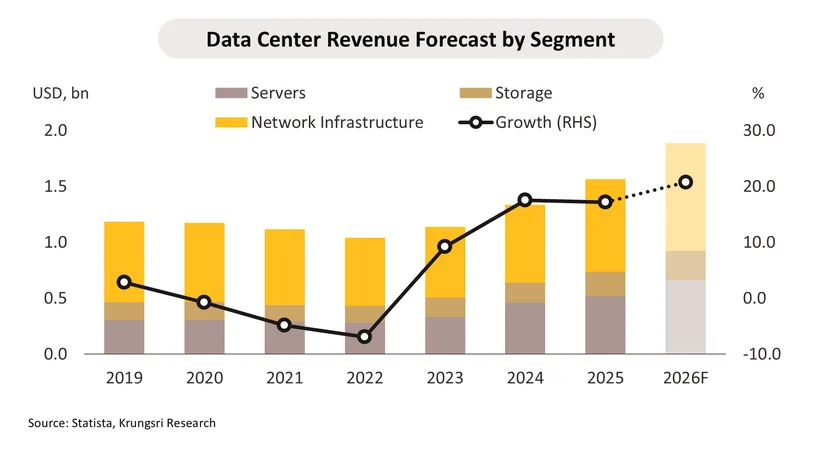
Data Center: Total revenue continues to grow, driven by rising investment and AI-related demand across network infrastructure, servers, and data storage.
-
During 1Q26, the Board of Investment (BOI) received 48 project applications for investment promotion in the digital sector, valued at USD 27.3 billion (THB 874 billion), predominantly in data centers and cloud services, with major investors from Singapore, Japan, the United Kingdom, and Malaysia. This momentum continued in May 2026, when the BOI approved three additional data center projects worth a combined USD 27 billion (approximately THB 913 billion)—the largest being TikTok System (Thailand) Co., Ltd., with an investment of USD 25 billion (around THB 842 billion). The project will expand server, storage, and processing infrastructure across Bangkok, Samut Prakan, and Chachoengsao to meet rising demand for digital services. Driven by the expanding digital economy and growing demand for AI infrastructure, this surge underscores Thailand's strengthening position as a regional hub for data centers, cloud services, and AI-driven digital infrastructure.
-
Looking ahead to 2026, total data center industry revenue is forecast to grow by 20.2–21.2%, driven by three key segments: (i) Network Infrastructure — Revenue is projected to expand by 15.9–16.9%, boosted by rising internet usage and the continued rollout of 5G networks by domestic service providers. Increased investment from foreign technology firms is also expected to accelerate digital infrastructure development. (ii) Server Systems — Revenue is expected to grow by 28.2–29.2%, underpinned by strong demand for AI and cloud computing from both consumers and enterprises. This is driving investment in high-performance servers capable of handling intensive workloads. (iii) Data Storage Systems — Revenue is anticipated to increase by 17.7–18.7%, fueled by rapid growth in data generation from AI adoption, as well as expanding e-commerce and e-payment platforms. However, competition among operators is expected to intensify, requiring continued investment in storage capacity, data security, and processing speed.
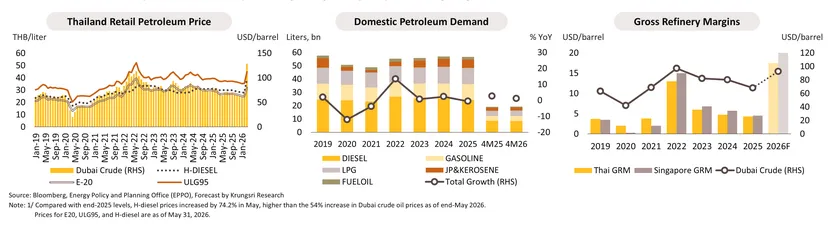
Refinery: Refining margins are expected to trend upward, driven by disruptions at several refined oil production facilities in the Middle East.
-
In Q2 2026, gross refinery margins (GRMs) remain significantly above the 2025 average, driven by escalating Middle East tensions and the closure of the Strait of Hormuz—a key route for roughly one-third of global seaborne crude—tightening supply and pushing Dubai crude to remain above USD 90 per barrel during April-May. At the same time, disruptions to refined product supply from attacks on refineries in the Middle East tightened market conditions. As a result, refined product prices in May increased at a faster pace than crude prices1/. These dynamics provided solid, but cyclical tailwinds for Thai refiners, boosting margins and generating inventory gains. Meanwhile, domestic demand for refined products continued to grow by 1.0% YoY (4M26), driven by (i) stronger electronics exports, (ii) higher air traffic and cargo volumes, and (iii) precautionary stockpiling of refined products amid supply concerns and rising prices.
-
Thai refiners are expected to continue benefiting from above-average refining margins through the remainder of 2026. However, the upside is increasingly uncertain as the situation in the Middle East remains highly fluid. Refined product markets are likely to remain tight, as damage to Middle Eastern refining infrastructure could take years to fully recover, keeping product spreads elevated even after crude flows partially normalize. Although regional tensions have eased somewhat, periodic conflict and logistics disruptions through the Strait of Hormuz could still recur, leaving crude and refined product prices volatile, albeit on a slightly downward trend from the Q2 peak. With the significant uncertainties in the implementation of the provisional peace deal and OPEC+ output that is forecast to remain below the pre-conflict period, Krungsri Research expects Dubai crude to average USD 85–90/bbl in 2026 (compared to USD 68.3/bbl in 2025). As a result, Thailand’s GRMs are projected at USD 15–20/bbl in 2H26, up sharply from USD 5.9/bbl in 2025. Key downside risks for refiners include inventory losses on crude and product stocks accumulated at elevated prices during the conflict, while a softer domestic economy could constrain cost pass-through and gradually compress refining margins.
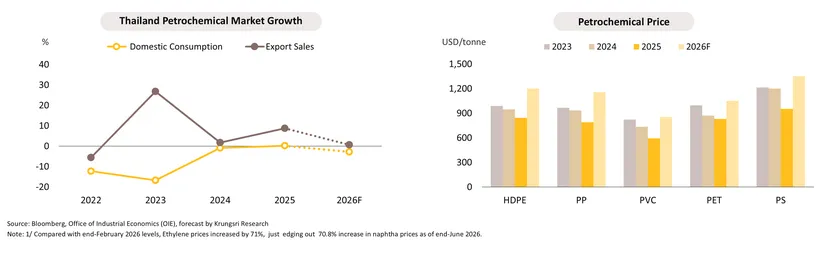
Petrochemical: Product spreads are expected to remain wide, driven by multiple plant shutdowns and periodic supply disruptions from intermittent tensions in the Middle East.
-
In Q2 2026, petrochemical spreads for products such as HDPE, PP, and PET remained elevated through June. As around 37% of global seaborne naphtha trade passes through the Strait of Hormuz, petrochemical producers in Thailand and across Asia remained exposed to feedstock supply tightness due to their heavy reliance on Middle Eastern imports. This put pressure on naphtha-based producers, as elevated feedstock costs and higher unit production costs caused by raw material shortages squeezed margins. As a result, supply remained tight, and product prices rose faster than feedstock costs.1/ In contrast, China was relatively insulated from these pressures due to its increasing use of coal-based olefins and expanding ethane-based capacity, which helped cushion the impact of volatile naphtha prices. This may increase competitive pressure on Thai producers from Chinese imports, as China’s scale advantages could enable more aggressive price competition.
-
Throughout 2026, the petrochemical sector is expected to benefit from wider spreads, as the reconstruction of damaged energy infrastructure in the Middle East may continue to cause intermittent supply disruptions despite easing tensions in 2H26. Domestic petrochemical demand is projected to contract by -2.8% amid a slow economic recovery, while exports are expected to rise slightly by 0.7% in 2026. Export growth is likely to remain constrained by weaker global demand, the risk of feedstock shortages, and periodic logistics disruptions. At the same time, structural challenges remain intact, including (i) stricter environmental regulations such as single-use plastic bans, the Packaging and Packaging Waste Regulation (PPWR), and the Carbon Border Adjustment Mechanism (CBAM); (ii) persistent oversupply from capacity expansions in China and India; and (iii) rising inflows of low-cost Chinese plastic products into Thailand.
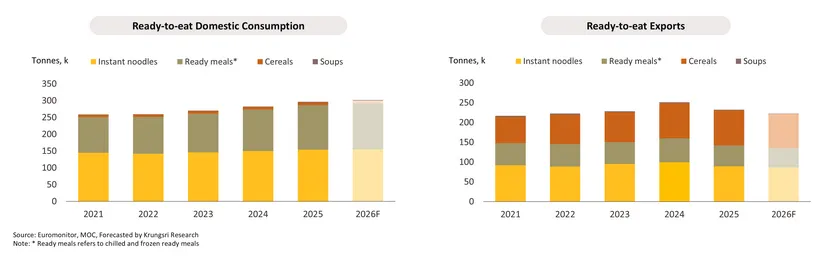
Ready-to-eat Food: Domestic demand will grow modestly, underpinned by rising demand for convenient foods, while exports remain pressured by border trade disruptions.
-
During 5M26, domestic consumption continued to expand, underpinned by increasingly urban lifestyles and steady demand for affordable, convenient ready-to-eat (RTE) products. However, growth likely moderated from the same period last year amid softer purchasing power, reflecting economic uncertainty and persistently high living costs. Meanwhile, export volume and value continued to contract by -6.1% YoY and -6.4% YoY, respectively. The decline was driven by two main factors: (i) Thailand–Cambodia border tensions disrupted cross-border trade and fueled anti-Thai sentiment in Cambodia, directly affecting instant noodle exports, as Cambodia is one of Thailand’s key export markets for the product, and (ii) elevated global energy prices increased inflationary pressures and weighed on consumer purchasing power in key export destinations, particularly price-sensitive markets in ASEAN and other emerging economies.
-
Domestic consumption is projected to grow by 1.4-2.4% throughout 2026, bolstered by fast-paced lifestyles, sustained demand for affordable and convenient RTE products, and continued expansion of convenience-store networks. However, growth is likely to remain moderate, constrained by rising health consciousness, intensifying competition from healthier meal alternatives, and potential volatility in raw material costs. Meanwhile, export volume is expected to contract by -4.7% to -3.7%, pressured by weaker purchasing power in key markets, higher domestic energy and logistics costs that erode price competitiveness, and persistent Thailand–Cambodia border tensions that continue to disrupt border trade and weigh on shipments to Cambodia and nearby CLMV markets.
Beverage: Domestic demand shows modest recovery, though exports stay under pressure from Cambodia border closures.
-
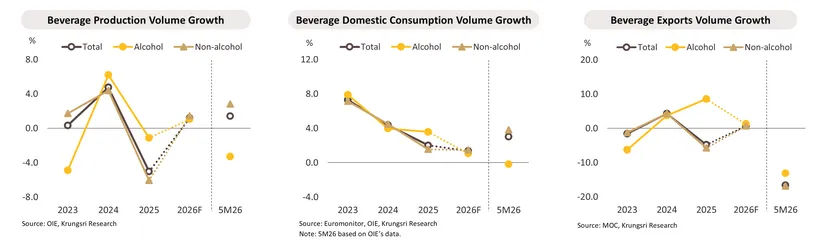
In 5M26, total beverage production increased by 1.4% YoY, driven by non-alcoholic beverages (+2.8% YoY), primarily aided by resumed production of carbonated drinks. However, alcoholic beverage production fell by -3.3% YoY due to production cuts aimed at destocking elevated inventory levels, alongside softer external demand. Domestic consumption recovered to 3.0% YoY, underpinned by non-alcoholic drinks, particularly carbonated drinks, amid hotter weather and the launch of zero-sugar products catering to increasingly health-conscious consumers. Meanwhile, alcoholic beverage consumption remained flat. Total exports contracted by -16.6% YoY, with alcoholic beverages declining -13.1% YoY and non-alcoholic beverages down -16.9% YoY, largely due to a halt in shipments to Cambodia (Thailand’s key beverage export market) following prolonged border closures amid ongoing border tensions.
-
2026 Outlook: Production is projected to grow by 0.7–1.7%, helped by both domestic and export demand, but at a slower pace due to rising production costs, particularly from higher oil prices and shortages of plastic resin, a key packaging material, amid the Middle East conflict. Growth is also expected to normalize from the low base in 2025, when output was affected by destocking and maintenance shutdowns at some major producers. Domestic consumption is forecast to increase modestly by 0.9–1.9% (down from 2.0% growth in 2025), constrained by rising living costs and lower-than-expected foreign tourist arrivals, though still supported to some extent by hot weather and new low-sugar product launches catering to health-conscious consumers. Meanwhile, exports are expected to remain stable or grow by 0.2-1.2%, bolstered by modest gains in juice, energy drinks, and beer. However, the overall outlook will be weighed down by global economic uncertainty, weak purchasing power, and continued disruption to shipments to Cambodia due to prolonged border closures and ongoing tensions.
Restaurant: Revenue will grow modestly in 2026, bolstered by food delivery and stimulus measures, but constrained by weak purchasing power and intensifying price competition.
-
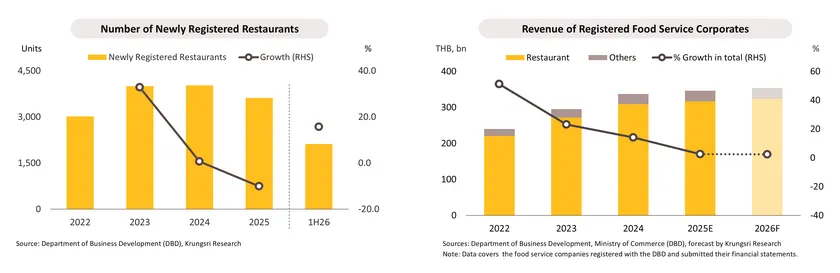
Restaurant and foodservice revenue in 1H26 is expected to continue expanding, albeit at a slightly slower pace than in 2025 (around 2.5%), constrained by two main factors: (i) Consumer purchasing power has come under pressure from economic uncertainty and higher living costs, partly driven by rising oil prices amid the Middle East conflict, prompting households to curb discretionary spending and reduce dine-out frequency; and (ii) tourism demand has softened, as disruptions to flights from the Middle East and Europe weighed on inbound arrivals, while the Chinese market remains subdued. Meanwhile, competitive pressure has intensified as the number of registered and active restaurants rose by 7.9% YoY to 28,025 outlets. According to the Department of Business Development (DBD), in 1H26, new restaurant registrations increased by 15.7% YoY, boosted partly by business registrations to qualify for the government's Thai Chuay Thai Plus scheme. Meanwhile, registered capital declined by -2.6% YoY, suggesting that recent entrants have been concentrated among smaller-scale operators, while investment by medium- and large-scale players has become more cautious.
-
For full-year 2026, restaurant and food service revenue is projected to grow by 1.8–2.8%. Growth will likely be constrained by still-fragile purchasing power and increasingly value-conscious consumer behavior. Nevertheless, the continued expansion of food delivery platforms and government stimulus measures, particularly the Thai Chuay Thai Plus scheme, should help sustain revenue growth. Meanwhile, price competition is expected to intensify, especially in the mid- to low-tier segments, as large corporate operators increasingly expand into mass-market formats and adopt more aggressive pricing strategies to capture market share.
Construction: Investment is expected to expand further in 2026, driven by megaprojects and private non-residential investment despite elevated cost pressures.
-
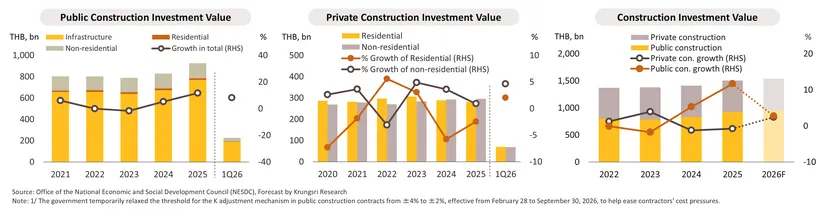
In 1Q26, public construction investment remained strong, increasing by 8.1% YoY, driven primarily by 9.2% YoY growth in infrastructure projects, which accounted for 83% of total public construction investment. Meanwhile, private construction investment returned to growth (+2.9% YoY), driven by non-residential construction (+4.6% YoY), particularly industrial factories and commercial buildings, as well as a recovery in residential construction (+2.0% YoY) after contracting in 1Q25. As a result, total construction investment rose by 6.1% YoY to THB 365.0 billion, although growth moderated from 16.4% in 1Q25.
-
Throughout 2026, total construction investment is projected to grow by 2.5–2.7%, with public investment slightly outpacing private investment. However, prolonged Middle East tensions could put upward pressure on construction costs through higher transportation costs and increased volatility in construction material prices, thereby raising cost burdens for contractors.
-
Public construction investment is projected to grow by 2.6–2.8%, driven by continued investment in major infrastructure projects, including motorways, double-track railways, and the expansion of Suvarnabhumi and Don Mueang airports. Meanwhile, the temporary relaxation of the K adjustment mechanism1/ is expected to ease the impact of rising construction costs during project implementation, providing contractors with greater flexibility in managing cost pressures.
-
Private construction investment is projected to grow by 2.3–2.5%, boosted by non-residential construction. However, residential construction is expected to remain weak due to high household debt, weak purchasing power, and elevated housing inventory, despite the one-year extension of the reduced transfer and mortgage registration fees (effective until June 30, 2027). Meanwhile, private contractors continue to face cost pressures without a K adjustment mechanism, while the financial sector remains cautious in extending credit for residential development projects.
Housing (BMR): Sales are expected to hit a 23-year low in 2026, though government measures help cushion the downturn.
-
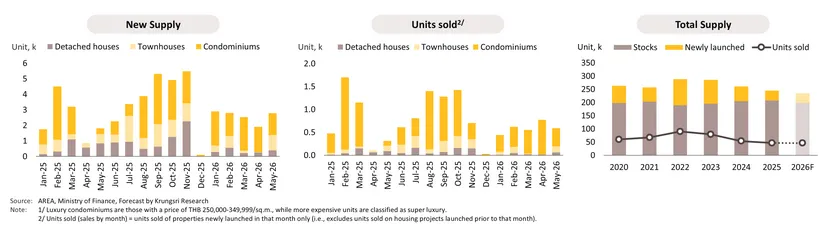
In 5M26, the residential market remained subdued, as reflected in a -6.6% YoY decline in newly launched residential supply to 12,939 units. This was mainly driven by fewer launches of detached houses (-42.7% YoY) and townhouses (-10.1% YoY), as developers prioritized inventory clearance in selected locations. In contrast, condominium launches surged by 35.6% YoY, driven by new luxury projects in high-potential locations, particularly near mass transit lines and emerging employment hubs. Sales of newly launched units declined by -20.3% YoY to 2,982 units, mainly due to weaker demand for detached houses (-57.9% YoY) and condominiums (-19.1% YoY), reflecting higher selling prices driven by rising development costs and a limited pool of high-end buyers. Meanwhile, townhouse sales increased by 8.6% YoY, reflecting buyers' growing preference for more affordable housing in suburban areas along mass transit extensions, where relatively lower prices improved access to mortgage financing.
-
For the remainder of 2026, housing demand is expected to improve modestly, underpinned by the government's extension of the reduced transfer and mortgage registration fees to 0.01% for properties priced up to THB 7 million through June 30, 2027. The measure is expected to encourage ownership transfers among buyers with strong purchasing power. Meanwhile, the luxury1/ condominium segment is expected to remain resilient, helped by demand from high-net-worth individuals (HNWIs), both Thai and foreign, including buyers from the Middle East seeking properties as safe-haven assets. However, the recovery is likely to remain constrained by: (i) the slow recovery in purchasing power among middle- to lower-income households, amid rising living costs and persistently high household debt; (ii) heightened consumer caution toward long-term financial commitments, with buyers prioritizing long-term value for owner-occupation or rental investment over speculative purchases; and (iii) more cautious lending by financial institutions to contain non-performing loans (NPLs), resulting in higher mortgage rejection rates extending to the THB 3-5 million price segment. Consequently, newly launched residential supply is projected to decline by -2.7% to 36,000 units in 2026, while total residential sales are expected to fall by -1.2% YoY to 46,000 units, with both reaching a 23-year low.
Office Building (BMR): Persistent oversupply is expected to keep occupancy rates near 2025 levels.
-
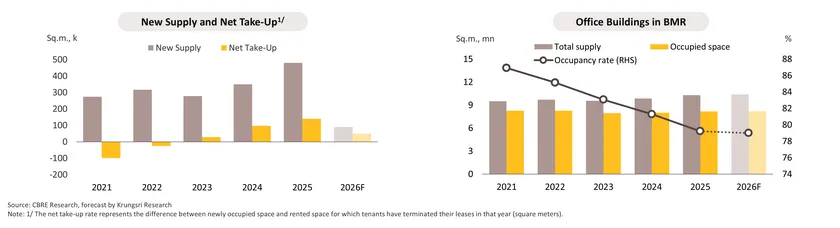
In 1Q26, total accumulated office supply increased by 2.9% YoY to 10.3 million sq.m. Meanwhile, net take-up1/ remained positive at 11,559 sq.m., bolstered by continued tenant relocation to Grade A and A+ office buildings, as well as Grade B buildings in non-CBD areas. As a result, occupied space increased by 1.6% to 8.2 million sq.m., driven by continued positive net take-up. Despite the high level of vacant office space remaining in the market, continued space absorption brought the overall occupancy rate to 79.3%. This marked the second consecutive quarter-on-quarter increase, reflecting signs of a gradual market recovery.
-
For the remainder of 2026, the Thai economy is expected to slow amid ongoing geopolitical uncertainties, particularly Middle East tensions. As a result, most businesses are likely to prioritize cost-control measures, leading to slower hiring and more cautious office expansion plans. Nevertheless, foreign investment in targeted industries, including electric vehicles (EVs), digital businesses, and advanced medical services, is expected to support office demand, particularly for Grade A+ green office buildings in the CBD that meet global ESG standards. Therefore, total net take-up is projected to reach 40,000-50,000 sq.m. in 2026, supporting a modest 0.5% increase in occupied space from 2025. This reflects the ongoing flight-to-quality trend, with leasing demand concentrated in Grade A+ office buildings in the CBD and Grade A buildings in non-CBD areas. On the supply side, approximately 90,000 sq.m. of new office space is scheduled for completion, bringing total accumulated supply to 10.4 million sq.m., up 0.9% from 2025. Around 80% of the new supply will comprise Grade A+ office buildings, including One Bangkok Tower 2 and Thai Group Quarter, with landlords expected to offer more competitive rental packages and attractive lease incentives to retain existing tenants and attract new occupiers. As a result, the overall occupancy rate is projected to remain stable at around 79.0%, broadly in line with 2025. However, the continued supply overhang is expected to keep downward pressure on rental rates, particularly for older office buildings that have yet to undergo refurbishment or asset enhancement.
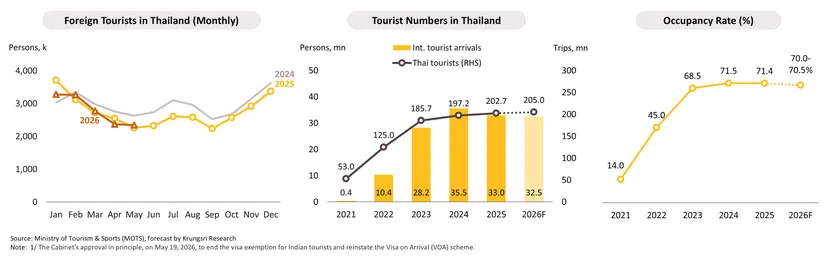
Hotel: International tourist arrivals are projected to fall to 32.5 million in 2026, with occupancy rates softening due to reduced flight capacity amid the Middle East conflict.
-
In 5M26, international tourist arrivals declined by -2.3% YoY to 14.0 million. Although arrivals from China (17% of total arrivals) rebounded by 18.4% YoY, this was offset by a decline in Malaysian visitors (12% share, -8.6% YoY), despite signs of recovery in May. Meanwhile, European arrivals grew by only 0.3% YoY, partly due to the Middle East conflict, which disrupted flight routes, while arrivals from the Middle East fell by -24.8% YoY. Domestic tourism increased by 2.8% YoY to 86.6 million trips. As a result, the nationwide occupancy rate (OR) declined to 73.2% (-0.5 ppt YoY), reflecting weaker international arrivals in key destinations. Nevertheless, OR in major tourist destinations remained above 75%. Meanwhile, the nationwide average daily room rate (ADR) increased by 5.0% YoY, supporting a 3.5% YoY rise in revenue per available room (RevPAR) to THB 1,409.
-
In 2026, international tourist arrivals are expected to decline slightly, weighed down by (i) a slower-than-expected recovery in the Chinese market; (ii) the Middle East conflict, which has reduced flight capacity and disrupted travel; (iii) elevated oil prices and airfares; (iv) a slowdown in the global economy amid geopolitical tensions; (v) intensifying competition from regional destinations; and (vi) the expiration of the visa exemption for Indian tourists and the reinstatement of the Visa on Arrival (VOA) scheme1/. As a result, international tourist arrivals are projected at 32.5 million (-1.4% YoY). Meanwhile, domestic tourism is expected to reach around 205 million trips (+1.1% YoY), helped by continued government stimulus measures. Consequently, the nationwide hotel occupancy rate (OR) is projected to ease to 70.0–70.5%, down from 71.4% in 2025.
Private Hospital: Revenue growth is expected to remain moderate, with a gradual recovery in international patient volumes in 2H26.
-
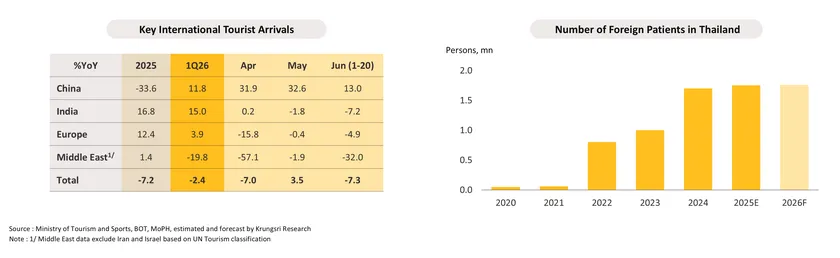
Revenue growth moderated in the first half of the year, driven by (i) more cautious healthcare spending among domestic patients amid rising living costs, prompting some self-paying patients to defer non-urgent treatments, although demand for essential care remained resilient; and (ii) a decline in international patient volumes, particularly from the Middle East, a key market, due to the regional conflict and Ramadan-related travel delays, which weighed on hospitals reliant on foreign patients. Moreover, neighboring markets, especially Cambodia, were also affected by the Thailand–Cambodia border closure. Nevertheless, the expansion of Social Security healthcare benefits, including coverage for dental implants and wisdom tooth extractions, helped partially boost hospital revenues.
-
Business performance is expected to improve in the second half of the year, driven by (i) a gradual recovery in international patient volumes, particularly from the Middle East, bolstered by easing regional tensions, lower pressure on oil prices and travel costs, and the recovery in flight frequencies; and (ii) the continued popularity of preventive healthcare, which is encouraging consumers to place greater emphasis on health screenings and proactive health management. However, domestic purchasing power remains fragile, especially among middle- and lower-income groups, which may weigh on demand for medical services at small and medium-sized hospitals. Hospitals with diversified revenue streams across self-pay and Social Security patients, or those serving as referral centers for complex cases within and outside their networks, are expected to be more resilient, as stable and recurring income from Social Security patients helps mitigate earnings volatility amid a slowing economy. In 2026, the business is expected to record revenue growth of around 2.0–3.0%.
Pharmaceuticals: Demand is expected to grow, underpinned by rising NCDs and broader healthcare coverage, though growth may moderate amid weaker purchasing power.
-
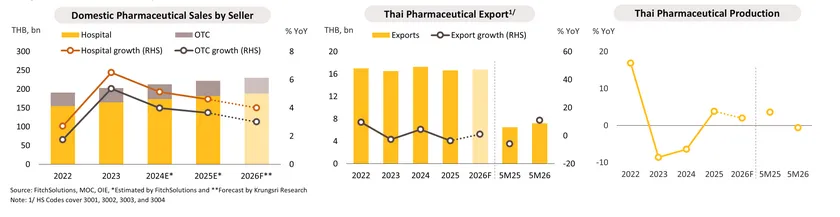
During 5M26, Thailand's pharmaceutical production index contracted slightly by -0.6% YoY, driven by lower production of injectables (-48.4% YoY), creams (-22.5% YoY), powders (-6.4% YoY), capsules (-3.1% YoY), and liquid formulations (-0.6% YoY). The decline reflected a high base effect in 5M25, as well as the impact of the Middle East conflict, which led some manufacturers to adopt more cautious production strategies amid uncertainties over the supply of active pharmaceutical ingredients (APIs), raw materials, and higher freight costs. Nevertheless, domestic pharmaceutical demand is expected to continue growing, driven by (i) rising influenza cases due to erratic weather conditions and reduced preventive measures, and (ii) government policies expanding healthcare coverage and improving access to healthcare services. Meanwhile, pharmaceutical export volume declined -8.0% YoY, while export value increased by 10.9% YoY, reflecting higher production costs that pushed up prices, alongside weakened purchasing power in export markets.
-
Pharmaceutical production is projected to grow by 1.5–2.5% in 2026, backed by continued growth in domestic demand and government initiatives to strengthen local manufacturing capacity for pharmaceuticals, APIs, and biopharmaceuticals, to reduce import dependence. Domestic pharmaceutical sales are forecast to increase by 3.0–4.0%, reflecting growth of 3.5-4.5% in hospital demand and of 2.5-3.5% in the over-the-counter (OTC) market. Key demand drivers include: (i) the rising prevalence of non-communicable diseases (NCDs) and air pollution-related illnesses; and (ii) expanded healthcare coverage under the Universal Coverage and the Social Security schemes, thereby improving access to medicines. However, domestic consumption is expected to moderate slightly from 2025 due to weaker purchasing power amid a fragile economic environment. In addition, geopolitical tensions in the Middle East are likely to increase medicine prices through higher import costs for medicines and raw materials, potentially reducing demand for non-essential medicines. Meanwhile, pharmaceutical exports are expected to remain broadly flat, reflecting persistently weak external demand amid global economic uncertainty.
Medical devices: Domestic demand remains underpinned by rising NCD prevalence and preventive healthcare trends, while exports stay soft amid global economic uncertainty.
-
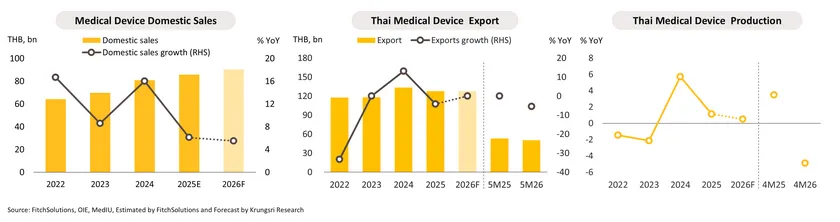
During 5M26, Thailand’s medical device production index contracted by -7.2% YoY due to lower output of blood transfusion and infusion sets (-9.2% YoY), syringes (-11.1% YoY), disposable medical devices (e.g., face masks, caps, and gowns) (-23.2% YoY), and ophthalmic lenses (-5.6% YoY). The decline was primarily driven by weaker exports, which accounted for around 60% of total medical device sales. Periodic supply disruptions from Middle East tensions also constrained imports of petrochemicals and medical plastics, prompting some manufacturers to scale back production. Nevertheless, domestic demand is expected to remain resilient, driven by the aging population, the rising prevalence of non-communicable diseases (NCDs), and improved access to healthcare services. Medical device exports declined by -5.4% YoY due to: (i) intensifying price competition in Thailand’s key export segment of medical consumables from major producers such as China and Malaysia; (ii) weakening global demand and logistics disruptions related to the Middle East conflict; (iii) subsequent normalization of orders after US tariff-driven front loading; and (iv) the Chinese government procurement policy favoring domestically manufactured medical devices, which has reduced import demand from Thailand.
-
Medical device production is projected to grow modestly by 0.5–1.5% in 2026, while the domestic market is expected to expand by 5.0–6.0%. Growth will be underpinned by: (i) the rising prevalence of non-communicable diseases (NCDs), driving demand for diagnostic, patient monitoring, and treatment devices; (ii) a growing elderly population, boosting demand for rehabilitation, health monitoring, and long-term care devices; and (iii) the increasing adoption of preventive healthcare, boosting demand for screening and preventive healthcare products. However, hospital investment is expected to remain cautious amid economic uncertainty. Medical device exports are projected to remain broadly flat in 2026, with exports expected to recover in 2H26 following a contraction in the first half. The recovery will be aided by easing geopolitical tensions in the Middle East, improving demand from trading partners and logistics conditions, although intense global competition is expected to continue weighing on export growth.
Modern Trade: Growth slowed in 2026 amid weaker purchasing power and a shift toward essential spending, while the recovery in tourist-related spending remained limited.
-
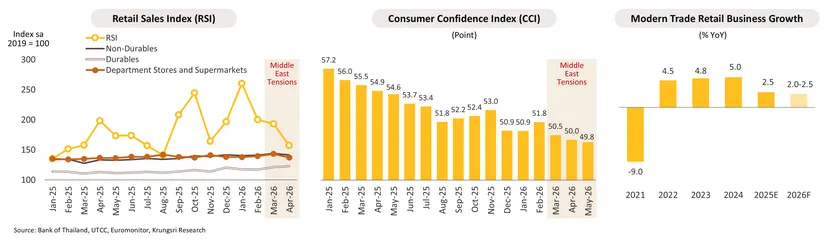
In 5M26, modern trade sales came under greater pressure as Middle East tensions lifted energy prices, transport costs, and overall living expenses, weakening consumer sentiment and spending. The Consumer Confidence Index (CCI) fell to 49.8 in May from 51.8 in February, while the Retail Sales Index (RSI) for department stores and supermarkets contracted by -1.5% YoY in Mar–Apr. This reflected more cautious household spending amid fragile purchasing power, income uncertainty, and a higher cost of living. At the same time, the slower-than-expected recovery in foreign tourist arrivals continued to weigh on spending in tourist-linked areas and discretionary categories such as department stores, premium products, and health and beauty items.
-
For 2026, modern trade growth is expected to moderate to only 2.0–2.5%, with convenience stores and supermarkets remaining the key growth drivers as consumers continue to prioritize essential spending. Convenience stores should remain the most resilient segment, as high purchase frequency, daily essential product offerings, and extensive branch networks across both urban and residential areas support their performance. Supermarkets are also expected to continue expanding, although competition is intensifying from neighborhood formats such as Lotus’s Go Fresh, Tops Daily, and Mini Big C, as well as from quick-commerce platforms offering rapid grocery delivery. In contrast, hypermarkets are likely to remain under pressure as consumers show less willingness to travel for bulk purchases, while department stores are expected to recover more slowly due to weak discretionary spending and the partial rebound in tourism-related demand. As a result, convenience stores and supermarkets, which together account for around 70% of market value and nearly 95% of total outlets, will continue to underpin modern trade growth this year.
Air Transport: Growth is expected to remain moderate in 2026, with air cargo continuing to outperform passenger traffic.
-
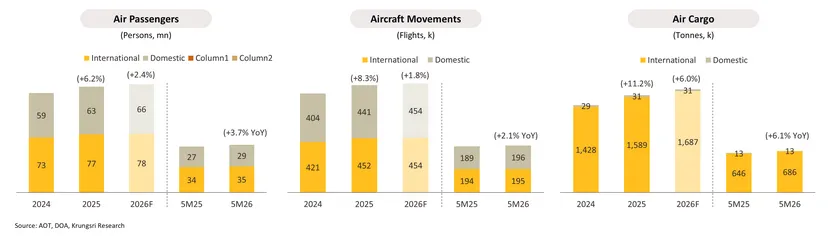
In 5M26, airline traffic continued to expand, although passenger growth showed clearer signs of moderation amid softer tourism momentum, weaker purchasing power, and higher travel costs. Total air passengers rose to around 64 million (+3.7% YoY), comprising 29 million domestic passengers and 35 million international passengers, with domestic passenger growth outpacing international. Part of the moderation in international demand reflected the impact of Middle East tensions, which disrupted several routes, weakened travel confidence, and kept fuel-related travel costs elevated. Meanwhile, aircraft movements increased by only 2.1% YoY to 391,000 flights, slower than passenger growth, indicating continued capacity discipline by airlines. Air cargo also remained relatively strong, expanding by 6.1% YoY, fueled by international shipments of electronics, high-value goods, perishables, and ongoing regional supply-chain activities.
-
For 2026, Krungsri Research expects airline growth to remain positive but moderate, with softer travel demand constraining passenger traffic, while air cargo remains the sector’s main growth buffer. Passenger volume is projected to increase by only 2.4%, while aircraft movements are expected to rise by 1.8%, reflecting limited capacity expansion and continued discipline in route management. Meanwhile, air cargo is forecast to grow by 6.0%, bolstered by international cargo demand, particularly for electronics, high-value products, perishable goods, and regional supply-chain activities. Nevertheless, the pace of expansion across both passenger and cargo segments is likely to remain limited by aircraft delivery delays, spare-parts shortages, and maintenance constraints, which may continue to limit fleet availability, aircraft utilization, and airlines’ ability to expand routes more aggressively.
Chemical Fertilizer: Domestic demand is expected to fall, weighed down by farmers' fragile purchasing power, elevated fertilizer prices, and drought risk from El Niño.
-
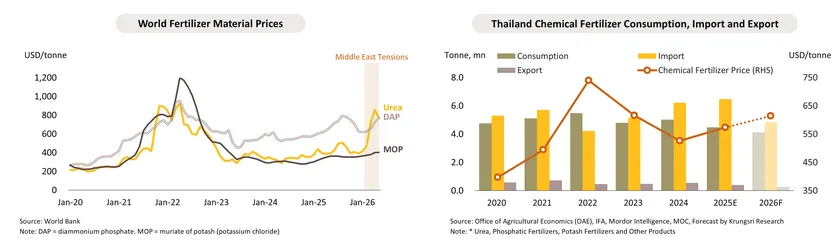
In 5M26, domestic chemical fertilizer production fell -17.6% YoY, driven by (i) geopolitical disruptions—chiefly the Middle East conflict and closure of the Strait of Hormuz— which cut raw material imports by -28.9% YoY, led by war-affected suppliers Saudi Arabia (-72.4% YoY), Oman (-68.4% YoY), and Israel (-33.6% YoY); Thailand sources over 70% of fertilizer raw material imports from the Middle East; and (ii) rising raw material costs, tracking higher crude oil prices, which further slowed import activity. Average import prices reached USD 400.3/tonne for raw materials (+8.1% YoY) and USD 605.6/tonne for blended fertilizer (+13.0% YoY). Domestic consumption contracted -20.1% YoY on weaker farmer purchasing power, with agricultural income down roughly -2.0% YoY even as domestic fertilizer prices rose 2-10% depending on product cost structure. Exports fell -38.4% YoY to 0.1 million tonnes, led by Cambodia (-82.7% YoY) amid bilateral tensions and Myanmar (-32.0% YoY) due to internal conflict.
-
In 2026, domestic fertilizer demand is projected to decline by -7.4% to -8.4%, averaging 4.11–4.15 million tonnes, driven primarily by weakening farmer purchasing power and elevated prices. Farmers' purchasing power is expected to weaken due to a slowdown in overall agricultural output, stemming from the transition into El Niño during the second half of the year and strict government management of reservoir water, which has prompted some farmers to delay cultivation and reduce fertilizer usage. Concurrently, chemical fertilizer prices remain high due to supply tightness fueled by conflicts in the Middle East, a key import source. Consequently, annual chemical fertilizer imports are forecast to drop by -24.7% to -25.7%, totaling 4.81–4.87 million tonnes. Meanwhile, fertilizer exports are projected to contract by -31.2% to -32.2%, reaching 0.27–0.28 million tonnes, restricted by Thailand-Cambodia border tensions as well as economic uncertainty and domestic conflict in Myanmar, both of which continue to disrupt border trade and logistics.
Palm Oil: Domestic sales will be underpinned by a higher biodiesel blending ratio and food industry recovery, while exports benefit from competitors' supply constraints.
-
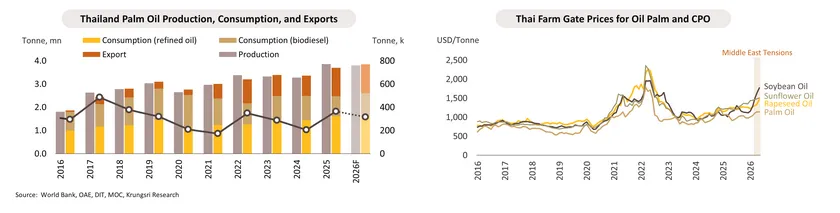
During 5M26, fresh oil palm fruit production fell to 8.6 million tonnes (-2.1% YoY), normalizing from a high base during the same period last year which had benefited from highly favorable weather and rainfall. Despite this lower crop volume, crude palm oil (CPO) production expanded by 2.6% to 1.6 million tonnes, driven by enhanced plantation maintenance incentivized by rising fruit prices, which ultimately yielded higher oil extraction rates. This growth was further bolstered by strong domestic consumption, which rose to 1.0 million tonnes (+9.5% YoY), led by biodiesel production at 0.4 million tonnes (+19.3% YoY) due to the B7 blending mandate, and refined palm oil production at 0.6 million tonnes (+3.9% YoY). Meanwhile, exports surged to 0.5 million tonnes (+29.5% YoY) to fulfill restocking demand, primarily driven by energy security concerns in India and China.
-
In 2026, domestic palm oil production is projected to contract by -0.9% to -1.9% due to the rapid onset of El Niño. However, this decline will be mitigated by ongoing plantation expansions and favorable prices that incentivize farmers to maintain and harvest crops, keeping the contraction rate relatively low while boosting expansion in both domestic and export markets. Total domestic demand for crude palm oil is expected to grow by 4.9% to 5.9%, driven by downstream industries. This includes the transportation sector, which increased its biodiesel mandate from B5 to B7 in March 2026, and the food industry, which has benefited from government stimulus measures via the Thai Chuay Thai Plus scheme. Meanwhile, export volumes are forecast to expand by 1.0% to 2.0%, driven primarily by (i) supply constraints from major competitors. Specifically, Indonesia and Malaysia are tightening crude palm oil export restrictions due to energy security concerns stemming from Middle East conflicts and El Niño, while Indonesia, the world's top exporter, is also raising its biodiesel blend from B40 to B50 starting July 1; (ii) rising global demand, as major trading partners, particularly India and China, increase imports to build food and energy reserves; and (iii) relative price advantage over other energy crops, which have seen price hikes driven by escalating geopolitical tensions in the Middle East.

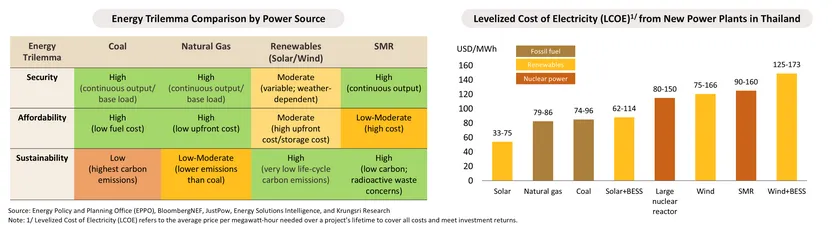
SMRs are emerging as a potential solution to strengthen Thailand's energy security while driving its clean energy transition.
-
The 2026 global energy shock, triggered by Middle East tensions, has renewed interest in Small Modular Reactors (SMRs). SMRs are advanced nuclear power plants with three key features: (i) small—up to 300 MW per unit, roughly one-third the capacity of a conventional large reactor; (ii) modular—most components are factory-built and shipped to the installation site; and (iii) reactor-based—using nuclear fission to produce heat, which is then used to generate carbon-free electricity. They also employ passive cooling systems that rely on natural forces rather than pumps, backup power, or human action, to bring the reactor to a safe shutdown state. As a result, SMRs offer greater flexibility and safety, with the potential to enhance both energy security and sustainability.
-
In Thailand, SMRs are expected to gain importance in the new Power Development Plan (PDP2026), which targets 60% of electricity generation from clean energy, including renewables, hydropower, and SMRs. Planned SMR capacity is expected to increase to 2,000–4,000 MW, up from 600 MW in the draft PDP2024, with final details expected later in 2026. Key drivers include: (i) rising demand for clean electricity, particularly from data center investments and Thailand's accelerated 2050 net-zero target; and (ii) greater energy security by reducing Thailand's exposure to LNG price volatility and supply disruptions, as experienced during the 2022 Russia–Ukraine war and the 2026 Middle East tensions. In response to these trends, several energy players are exploring SMRs, including the Electricity Generating Authority of Thailand (EGAT); Global Power Synergy (GPSC), which is seeking a partnership with Denmark's Saltfoss Energy; Ratch Group, in partnership with Saha Pathana Group; and WHA Group. However, challenges remain, including (i) public concerns over nuclear safety following the Chernobyl (1986) and Fukushima (2011) accidents, as well as radioactive waste management; and (ii) cost competitiveness, as SMRs currently require high upfront investment and have higher generation costs than other technologies, such as gas-fired power plants.
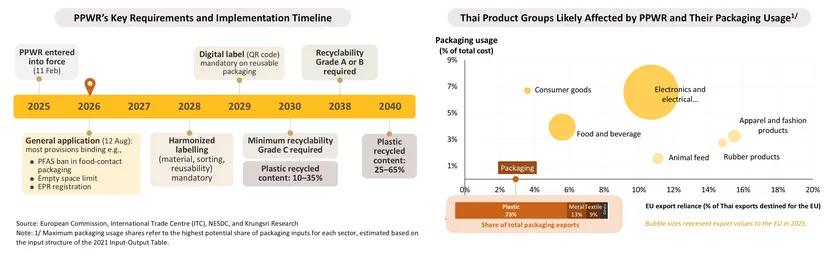
PPWR: New EU rules raise compliance costs for packaging redesign and documentation while driving growth in circular economy industries.
-
The Packaging and Packaging Waste Regulation (PPWR) establishes sustainability requirements for all packaging placed on the EU market, regardless of origin, including packaging made of plastic, paper, metal, glass, wood, textiles, and ceramics. Some provisions will take effect on August 12, 2026, including restrictions on hazardous substances such as per- and polyfluoroalkyl substances (PFAS) in food-contact packaging and limits on packaging empty space. From 2030 onward, two key requirements will apply: (i) recyclability—packaging must achieve at least Grade C recyclability (at least 70% recyclable by weight), rising to Grade B (at least 80%) from 2038 onward; and (ii) recycled content—plastic packaging must contain 10–35% recycled content during 2030–2039, increasing to 25–65% from 2040 onward, depending on the packaging type.
-
The regulation will affect Thai businesses exporting goods to the EU through higher costs associated with redesigning packaging and preparing the technical documentation required to demonstrate compliance, as well as potentially reduced competitiveness if businesses fail to comply with the PPWR. Products most likely to feel the impact fall into two groups: (i) packaging, particularly plastic packaging, which accounted for 72.9% of packaging exports to the EU; and (ii) packaging-intensive products, where export values and/or the shares of packaging in total cost are relatively high, particularly food and beverages, consumer goods, and electrical appliances and electronics. However, the PPWR is expected to support long-term growth in the circular economy, particularly in recycled plastics, bioplastics, and recycling-related sectors, as well as among businesses adopting sustainable packaging.
Back







.webp.aspx)