
Bangkok (9 September 2026) –
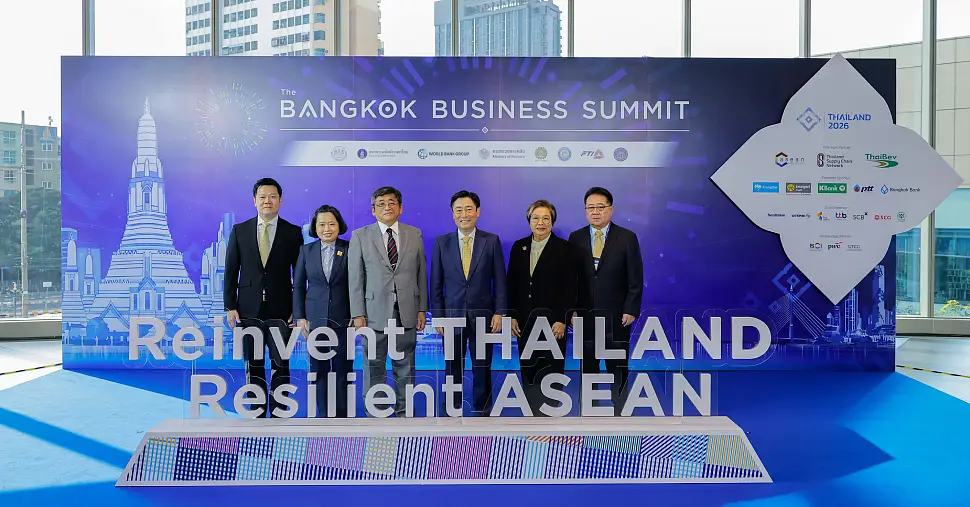
Krungsri (Bank of Ayudhya PCL) and MUFG shared their vision and perspectives on the future of Thailand’s economy at
THE BANGKOK BUSINESS SUMMIT 2026. The discussions outlined approaches to navigate rapid global changes driven by technology, geopolitics, supply-chain restructuring, and climate challenges. The two organizations highlighted three key enablers: digital infrastructure that broadens access to finance; stronger links between Thailand, regional economies and capital markets, and private capital that supports the transition to a low-carbon economy. Together, these will form an important foundation for enhancing the long-term competitiveness of Thailand and ASEAN.
At the event,
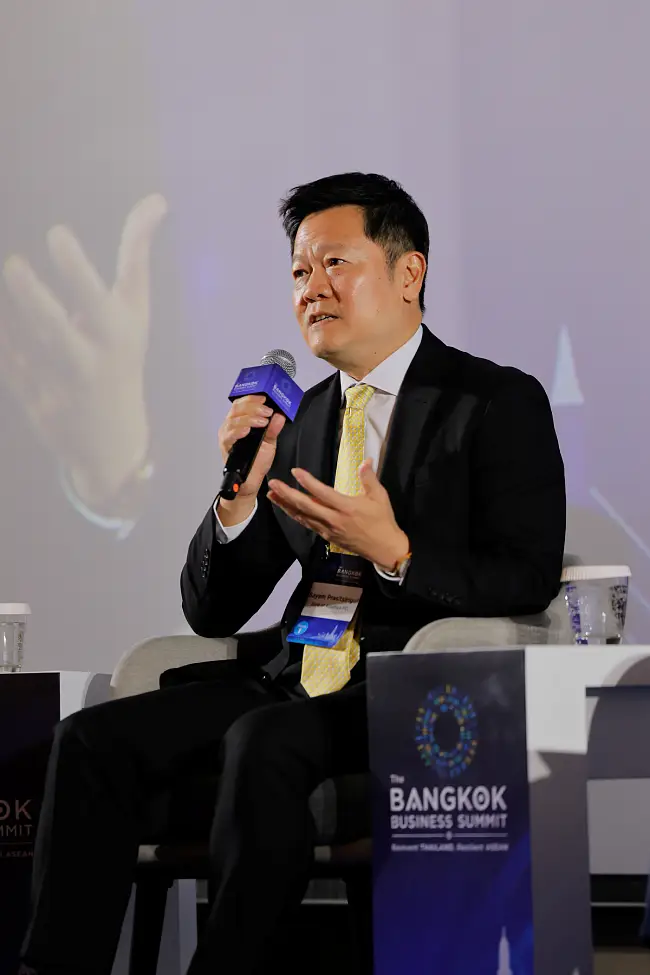
Mr. Sayam Prasitsirigul, Krungsri Head of Retail and Consumer Banking, shared his views during the session, “
Building Thailand’s Trusted Economy: Digital Public Infrastructure for Inclusive Growth.” He noted that Thailand’s digital economy must be built on
trust, security, and inclusive access, supported by connected infrastructure and a financial ecosystem that expands access to financial services and funding for individuals and small and medium-sized enterprises (SMEs), while strengthening the country’s competitiveness.
A key objective is to position Thailand as
ASEAN’s Trusted Digital Economy by 2035. Digital Public Infrastructure will play an important role in connecting the public sector, businesses, and financial institutions, while enabling more efficient flows of data and transactions.
For SMEs, Mr. Sayam emphasized their importance as a
key engine of the Thai economy. Financial institutions have continued to support entrepreneurs by simplifying and accelerating loan application processes, as well as offering competitive interest rates. However, a major challenge remains the accessibility and effective use of data. While banks increasingly consider alternative data beyond financial statements in their credit assessments, thorough data verification and validation are still needed to accurately assess borrowers’ repayment capacity. This can make the process complex, time-consuming, and costly, which may ultimately be reflected in customers’ financing expenses.
Today, Digital Public Infrastructure, particularly PromptBiz, is helping address these constraints. PromptBiz is a digital infrastructure platform that securely and systematically connects trade data among buyers, sellers, and financial institutions. It enables the verification of transaction data and invoices, reduces risks related to fraudulent documents and duplicate loan applications, and allows financial institutions to
assess and provide credit more efficiently. As a result, SMEs can
improve liquidity, reduce their reliance on collateral, and enhance efficiency throughout the supply chain.
Looking ahead, PromptBiz has the potential to evolve beyond facilitating
access to finance into an infrastructure platform that connects large corporations, SMEs, and financial institutions across the wider ecosystem. By linking the public and private sectors, it can strengthen supply chains through improved access to finance, data, knowledge, and technology, while creating an environment that supports business growth and adaptation.
This development therefore goes beyond expanding SMEs’ access to funding. It represents an
important foundation for strengthening business capabilities, accelerating the transition toward future industries, and transforming Thai industry to compete and grow sustainably.
“Today, we have
Reinvent Thailand as a roadmap, PromptBiz as a platform, and financial institutions ready to provide financing across this ecosystem. What matters now is for
both the public and private sectors to act together—enabling businesses of all sizes to transform and grow together, and driving Thailand’s
potential toward tangible growth,” said Mr. Sayam.
Meanwhile,
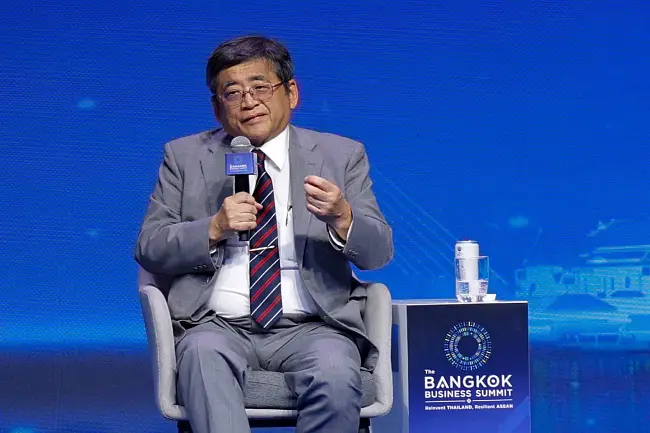
Mr. Masamichi Kono, Senior Advisor, MUFG Bank, Trustee, IFRS Foundation, and Member, Friends of Multilateralism Group (FMG), joined the main-stage discussion, “The Global Acceleration Economy: De-Risking the Decade for ASEAN.” Mr. Kono outlined the global economic landscape in an era of acceleration, shaped by technology, geopolitics, and supply-chain restructuring. He highlighted factors that will help ASEAN maintain its competitiveness, attract investment, and achieve sustainable growth amid rising uncertainty.
One significant opportunity for Thailand is
its ongoing accession process to the Organization for Economic Co-operation and Development (OECD). Mr. Kono noted that the benefits begin during the technical review stage, when Thailand can benchmark its policies, implementation frameworks, practices, and standards against those of OECD member countries. This process can help raise standards, increase transparency, strengthen investor confidence, and deepen Thailand’s integration with the global economy.
Mr. Kono also underscored the importance of a
rules-based multilateral trading system and international cooperation in promoting regional economic stability. He noted that Japanese investors continue to regard Thailand as an attractive investment destination and regional hub, supported by its strategic location, strong infrastructure, robust industrial base, and commitment to an open and rules-based economic framework.
Despite growing uncertainties in the global economy, Mr. Kono highlighted the resilience of the multilateral trading system, noting that bilateral and regional trade agreements continue to be developed on WTO foundations rather than as substitutes for them. He stressed that preserving free, fair and open markets, attracting regional talent, and building resilient and adaptive supply chains will be essential for enhancing Thailand’s competitiveness and strengthening its role in regional growth and economic integration.
To support sustainable growth, Mr. Kono highlighted the role of transition finance in helping businesses and industries accelerate their transition toward a low-carbon economy while supporting Thailand’s net-zero ambitions. He also stressed the growing importance of building climate-resilient industries and supply chains to enhance long-term competitiveness and sustainability. This transition must be accompanied by high-quality, transparent disclosures aligned with international standards. Such measures will strengthen market credibility, attract long-term capital, and ensure that the transition is effective and trusted in the years ahead.
The discussions reinforced that enhancing Thailand’s competitiveness requires simultaneous progress in digital transformation, regional connectivity, and sustainable finance—with trust as the foundation. This extends from data and digital infrastructure to international standards, transparency, and a financial system that can provide concrete support to businesses.
As a leading regional bank for sustainability, Krungsri is ready to combine MUFG’s global network, financial expertise, and innovation to serve as a “
Trusted Partner”—connecting Thai businesses with opportunities, capital, and growth, while helping drive Thailand and ASEAN toward a stronger and more sustainable future.