
Bangkok (9 October 2026) –
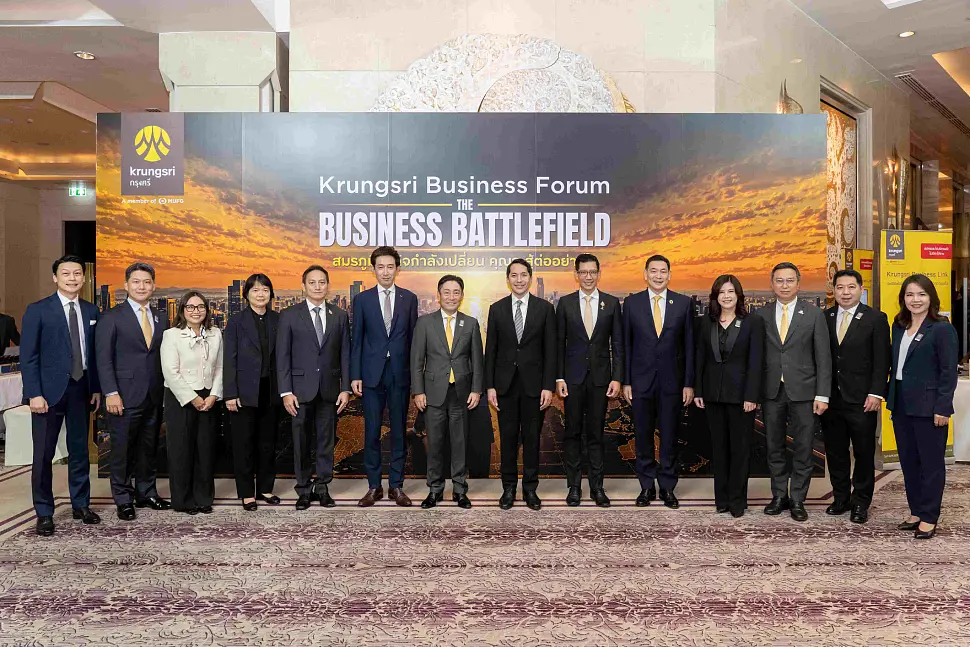
Krungsri (Bank of Ayudhya PCL) hosted “
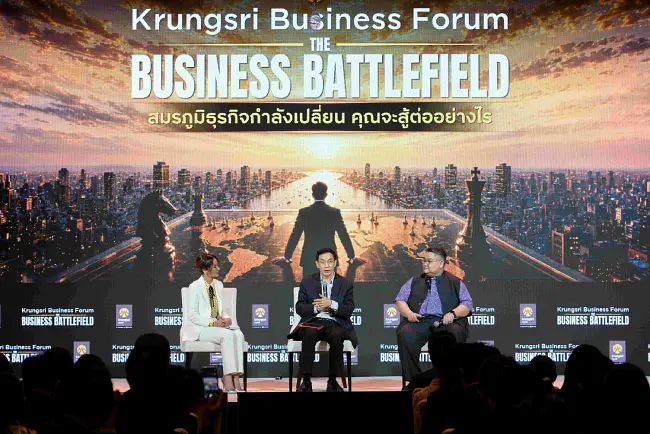
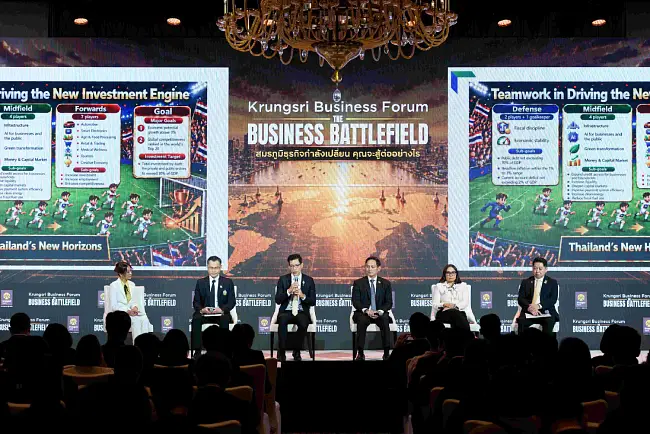
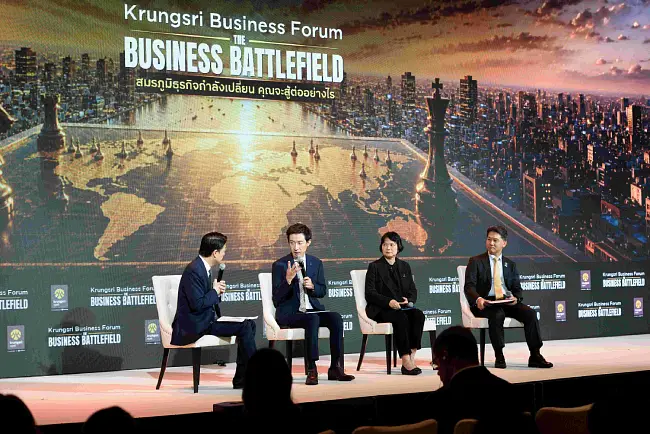
Krungsri Business Forum 2026: The Business Battlefield,” bringing together policymakers, government officials, business leaders, economists, and experts in economics, finance, and technology to exchange perspectives and decode the challenges facing Thai businesses amid a rapidly changing global landscape. The forum provided insights to help businesses prepare for emerging challenges, seize new opportunities, and adapt their strategies for resilient growth in the business battlefield of the future.
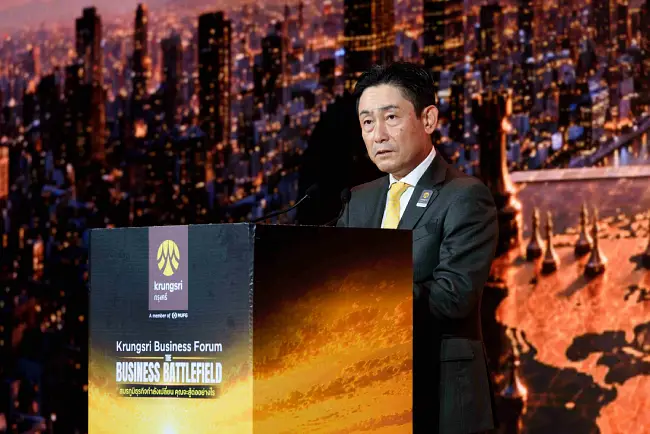
Mr. Kenichi Yamato, Krungsri President and Chief Executive Officer, said: “The business environment is increasingly resembling a battlefield, where the landscape is shifting rapidly and the rules of competition are evolving. Geopolitical tensions are reshaping trade and supply chains, while technology, particularly artificial intelligence (AI), is redefining productivity and competition. At the same time, the transition to a low-carbon economy is influencing investment priorities, while customer expectations continue to evolve at an unprecedented pace. Against this backdrop, the key question for business leaders is no longer simply, ‘How do we protect what we have?’ but rather, ‘How do we transform our businesses so that we can compete and grow under the new rules?’”
“Thailand has strong foundations, including deep industrial ecosystems, a strategic position in ASEAN, experienced entrepreneurs, and established connections with global supply chains. However, the country’s next phase of growth cannot rely solely on the advantages of the past. We must build on these strengths to develop new capabilities, create new sources of value, and unlock new growth opportunities. Krungsri is ready to be a trusted partner that understands our customers’ businesses and supports them throughout every stage of their transformation, with expertise and capabilities under ‘ONE Krungsri’ covering corporate and investment banking customers, SMEs, Japanese corporate customers, and retail customers, combined with MUFG’s global network. This enables Krungsri to help customers turn uncertainty into clear goals, opportunities into investments, and investments into sustainable growth,” Mr. Kenichi said.
Decoding Thailand’s National Strategy: Turning Global Challenges into New Capabilities
In his keynote address,
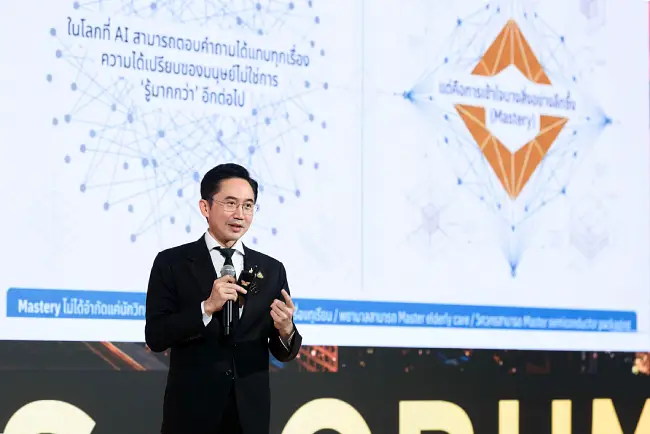
“Thailand’s Next Competitive Advantage: Turning Global Challenges into National Opportunities,” Professor Dr. Yodchanan Wongsawat, Deputy Prime Minister and Minister of Higher Education, Science, Research and Innovation, highlighted the need for Thailand to shift its competitive edge from cost advantage to capability advantage by investing in the country’s human capital. The government is advancing this agenda through “Thailand Square,” which aims to connect education, skills development, research, innovation, and technology. At the heart of the concept is a shift from “Individual Mastery” to “
National Mastery” to strengthen Thailand’s long-term competitiveness through investment in innovation, technology, and highly skilled talent. Science and technology will play a key role in upgrading existing industries while creating new ones, positioning Thailand as a trusted strategic partner in the global economy.
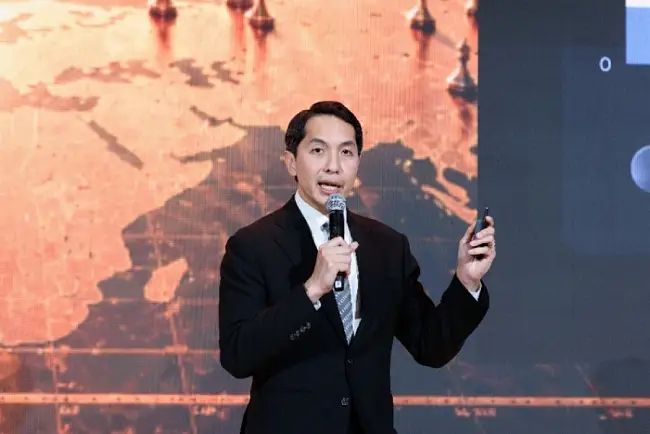
Dr. Santitarn Sathirathai, Vice Minister for Finance, in his keynote address,
“Thailand’s Future Economy: The Next Growth Engine in the Fragmented World,” said that AI is no longer simply an alternative technology, but is emerging as a key economic and productivity engine. He emphasized the importance of a “private sector-led approach with government support” approach, noting that Thailand needs to move beyond being merely a destination for AI investment and become a country that actively leverages AI to improve productivity, create greater value, and drive the economy into its next phase of growth. He added that Thailand’s economic development should advance on three fronts in parallel: “
Stabilize Today, Transition Now, and Invest for Tomorrow,” balancing the need to address immediate challenges with laying the foundations for future growth. This includes enabling existing industries to adapt and strengthen their competitiveness, while creating opportunities for new industries, developing the skills of the Thai workforce, and promoting investment that expands opportunities for Thai businesses.
Deep Dive into Geopolitics and the New Rules of Competition
The panel discussion
“The War Room: Geopolitics, Power and the New Rules of Competition” brought together
Dr. Somkiat Tangkitvanich, President of Thailand Development Research Institute (TDRI), and
Dr. Piti Srisangnam, Associate Professor of Economics at the Faculty of Economics, Chulalongkorn University and Executive Director, ASEAN Foundation, to examine geopolitical trends, trade tensions, and economic fragmentation, including economic decoupling and friend-shoring. The speakers highlighted the need for Thai businesses to accelerate their adaptation to increasingly fragmented supply chains and called for closer public-private collaboration to strengthen key structural foundations, including laws and regulations, workforce skills, and investment support systems, to unlock Thailand’s competitive potential over the next decade.
Future Economic Pillars: Food, Infrastructure and Automotive
The forum explored three strategic industries expected to serve as key growth engines for Thailand’s future economy.
Dr. Surachai Sathitkunarat, President of the Office of the National Higher Education, Science, Research and Innovation Policy Council; Mr. Sujarit Mayalarp, Senior President of CPF Global Food Solution Plc. and Acting President of Domestic Trade Business; Dr. Chris Aurand, Senior Department Manager, Group Discovery & Development, Thai Union Group; and
Ms. Duangkamol Limpuangthip, Krungsri Head of SME Banking Group, discussed how Thailand can move from being the
“Kitchen of the World” toward becoming a “Global Food Innovation Hub.” The discussion highlighted the potential of biotechnology, precision fermentation, and AI to reshape agricultural and food production, enabling the shift from commodities to high-value food products, while offering pathways for Thai SMEs to strengthen their participation in the global food value chain.
On infrastructure development to support the country’s future growth,
Dr. Benjarong Suwankiri, Advisor of the Deputy Prime Minister; Dr. Veerapat Keatfuangfoo, Deputy Permanent Secretary of the Ministry of Energy; Mr.Lerboon Udomsap, Senior Expert on Irrigation Engineering (Operation and Maintenance); Ms. Jean Monson, Director of Project Finance Department, Asia Investment Banking Division, MUFG; and
Mr. Prakob Phiencharoen, Krungsri Head of Corporate and Investment Banking Group, highlighted the strategic importance of reliable clean energy, digital infrastructure capable of supporting data centers, smart grids, and water resource management, with Krungsri and MUFG stand ready to provide financial solutions and project finance to support the development of Thailand’s low-carbon infrastructure.
The forum concluded with a panel discussion on the transformation of Thailand’s automotive industry, featuring
Mr. Koji Iwanami, President and CEO of Honda Automobile (Thailand) Co., Ltd.; Ms. Vorawan Norasucha, Executive Director of Investment Promotion Division 2 and Acting Senior Executive Investment Advisor, Board of Investment (BOI); and Mr. Kohei Omori, Krungsri Head of Japanese Corporate Banking Group. The discussion examined the transition from the traditional automotive industry to a broader mobility ecosystem, encompassing not only electric vehicles (EVs) but also connectivity, intelligent software, and semiconductors. While Thailand has a strong automotive ecosystem, the speakers emphasized the need to accelerate the development of local parts manufacturers and strengthen their ability to connect with global automotive supply chains in order to maintain Thailand’s position as ASEAN’s Future Mobility Hub.
“Krungsri Business Forum 2026: The Business Battlefield” underscored Krungsri’s commitment to providing business insights, identifying new opportunities, and facilitating networking among business leaders and entrepreneurs. The forum aimed to help Thai businesses build greater readiness, confidence, and capabilities to navigate the evolving competitive landscape and pursue sustainable growth.